Vent, dashboard or windshield: which mount for your car
Three mounting positions, three completely different failure modes, and one decision that depends entirely on your specific car rather than on which mount is best in general.
By Sawyer V. · Published · How we research
We have not tested any of this. Everything below is compiled from published manufacturer specifications, and the arithmetic is printed so you can check it. This page carries affiliate links: if you buy through one we earn a commission at no extra cost to you, and it does not change the order of the picks. Full disclosure.
The short answer
Vent if your vents have horizontal blades you can get a twist-lock behind: nothing to stick, nothing to fail in heat, off in a second. Dashboard if you want control over exactly where the phone sits and your dash has a flat, smooth area. Windshield only if the first two do not work and your state permits it — it is the position with legal restrictions and the one most likely to let go on a cold morning. Four checks in the driveway settle it, and they are below.
| # | Pick | Install | Score | Price |
|---|---|---|---|---|
| 1 | iOttie Easy One Touch 5 Air Vent The default vent mount | Clips on | 8.3/10 | Check price on Amazon |
| 2 | iOttie Easy One Touch 5 Dash & Windshield Getting the phone up into your eyeline | Suction | 7.9/10 | $24.95 - view on Amazon |
| 3 | iOttie Easy One Touch 5 CD Slot The mounting position nobody thinks of | Clips on | 7.6/10 | Check price on Amazon |
Prices last verified October 19, 2026. They move constantly; the figure on Amazon when you click is the real one.
The four checks, in the driveway, in two minutes
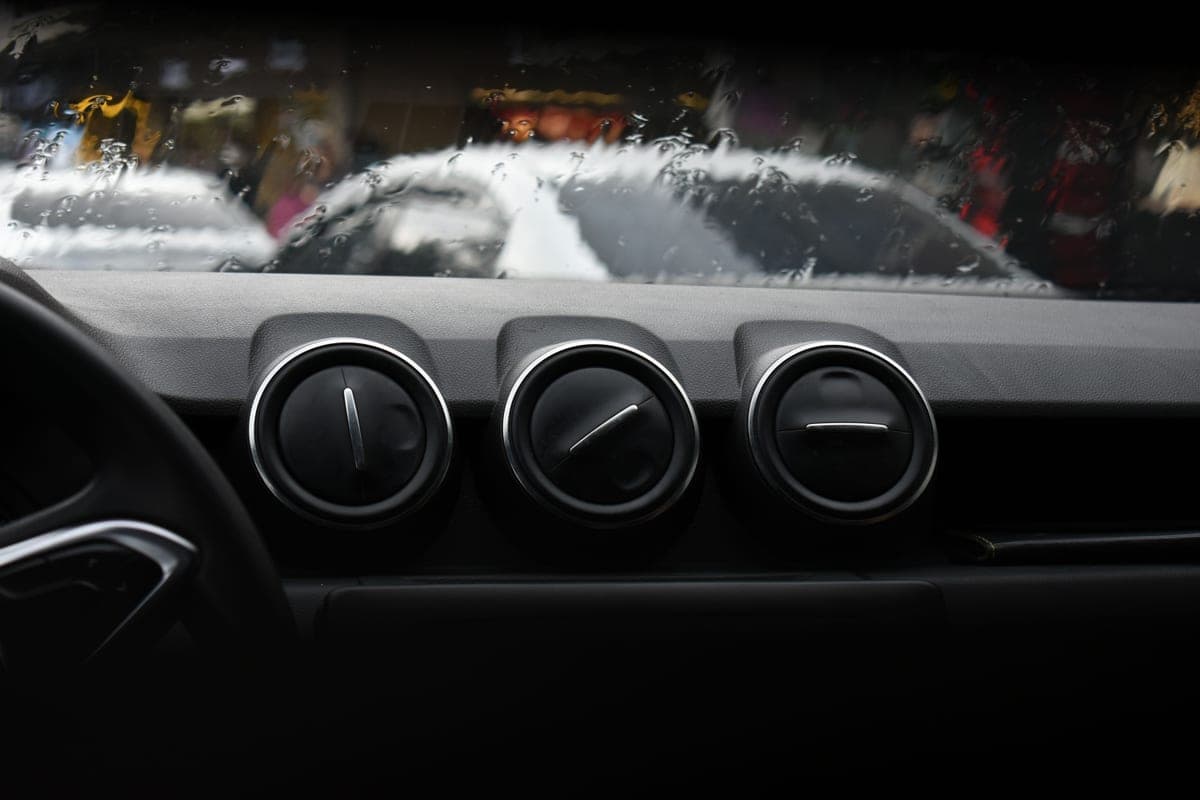
- Look at your vent blades. Horizontal and reasonably substantial? A vent mount will work. Thin, vertical, recessed behind a mesh, or circular “turbine” style? A vent mount will not grip properly and you should stop considering it.
- Run a hand across your dashboard. Is there a flat area, at least the size of a coaster, that is smooth rather than textured? Adhesive discs and suction cups need one. Heavily grained or soft-touch plastic is where dashboard mounts fail.
- Check your state's windshield rules. Some states restrict what may be attached to a windshield, and several restrict it to specific zones rather than banning it outright. Two minutes now saves an argument later.
- Sit in the driving position and look where you want the phone. If the answer is “lower right, near the vents”, take a vent mount. If it is “up and just below my sightline”, you need an arm, which means dashboard or windshield.
How each position fails, which is the real comparison
| Position | How it attaches | How it fails | Reversible? |
|---|---|---|---|
| Vent | Twist-lock or spring clip | Sags on thin blades; blocks a vent | Completely |
| Dashboard | Adhesive disc plus suction | Adhesive lets go in heat | Mostly - residue |
| Windshield | Suction cup to glass | Seal fails when cold or dusty | Completely |
Vent: the default, and why
It attaches to something that is already there, needs no adhesive, and comes off in a second. There is nothing to fail in heat because there is no adhesive to soften and no suction seal to lose. That is a genuine reliability advantage and it is why the vent is the right default for most cars.
Two costs. You block a vent — on the driver's side in August, that is the vent you wanted. And on cars with thin horizontal blades, a heavy phone hanging off one over months can leave the blade permanently angled downward. The vent mount page covers the twist-lock versus spring-clip distinction, which is what separates the mounts that last.
Dashboard: placement, at the price of permanence
A telescopic arm on a dash base is the only way to put the phone exactly where you want it. iOttie publishes 4.5 to 6.75 inches of extension and 260 degrees of pivot on its Easy One Touch 5, which is a real amount of freedom.
The cost is the adhesive disc, which is permanent in practice. And the adhesive is the component that fails first, because it is rated for a temperature range that a dashboard in summer sun genuinely exceeds. If your dashboard is textured, this position is a bad bet before you start.
Windshield: the one with rules
Suction to glass is the most reliable surface available — glass is smooth, flat and consistent, which is exactly what a suction cup wants. It is also the position with legal restrictions in some states, and the one where a failed seal drops the phone into the footwell rather than onto the dash.
Cold is the enemy here rather than heat: a cold suction cup is stiff and seals badly, which is why windshield mounts most often let go on the first properly cold morning of the year. Warming the cup in your hands before fitting genuinely helps.
One thing that overrides all of the above
Do not mount anything in the deployment path of an airbag. Passenger airbags come out of the upper dashboard, and side-curtain airbags come out of the A-pillars. A mount and a phone in either path becomes a projectile in a collision.
The practical rule: keep mounts low and to the driver's side of the center console, and off the A-pillar entirely. Your owner's manual shows the deployment zones, and most dashboards have a molded “SRS AIRBAG” label marking the panel that opens.
So what should you do
- Vents are horizontal and substantial: vent mount. Simplest, most reliable, cheapest, fully reversible.
- Vents are thin or vertical, dash has a smooth flat area: dashboard mount with a disc.
- Neither works and your state allows it: windshield, warmed cup, clean glass.
- You have an unused CD slot: seriously consider it before anything else.
Once you know which position your car actually allows, the specific mounts that hold up in each are in best car phone mounts.
Every pick, with the working
Each entry lists the specifications the maker publishes, the axis scores those specifications produce, and what you give up. Rows that read “Not published” are not omissions on our side: they are things the maker will not commit to in writing, and they cost the product points on the transparency axis. Specifications compiled September 4, 2026.
Our pickThe default vent mount
iOttie Easy One Touch 5 Air Vent
A twist-lock vent clamp and the one-handed cradle iOttie has been refining for a decade, at $24.95. It grips the phone mechanically rather than magnetically, which means it does not care what case you have, and it costs a quarter of what the Qi2 chargers cost because it does not charge anything.
- Attachment
- Twist-lock air vent
- Hold
- Mechanical cradle, one-touch lock and release
- Orientation
- Portrait or landscape
- Cable management
- Magnetic cord organizer
- SKU
- HLCRIO172
- Weight capacity
- Not published
- Operating range
- Not published
List price $24.95 per iOttie's own store, captured on the compile date below. Not a live price and not what you will pay — the button is where the real number is.
What it gets right
- Twist-lock vent attachment rather than a spring clip, which is the difference between staying put and rattling loose
- Mechanical cradle works with any case, any thickness, and any phone that fits
- One-handed lock and release, which is the entire point of the product line
- $24.95 list, the cheapest way to solve the problem properly
Flaws
- Blocks a vent, and in summer that vent is the one you wanted
- No charging, so the cable still has to come from somewhere
- A heavy phone on a thin vent blade will still droop over time on some cars
The working behind the 8.3
- Heat headroom: not scored (weight 22%)
- The maker publishes no operating-temperature ceiling, so this axis is dropped and the other weights are re-normalized.
- Install effort: 9.0 (weight 24%)
- Clips onto a vent blade or a headrest post. Two minutes, no tools, no adhesive, no residue.
- Price against the ceiling: 10.0 (weight 24%)
- Listed at $24.95 on the compile date. This site's buyer has a practical ceiling around $150 for a single upgrade, so the scale rewards everything under $100 and falls away sharply past $150. The live price is very often different, and that is what the button is for.
- Written commitment: 5.5 (weight 15%)
- 12-month warranty. This is the only promise in the entire listing that a court would read, which is why it is scored and the marketing copy is not.
- Spec transparency: 7.1 (weight 15%)
- 5 of the 7 specifications we went looking for are published by the maker (71%). A blank row is never a guess here: it prints “Not published” and it costs the product points, because a figure nobody will commit to in writing is a figure you cannot check.
Axes with no published input are dropped and the remaining weights re-normalized, so a product is not punished for a category where an axis does not apply. Specifications compiled September 4, 2026 from iOttie's Easy One Touch 5 Air Vent page.
2Getting the phone up into your eyeline
iOttie Easy One Touch 5 Dash & Windshield
Skip this one. The most adjustable of the three and the one with the failure mode this page keeps warning about: adhesive and suction both let go, in opposite seasons. Buy it if you need the arm; take one of the other two if you do not.
The same cradle on a telescopic arm that extends from 4.5 to 6.75 inches and pivots 260 degrees, on a suction base rated to five pounds. The arm is what you are buying: a vent mount puts the phone where the vent is, and this puts it where you want to look.
- Attachment
- Suction cup, dashboard or windshield
- Arm extension
- 4.5 in to 6.75 in
- Pivot
- 260 degrees
- Weight capacity
- 5 lb
- Primary material
- Plastic
- SKU
- HLCRIO171
- Operating range
- Not published
List price $24.95 per iOttie's own store, captured on the compile date below. Not a live price and not what you will pay — the button is where the real number is.
What it gets right
- Telescopic arm 4.5 to 6.75 inches with 260 degrees of pivot — genuine placement freedom
- Rated to 5 lb, which is several times any phone
- Does not block a vent
- $24.95 list, same as the vent version
Flaws
- Suction to glass or a dash disc, and suction is the mount type most likely to let go on a hot day
- A tall arm on the windshield is a tall arm in your field of view; check your state's windshield-obstruction rules
- No charging
The working behind the 7.9
- Heat headroom: not scored (weight 22%)
- The maker publishes no operating-temperature ceiling, so this axis is dropped and the other weights are re-normalized.
- Install effort: 7.0 (weight 24%)
- Suction cup onto glass or a dash disc. Reversible, but it wants a clean surface and it is the mount type most likely to let go on a hot day.
- Price against the ceiling: 10.0 (weight 24%)
- Listed at $24.95 on the compile date. This site's buyer has a practical ceiling around $150 for a single upgrade, so the scale rewards everything under $100 and falls away sharply past $150. The live price is very often different, and that is what the button is for.
- Written commitment: 5.5 (weight 15%)
- 12-month warranty. This is the only promise in the entire listing that a court would read, which is why it is scored and the marketing copy is not.
- Spec transparency: 8.6 (weight 15%)
- 6 of the 7 specifications we went looking for are published by the maker (86%). A blank row is never a guess here: it prints “Not published” and it costs the product points, because a figure nobody will commit to in writing is a figure you cannot check.
Axes with no published input are dropped and the remaining weights re-normalized, so a product is not punished for a category where an axis does not apply. Specifications compiled September 4, 2026 from iOttie's Easy One Touch 5 Dash & Windshield page.
3The mounting position nobody thinks of
iOttie Easy One Touch 5 CD Slot
The same one-touch cradle as the rest of the Easy One Touch 5 line, on a lever-locked blade that wedges into a CD slot. If your car has a slot you have not used in a decade, this is the most rigid mounting position available: dead central, needs no adhesive, blocks no vent, and comes out completely when you sell the car.
- Attachment
- CD slot, lever locked
- Device width range
- 2.3 in to 3.5 in
- Hold
- Mechanical cradle, one-touch lock and release
- Cable management
- Magnetic cord organizer
- Extras
- Ships with a dashboard mounting base as an alternative
- SKU
- HLCRIO173
- Weight capacity
- Not published
- List price
- Not published
What it gets right
- Central and rigid — a CD slot is a structural opening, not a plastic vent blade or a sun-softened adhesive pad
- Lever mechanism locks the blade in the slot rather than relying on friction
- Blocks no air vent and sticks nothing to the dashboard
- Cradle takes phones and cases from 2.3 to 3.5 inches wide, which is a published figure most mounts do not give you
Flaws
- Requires a CD slot. Cars built in the last few years mostly do not have one
- Occupies the slot permanently, so the CD player is gone while it is fitted
- A slot low in the console puts the phone lower than a dash arm would
The working behind the 7.6
- Heat headroom: not scored (weight 22%)
- The maker publishes no operating-temperature ceiling, so this axis is dropped and the other weights are re-normalized.
- Install effort: 9.0 (weight 24%)
- Clips onto a vent blade or a headrest post. Two minutes, no tools, no adhesive, no residue.
- Price against the ceiling: not scored (weight 24%)
- No published list price we could cite on the compile date, so this axis is dropped and the other weights are re-normalized.
- Written commitment: 5.5 (weight 15%)
- 12-month warranty. This is the only promise in the entire listing that a court would read, which is why it is scored and the marketing copy is not.
- Spec transparency: 7.5 (weight 15%)
- 6 of the 8 specifications we went looking for are published by the maker (75%). A blank row is never a guess here: it prints “Not published” and it costs the product points, because a figure nobody will commit to in writing is a figure you cannot check.
Axes with no published input are dropped and the remaining weights re-normalized, so a product is not punished for a category where an axis does not apply. Specifications compiled September 4, 2026 from iOttie's Easy One Touch 5 CD Slot page.
Prices last verified October 19, 2026. They move constantly; the figure on Amazon when you click is the real one.
Questions people actually ask
Which mount position is most reliable?
The vent, because it has nothing to fail: no adhesive to soften in heat, no suction seal to lose in cold. Its weakness is that it blocks a vent and can sag on thin blades, neither of which is a sudden failure.
Is it legal to mount a phone on the windshield?
It varies by state and several restrict it to specific zones rather than prohibiting it. Check your own state before mounting to glass; a dash disc or a vent mount avoids the question.
Will a dash disc come off later?
Usually, with heat from a hairdryer and patience, though it can leave residue and can mark soft-touch surfaces. If the car is leased, test in a hidden area first or choose a position that needs no adhesive.
Can I mount a phone on the A-pillar?
No. Most modern cars have a curtain airbag in the A-pillar, and a mount there puts a phone directly in the deployment path. Keep mounts low, central and away from any panel marked SRS.