The best car accessories for commuters
Ranked by how often you touch them rather than by what they cost. A phone mount is a boring recommendation and the right first purchase, because you use it every single trip and a jump starter you use once in three years.
By Sawyer V. · Published · How we research
We have not tested any of this. Everything below is compiled from published manufacturer specifications, and the arithmetic is printed so you can check it. This page carries affiliate links: if you buy through one we earn a commission at no extra cost to you, and it does not change the order of the picks. Full disclosure.
The short answer
Start with a phone mount, then a charger, then a windshield shade. Under $70 for all three, and between them they change every single drive: the phone is where you can see it, it charges faster than it drains, and the car is not 50 degrees hotter than the air outside when you get back to it. Everything after that is insurance rather than improvement — a dash cam for the argument you might one day have, a jump starter for the morning you might one day lose. Buy in that order and stop wherever the budget runs out.
| # | Pick | Install | Score | Price |
|---|---|---|---|---|
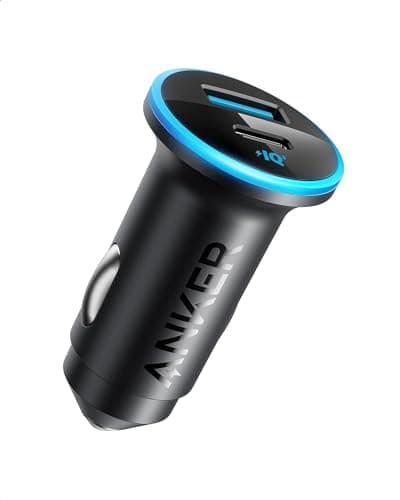
| 1 | Anker 323 Car Charger (52.5W) The one most people should actually buy | Plugs in | 9.2/10 | $14.99 - view on Amazon |
| 2 | Drop Stop Seat Gap Filler Never fishing a phone out of the seat rail again | Drops in | 9.2/10 | $24.99 - view on Amazon |
| 3 | Kinder Fluff Windshield Sun Shade The only UV claim here with a certification behind it | Drops in | 9.0/10 | Check price on Amazon |
| 4 | iOttie Easy One Touch 5 Air Vent The default vent mount | Clips on | 8.3/10 | Check price on Amazon |
| 5 | NOCO Boost Plus GB40 Not needing anybody else's car | Plugs in | 8.0/10 | Check price on Amazon |
| 6 | Vantrue E1 The best heat rating under $100 | Adhesive | 7.6/10 | $99.99 - view on Amazon |
Prices last verified October 19, 2026. They move constantly; the figure on Amazon when you click is the real one.
Why this list is ordered the way it is
Almost every “best car accessories” list is ordered by price, or by how interesting the product is to write about. Neither is useful to somebody with $150 and a car they already own.
This one is ordered by frequency of contact, then by consequence. A phone mount is a dull recommendation — it is cheap, it does nothing dramatic, and it is the right first purchase for almost everyone because you interact with it on every trip. A jump starter is the opposite: you will touch it once in three years and on that day it is the most valuable object in the car.
Both belong on the list. The ordering just reflects which one you notice.
Who this is written for
Somebody improving a car they already own. Not an enthusiast, not somebody researching for six weeks, not somebody with a project car in a garage. A person who drives to work in a normal car, has noticed two or three things that annoy them about it, has maybe $150 to fix one, and would like to fit it themselves on a Saturday without special tools.
That framing decides how everything here is scored. Install effort is a scored axis rather than a footnote, because half an hour under a dashboard is a real cost. Price is scored against a $150 ceiling rather than against the category. And a published heat ceiling matters more than a resolution figure, because the car sits outside all day at work.
1. A phone mount, about $25
The highest-frequency object in the car and the only one on this page with a genuine safety argument: the alternative is a phone in your lap, in a cup holder, or in your hand.
A vent mount is the right default because it attaches to something already there, needs no adhesive and no suction, and comes off in a second. That also means nothing to fail in heat — which, as the falling-mount page explains, is what kills dashboard mounts every July.
Look for a twist-lock rather than a spring clip. It is the single biggest quality difference in the category and it is rarely on the front of the box. The vent mount page has the full ranking, and the attachment guide covers what your specific car can take.
2. A car charger, about $20
Second most-touched thing, and the fix for the specific annoyance of a phone losing charge while it is plugged in — which is a real thing that happens when navigation with a bright screen consumes more than an old 5-watt USB port supplies.
You need much less than the marketing suggests. Phones cap between about 20 and 45 W and most sit near the bottom; a 30 W USB-C port charges any of them at full speed. The 67-watt and 130-watt chargers are for laptops. The wattage arithmetic is here.
3. A windshield shade, about $20
The best dollar-per-degree in the entire car. The windshield is the largest aperture for solar energy into a parked car, and blocking it addresses the dominant heat path.
It also protects everything else: the dashboard plastic, the adhesive holding anything on, and the dash cam sitting in the hottest strip of glass. Size it properly — a shade two inches too small leaves sun on exactly the part of the dashboard it was bought to shield. The shade page covers sizing and which UV claims are actually testable.
4. A dash cam, about $80 plus a card
The first item on this list that is insurance rather than improvement. It will mostly record nothing, and its value is narrow and real: it removes the argument about what happened, which is what makes minor collisions expensive.
Two things about the budget. Add $20 to $30 for a proper endurance card, because a general-purpose card in a dash cam fails silently — the gap between the two mainstream endurance cards is 70,080 rated hours against 10,000. And add another $20 to $30 plus an afternoon if you want parking mode, which needs a hardwire kit.
For a commuter, buy on published heat ceiling rather than resolution. A parked car runs 60 to 70 C inside and most makers publish no temperature figure at all. The under-$100 page ranks on exactly that, and the worth-it page is honest about who should skip one.
5. A jump starter, about $100
Lowest frequency, highest consequence. 1,000 peak amps in a 2.4-pound pack that fits in a glovebox, and it means a flat battery is a five-minute inconvenience rather than a callout and a missed morning.
The catch is maintenance, and it is the reason most jump starters fail: lithium packs self-discharge, heat accelerates it, and one that has spent three summers in a trunk is not at the charge it claims. Charge it twice a year. The jump starter page covers matching the published engine-size ceiling to your car.
6. A seat gap filler, about $25
Cheap, small, and it solves something that happens while you are moving: a phone or a card down the side of the seat is a genuine reach at exactly the wrong moment.
Look for one with a seatbelt slot. That is what anchors it rather than wedging it, and it is why generic wedges migrate forward and stop covering the part of the gap that matters. The small-fixes page covers it and is honest about the two fixes on that page that mostly are not worth it.
Three budgets
| Budget | Buy | What it changes |
|---|---|---|
| About $65 | Mount, charger, shade | Every drive, immediately |
| About $175 | The above plus a dash cam and a card | Every drive, plus the argument you might have |
| About $300 | The above plus a jump starter and a gap filler | Every drive, plus both of the mornings that go wrong |
What is deliberately not on this list
- A seat cushion. Genuinely useful for some people and entirely dependent on your car's headroom and your own back, which makes it a bad blanket recommendation. It has its own page with the measurements to take first.
- Floor mats. A strong buy in a snowy climate and hard to justify in a dry one. The comparison is here.
- A wireless CarPlay adapter. Excellent if your car already has wired CarPlay, and useless if it does not — too conditional for a general list. The explainer covers the prerequisite.
- A wireless charging mount. Three times the price of a mount plus a cable, and it needs a 20-watt source most cars do not have. Worth it for some people, not a default.
If the commute is urban rather than highway, the failures are different ones — short trips that never recharge the battery, low-speed parking damage, and a car left unattended in public for most of its life — best car accessories for city driving.
Every pick, with the working
Each entry lists the specifications the maker publishes, the axis scores those specifications produce, and what you give up. Rows that read “Not published” are not omissions on our side: they are things the maker will not commit to in writing, and they cost the product points on the transparency axis. Specifications compiled September 4, 2026.
Our pickThe one most people should actually buy
Anker 323 Car Charger (52.5W)
Two ports, 52.5W total, and a published voltage table showing 30W maximum on the USB-C port. Thirty watts charges any phone at or near its own ceiling, which means the 67W chargers above it are selling you headroom nothing in your pocket can use. At $19.99 this is the honest default.
- Ports
- 1 x USB-C, 1 x USB-A
- Total output
- 52.5 W
- USB-C output
- 5V/3A, 9V/3A, 12V/2.5A, 15V/2A, 20V/1.5A (30 W max)
- USB-A output
- 5V/3A, 9V/2A, 10V/2.25A (22.5 W max)
- Input
- 12V at 5.6 A, 24V at 3.6 A
- Safety
- ActiveShield 2.0
- Model
- A2735
- Warranty
- 18 months
- Operating range
- Not published
List price $19.99 per Anker's own store, captured on the compile date below. Not a live price and not what you will pay — the button is where the real number is.
What it gets right
- Anker publishes the full PDO table — 5V/3A, 9V/3A, 12V/2.5A, 15V/2A, 20V/1.5A — rather than a headline number
- 30 W on USB-C is at or above what almost every phone will accept
- Input rated 12V and 24V, so it works in a truck as well as a car
- $19.99 list and physically small, which matters in a tight console
Flaws
- Two ports, not three. A second passenger and a tablet is one device too many
- 30 W will not charge a laptop at any useful speed
- The USB-A port tops out at 22.5 W, so it is the slow one
The working behind the 9.2
- Heat headroom: not scored (weight 22%)
- The maker publishes no operating-temperature ceiling, so this axis is dropped and the other weights are re-normalized.
- Install effort: 10.0 (weight 24%)
- Plugs into a 12V socket or a USB port. Nothing to mount, nothing to route, reversible in a second.
- Price against the ceiling: 10.0 (weight 24%)
- Listed at $19.99 on the compile date. This site's buyer has a practical ceiling around $150 for a single upgrade, so the scale rewards everything under $100 and falls away sharply past $150. The live price is very often different, and that is what the button is for.
- Written commitment: 7.0 (weight 15%)
- 18-month warranty. This is the only promise in the entire listing that a court would read, which is why it is scored and the marketing copy is not.
- Spec transparency: 8.9 (weight 15%)
- 8 of the 9 specifications we went looking for are published by the maker (89%). A blank row is never a guess here: it prints “Not published” and it costs the product points, because a figure nobody will commit to in writing is a figure you cannot check.
Axes with no published input are dropped and the remaining weights re-normalized, so a product is not punished for a category where an axis does not apply. Specifications compiled September 4, 2026 from Anker's 323 Car Charger product page.
2Never fishing a phone out of the seat rail again
Drop Stop Seat Gap Filler
A neoprene wedge that fills the gap between the seat and the center console, with a slot the seatbelt catch passes through. That slot is the patent and it is the reason this one stays put where generic wedges migrate. It is more expensive than it has any right to be, and it solves a problem that genuinely happens while you are driving.
- Material
- Neoprene
- Quantity
- 2 per pack, driver and passenger
- Fit method
- Expands and contracts to the gap; seatbelt slot anchors it
- Cleaning
- Liquid and stain resistant, wipe clean
- Dimensions
- Not published
- Warranty
- Not published
List price $24.99 per Walmart listing, two-pack, captured on the compile date below. Not a live price and not what you will pay — the button is where the real number is.
What it gets right
- The seatbelt slot means it is anchored rather than wedged, which is the difference from every generic copy
- Neoprene expands and contracts to fit whatever gap your car has, so 'universal' is closer to true than usual
- Liquid and stain resistant, and it wipes clean
- Sold as a pair, so both front seats are covered
Flaws
- $25 to $40 for two pieces of shaped neoprene, depending entirely on where you buy
- It fills the gap, which also means the gap is no longer available for anything you wanted to put there
- Cars with an unusually wide gap or a console that flares will still see items get past the ends
The working behind the 9.2
- Heat headroom: not scored (weight 22%)
- The maker publishes no operating-temperature ceiling, so this axis is dropped and the other weights are re-normalized.
- Install effort: 10.0 (weight 24%)
- Drops in and sits there. No fixing of any kind, and it comes out again when you sell the car.
- Price against the ceiling: 10.0 (weight 24%)
- Listed at $24.99 on the compile date. This site's buyer has a practical ceiling around $150 for a single upgrade, so the scale rewards everything under $100 and falls away sharply past $150. The live price is very often different, and that is what the button is for.
- Written commitment: not scored (weight 15%)
- No warranty term published, so this axis is dropped and the other weights are re-normalized.
- Spec transparency: 6.7 (weight 15%)
- 4 of the 6 specifications we went looking for are published by the maker (67%). A blank row is never a guess here: it prints “Not published” and it costs the product points, because a figure nobody will commit to in writing is a figure you cannot check.
Axes with no published input are dropped and the remaining weights re-normalized, so a product is not punished for a category where an axis does not apply. Specifications compiled September 4, 2026 from Drop Stop published product description and materials.
3The only UV claim here with a certification behind it
Kinder Fluff Windshield Sun Shade
Reflective polyester in four published sizes, and the only shade in this ledger whose UV claim is stated as a certified test result rather than a round marketing number: 99.87% of UVB and 99.02% of UVA. Two decimal places is what a test report looks like; 99% is what a copywriter writes.
- Material
- Reflective polyester, 210T
- Certified UVB blocking
- 99.87%
- Certified UVA blocking
- 99.02%
- Sizes published
- 24x29 and 33x36 (two piece), 28x31, 64x36 (one piece)
- Cabin temperature claim
- Not published
- Frame
- Not published
- Warranty
- Not published
List price $20.90 per Kinder Fluff's own store, 64 x 36 in single piece, captured on the compile date below. Not a live price and not what you will pay — the button is where the real number is.
What it gets right
- Certified UV figures published to two decimal places, which is a testable claim rather than a slogan
- Four published sizes including a 64 x 36 in single piece and a 33 x 36 in two-piece
- Under $21 across the range
- Two-piece versions fold smaller, so they live behind a seat rather than in the trunk
Flaws
- Kinder Fluff publishes a UV figure and no cabin-temperature figure, so there is nothing to compare against EcoNour's claim
- Two-piece shades leave a seam down the middle of the windshield and a gap if you fit them carelessly
- 210T fabric rather than the 240T some competitors use, though neither publishes what that means in performance
The working behind the 9.0
- Heat headroom: not scored (weight 22%)
- The maker publishes no operating-temperature ceiling, so this axis is dropped and the other weights are re-normalized.
- Install effort: 10.0 (weight 24%)
- Drops in and sits there. No fixing of any kind, and it comes out again when you sell the car.
- Price against the ceiling: 10.0 (weight 24%)
- Listed at $20.9 on the compile date. This site's buyer has a practical ceiling around $150 for a single upgrade, so the scale rewards everything under $100 and falls away sharply past $150. The live price is very often different, and that is what the button is for.
- Written commitment: not scored (weight 15%)
- No warranty term published, so this axis is dropped and the other weights are re-normalized.
- Spec transparency: 5.7 (weight 15%)
- 4 of the 7 specifications we went looking for are published by the maker (57%). A blank row is never a guess here: it prints “Not published” and it costs the product points, because a figure nobody will commit to in writing is a figure you cannot check.
Axes with no published input are dropped and the remaining weights re-normalized, so a product is not punished for a category where an axis does not apply. Specifications compiled September 4, 2026 from Kinder Fluff's windshield sunshade product page.
4The default vent mount
iOttie Easy One Touch 5 Air Vent
A twist-lock vent clamp and the one-handed cradle iOttie has been refining for a decade, at $24.95. It grips the phone mechanically rather than magnetically, which means it does not care what case you have, and it costs a quarter of what the Qi2 chargers cost because it does not charge anything.
- Attachment
- Twist-lock air vent
- Hold
- Mechanical cradle, one-touch lock and release
- Orientation
- Portrait or landscape
- Cable management
- Magnetic cord organizer
- SKU
- HLCRIO172
- Weight capacity
- Not published
- Operating range
- Not published
List price $24.95 per iOttie's own store, captured on the compile date below. Not a live price and not what you will pay — the button is where the real number is.
What it gets right
- Twist-lock vent attachment rather than a spring clip, which is the difference between staying put and rattling loose
- Mechanical cradle works with any case, any thickness, and any phone that fits
- One-handed lock and release, which is the entire point of the product line
- $24.95 list, the cheapest way to solve the problem properly
Flaws
- Blocks a vent, and in summer that vent is the one you wanted
- No charging, so the cable still has to come from somewhere
- A heavy phone on a thin vent blade will still droop over time on some cars
The working behind the 8.3
- Heat headroom: not scored (weight 22%)
- The maker publishes no operating-temperature ceiling, so this axis is dropped and the other weights are re-normalized.
- Install effort: 9.0 (weight 24%)
- Clips onto a vent blade or a headrest post. Two minutes, no tools, no adhesive, no residue.
- Price against the ceiling: 10.0 (weight 24%)
- Listed at $24.95 on the compile date. This site's buyer has a practical ceiling around $150 for a single upgrade, so the scale rewards everything under $100 and falls away sharply past $150. The live price is very often different, and that is what the button is for.
- Written commitment: 5.5 (weight 15%)
- 12-month warranty. This is the only promise in the entire listing that a court would read, which is why it is scored and the marketing copy is not.
- Spec transparency: 7.1 (weight 15%)
- 5 of the 7 specifications we went looking for are published by the maker (71%). A blank row is never a guess here: it prints “Not published” and it costs the product points, because a figure nobody will commit to in writing is a figure you cannot check.
Axes with no published input are dropped and the remaining weights re-normalized, so a product is not punished for a category where an axis does not apply. Specifications compiled September 4, 2026 from iOttie's Easy One Touch 5 Air Vent page.
5Not needing anybody else's car
NOCO Boost Plus GB40
1,000 peak amps out of a 24 watt-hour lithium pack that weighs 2.4 pounds, rated for gasoline engines to 6.0 liters and diesel to 3.0, with spark-proof clamps and reverse-polarity protection. It is the single accessory here that changes what happens on the worst morning of your year, and it fits in a glovebox.
- Peak amps
- 1,000 A
- Battery
- 24 Wh lithium-ion
- Engine ceiling
- Gasoline to 6.0 L, diesel to 3.0 L
- Starts per charge
- Up to 20
- Dimensions
- 7.7 x 3.2 x 1.7 in
- Weight
- 2.4 lb with clamps
- Light
- 100 lumens
- Safety
- Spark proof, reverse polarity protected
- Operating range
- Not published
List price $99.95 per NOCO's listed price, captured on the compile date below. Not a live price and not what you will pay — the button is where the real number is.
What it gets right
- 1,000 peak amps and up to 20 starts on one charge, both published
- Spark-proof and reverse-polarity protected, which matters when you are doing this in the dark
- 2.4 lb and 7.7 inches long — it genuinely lives in the car rather than the garage
- USB port and a 100-lumen light, so it is also the thing you reach for in a power cut
Flaws
- Lithium, so it self-discharges and needs topping up every few months or it is a brick when you need it
- 6.0 L gasoline and 3.0 L diesel is the published ceiling — a big diesel needs the bigger model
- $99.95 for something you hope never to use
The working behind the 8.0
- Heat headroom: not scored (weight 22%)
- The maker publishes no operating-temperature ceiling, so this axis is dropped and the other weights are re-normalized.
- Install effort: 10.0 (weight 24%)
- Plugs into a 12V socket or a USB port. Nothing to mount, nothing to route, reversible in a second.
- Price against the ceiling: 7.0 (weight 24%)
- Listed at $99.95 on the compile date. This site's buyer has a practical ceiling around $150 for a single upgrade, so the scale rewards everything under $100 and falls away sharply past $150. The live price is very often different, and that is what the button is for.
- Written commitment: 5.5 (weight 15%)
- 12-month warranty. This is the only promise in the entire listing that a court would read, which is why it is scored and the marketing copy is not.
- Spec transparency: 8.9 (weight 15%)
- 8 of the 9 specifications we went looking for are published by the maker (89%). A blank row is never a guess here: it prints “Not published” and it costs the product points, because a figure nobody will commit to in writing is a figure you cannot check.
Axes with no published input are dropped and the remaining weights re-normalized, so a product is not punished for a category where an axis does not apply. Specifications compiled September 4, 2026 from NOCO Boost Plus GB40 published specifications.
6The best heat rating under $100
Vantrue E1
Skip this one. Not a bad camera — it wins its own category on published heat ceiling. It is the skip on THIS page for anybody whose budget is genuinely tight, because a dash cam plus an endurance card is $110 of the money that would otherwise buy a mount, a charger, a shade and a gap filler. Those four improve every drive; the camera improves one drive in five years.
Vantrue publishes an operating range of -20 C to 70 C on this camera, which is the highest ceiling of anything here and 10 C above what the same company publishes for its own 4K model. It is a supercapacitor camera with GPS and a 2.7K sensor at a two-figure list price, which is an unusual combination, and it is the pick if your car sits in a sun-baked lot all day.
- Front resolution
- 2592 x 1944
- Alternate mode
- 1920 x 1080 at 60fps
- Power store
- Supercapacitor
- Operating range
- -20 C to 70 C (-4 F to 158 F)
- Max microSD
- 512 GB
- GPS
- Built in
- Wi-Fi
- Built in, app control
- Parking mode
- 24-hour, buffered motion detection
- Field of view
- Not published
- Published current draw
- Not published
List price $89.99 per Vantrue's own store, sale price (regular $129.99), captured on the compile date below. Not a live price and not what you will pay — the button is where the real number is.
What it gets right
- 70 C published ceiling — the highest of any camera in this ledger, and 10 C above Vantrue's own E1 Pro
- Supercapacitor rather than a lithium cell, which is the part that swells and dies in a hot cabin
- GPS and voice control at a list price under $100
- Takes a 512GB card, so a big endurance card will not be wasted on it
Flaws
- 2592x1944 is not 4K, and the marketing calls it 2.7K, which is a stretch of the usual naming
- Front only. A rear channel means a different camera
- Parking mode needs a hardwire kit that is not in the box
The working behind the 7.6
- Heat headroom: 10.0 (weight 22%)
- Published operating ceiling 70 C (158 F). A car parked in summer sun runs roughly 60-70 C inside, so 65 C and up is real headroom, 60 C is living at the limit, and anything under 55 C is a summer problem waiting to happen.
- Install effort: 6.0 (weight 24%)
- Adhesive pad onto the dashboard. Permanent in practice: repositioning means a new pad, and the pad is the part that fails first.
- Price against the ceiling: 7.0 (weight 24%)
- Listed at $89.99 on the compile date. This site's buyer has a practical ceiling around $150 for a single upgrade, so the scale rewards everything under $100 and falls away sharply past $150. The live price is very often different, and that is what the button is for.
- Written commitment: 7.0 (weight 15%)
- 18-month warranty. This is the only promise in the entire listing that a court would read, which is why it is scored and the marketing copy is not.
- Spec transparency: 8.0 (weight 15%)
- 8 of the 10 specifications we went looking for are published by the maker (80%). A blank row is never a guess here: it prints “Not published” and it costs the product points, because a figure nobody will commit to in writing is a figure you cannot check.
Axes with no published input are dropped and the remaining weights re-normalized, so a product is not punished for a category where an axis does not apply. Specifications compiled September 4, 2026 from Vantrue's E1 product page.
Prices last verified October 19, 2026. They move constantly; the figure on Amazon when you click is the real one.
Questions people actually ask
What is the single best first upgrade for a commuter car?
A phone mount, for almost everybody. Under $25, two minutes to fit, and it is the only thing here you interact with on every single trip. It is also the one with a real safety argument, because the alternative is a phone in your lap.
How much should I expect to spend?
About $65 buys a mount, a charger and a windshield shade, and that combination changes a commute more than any single $65 item does. Beyond that you are buying insurance rather than improvement.
Do I need a dash cam?
If you drive daily in traffic, the case is good — it removes the argument about what happened, which is what makes minor collisions expensive. If you drive rarely on quiet roads and park in a garage, it is genuinely optional and this page says so.
Are these ranked by quality or by price?
By frequency of contact, then consequence. Everything here is also scored by the same published-spec rubric used across the site — heat headroom, install effort, price against a $150 ceiling, warranty and spec transparency — with the working printed under each score.
Sources
- iOttie Easy One Touch 5 Air Vent published specifications and price
- Anker 323 Car Charger published output table and price
- Kinder Fluff windshield sunshade published sizes and certified UV figures
- Vantrue E1 published operating temperature and price
- NOCO Boost Plus GB40 published specifications
- Samsung PRO Endurance published endurance ratings