The best car upgrades under $100
A hundred dollars is one middling product or three good ones, and the second is almost always the better outcome. Here is which categories have a real answer under $100 and which honestly do not.
By Sawyer V. · Published · How we research
We have not tested any of this. Everything below is compiled from published manufacturer specifications, and the arithmetic is printed so you can check it. This page carries affiliate links: if you buy through one we earn a commission at no extra cost to you, and it does not change the order of the picks. Full disclosure.
The short answer
Buy a phone mount, a car charger and a windshield shade: about $65 together. Those three change every drive you take, and they leave $35 for a seat gap filler or toward something bigger later. The alternative — one $90 dash cam — improves one drive in five years and immediately needs another $25 for the endurance card it cannot work properly without. Three good things beat one middling thing at this budget, almost every time.
| # | Pick | Install | Score | Price |
|---|---|---|---|---|
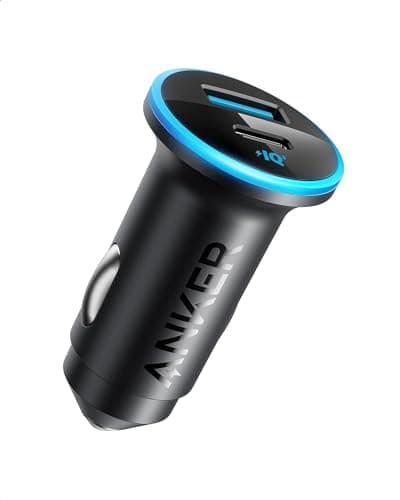
| 1 | Anker 323 Car Charger (52.5W) The one most people should actually buy | Plugs in | 9.2/10 | $14.99 - view on Amazon |
| 2 | Drop Stop Seat Gap Filler Never fishing a phone out of the seat rail again | Drops in | 9.2/10 | $24.99 - view on Amazon |
| 3 | Kinder Fluff Windshield Sun Shade The only UV claim here with a certification behind it | Drops in | 9.0/10 | Check price on Amazon |
| 4 | iOttie Easy One Touch 5 Air Vent The default vent mount | Clips on | 8.3/10 | Check price on Amazon |
| 5 | Vantrue E1 Lite The cheapest camera here worth owning | Adhesive | 7.6/10 | $99.99 - view on Amazon |
Prices last verified October 19, 2026. They move constantly; the figure on Amazon when you click is the real one.
The allocation principle
At $100 the useful question is not “what is the best thing I can buy” but “how many separate problems can I fix”. A car has several small annoyances and one or two rare disasters, and $100 covers all the annoyances or half of one disaster.
The annoyances win, because you meet them twice a day.
What $100 actually buys, by category
| Category | Good option under $100? | Roughly |
|---|---|---|
| Phone mount | Yes, comfortably | $25 |
| Car charger | Yes, comfortably | $20 |
| Windshield shade | Yes, comfortably | $20 |
| Seat gap filler | Yes | $25 |
| Trunk organizer | Yes | $17 |
| Seat cushion | Yes, at the top of the range | $60 |
| Lumbar support | Yes | $30 to $40 |
| Dash cam | Yes, but it consumes the whole budget | $80 to $90 plus a card |
| Jump starter | Marginal - the good ones sit at $100 | $100 |
| Wireless Qi2 mount | Yes, plus a charger it needs | $40 plus $20 |
| Floor mats | No, not fitted per vehicle | Above $100 |
| CarPlay adapter | Marginal, and only if your car qualifies | $59 and up |
The three to buy, and why in that order
- Phone mount, about $25. The highest-frequency object in the car and the only one here with a genuine safety argument. Take a vent mount with a twist-lock rather than a spring clip — the ranking is here.
- Car charger, about $20. Fixes a phone that loses charge while plugged in, which is a real thing that happens on a weak USB-A port. You need far less power than the marketing suggests: the arithmetic is here.
- Windshield shade, about $20. The best dollar-per-degree change available to a parked car, and it protects everything else inside it. Sizing matters more than brand.
$65, three separate problems solved, and $35 left.
The dash cam question, answered honestly
There are genuinely good dash cams under $100. The Vantrue E1 Lite publishes a 70 C operating ceiling and a supercapacitor at a list price under $80, which is a real product and not a compromise.
The problem is that a dash cam is not one purchase. It is a camera plus an endurance card — a general-purpose microSD in a dash cam fails silently, and the gap between the two mainstream endurance cards is 70,080 rated hours against 10,000. Add $25. If you want parking mode, add a hardwire kit and an afternoon.
So the honest comparison at $100 is: three things that improve every drive, or one thing that improves one drive in five years and is still $25 short of complete. The worth-it page makes the case for the camera properly, and it is a real case — just not at this budget as a first purchase.
What $100 genuinely does not buy
- Fitted floor mats. Laser-measured, vehicle-specific liners are above this budget from every maker, and a universal rectangle in the driver footwell is a safety problem rather than a saving. The mats page explains why fit is the product.
- A jump starter with margin. The good ones list right at $100, which means this budget buys it and nothing else. Worth doing if a flat battery is a live worry; otherwise it is next month.
- Wireless charging done properly. A Qi2 mount is $40 and needs a 20-watt USB-C source most cars do not have, so it is really $60 — and it still throttles on a hot day unless it has active cooling. The Qi2 page covers the hidden cost.
If you are buying one thing a month
A sensible order, which is the same as the commuter list for the same reason — frequency of contact first, consequence second:
- Month one: mount, charger, shade. Everything changes at once.
- Month two: dash cam and an endurance card.
- Month three: jump starter, and put a reminder in the calendar to charge it twice a year.
- After that: whichever of comfort, storage or floor protection actually annoys you, which by then you will know.
Every pick, with the working
Each entry lists the specifications the maker publishes, the axis scores those specifications produce, and what you give up. Rows that read “Not published” are not omissions on our side: they are things the maker will not commit to in writing, and they cost the product points on the transparency axis. Specifications compiled September 4, 2026.
Our pickThe one most people should actually buy
Anker 323 Car Charger (52.5W)
Two ports, 52.5W total, and a published voltage table showing 30W maximum on the USB-C port. Thirty watts charges any phone at or near its own ceiling, which means the 67W chargers above it are selling you headroom nothing in your pocket can use. At $19.99 this is the honest default.
- Ports
- 1 x USB-C, 1 x USB-A
- Total output
- 52.5 W
- USB-C output
- 5V/3A, 9V/3A, 12V/2.5A, 15V/2A, 20V/1.5A (30 W max)
- USB-A output
- 5V/3A, 9V/2A, 10V/2.25A (22.5 W max)
- Input
- 12V at 5.6 A, 24V at 3.6 A
- Safety
- ActiveShield 2.0
- Model
- A2735
- Warranty
- 18 months
- Operating range
- Not published
List price $19.99 per Anker's own store, captured on the compile date below. Not a live price and not what you will pay — the button is where the real number is.
What it gets right
- Anker publishes the full PDO table — 5V/3A, 9V/3A, 12V/2.5A, 15V/2A, 20V/1.5A — rather than a headline number
- 30 W on USB-C is at or above what almost every phone will accept
- Input rated 12V and 24V, so it works in a truck as well as a car
- $19.99 list and physically small, which matters in a tight console
Flaws
- Two ports, not three. A second passenger and a tablet is one device too many
- 30 W will not charge a laptop at any useful speed
- The USB-A port tops out at 22.5 W, so it is the slow one
The working behind the 9.2
- Heat headroom: not scored (weight 22%)
- The maker publishes no operating-temperature ceiling, so this axis is dropped and the other weights are re-normalized.
- Install effort: 10.0 (weight 24%)
- Plugs into a 12V socket or a USB port. Nothing to mount, nothing to route, reversible in a second.
- Price against the ceiling: 10.0 (weight 24%)
- Listed at $19.99 on the compile date. This site's buyer has a practical ceiling around $150 for a single upgrade, so the scale rewards everything under $100 and falls away sharply past $150. The live price is very often different, and that is what the button is for.
- Written commitment: 7.0 (weight 15%)
- 18-month warranty. This is the only promise in the entire listing that a court would read, which is why it is scored and the marketing copy is not.
- Spec transparency: 8.9 (weight 15%)
- 8 of the 9 specifications we went looking for are published by the maker (89%). A blank row is never a guess here: it prints “Not published” and it costs the product points, because a figure nobody will commit to in writing is a figure you cannot check.
Axes with no published input are dropped and the remaining weights re-normalized, so a product is not punished for a category where an axis does not apply. Specifications compiled September 4, 2026 from Anker's 323 Car Charger product page.
2Never fishing a phone out of the seat rail again
Drop Stop Seat Gap Filler
A neoprene wedge that fills the gap between the seat and the center console, with a slot the seatbelt catch passes through. That slot is the patent and it is the reason this one stays put where generic wedges migrate. It is more expensive than it has any right to be, and it solves a problem that genuinely happens while you are driving.
- Material
- Neoprene
- Quantity
- 2 per pack, driver and passenger
- Fit method
- Expands and contracts to the gap; seatbelt slot anchors it
- Cleaning
- Liquid and stain resistant, wipe clean
- Dimensions
- Not published
- Warranty
- Not published
List price $24.99 per Walmart listing, two-pack, captured on the compile date below. Not a live price and not what you will pay — the button is where the real number is.
What it gets right
- The seatbelt slot means it is anchored rather than wedged, which is the difference from every generic copy
- Neoprene expands and contracts to fit whatever gap your car has, so 'universal' is closer to true than usual
- Liquid and stain resistant, and it wipes clean
- Sold as a pair, so both front seats are covered
Flaws
- $25 to $40 for two pieces of shaped neoprene, depending entirely on where you buy
- It fills the gap, which also means the gap is no longer available for anything you wanted to put there
- Cars with an unusually wide gap or a console that flares will still see items get past the ends
The working behind the 9.2
- Heat headroom: not scored (weight 22%)
- The maker publishes no operating-temperature ceiling, so this axis is dropped and the other weights are re-normalized.
- Install effort: 10.0 (weight 24%)
- Drops in and sits there. No fixing of any kind, and it comes out again when you sell the car.
- Price against the ceiling: 10.0 (weight 24%)
- Listed at $24.99 on the compile date. This site's buyer has a practical ceiling around $150 for a single upgrade, so the scale rewards everything under $100 and falls away sharply past $150. The live price is very often different, and that is what the button is for.
- Written commitment: not scored (weight 15%)
- No warranty term published, so this axis is dropped and the other weights are re-normalized.
- Spec transparency: 6.7 (weight 15%)
- 4 of the 6 specifications we went looking for are published by the maker (67%). A blank row is never a guess here: it prints “Not published” and it costs the product points, because a figure nobody will commit to in writing is a figure you cannot check.
Axes with no published input are dropped and the remaining weights re-normalized, so a product is not punished for a category where an axis does not apply. Specifications compiled September 4, 2026 from Drop Stop published product description and materials.
3The only UV claim here with a certification behind it
Kinder Fluff Windshield Sun Shade
Reflective polyester in four published sizes, and the only shade in this ledger whose UV claim is stated as a certified test result rather than a round marketing number: 99.87% of UVB and 99.02% of UVA. Two decimal places is what a test report looks like; 99% is what a copywriter writes.
- Material
- Reflective polyester, 210T
- Certified UVB blocking
- 99.87%
- Certified UVA blocking
- 99.02%
- Sizes published
- 24x29 and 33x36 (two piece), 28x31, 64x36 (one piece)
- Cabin temperature claim
- Not published
- Frame
- Not published
- Warranty
- Not published
List price $20.90 per Kinder Fluff's own store, 64 x 36 in single piece, captured on the compile date below. Not a live price and not what you will pay — the button is where the real number is.
What it gets right
- Certified UV figures published to two decimal places, which is a testable claim rather than a slogan
- Four published sizes including a 64 x 36 in single piece and a 33 x 36 in two-piece
- Under $21 across the range
- Two-piece versions fold smaller, so they live behind a seat rather than in the trunk
Flaws
- Kinder Fluff publishes a UV figure and no cabin-temperature figure, so there is nothing to compare against EcoNour's claim
- Two-piece shades leave a seam down the middle of the windshield and a gap if you fit them carelessly
- 210T fabric rather than the 240T some competitors use, though neither publishes what that means in performance
The working behind the 9.0
- Heat headroom: not scored (weight 22%)
- The maker publishes no operating-temperature ceiling, so this axis is dropped and the other weights are re-normalized.
- Install effort: 10.0 (weight 24%)
- Drops in and sits there. No fixing of any kind, and it comes out again when you sell the car.
- Price against the ceiling: 10.0 (weight 24%)
- Listed at $20.9 on the compile date. This site's buyer has a practical ceiling around $150 for a single upgrade, so the scale rewards everything under $100 and falls away sharply past $150. The live price is very often different, and that is what the button is for.
- Written commitment: not scored (weight 15%)
- No warranty term published, so this axis is dropped and the other weights are re-normalized.
- Spec transparency: 5.7 (weight 15%)
- 4 of the 7 specifications we went looking for are published by the maker (57%). A blank row is never a guess here: it prints “Not published” and it costs the product points, because a figure nobody will commit to in writing is a figure you cannot check.
Axes with no published input are dropped and the remaining weights re-normalized, so a product is not punished for a category where an axis does not apply. Specifications compiled September 4, 2026 from Kinder Fluff's windshield sunshade product page.
4The default vent mount
iOttie Easy One Touch 5 Air Vent
A twist-lock vent clamp and the one-handed cradle iOttie has been refining for a decade, at $24.95. It grips the phone mechanically rather than magnetically, which means it does not care what case you have, and it costs a quarter of what the Qi2 chargers cost because it does not charge anything.
- Attachment
- Twist-lock air vent
- Hold
- Mechanical cradle, one-touch lock and release
- Orientation
- Portrait or landscape
- Cable management
- Magnetic cord organizer
- SKU
- HLCRIO172
- Weight capacity
- Not published
- Operating range
- Not published
List price $24.95 per iOttie's own store, captured on the compile date below. Not a live price and not what you will pay — the button is where the real number is.
What it gets right
- Twist-lock vent attachment rather than a spring clip, which is the difference between staying put and rattling loose
- Mechanical cradle works with any case, any thickness, and any phone that fits
- One-handed lock and release, which is the entire point of the product line
- $24.95 list, the cheapest way to solve the problem properly
Flaws
- Blocks a vent, and in summer that vent is the one you wanted
- No charging, so the cable still has to come from somewhere
- A heavy phone on a thin vent blade will still droop over time on some cars
The working behind the 8.3
- Heat headroom: not scored (weight 22%)
- The maker publishes no operating-temperature ceiling, so this axis is dropped and the other weights are re-normalized.
- Install effort: 9.0 (weight 24%)
- Clips onto a vent blade or a headrest post. Two minutes, no tools, no adhesive, no residue.
- Price against the ceiling: 10.0 (weight 24%)
- Listed at $24.95 on the compile date. This site's buyer has a practical ceiling around $150 for a single upgrade, so the scale rewards everything under $100 and falls away sharply past $150. The live price is very often different, and that is what the button is for.
- Written commitment: 5.5 (weight 15%)
- 12-month warranty. This is the only promise in the entire listing that a court would read, which is why it is scored and the marketing copy is not.
- Spec transparency: 7.1 (weight 15%)
- 5 of the 7 specifications we went looking for are published by the maker (71%). A blank row is never a guess here: it prints “Not published” and it costs the product points, because a figure nobody will commit to in writing is a figure you cannot check.
Axes with no published input are dropped and the remaining weights re-normalized, so a product is not punished for a category where an axis does not apply. Specifications compiled September 4, 2026 from iOttie's Easy One Touch 5 Air Vent page.
5The cheapest camera here worth owning
Vantrue E1 Lite
Skip this one. The best dash cam that fits under $100 on its own, and buying it uses your entire budget on one category — then needs another $25 for a card it cannot work properly without. If $100 is genuinely the whole budget, the mount plus charger plus shade combination improves more drives.
The same 70 C ceiling and the same supercapacitor as the E1, at 1080p and a lower list price. 1080p is enough to read a plate directly in front of you and not enough to read one two lanes over, and that trade is the entire decision. If the budget is the constraint, this is where to spend it rather than on a cheaper camera with an unpublished heat rating.
- Front resolution
- 1920 x 1080
- Power store
- Supercapacitor
- Operating range
- -20 C to 70 C (-4 F to 158 F)
- Wi-Fi
- Built in, app control
- GPS
- Not on this model
- Parking mode
- 24-hour, motion detection
- Max microSD
- Not published
- Field of view
- Not published
- Published current draw
- Not published
List price $79.99 per Vantrue's own store, sale price (regular $109.99), captured on the compile date below. Not a live price and not what you will pay — the button is where the real number is.
What it gets right
- 70 C published ceiling at the lowest list price in this ledger
- Supercapacitor, not a lithium cell
- Wi-Fi and app control at this money
- Small enough to hide behind the mirror, which is most of what a mini camera is for
Flaws
- 1080p. Plate legibility falls off fast at distance and at an angle
- No GPS on this model, so no speed or location stamp on the footage
- Parking mode needs a hardwire kit sold separately
The working behind the 7.6
- Heat headroom: 10.0 (weight 22%)
- Published operating ceiling 70 C (158 F). A car parked in summer sun runs roughly 60-70 C inside, so 65 C and up is real headroom, 60 C is living at the limit, and anything under 55 C is a summer problem waiting to happen.
- Install effort: 6.0 (weight 24%)
- Adhesive pad onto the dashboard. Permanent in practice: repositioning means a new pad, and the pad is the part that fails first.
- Price against the ceiling: 8.0 (weight 24%)
- Listed at $79.99 on the compile date. This site's buyer has a practical ceiling around $150 for a single upgrade, so the scale rewards everything under $100 and falls away sharply past $150. The live price is very often different, and that is what the button is for.
- Written commitment: 7.0 (weight 15%)
- 18-month warranty. This is the only promise in the entire listing that a court would read, which is why it is scored and the marketing copy is not.
- Spec transparency: 6.7 (weight 15%)
- 6 of the 9 specifications we went looking for are published by the maker (67%). A blank row is never a guess here: it prints “Not published” and it costs the product points, because a figure nobody will commit to in writing is a figure you cannot check.
Axes with no published input are dropped and the remaining weights re-normalized, so a product is not punished for a category where an axis does not apply. Specifications compiled September 4, 2026 from Vantrue's E1 Lite product page.
Prices last verified October 19, 2026. They move constantly; the figure on Amazon when you click is the real one.
Questions people actually ask
What is the best thing to buy for a car under $100?
Three things rather than one: a phone mount, a car charger and a windshield shade, about $65 together. They fix three separate problems you meet on every drive, where a single $90 purchase fixes one.
Can I get a decent dash cam for under $100?
Yes — there are cameras under $80 publishing a 70 C operating ceiling and a supercapacitor. The catch is that a camera needs an endurance card, so the real cost is closer to $105 and it uses your entire budget on one category.
Is a cheap phone mount as good as an expensive one?
Mostly. The specification that separates good from bad is a twist-lock vent attachment rather than a spring clip, and that is available at about $25. What more money buys is wireless charging, not better holding.
What should I not buy at this budget?
Fitted floor mats, which are above it from every maker, and a universal rectangle instead is a safety problem rather than a saving. Also anything wireless-charging without also budgeting for the 20-watt source it needs.