All-weather mats vs carpet mats
One contains what lands on it and the other absorbs it, and that single difference explains every other difference between them. Here is which suits your climate, your car and what you carry.
By Sawyer V. · Published · How we research
We have not tested any of this. Everything below is compiled from published manufacturer specifications, and the arithmetic is printed so you can check it. This page carries affiliate links: if you buy through one we earn a commission at no extra cost to you, and it does not change the order of the picks. Full disclosure.
The short answer
All-weather if anything wet or dirty gets into your car; carpet if nothing does. An all-weather liner is a tray: it has raised edges, it holds what lands in it, and you pull it out and hose it down. A carpet mat absorbs, which is quieter and looks better and means the water is now inside the mat rather than on top of it. Most people in a four-season climate end up owning both and swapping them twice a year, which is the honest answer and the one nobody selling either wants to give you.
| # | Pick | Install | Score | Price |
|---|---|---|---|---|
| 1 | 3D MAXpider Kagu Floor Liners The only mat here that publishes its layer construction | Drops in | 8.8/10 | Check price on Amazon |
| 2 | Husky Liners WeatherBeater Laser-measured fit without the WeatherTech price | Drops in | 7.8/10 | $144.49 - view on Amazon |
Prices last verified October 19, 2026. They move constantly; the figure on Amazon when you click is the real one.
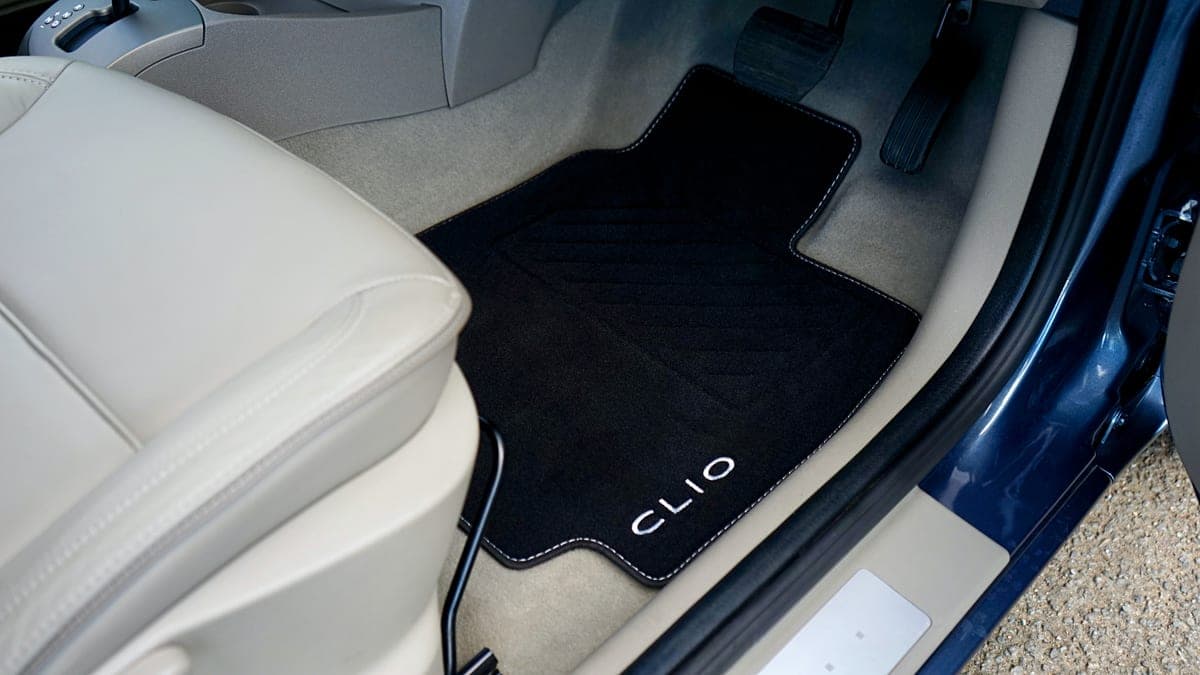
The one difference that explains all the others
An all-weather liner is a shaped tray in a thermoplastic material with raised edges. It contains. A carpet mat is a textile. It absorbs.
Everything downstream follows from that. Containment means you can pour the contents out; absorption means the water is in the fibers and stays there. Containment means a hard surface underfoot; absorption means a soft one. Containment means you can hose it; absorption means you need to extract it.
Side by side
| All-weather liner | Carpet mat | |
|---|---|---|
| Water and snow | Contained in the tray | Absorbed, then evaporates into the cabin |
| Mud and grit | Pours out | Needs vacuuming, and some stays |
| Cleaning | Pull out, hose, refit | Vacuum, and shampoo when it gets bad |
| Noise underfoot | Harder surface; a multi-layer mat is quieter | Quieter |
| Appearance | Utilitarian | Matches the interior |
| Winter | The whole argument for them | Gets saturated and stays damp |
| Typical cost | Higher | Lower |
The argument nobody makes, and it is the best one
A saturated carpet mat is a reservoir of water sitting inside a sealed cabin. That water evaporates, the humidity in the cabin rises, and it condenses on the coldest surface available — which is the inside of the windshield.
That is a substantial part of why some cars fog badly in winter and others do not. A liner that holds the water in a tray, where you can tip it out, removes the reservoir. If your windows fog every winter morning and you have wet carpet mats, those two facts are related.
When carpet is the right answer
- A dry climate and clean shoes. If nothing wet or muddy gets into the car, containment has nothing to contain and you are paying for a solution to a problem you do not have.
- A car you care about the look of. Carpet matches the interior; a rubber tray does not, and no amount of carbon-fiber texturing changes that.
- Noise sensitivity. Carpet is quieter underfoot. Multi-layer liners with a foam core close most of that gap — 3D MAXpider publishes an XPE layer specifically for sound insulation — but a textile still wins.
- Budget. Carpet mats cost a fraction of a fitted liner.
When all-weather is the right answer
- Real winters. Snow and road salt. Salt in a carpet mat is salt against the floorpan, and this is where the resale argument becomes financial rather than cosmetic.
- Children, dogs, sports, or a trade. Anything that arrives wet or muddy on a schedule.
- A leased car. Protecting the original carpet is protecting your deposit, and a liner is cheaper than a wear charge.
- A car you intend to sell. The interior is most of what a buyer looks at, and the footwell is where wear concentrates.
The answer most people actually arrive at
Both, swapped seasonally. All-weather liners from the first frost to the last, carpet for the dry months. It costs more up front and it is what people in four-season climates end up doing anyway, usually after ruining one set of carpet mats first.
If you do this, keep the set that is out of the car flat and dry rather than folded in a garage corner. A liner stored folded takes a set and never sits properly again.
One rule that applies to both
Never stack mats, and never run a universal mat in the driver footwell. A mat that can slide forward under the pedals is a hazard rather than an inconvenience, and stacking a carpet mat on top of a liner is the most common way people create exactly that.
Whichever you buy, buy it fitted to your year, make and model, and check that it engages whatever retention hooks your car has. The liner page covers what each maker publishes about how theirs stays put.
One thing this page has deliberately not settled: within the all-weather camp there is a second decision between a molded tray that climbs the footwell walls and a flat mat with channels pressed into it. That is a different axis from material, and it is the one that decides whether a tipped drink reaches your carpet — floor liner vs floor mat works through it.
Every pick, with the working
Each entry lists the specifications the maker publishes, the axis scores those specifications produce, and what you give up. Rows that read “Not published” are not omissions on our side: they are things the maker will not commit to in writing, and they cost the product points on the transparency axis. Specifications compiled September 4, 2026.
Our pickThe only mat here that publishes its layer construction
3D MAXpider Kagu Floor Liners
Three layers, each with a stated job: a thermoplastic rubber top, an XPE foam core for sound and thermal insulation, and a fibrous bottom that grips the factory carpet rather than sliding on it. Nobody else in this category publishes a construction at all, and the middle layer is the reason these are noticeably quieter underfoot than a single-piece mat.
- Construction
- Three layers
- Top layer
- Thermoplastic rubber with carbon fiber texture
- Middle layer
- Cross-linked polyethylene (XPE) for shock and sound
- Bottom layer
- MAXpider fibers that grip factory carpet
- Edges
- Raised outer edges to contain spills
- Warranty
- 3 years
- Thickness
- Not published
- Hardness
- Not published
- List price
- Not published
What it gets right
- Published three-layer construction with a stated function for each layer
- The XPE core adds genuine sound and thermal insulation, which a single-layer mat cannot
- Fibrous backing grips factory carpet without hooks, so it does not creep toward the pedals
- 3-year warranty published, the only warranty term in this category
Flaws
- 3D MAXpider publishes no thickness or hardness figure, so there is nothing to compare against WeatherTech's 3.2 mm and 62 Shore A
- The carbon-fiber-texture top layer is a styling choice you either want or do not
- No published list price; it is priced per vehicle like the rest of the category
The working behind the 8.8
- Heat headroom: not scored (weight 22%)
- The maker publishes no operating-temperature ceiling, so this axis is dropped and the other weights are re-normalized.
- Install effort: 10.0 (weight 24%)
- Drops in and sits there. No fixing of any kind, and it comes out again when you sell the car.
- Price against the ceiling: not scored (weight 24%)
- No published list price we could cite on the compile date, so this axis is dropped and the other weights are re-normalized.
- Written commitment: 9.0 (weight 15%)
- 36-month warranty. This is the only promise in the entire listing that a court would read, which is why it is scored and the marketing copy is not.
- Spec transparency: 6.7 (weight 15%)
- 6 of the 9 specifications we went looking for are published by the maker (67%). A blank row is never a guess here: it prints “Not published” and it costs the product points, because a figure nobody will commit to in writing is a figure you cannot check.
Axes with no published input are dropped and the remaining weights re-normalized, so a product is not punished for a category where an axis does not apply. Specifications compiled September 4, 2026 from 3D MAXpider Kagu published layer construction and warranty.
2Laser-measured fit without the WeatherTech price
Husky Liners WeatherBeater
Rubberized thermoplastic with Husky's ProGard formula, laser measured to the vehicle like the WeatherTech but more flexible and cheaper. Husky publishes lab-test claims of 78 percent greater durability and 30 percent lower cost against WeatherTech FloorLiner. Those are Husky's own tests on Husky's own blog, which is exactly how much weight to give them.
- Material
- Rubberized thermoplastic, ProGard formula
- Fit method
- Laser measured per year, make and model
- Maker's durability claim
- 78% more durable than WeatherTech FloorLiner
- Independent verification
- Not published
- Thickness
- Not published
- Hardness
- Not published
- List price
- Not published
What it gets right
- Laser measured per vehicle, so the fit argument is not the differentiator it used to be
- More flexible than the WeatherTech, which makes taking it out to hose it down a one-handed job
- Consistently cheaper for the same coverage
Flaws
- The 78 percent durability claim is Husky testing Husky against a competitor, published by Husky
- Husky does not publish a thickness or a durometer figure, so there is nothing to compare against WeatherTech's 3.2 mm and 62 Shore A
- More flexible also means a lower lip that holds less liquid
The working behind the 7.8
- Heat headroom: not scored (weight 22%)
- The maker publishes no operating-temperature ceiling, so this axis is dropped and the other weights are re-normalized.
- Install effort: 10.0 (weight 24%)
- Drops in and sits there. No fixing of any kind, and it comes out again when you sell the car.
- Price against the ceiling: not scored (weight 24%)
- No published list price we could cite on the compile date, so this axis is dropped and the other weights are re-normalized.
- Written commitment: not scored (weight 15%)
- No warranty term published, so this axis is dropped and the other weights are re-normalized.
- Spec transparency: 4.3 (weight 15%)
- 3 of the 7 specifications we went looking for are published by the maker (43%). A blank row is never a guess here: it prints “Not published” and it costs the product points, because a figure nobody will commit to in writing is a figure you cannot check.
Axes with no published input are dropped and the remaining weights re-normalized, so a product is not punished for a category where an axis does not apply. Specifications compiled September 4, 2026 from Husky Liners WeatherBeater product page.
Prices last verified October 19, 2026. They move constantly; the figure on Amazon when you click is the real one.
Questions people actually ask
Are all-weather mats worth the extra money?
If anything wet, muddy or salty gets into your car, yes — they contain it where carpet absorbs it, and road salt against a floorpan is the expensive version of that problem. In a dry climate the case is much weaker.
Do all-weather mats make the car noisier?
A single-layer rubber mat can. A multi-layer liner with a foam core is much closer to carpet — 3D MAXpider publishes an XPE layer specifically for sound and thermal insulation, which is one of the few functional claims in this category with a stated mechanism.
Can I put carpet mats on top of all-weather liners?
No. Stacking mats is how a mat ends up sliding forward under the pedals, which is a genuine safety hazard rather than an inconvenience. One mat, fitted to the vehicle, engaged with the retention hooks.
Do wet carpet mats cause window fogging?
They contribute. A saturated mat is a reservoir of water inside a sealed cabin, and that water evaporates and condenses on the coldest surface — the inside of the windshield. A liner that holds water in a tray you can tip out removes the reservoir.