The best door seal lubricants to stop frozen doors
Ten minutes in autumn stops the door you cannot open in February — and stops you tearing the seal off the car when you force it.
By Sawyer V. · Published · How we research
We have not tested any of this. Everything below is compiled from published manufacturer specifications, and the arithmetic is printed so you can check it. This page carries affiliate links: if you buy through one we earn a commission at no extra cost to you, and it does not change the order of the picks. Full disclosure.
The verdict
Buy SONAX GummiPfleger at around $15 if you want the job to be easy — it is the one product here made specifically for door seals, with a sponge applicator that reaches into the channel. Buy Super Lube silicone grease at around $12 if you would rather have a tube that also does the latches, hinges and window channels. Prices as of October 11, 2026.
The one rule that matters: it must be silicone. Petroleum-based grease, including the general-purpose stuff in most garages, swells and degrades the rubber it touches. A seal treated with the wrong product fails faster than one left alone — so “any lubricant” is actively bad advice here.
| # | Pick | Install | Score | Price |
|---|---|---|---|---|
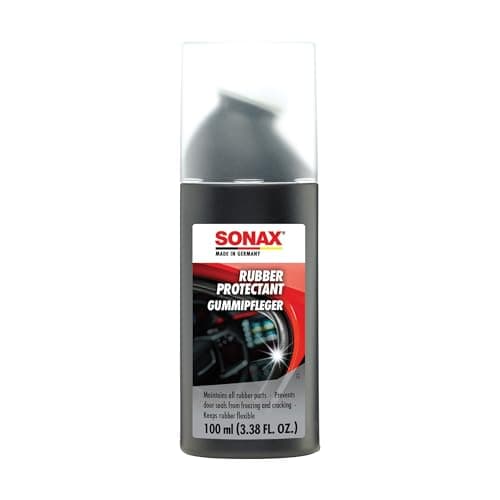
| 1 | SONAX Rubber Protectant GummiPfleger, 100 ml The purpose-made seal product, with an applicator built in | Drops in | 9.2/10 | $14.53 - view on Amazon |
| 2 | KEZE 92003 Silicone Grease with PTFE The cheapest tube that is still the right chemistry | Drops in | 8.8/10 | $8.99 - view on Amazon |
| 3 | Super Lube O-Ring Silicone Lubricant Waterproof silicone grease that also does the door locks | Drops in | 8.6/10 | $12.49 - view on Amazon |
| 4 | Car Rubber Seal Protectant and Window Track Lubricant Skip it — nothing published, dearest but one | Drops in | 8.0/10 | $17.99 - view on Amazon |
Prices last verified October 11, 2026. They move constantly; the figure on Amazon when you click is the real one.
Why a door freezes shut
The rubber weatherstrip around a door is slightly porous and it sits in a channel that collects water — from rain, from a car wash, from snow melting off your coat as you get out.
When the temperature drops, that water freezes in the gap between the rubber and the painted metal it presses against, and the two are now bonded by a thin sheet of ice. Pull hard and one of three things gives: the ice, the seal, or your temper. The seal is the expensive one — a weatherstrip torn off its retaining lip will whistle at speed and leak water for the rest of the car's life.
A silicone film fixes this by sitting between the rubber and the metal so water cannot bridge them and ice cannot bond. It also keeps the rubber supple, which is the second half of the job: an old, hardened seal both leaks and freezes more readily.
The four, on what they publish
| Product | Chemistry stated | Format | Volume | Applicator | Price |
|---|---|---|---|---|---|
| SONAX GummiPfleger | Rubber conditioner | Bottle | 100 ml | Built-in sponge | $14.53 |
| Super Lube O-Ring | Silicone | Grease | Not published | None | $12.49 |
| KEZE 92003 | Silicone with PTFE | Tube | Not published | None | $8.99 |
| Car Rubber Seal Protectant | Not stated | Spray | Not published | Not published | $17.99 |
Three of the four name their chemistry and one does not, which is why that one is the skip. Only one publishes a volume. This is a cheap category where the right answer is any competent silicone, applied before the first freeze.
Who each one is for
- SONAX GummiPfleger — if you want to do this in ten minutes once a year. Purpose-made for weatherstrip with an applicator head that gets into the channel, from a mainstream European car-care brand. Skip it if you also want to do the latches and hinges, because 100 ml of conditioner is not a general lubricant
- Super Lube — if you want one tube for every rubber and moving part. Waterproof, heat-stable silicone that handles seals, O-rings, latches and window channels. Skip it if the idea of applying grease by hand near your paint puts you off
- KEZE 92003 — the cheapest correct chemistry. Silicone with PTFE in a tube for under nine dollars. Skip it if you want to know how much you are getting, because no volume is published
- Car Rubber Seal Protectant — no. See the skip note
How to do it
- Do it in autumn, on a dry day. Before the first freeze, not after the first stuck door
- Clean the seals first with a damp cloth and let them dry. Grit embedded in the rubber is what cuts it, and you are about to lubricate over anything you leave there
- Apply a thin film to the rubber only. The goal is a barrier, not a coating — too much and it transfers onto clothing every time someone gets in
- Do every opening, not just the front doors. Rear doors, the trunk or tailgate seal, the fuel filler flap and the sunroof seal all freeze, and the fuel flap is the one that strands you at a pump
- Wipe the painted face of the shut line too. Ice bonds the rubber to the metal, so treating only one of the two surfaces does half the job
- Do the locks separately, with a lock-specific lubricant rather than a grease that attracts grit into the barrel
If the door is already frozen shut
- Try another door first. Get in, start the car, run the heater — the cabin warming will release the others in a few minutes with no force at all
- Push before you pull. Pressing the door inward breaks the ice bond along the seal without putting load on the weatherstrip
- Do not pour hot water on it. It refreezes within minutes, usually worse, and thermal shock on cold glass is a genuine risk
- Never force a frozen door hard. The seal tears before the ice gives, and the seal is the part you cannot buy for nine dollars
The rest of the autumn hour
Seal treatment is one of three jobs worth doing in the same afternoon, all cheap and all invisible until the week they pay off.
Underbody protection before the salt starts, which is the one that decides whether the car rots — best rust prevention sprays. Washer fluid that will not freeze in the lines, because the alternative is a salt-smeared windshield and nothing to clear it with — best windshield washer fluid. And an interior glass treatment, because a car that fogs is a car you drive badly — best anti-fog sprays.
The full list is in best car accessories for winter, and if the car lives outside all year the broader problem is best car accessories for no garage.
Every pick, with the working
Each entry lists the specifications the maker publishes, the axis scores those specifications produce, and what you give up. Rows that read “Not published” are not omissions on our side: they are things the maker will not commit to in writing, and they cost the product points on the transparency axis. Specifications compiled September 4, 2026.
Our pickThe purpose-made seal product, with an applicator built in
SONAX Rubber Protectant GummiPfleger, 100 ml
This is the one product here designed for exactly this job rather than adapted to it: a rubber conditioner sold specifically for door and window weatherstrip, with a sponge applicator head that reaches into the channel. Generic silicone grease works, but you will be applying it with a rag and getting it on the paint. SONAX is a mainstream European car-care brand.
- Type
- Rubber seal conditioner
- Volume
- 100 ml
- Applicator
- Built-in sponge head
- Intended surfaces
- Door and window rubber seals
- Durability
- Not published
- Warranty
- Not published
List price $14.53 per Amazon listing, October 11, 2026, captured on the compile date below. Not a live price and not what you will pay — the button is where the real number is.
What it gets right
- Purpose-made for door and window rubber seals rather than a general lubricant
- Applicator head built into the bottle, so it reaches into the seal channel
- 100 ml published, which is more than enough for every seal on a car
- An established car-care brand with a real product line
Flaws
- Dearest per milliliter in this group
- No published durability figure, so reapplication interval is guesswork
- 100 ml is a small bottle next to the grease tubes here
The working behind the 9.2
- Heat headroom: not scored (weight 22%)
- The maker publishes no operating-temperature ceiling, so this axis is dropped and the other weights are re-normalized.
- Install effort: 10.0 (weight 24%)
- Drops in and sits there. No fixing of any kind, and it comes out again when you sell the car.
- Price against the ceiling: 10.0 (weight 24%)
- Listed at $14.53 on the compile date. This site's buyer has a practical ceiling around $150 for a single upgrade, so the scale rewards everything under $100 and falls away sharply past $150. The live price is very often different, and that is what the button is for.
- Written commitment: not scored (weight 15%)
- No warranty term published, so this axis is dropped and the other weights are re-normalized.
- Spec transparency: 6.7 (weight 15%)
- 4 of the 6 specifications we went looking for are published by the maker (67%). A blank row is never a guess here: it prints “Not published” and it costs the product points, because a figure nobody will commit to in writing is a figure you cannot check.
Axes with no published input are dropped and the remaining weights re-normalized, so a product is not punished for a category where an axis does not apply. Specifications compiled September 4, 2026 from the SONAX GummiPfleger listing.
2The cheapest tube that is still the right chemistry
KEZE 92003 Silicone Grease with PTFE
Silicone grease with PTFE added, in a tube, for under nine dollars. PTFE is a dry lubricant that lowers friction further than silicone alone, which is more relevant to a sticky latch than to a door seal. It is the right family of product at the lowest price here, and the compromise is that nothing is published about quantity or longevity.
- Type
- Silicone grease with PTFE
- Format
- Tube
- Intended surfaces
- Automotive rubber, machinery
- Volume
- Not published
- Durability
- Not published
- Warranty
- Not published
List price $8.99 per Amazon listing, October 11, 2026, captured on the compile date below. Not a live price and not what you will pay — the button is where the real number is.
What it gets right
- Silicone with PTFE, published — the correct chemistry for rubber
- Cheapest product in this group
- Tube format, so it keeps and does not dry out like an open bottle
Flaws
- No published volume, so value per gram is unknowable
- An unfamiliar brand with no product page to check figures against
- A tube of grease is the fiddliest way to dress a long door seal
The working behind the 8.8
- Heat headroom: not scored (weight 22%)
- The maker publishes no operating-temperature ceiling, so this axis is dropped and the other weights are re-normalized.
- Install effort: 10.0 (weight 24%)
- Drops in and sits there. No fixing of any kind, and it comes out again when you sell the car.
- Price against the ceiling: 10.0 (weight 24%)
- Listed at $8.99 on the compile date. This site's buyer has a practical ceiling around $150 for a single upgrade, so the scale rewards everything under $100 and falls away sharply past $150. The live price is very often different, and that is what the button is for.
- Written commitment: not scored (weight 15%)
- No warranty term published, so this axis is dropped and the other weights are re-normalized.
- Spec transparency: 5.0 (weight 15%)
- 3 of the 6 specifications we went looking for are published by the maker (50%). A blank row is never a guess here: it prints “Not published” and it costs the product points, because a figure nobody will commit to in writing is a figure you cannot check.
Axes with no published input are dropped and the remaining weights re-normalized, so a product is not punished for a category where an axis does not apply. Specifications compiled September 4, 2026 from the KEZE 92003 silicone grease listing.
3Waterproof silicone grease that also does the door locks
Super Lube O-Ring Silicone Lubricant
A waterproof, heat-stable silicone grease made for rubber seals and O-rings. It is not a car product, which is the point: it is an industrial lubricant that happens to be exactly the right chemistry for weatherstrip, and the same tube does your door latches, trunk seal and window channels. Silicone is the correct family here because petroleum grease degrades rubber.
- Type
- Silicone grease
- Published properties
- Waterproof, heat stable
- Intended surfaces
- Rubber seals and O-rings
- Applicator
- Not published
- Volume
- Not published
- Durability
- Not published
- Warranty
- Not published
List price $12.49 per Amazon listing, October 11, 2026, captured on the compile date below. Not a live price and not what you will pay — the button is where the real number is.
What it gets right
- Silicone rather than petroleum, which is the chemistry that does not attack rubber
- Published as waterproof and heat stable
- One tube covers door seals, latches, O-rings and window channels
- Cheaper than the purpose-made car product
Flaws
- A grease, so application means a rag and a careful hand near paint
- No applicator, and no published volume on the listing we checked
- Not marketed for cars, so there is no automotive durability claim
The working behind the 8.6
- Heat headroom: not scored (weight 22%)
- The maker publishes no operating-temperature ceiling, so this axis is dropped and the other weights are re-normalized.
- Install effort: 10.0 (weight 24%)
- Drops in and sits there. No fixing of any kind, and it comes out again when you sell the car.
- Price against the ceiling: 10.0 (weight 24%)
- Listed at $12.49 on the compile date. This site's buyer has a practical ceiling around $150 for a single upgrade, so the scale rewards everything under $100 and falls away sharply past $150. The live price is very often different, and that is what the button is for.
- Written commitment: not scored (weight 15%)
- No warranty term published, so this axis is dropped and the other weights are re-normalized.
- Spec transparency: 4.3 (weight 15%)
- 3 of the 7 specifications we went looking for are published by the maker (43%). A blank row is never a guess here: it prints “Not published” and it costs the product points, because a figure nobody will commit to in writing is a figure you cannot check.
Axes with no published input are dropped and the remaining weights re-normalized, so a product is not punished for a category where an axis does not apply. Specifications compiled September 4, 2026 from the Super Lube silicone O-ring lubricant listing.
4Skip it — nothing published, dearest but one
Car Rubber Seal Protectant and Window Track Lubricant
Skip this one. It never states what it is made of, and chemistry is the only thing that matters here. Two cheaper products in this group say plainly that they are silicone. Buy one of those instead.
Sold for door, window, hood and trunk seals, which is the right target, and that is the extent of what the listing commits to. No chemistry named, no volume, no durability. When the two cheaper products in this group both state what they are made of, buying the one that does not is the wrong way round.
- Intended surfaces
- Doors, windows, hoods, trunks
- Chemistry
- Not published
- Volume
- Not published
- Applicator
- Not published
- Durability
- Not published
- Warranty
- Not published
List price $17.99 per Amazon listing, October 11, 2026, captured on the compile date below. Not a live price and not what you will pay — the button is where the real number is.
What it gets right
- Names the right surfaces: doors, windows, hoods and trunks
- Sold as a protectant and conditioner rather than a plain lubricant
Flaws
- Does not state whether it is silicone-based, which is the one thing that matters
- No volume, durability or applicator detail published
- Second-dearest here while publishing the least
The working behind the 8.0
- Heat headroom: not scored (weight 22%)
- The maker publishes no operating-temperature ceiling, so this axis is dropped and the other weights are re-normalized.
- Install effort: 10.0 (weight 24%)
- Drops in and sits there. No fixing of any kind, and it comes out again when you sell the car.
- Price against the ceiling: 10.0 (weight 24%)
- Listed at $17.99 on the compile date. This site's buyer has a practical ceiling around $150 for a single upgrade, so the scale rewards everything under $100 and falls away sharply past $150. The live price is very often different, and that is what the button is for.
- Written commitment: not scored (weight 15%)
- No warranty term published, so this axis is dropped and the other weights are re-normalized.
- Spec transparency: 1.7 (weight 15%)
- 1 of the 6 specifications we went looking for are published by the maker (17%). A blank row is never a guess here: it prints “Not published” and it costs the product points, because a figure nobody will commit to in writing is a figure you cannot check.
Axes with no published input are dropped and the remaining weights re-normalized, so a product is not punished for a category where an axis does not apply. Specifications compiled September 4, 2026 from the car rubber seal protectant listing.
Prices last verified October 11, 2026. They move constantly; the figure on Amazon when you click is the real one.
Questions people actually ask
What should I use to stop my car doors freezing shut?
A silicone-based seal conditioner or silicone grease, applied as a thin film to the door rubbers in autumn before the first freeze. Silicone sits between the rubber and the metal so water cannot bridge them and ice cannot bond. Treat the painted shut line as well as the rubber.
Can I use WD-40 on car door seals?
No. WD-40 and other petroleum-based products swell rubber and then dry it, so a seal treated with them goes soft, then sticky, then cracks. Use silicone, which is chemically compatible with the rubber and costs about the same.
How do I open a car door that is frozen shut?
Try the other doors first, then start the car and let the cabin warm — the rest will release on their own. Press the door inward to break the ice bond rather than pulling. Do not pour hot water on it, and never force it hard: the weatherstrip tears before the ice gives, and a torn seal whistles and leaks permanently.
How often should I treat car door seals?
Once a year, in autumn, is enough for most cars. No product in this group publishes a durability figure, so there is no sourced interval — but a thin film applied before the first freeze and topped up mid-winter if doors start sticking covers the season.
Do I need to treat anything besides the doors?
Yes. The trunk or tailgate seal, the fuel filler flap and the sunroof seal all freeze. The fuel flap is the one people forget and it is the one that strands you at a pump in a cold snap.