The best car accessories for winter
Everything that fails in winter was already marginal in October. These are the purchases that address the failures in the order they actually happen.
By Sawyer V. · Published · How we research
We have not tested any of this. Everything below is compiled from published manufacturer specifications, and the arithmetic is printed so you can check it. This page carries affiliate links: if you buy through one we earn a commission at no extra cost to you, and it does not change the order of the picks. Full disclosure.
The short answer
Cold does not break things. It finds the things that were already marginal. In rough order of what fails first: the battery, because it delivers substantially less at 0 C than at 21 C; the glass, because summer washer fluid freezes and worn blades smear; tire pressure, which falls roughly 1 PSI per 10 F drop; and traction, which is the one most people buy for and the last one that actually bites.
| # | Pick | Install | Score | Price |
|---|---|---|---|---|
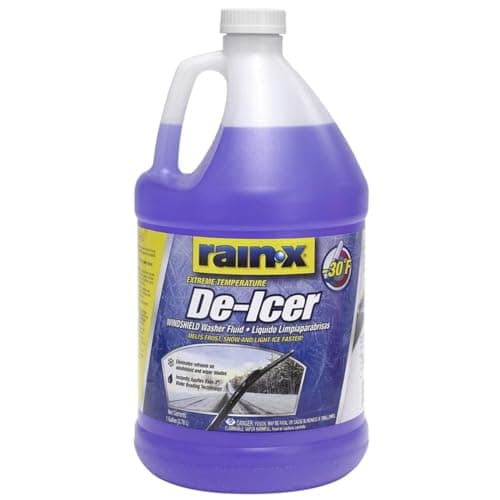
| 1 | Rain-X De-Icer Windshield Washer Fluid A windshield that freezes overnight | Drops in | 9.5/10 | $18.99 - view on Amazon |
| 2 | NOCO GENIUS5 Battery Charger A car that sits, or a battery that keeps going flat | Plugs in | 9.2/10 | $39.95 - view on Amazon |
| 3 | AutoSock Textile Snow Socks A car with no wheel-well clearance for chains | Drops in | 9.0/10 | $274.95 - view on Amazon |
| 4 | Anker Bolder LC90 Flashlight A light that is not your phone | Drops in | 8.8/10 | Check price on Amazon |
| 5 | Bosch ICON Beam Wiper Blade A windshield that ices up | Clips on | 7.4/10 | $52.45 - view on Amazon |
Prices last verified October 26, 2026. They move constantly; the figure on Amazon when you click is the real one.
1. The battery, which fails first
Almost every winter no-start is a battery that was already weak in autumn. Cold reduces the current a battery can deliver and thickens the oil the starter is turning against, so demand rises exactly as supply falls.
Two purchases address this and they do different jobs:
- A tester tells you whether the battery is worn, and whether the charging system is the actual fault. Do this in October, not in January — best car battery testers
- A maintenance charger puts back what short winter trips do not. Cranking takes a lot out and a ten-minute commute in the dark with the lights, heater and heated rear window running does not replace it — best car battery chargers
A jump pack is the fallback rather than the fix, and it needs charging every few months or it is flat when you need it — best portable jump starters.
2. Glass, which fails most often
The daily winter failure is not dramatic. It is not being able to see, repeatedly, on every dark wet commute. Three things fix it and they are all cheap: fluid with a published freeze point, fresh blades, and a brush long enough to reach the roof.
| What | Published figure | Why it matters in cold |
|---|---|---|
| Winter washer fluid | -30 F / -25 F freeze point | Summer fluid freezes in the lines |
| Beam wiper blades | Bracketless construction | No frame for ice to pack into |
| Glass treatment | Apply above 40 F | Must be done before the season |
Washer fluid is the cheapest and most neglected. Rain-X publishes actual freeze points — -30 F on the extreme formula and -25 F on the heavy duty — rather than a season name, and it must be used undiluted because topping up over summer fluid dilutes the protection by an amount you cannot know.
Blades are the second. A framed blade has joints for snow and ice to pack into, which jacks the blade off the glass and leaves a smeared band. A bracketless beam has nothing to pack into — that is the functional argument rather than a premium one — best windshield wipers.
A glass treatment helps most at night in heavy rain, and it has a timing constraint: Rain-X publishes an application floor of 40 F, so it has to go on before the weather you want it for — best rain repellents for glass.
And the inside of the glass matters as much as the outside. Windows that fog take longer to clear when the cabin filter is blocked, because it sits directly in the demist airflow path — how to defog your windshield and best cabin air filters.
3. Pressure, which nobody checks
Tire pressure falls roughly 1 PSI for every 10 F drop in temperature. A tire set correctly in September is measurably low by December without losing any air at all.
Underinflated tires in winter are worse at everything that matters: braking distance, wet grip and the ability of the tire to do anything useful in snow. And they are the starting condition most people are in before any traction device gets fitted.
A gauge is the accurate tool — AstroAI publishes plus or minus 1 PSI, a stated accuracy figure almost nothing in that category offers — best tire pressure gauges. An inflator is the thing that lets you act on the reading without finding a garage in the cold — best tire inflators.
Check them cold, before driving. A tire warmed by ten minutes of driving reads higher than it is.
4. Traction, which is the last question
Traction devices come last in this list deliberately. They are the purchase people make first and the one that applies on the fewest days.
Two things decide it and neither is performance:
- The law where you drive. Some jurisdictions accept SAE-certified textile socks as a chain alternative and some specifically require metal chains. Check before buying — this is general information, not legal advice
- Wheel-well clearance. Chains need real clearance between tire and strut, and plenty of modern cars with wide tires in tight arches do not have it. Many owner's manuals state chains are not permitted at all, which is a clearance statement rather than a suggestion
Both socks and chains carry a speed ceiling around 25 to 30 mph, which is structural rather than advisory — best snow socks and tire chains.
The honest headline: proper winter tires outperform any traction device fitted to summer tires, and they do it for the whole season. Winter compounds stay flexible below about 7 C, where summer rubber hardens and loses grip long before there is snow on the road. If you drive all winter in it, tires first.
5. The kit for when it goes wrong anyway
Winter breakdowns are more dangerous than summer ones for reasons that have nothing to do with the car: it is dark, it is cold, and you are much harder to see.
- A flashlight, hands-free. Anker publishes 900 lumens and IPX5 for the Bolder LC90 — best flashlights for a car
- Warning triangles, built to FMVSS 571.125 and needing no battery that can be flat — best warning triangles and road flares
- A charged power bank. A phone is the critical item in a breakdown and cold shortens its battery — best power banks for car travel
- Warm layers and a blanket in the cabin, not the trunk, so you can reach them without getting out
The full seasonal list, including the two things not to do, is in what to keep in your car in winter, and the procedure when it happens is in what to do if your car breaks down.
Do it in October
Almost everything on this page is cheaper, easier and more effective done before the weather arrives.
The battery test tells you something actionable while there is still time to act. The glass treatment needs 40 F to go on. The pressures need setting before the temperature drops rather than after. And the traction devices need practicing once in a dry driveway, because reading instructions for the first time in the dark with cold hands is how a three-minute job becomes twenty.
The summer equivalent of this list, for the other end of the year, is in best car accessories for summer.
Every pick, with the working
Each entry lists the specifications the maker publishes, the axis scores those specifications produce, and what you give up. Rows that read “Not published” are not omissions on our side: they are things the maker will not commit to in writing, and they cost the product points on the transparency axis. Specifications compiled September 4, 2026.
Our pickA windshield that freezes overnight
Rain-X De-Icer Windshield Washer Fluid
Publishes an actual freeze point rather than a season name, which is the entire point of buying winter fluid. The -30 F formula is the one to buy if your winter genuinely gets there; anything labeled only 'all season' is a guess.
- Freeze protection
- -30 F (extreme) / -25 F (heavy duty)
- Boiling point
- 186 F (on the -25 F formula)
- Flash point
- 84 F (on the -25 F formula)
- Maximum pH
- 8.5
- Dilution
- Use undiluted
- Extra function
- Water-beading treatment, anti-refreeze
- List price
- Not published
What it gets right
- Publishes a freeze protection figure in degrees — -30 F on the extreme formula, -25 F on the heavy duty
- Also publishes boiling point, flash point and pH on the technical data, which almost no consumer fluid does
- Prevents refreeze on the glass and the wiper blades, which is where summer fluid fails badly
- Applies water-beading treatment as it cleans
Flaws
- Must be used undiluted — topping up over summer fluid dilutes the freeze protection and you will not know by how much
- A winter fluid in a summer climate is money spent on protection you never use
- Fluid does not fix worn wiper blades, which is more often the real cause of poor visibility
The working behind the 9.5
- Heat headroom: not scored (weight 22%)
- The maker publishes no operating-temperature ceiling, so this axis is dropped and the other weights are re-normalized.
- Install effort: 10.0 (weight 24%)
- Drops in and sits there. No fixing of any kind, and it comes out again when you sell the car.
- Price against the ceiling: not scored (weight 24%)
- No published list price we could cite on the compile date, so this axis is dropped and the other weights are re-normalized.
- Written commitment: not scored (weight 15%)
- No warranty term published, so this axis is dropped and the other weights are re-normalized.
- Spec transparency: 8.6 (weight 15%)
- 6 of the 7 specifications we went looking for are published by the maker (86%). A blank row is never a guess here: it prints “Not published” and it costs the product points, because a figure nobody will commit to in writing is a figure you cannot check.
Axes with no published input are dropped and the remaining weights re-normalized, so a product is not punished for a category where an axis does not apply. Specifications compiled September 4, 2026 from Rain-X De-Icer published specifications.
2A car that sits, or a battery that keeps going flat
NOCO GENIUS5 Battery Charger
Publishes what almost nothing in this category does: the chemistries it supports by name, the capacity ceiling, and the fact that it has a thermal sensor adjusting charge to ambient temperature. Seven modes including a repair mode and a force mode for a battery at 0 V.
- Output
- 5 A
- Voltages
- 6 V and 12 V
- Chemistries
- Wet, gel, MF, CA, EFB, AGM, lithium
- Capacity ceiling
- Up to 120 Ah
- Modes
- 7 — Standby, 12V, 12V AGM, 12V Lithium, 6V, Repair, Force
- Thermal compensation
- Integrated thermal sensor
- Minimum start voltage
- 1 V (0 V in Force mode)
- Warranty
- Not published
- List price
- Not published
What it gets right
- Publishes supported chemistries by name — wet, gel, MF, CA, EFB, AGM and lithium — rather than 'all battery types'
- Publishes a capacity ceiling of 120 Ah, so you can check it against your battery
- Integrated thermal sensor adjusts charging to ambient temperature, which prevents overcharging in heat
- Charges from as low as 1 V, with a force mode for a battery that has gone fully to 0 V
- 6 V and 12 V, which covers motorcycles and older vehicles as well as cars
Flaws
- 5 A is a maintainer and a slow charger, not a fast one. A deeply flat large battery takes many hours
- Force mode bypasses the safety detection that stops it charging a dead battery, and a battery that dead may be scrap
- It is a garage tool that needs mains power — it does nothing at the roadside
- No published warranty term
The working behind the 9.2
- Heat headroom: not scored (weight 22%)
- The maker publishes no operating-temperature ceiling, so this axis is dropped and the other weights are re-normalized.
- Install effort: 10.0 (weight 24%)
- Plugs into a 12V socket or a USB port. Nothing to mount, nothing to route, reversible in a second.
- Price against the ceiling: not scored (weight 24%)
- No published list price we could cite on the compile date, so this axis is dropped and the other weights are re-normalized.
- Written commitment: not scored (weight 15%)
- No warranty term published, so this axis is dropped and the other weights are re-normalized.
- Spec transparency: 7.8 (weight 15%)
- 7 of the 9 specifications we went looking for are published by the maker (78%). A blank row is never a guess here: it prints “Not published” and it costs the product points, because a figure nobody will commit to in writing is a figure you cannot check.
Axes with no published input are dropped and the remaining weights re-normalized, so a product is not punished for a category where an axis does not apply. Specifications compiled September 4, 2026 from NOCO GENIUS5 published specifications.
3A car with no wheel-well clearance for chains
AutoSock Textile Snow Socks
Skip this one. Skip it unless you actually meet snow. Traction devices are for a handful of days a year or one mountain route, and they carry a legal question — some jurisdictions accept textile socks as a chain alternative and some require metal chains. If you drive all winter in snow, proper winter tires outperform any device fitted to summer rubber and do it without you kneeling at the roadside.
A textile traction device that fits where chains physically cannot. It states a three-minute fitting time and the same 25 to 30 mph speed ceiling chains carry, and it is accepted as a chain alternative in many jurisdictions — but not all, which is the thing to check first.
- Type
- Textile traction device
- Fitting time
- Stated 3 minutes
- Speed limit
- 25-30 mph
- Clearance needed
- Minimal — fits low-clearance vehicles
- Rim damage
- Stated damage-free to alloy rims
- Legal as chain substitute
- Varies by jurisdiction — check locally
- Warranty
- Not published
- List price
- Not published
What it gets right
- Fits vehicles with limited wheel-well clearance, where chains simply do not go
- Textile rather than metal, so it does not damage alloy rims
- Stated three-minute fitting, which matters when you are doing it on a shoulder in weather
- Stated to meet the performance, safety and durability requirements of snow chain standards
Flaws
- Chain-control regulations vary: some jurisdictions accept SAE-certified socks as a chain alternative and some require actual chains. Check before you rely on it
- Same 25 to 30 mph ceiling as chains — this is a get-through device, not a way to drive normally
- Textile wears fast on bare pavement. Take them off as soon as the road clears
- No published warranty term
The working behind the 9.0
- Heat headroom: not scored (weight 22%)
- The maker publishes no operating-temperature ceiling, so this axis is dropped and the other weights are re-normalized.
- Install effort: 10.0 (weight 24%)
- Drops in and sits there. No fixing of any kind, and it comes out again when you sell the car.
- Price against the ceiling: not scored (weight 24%)
- No published list price we could cite on the compile date, so this axis is dropped and the other weights are re-normalized.
- Written commitment: not scored (weight 15%)
- No warranty term published, so this axis is dropped and the other weights are re-normalized.
- Spec transparency: 7.5 (weight 15%)
- 6 of the 8 specifications we went looking for are published by the maker (75%). A blank row is never a guess here: it prints “Not published” and it costs the product points, because a figure nobody will commit to in writing is a figure you cannot check.
Axes with no published input are dropped and the remaining weights re-normalized, so a product is not punished for a category where an axis does not apply. Specifications compiled September 4, 2026 from AutoSock published fitting time, standards and speed limit.
4A light that is not your phone
Anker Bolder LC90 Flashlight
900 lumens from a CREE LED, a published 6-hour runtime, IPX5 water resistance and five modes including strobe and SOS, on a rechargeable 18650. Using a phone as a flashlight at the roadside drains the one device you need to call for help, which is the entire argument for keeping a real one in the car.
- Output
- 900 lumens, CREE LED
- Runtime
- Up to 6 hours
- Ingress rating
- IPX5
- Modes
- High, medium, low, strobe, SOS
- Beam
- Zoomable
- Battery
- Rechargeable 18650, included
- Stated beam distance
- Over 660 ft
- Operating range
- Not published
What it gets right
- Published lumens (900), runtime (6 h) and ingress rating (IPX5) — all three, which is rare at this price
- Rechargeable 18650 included, so there is no scramble for AAs
- Zoomable from flood to spot, which covers both 'find the dropped bolt' and 'signal from the shoulder'
- SOS and strobe modes, which are exactly the modes a roadside light needs
Flaws
- IPX5 is rain resistance, not submersion. Fine for a breakdown, not for dropping in a puddle
- A lithium cell in a hot trunk self-discharges, so it needs charging on a schedule like the jump starter does
- 900 lumens on high for 6 hours is not the same as 900 lumens for 6 hours; brightness steps down between modes
The working behind the 8.8
- Heat headroom: not scored (weight 22%)
- The maker publishes no operating-temperature ceiling, so this axis is dropped and the other weights are re-normalized.
- Install effort: 10.0 (weight 24%)
- Drops in and sits there. No fixing of any kind, and it comes out again when you sell the car.
- Price against the ceiling: not scored (weight 24%)
- No published list price we could cite on the compile date, so this axis is dropped and the other weights are re-normalized.
- Written commitment: 7.0 (weight 15%)
- 18-month warranty. This is the only promise in the entire listing that a court would read, which is why it is scored and the marketing copy is not.
- Spec transparency: 8.8 (weight 15%)
- 7 of the 8 specifications we went looking for are published by the maker (88%). A blank row is never a guess here: it prints “Not published” and it costs the product points, because a figure nobody will commit to in writing is a figure you cannot check.
Axes with no published input are dropped and the remaining weights re-normalized, so a product is not punished for a category where an axis does not apply. Specifications compiled September 4, 2026 from Anker Bolder LC90 published specifications.
5A windshield that ices up
Bosch ICON Beam Wiper Blade
A bracketless beam blade with a published warranty term, which most wiper blades do not carry. The bracketless design is the functional point: no metal frame means nothing for ice to pack into and jack the blade off the glass.
- Construction
- Bracketless beam, no joints or hinges
- Tension
- Dual steel springs, tension spring arcing
- Rubber
- FX dual rubber, stated heat and ozone resistant
- Warranty
- 12 months
- Rated life
- Not published
- List price
- Not published
What it gets right
- Bracketless beam construction — no joints or hinges for ice and snow to build up in, which is why framed blades lift in winter
- Tension spring arcing applies pressure along the whole blade rather than at a few contact points
- Published 12-month warranty, which is rare on a wear item in this category
- FX dual rubber stated to resist heat and ozone deterioration, the two things that harden a wiper
Flaws
- The 'up to 40% longer life' figure is Bosch's own comparative claim, not an independent test
- Beam blades cost noticeably more than framed blades that clear glass adequately in mild climates
- Blade life is not published in months or wipes, only as a relative claim
- Sold singly on many listings, so a pair is two purchases
The working behind the 7.4
- Heat headroom: not scored (weight 22%)
- The maker publishes no operating-temperature ceiling, so this axis is dropped and the other weights are re-normalized.
- Install effort: 9.0 (weight 24%)
- Clips onto a vent blade or a headrest post. Two minutes, no tools, no adhesive, no residue.
- Price against the ceiling: not scored (weight 24%)
- No published list price we could cite on the compile date, so this axis is dropped and the other weights are re-normalized.
- Written commitment: 5.5 (weight 15%)
- 12-month warranty. This is the only promise in the entire listing that a court would read, which is why it is scored and the marketing copy is not.
- Spec transparency: 6.7 (weight 15%)
- 4 of the 6 specifications we went looking for are published by the maker (67%). A blank row is never a guess here: it prints “Not published” and it costs the product points, because a figure nobody will commit to in writing is a figure you cannot check.
Axes with no published input are dropped and the remaining weights re-normalized, so a product is not punished for a category where an axis does not apply. Specifications compiled September 4, 2026 from Bosch ICON published construction and warranty.
Prices last verified October 26, 2026. They move constantly; the figure on Amazon when you click is the real one.
Questions people actually ask
What should I buy first for winter driving?
Test the battery, then sort the glass. Those two account for most winter failures — a battery that was already marginal, and the inability to see through a windshield with summer fluid and worn blades. Traction devices come later and apply on far fewer days.
Why does my tire pressure drop in winter?
Air contracts as it cools. Pressure falls roughly 1 PSI for every 10 F drop, so a tire set correctly in September is measurably low by December without losing any air. Check cold, before driving.
Are snow socks as good as chains?
Chains are better in deep snow and universally accepted in chain control; socks fit cars chains cannot and go on far faster. Some jurisdictions require actual chains, so check the rules for the roads you drive. Both carry the same 25-30 mph ceiling.
Do I need special washer fluid for winter?
Yes. Summer fluid freezes in the lines and on the blades, which is the failure that leaves you unable to clear salt spray. Rain-X publishes actual freeze points — -30 F and -25 F — and it must be used undiluted to reach them.