Seat cushion vs lumbar support
They address different problems and get bought interchangeably. A cushion changes what your pelvis does. A lumbar support fills a gap. Only one of those is your issue.
By Sawyer V. · Published · How we research
We have not tested any of this. Everything below is compiled from published manufacturer specifications, and the arithmetic is printed so you can check it. This page carries affiliate links: if you buy through one we earn a commission at no extra cost to you, and it does not change the order of the picks. Full disclosure.
The decision
Try the free adjustment first, then buy for where the problem starts. If you feel like you are sitting in a bucket with your knees higher than your hips, that is a seat base angle problem and a cushion addresses it. If your lower back feels unsupported against a seat that curves away behind you, that is a gap and a lumbar support fills it. Before either, spend ten minutes on your seat setup — many cars have height and tilt adjustments people never touch.
| # | Pick | Install | Score | Price |
|---|---|---|---|---|
| 1 | Everlasting Comfort Lumbar Support Pillow Filling the gap your seat leaves | Drops in | 9.5/10 | $39.99 - view on Amazon |
| 2 | ComfiLife Gel Enhanced Seat Cushion The standard answer for a long drive | Drops in | 9.3/10 | $41.36 - view on Amazon |
| 3 | Purple Simply Seat Cushion Lift without losing headroom | Drops in | 9.2/10 | $99.00 - view on Amazon |
| 4 | LoveHome Memory Foam Lumbar Support A cooler back on a long drive | Drops in | 8.8/10 | $20.99 - view on Amazon |
Prices last verified October 22, 2026. They move constantly; the figure on Amazon when you click is the real one.
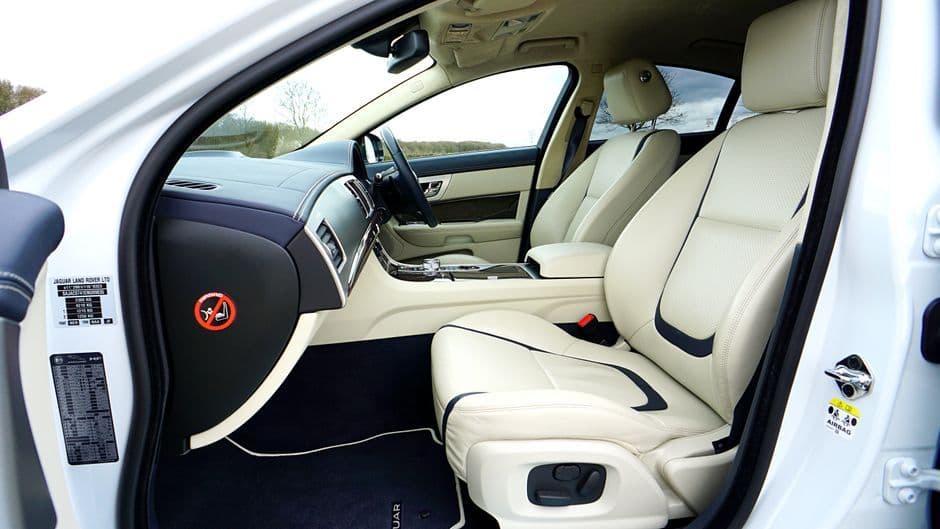
The adjustment that costs nothing
A surprising number of people buy a cushion for a problem their seat can already fix. Most cars have more adjustment than the driver has ever used, and the two least-used controls are exactly the ones relevant here.
- Seat height. Raising the seat changes your hip-to-knee angle directly, which is the same variable a wedge cushion manipulates
- Cushion tilt. Many seats tilt the front of the base independently. This is precisely what a wedge cushion does, built in and free
- Built-in lumbar adjustment. Common on more cars than people realize — sometimes a dial on the seat side, sometimes a lever, sometimes electric
- Backrest angle. Too reclined and you lose contact with the lumbar area entirely, which creates the gap a support then fills
Work through the whole setup before buying anything — the order that makes sense is in how to set up your driving position. If the seat can do it, the seat is a better solution than an accessory sitting on top of it.
What a seat cushion does
If you have already decided it is a cushion you need, the ComfiLife review goes through the one published line that decides whether it suits a car seat at all.
A cushion sits on the seat base and changes two things: how firm the surface is, and — if it is wedge-shaped — the angle of your pelvis.
The angle is the interesting part. Many car seats have a base that slopes backward, so your knees end up higher than your hips. That rotates the pelvis backward, which flattens the lower spine's natural curve, and that is the sensation people describe as sinking into a bucket.
A wedge cushion is thicker at the back than the front, which tilts the seating surface forward and rotates the pelvis back toward neutral. It is a geometry fix, not a padding fix, which is why a flat pad of foam often does not help.
The other reason to buy one is a seat whose foam has simply collapsed with age. That is a different problem — you are restoring thickness rather than changing angle — and any firm cushion addresses it. See best seat cushions for long drives.
What a lumbar support does
A lumbar support sits behind your lower back and fills the space between you and the seat back. Car seats are frequently flat or even concave through the lumbar region, and a person sitting in one has an air gap behind the small of their back.
With nothing filling that gap, the lower back has no support and the muscles do the work instead, which is fine for ten minutes and tiring over three hours. A support fills the gap so the seat holds the shape rather than your muscles.
Position matters more than product here. A support sitting too high acts on your mid-back rather than your lumbar region and pushes your shoulders forward, which is worse than nothing. Most people fit them too high on the first attempt — see best lumbar supports.
Working out which you need
| What you feel | Likely cause | Product |
|---|---|---|
| Knees higher than hips, sinking | Seat base slopes backward | Wedge cushion |
| Sitting on a hard board | Seat foam has collapsed | Any firm cushion |
| Gap behind the small of your back | Flat seat back | Lumbar support |
| Ache starts low and spreads up | Often pelvic angle | Cushion first |
| Ache between the shoulder blades | Often backrest angle or reach | Neither — adjust the seat |
| Numbness in the thighs | Seat edge pressure | Cushion, and check seat height |
The pattern worth noting: discomfort that starts low and works upward usually traces to the pelvis, which means the cushion. Discomfort concentrated in the small of the back with a clear sense of unsupported space means the lumbar support.
Using both, and why it can backfire
You can use both, and plenty of people do. There is one interaction to watch for.
A cushion raises you, and raising yourself changes where your lower back meets the seat back — which means a lumbar support that was correctly positioned before is now too low relative to you. Fit the cushion first, sit in it, and only then position the support.
A cushion also reduces headroom and changes your relationship to the steering wheel and pedals. On a car where you were already close to the roof, or where you had the seat at its lowest for a reason, that matters. Re-check your mirrors after adding either one.
Materials, briefly
Memory foam conforms and holds shape, and it gets warm — which in a car in summer is a real consideration on a surface you are pressed against. Gel-topped versions exist partly for this reason.
Firmness matters more than material. A cushion that compresses fully under your weight has stopped changing any geometry and is just a layer of fabric. If it flattens out, it is too soft for you regardless of what it is made of.
Heat is the reason to think about this at all in a car. If the seat surface is your complaint rather than the geometry, a ventilated cushion addresses a different problem entirely — best cooling seat cushions — and if the issue is fatigue on long drives rather than posture, how to reduce driver fatigue is the more useful page.
A third option exists and belongs last rather than first: a massage cushion treats the symptom rather than the seating geometry. If you do go that way, the vibration units are the ones designed for a driver's seat and the published heat and shut-off figures are what to compare — best massage seat cushions.
A third contact point sits between the two and costs almost nothing to fix: the console armrest, where thickness is the only published specification and the fix is often the seat setting rather than the pad — best car armrest cushions.
Every pick, with the working
Each entry lists the specifications the maker publishes, the axis scores those specifications produce, and what you give up. Rows that read “Not published” are not omissions on our side: they are things the maker will not commit to in writing, and they cost the product points on the transparency axis. Specifications compiled September 4, 2026.
Our pickFilling the gap your seat leaves
Everlasting Comfort Lumbar Support Pillow
High-density memory foam on a dual-strap harness, and the only support in this category to cite named third-party standards: Everlasting Comfort states the foam is CertiPUR-US certified and the covers are OEKO-TEX certified, under a published lifetime replacement-or-money-back guarantee. What it does not publish, anywhere on its own product page, is a single dimension — and depth is the one figure that decides whether a lumbar support fits you.
- Depth (the fit figure)
- 3.5 in per the listing; the maker publishes none
- Dimensions
- 13 x 3.5 in per the listing; its 0.1 in height is not credible
- Weight
- 1.5 lb per the listing; the maker publishes none
- Material
- High-density memory foam, CertiPUR-US certified
- Cover
- Removable and breathable; the maker does not name the material
- Attachment
- Dual adjustable straps with extension pieces, removable
- Fits seats up to
- 32 in wide, per the listing
- Certifications
- CertiPUR-US foam, OEKO-TEX covers
- Warranty
- Lifetime replacement or money back, published
- Foam density figure
- Not published
- Maker-published dimensions
- Not published
List price $39.99 per Everlasting Comfort's own store, sale price (regular $44.95), captured on the compile date below. Not a live price and not what you will pay — the button is where the real number is.
What it gets right
- CertiPUR-US certified foam and OEKO-TEX certified covers, both stated by the maker — named external standards are rare anywhere in car accessories
- Lifetime replacement-or-money-back guarantee published, plus a stated lifetime warranty against defects on non-electronic products
- Dual adjustable straps with extension pieces rather than one, which is what stops it walking down the seat back
- Removable, breathable cover, and the listing fits it to seats up to 32 in wide
Flaws
- Everlasting Comfort's own product page publishes no dimensions at all — not length, width, depth or weight
- The depth figure therefore comes from the retail listing, and the listing's own dimension set includes a 0.1 in height that cannot be right
- Marketed first as an office chair cushion; car use is one application among several and no car-specific testing is claimed
- No foam density figure published, so CertiPUR-US tells you what the foam is not made of rather than how firm it is
The working behind the 9.5
- Heat headroom: not scored (weight 22%)
- The maker publishes no operating-temperature ceiling, so this axis is dropped and the other weights are re-normalized.
- Install effort: 10.0 (weight 24%)
- Drops in and sits there. No fixing of any kind, and it comes out again when you sell the car.
- Price against the ceiling: 9.5 (weight 24%)
- Listed at $39.99 on the compile date. This site's buyer has a practical ceiling around $150 for a single upgrade, so the scale rewards everything under $100 and falls away sharply past $150. The live price is very often different, and that is what the button is for.
- Written commitment: 10.0 (weight 15%)
- 1200-month warranty. This is the only promise in the entire listing that a court would read, which is why it is scored and the marketing copy is not.
- Spec transparency: 8.2 (weight 15%)
- 9 of the 11 specifications we went looking for are published by the maker (82%). A blank row is never a guess here: it prints “Not published” and it costs the product points, because a figure nobody will commit to in writing is a figure you cannot check.
Axes with no published input are dropped and the remaining weights re-normalized, so a product is not punished for a category where an axis does not apply. Specifications compiled September 4, 2026 from the Everlasting Comfort retail listing (the maker's own page publishes no dimensions).
2The standard answer for a long drive
ComfiLife Gel Enhanced Seat Cushion
17.5 by 13.7 by 2.8 inches of high-density memory foam with a gel layer on top, a non-slip rubber base and a washable cover. The published geometry is what matters here: 2.8 inches is enough lift to change your hip angle and not so much that your head moves toward the headliner in a low car. Measure your seat-to-roof clearance before you buy.
- Dimensions
- 17.5 L x 13.7 W x 2.8 H in
- Weight
- 1.45 lb
- Core material
- High-density memory foam
- Top layer
- Cooling gel
- Base
- Non-slip rubber
- Cover
- Machine-washable zippered velour, OEKO-TEX certified
- Foam density figure
- Not published
- Warranty
- Lifetime money back or replacement, stated
List price $59.94 per ComfiLife's own store, captured on the compile date below. Not a live price and not what you will pay — the button is where the real number is.
What it gets right
- Published dimensions, which most cushions in this category do not give you
- 2.8 in of lift changes the hip angle without wrecking your seating position
- Non-slip rubber base, so it stays where you put it when you get in
- Cover comes off and goes in the machine, which after one summer matters
Flaws
- 2.8 in of lift is a real change to your relationship with the roof, the mirrors and the belt path
- ComfiLife does not publish a foam density figure, only the words high density
- $59.94 list is a lot for foam
The working behind the 9.3
- Heat headroom: not scored (weight 22%)
- The maker publishes no operating-temperature ceiling, so this axis is dropped and the other weights are re-normalized.
- Install effort: 10.0 (weight 24%)
- Drops in and sits there. No fixing of any kind, and it comes out again when you sell the car.
- Price against the ceiling: 9.0 (weight 24%)
- Listed at $59.94 on the compile date. This site's buyer has a practical ceiling around $150 for a single upgrade, so the scale rewards everything under $100 and falls away sharply past $150. The live price is very often different, and that is what the button is for.
- Written commitment: not scored (weight 15%)
- No warranty term published, so this axis is dropped and the other weights are re-normalized.
- Spec transparency: 8.8 (weight 15%)
- 7 of the 8 specifications we went looking for are published by the maker (88%). A blank row is never a guess here: it prints “Not published” and it costs the product points, because a figure nobody will commit to in writing is a figure you cannot check.
Axes with no published input are dropped and the remaining weights re-normalized, so a product is not punished for a category where an axis does not apply. Specifications compiled September 4, 2026 from ComfiLife's Gel Enhanced Seat Cushion page.
3Lift without losing headroom
Purple Simply Seat Cushion
Only 1.25 inches thick, which is the entire argument for it. It is a hyperelastic polymer grid rather than foam, so it distributes weight by buckling under the loaded areas instead of compressing everywhere, and it does that in a third of the height a memory-foam cushion needs. In a low car that is the difference between a cushion you can use and one you cannot.
- Dimensions
- 17.5 x 15.75 x 1.25 in
- Weight
- 4 lb
- Core material
- 100% GelFlex hyperelastic polymer grid
- Ventilation
- Air channels through the grid
- Thermal behavior
- Described as temperature neutral
- Base
- No-slip
- Cover
- Machine washable cold, tumble dry low
- List price
- Not published
- Warranty
- Not published
What it gets right
- 1.25 in thick — a third of the lift of a typical foam cushion, so headroom, mirrors and belt path barely change
- GelFlex grid with air channels, so it does not trap heat the way a solid foam block does
- Purple describes it as temperature neutral, which is a real distinction from memory foam that stiffens when cold
- Grippy base and a washable cover
Flaws
- 1.25 in of lift is much less pelvic tilt than a thicker cushion; if lift is what you need, this is the wrong one
- 4 lb — noticeably heavier than a foam cushion of the same footprint
- Purple does not publish a list price on its own car-cushion page
The working behind the 9.2
- Heat headroom: not scored (weight 22%)
- The maker publishes no operating-temperature ceiling, so this axis is dropped and the other weights are re-normalized.
- Install effort: 10.0 (weight 24%)
- Drops in and sits there. No fixing of any kind, and it comes out again when you sell the car.
- Price against the ceiling: not scored (weight 24%)
- No published list price we could cite on the compile date, so this axis is dropped and the other weights are re-normalized.
- Written commitment: not scored (weight 15%)
- No warranty term published, so this axis is dropped and the other weights are re-normalized.
- Spec transparency: 7.8 (weight 15%)
- 7 of the 9 specifications we went looking for are published by the maker (78%). A blank row is never a guess here: it prints “Not published” and it costs the product points, because a figure nobody will commit to in writing is a figure you cannot check.
Axes with no published input are dropped and the remaining weights re-normalized, so a product is not punished for a category where an axis does not apply. Specifications compiled September 4, 2026 from Purple Simply Seat Cushion published specifications.
4A cooler back on a long drive
LoveHome Memory Foam Lumbar Support
Skip this one. If you need to know the depth before buying — and with a lumbar support you really do, because a pillow deeper than your gap pushes you forward instead of supporting you — buy the one that publishes it. Everlasting Comfort states 4.1 inches.
Memory foam behind a 3D ventilative mesh cover, on two adjustable straps. The mesh is the reason to pick it over a fabric-covered support: a foam block against your lower back for an hour is a hot foam block against your lower back, and mesh is the only feature in this category that addresses it.
- Material
- Memory foam
- Cover
- 3D ventilative mesh
- Attachment
- Two adjustable straps
- Fit
- Stated universal fit for major car seats
- Dimensions
- Not published
- Foam density figure
- Not published
- Warranty
- Not published
List price $29.99 per Amazon listing, lowest published price at compile, captured on the compile date below. Not a live price and not what you will pay — the button is where the real number is.
What it gets right
- 3D mesh cover, which moves air where a fabric cover traps it
- Two adjustable straps rather than one, which is what stops it walking down the seat back
- Described as a universal fit for major car seats
- Around $30, cheaper than most of this category
Flaws
- LoveHome publishes no consistent product dimensions across its listings, so you cannot check the depth against your own lumbar gap before buying
- No published foam density
- Memory foam is firmer on a cold morning than it is in August, mesh cover or not
The working behind the 8.8
- Heat headroom: not scored (weight 22%)
- The maker publishes no operating-temperature ceiling, so this axis is dropped and the other weights are re-normalized.
- Install effort: 10.0 (weight 24%)
- Drops in and sits there. No fixing of any kind, and it comes out again when you sell the car.
- Price against the ceiling: 9.5 (weight 24%)
- Listed at $29.99 on the compile date. This site's buyer has a practical ceiling around $150 for a single upgrade, so the scale rewards everything under $100 and falls away sharply past $150. The live price is very often different, and that is what the button is for.
- Written commitment: not scored (weight 15%)
- No warranty term published, so this axis is dropped and the other weights are re-normalized.
- Spec transparency: 5.7 (weight 15%)
- 4 of the 7 specifications we went looking for are published by the maker (57%). A blank row is never a guess here: it prints “Not published” and it costs the product points, because a figure nobody will commit to in writing is a figure you cannot check.
Axes with no published input are dropped and the remaining weights re-normalized, so a product is not punished for a category where an axis does not apply. Specifications compiled September 4, 2026 from LoveHome car lumbar support published specifications.
Prices last verified October 22, 2026. They move constantly; the figure on Amazon when you click is the real one.
Questions people actually ask
Should I buy a cushion or a lumbar support first?
Neither, until you have worked through your seat's own adjustments. If the discomfort starts low and feels like sinking, a cushion. If it is a clear unsupported gap behind your lower back, a lumbar support.
Can I use both at the same time?
Yes. Fit the cushion first, sit in it, then position the lumbar support — a cushion raises you and changes where the support needs to sit. Re-check your mirrors afterwards.
Why does my lumbar support make things worse?
Usually it is too high. A support acting on your mid-back rather than your lower back pushes your shoulders forward. Slide it down until it sits in the curve just above your belt line.
Will a seat cushion help with numb legs on long drives?
Sometimes, if the cause is pressure from the front edge of the seat base, which a wedge cushion changes. Also check seat height and get out and walk regularly — we describe geometry, not medicine.