The best microSD cards for a dash cam
Two endurance cards, and a gap between them of seven to one on the specification that matters. This is the cheapest component in the system and the one most likely to fail silently.
By Sawyer V. · Published · How we research
We have not tested any of this. Everything below is compiled from published manufacturer specifications, and the arithmetic is printed so you can check it. This page carries affiliate links: if you buy through one we earn a commission at no extra cost to you, and it does not change the order of the picks. Full disclosure.
The short answer
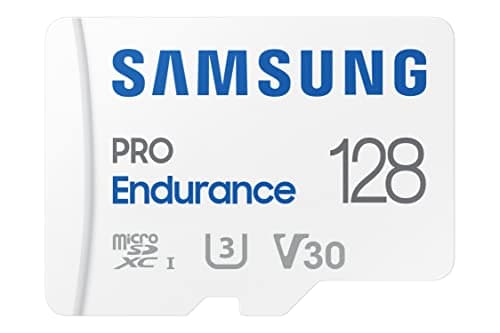
Buy the Samsung PRO Endurance, in 128GB. At that capacity Samsung rates it at 70,080 hours of continuous Full HD recording and 820 TBW. The comparable SanDisk High Endurance card is rated at 10,000 hours and 117 TBW — a seven-to-one gap on the only specification that matters for a device that overwrites its entire storage every few hours, forever. Both are V30 with the same published 100/40 MB/s speeds, so the endurance rating is the whole decision.
| # | Pick | Install | Score | Price |
|---|---|---|---|---|
| 1 | Samsung PRO Endurance microSD The card that outlives the camera | Drops in | 9.3/10 | $76.99 - view on Amazon |
| 2 | SanDisk High Endurance microSD The cheaper endurance card | Drops in | 8.6/10 | $69.99 - view on Amazon |
Prices last verified October 19, 2026. They move constantly; the figure on Amazon when you click is the real one.
Why a normal microSD card fails in a dash cam
Flash memory wears out by writing. Each cell tolerates a finite number of program-erase cycles, and a general-purpose card is designed around a use pattern where you fill it, read from it many times, and occasionally erase it.
A dash cam does the opposite. It writes continuously, fills the card in a few hours, and then overwrites the oldest footage — forever, every day it is in the car. That is the harshest possible duty cycle for flash, and it is why endurance cards exist as a separate product category.
The failure is also the worst kind: silent. The card does not announce it has degraded. It just quietly stops writing complete files, and you find out on the one day you needed the footage. That is the actual reason to spend twenty dollars more.
The two numbers that matter
- Rated hours. How many hours of continuous Full HD recording the maker rates the card for. It is the manufacturer's own figure and the most directly comparable one available.
- TBW, terabytes written. Total data the card is rated to absorb over its life. Independent of resolution, which makes it the better number if you record at higher than 1080p.
| Card | Rated hours (FHD) | TBW | Class |
|---|---|---|---|
| Samsung PRO Endurance 128GB | 70,080 | 820 TB | V30 |
| SanDisk High Endurance 128GB | 10,000 | 117 TB | V30 / U3 |
Seventy thousand hours is eight years of continuous recording. Ten thousand is a bit over a year. Neither figure is a promise — they are manufacturer ratings, not independent tests, and we say so — but they are the makers' own claims about their own products, and the ratio between them is the point.
What capacity to buy
128 GB is the right answer for most single-channel cameras. It holds several hours of 2K footage before looping, which is more than a commute, and it is the capacity where the price per gigabyte is usually best.
- 64GB is enough for a 1080p front camera and tight for anything more.
- 128GB is the sweet spot for a single 2K or 4K channel.
- 256GB is right for two channels, or for one channel plus regular parking-mode use.
- 512GB only if your camera supports it — several here cap at 256GB, and the REDTIGER F7N caps at 256 while recording two channels, which is the wrong way round.
Check your camera's published maximum before buying. A card larger than the camera supports may format and then fail unpredictably, which is the worst of both worlds.
Speed class, briefly
V30 means a sustained minimum write speed of 30 MB/s, and it is what every camera on this site needs and more. Both cards here are V30 and both publish 100 MB/s read and 40 MB/s write. Speed is not the differentiator in this category; endurance is. A faster card that is not an endurance card is the wrong purchase.
Two habits that extend the life of any card
- Format it in the camera, monthly. Not on a computer. Formatting in the camera resets the file system the way that camera expects and clears the fragmentation that builds up from constant looping. Most cameras have a reminder for this; turn it on.
- Save the clip you want the same day. The card loops. Footage you meant to keep is gone within hours, not weeks, and no amount of endurance rating helps with that.
What we cannot tell you
How long these cards actually last in a real camera in a real car. We have not run one to failure and neither, as far as any published source shows, has anybody with a repeatable method. What is on this page is the manufacturers' own ratings, side by side, with the sources attached — which is enough to make the decision and is not the same thing as a test.
Every pick, with the working
Each entry lists the specifications the maker publishes, the axis scores those specifications produce, and what you give up. Rows that read “Not published” are not omissions on our side: they are things the maker will not commit to in writing, and they cost the product points on the transparency axis. Specifications compiled September 4, 2026.
Our pickThe card that outlives the camera
Samsung PRO Endurance microSD
At 128GB Samsung rates this card at 70,080 hours of continuous Full HD recording and 820 TBW. The comparable SanDisk High Endurance card is rated at 10,000 hours and 117 TBW at the same capacity. That is a seven-to-one difference in the only specification that matters for a device that overwrites its storage every day of its life.
- Rated endurance at 128GB
- 70,080 hours of Full HD recording
- TBW at 128GB
- 820 TB written
- Speed class
- V30
- Read speed
- Up to 100 MB/s
- Write speed
- Up to 40 MB/s
- Warranty
- 5 years
- Operating range
- Not published
- List price
- Not published
What it gets right
- 70,080 rated hours at 128GB, seven times the nearest mainstream competitor
- 820 TBW at 128GB against 117 TBW for SanDisk High Endurance
- V30 speed class, which every camera in this ledger is happy with
- Rated for the exact duty cycle a dash cam imposes: continuous write, forever
Flaws
- Costs meaningfully more than a general-purpose card of the same capacity
- 40 MB/s write is fine for one or two channels and marginal for three at high bitrate
- Endurance ratings are the maker's own figures, not an independent test
The working behind the 9.3
- Heat headroom: not scored (weight 22%)
- The maker publishes no operating-temperature ceiling, so this axis is dropped and the other weights are re-normalized.
- Install effort: 10.0 (weight 24%)
- Drops in and sits there. No fixing of any kind, and it comes out again when you sell the car.
- Price against the ceiling: not scored (weight 24%)
- No published list price we could cite on the compile date, so this axis is dropped and the other weights are re-normalized.
- Written commitment: 10.0 (weight 15%)
- 60-month warranty. This is the only promise in the entire listing that a court would read, which is why it is scored and the marketing copy is not.
- Spec transparency: 7.5 (weight 15%)
- 6 of the 8 specifications we went looking for are published by the maker (75%). A blank row is never a guess here: it prints “Not published” and it costs the product points, because a figure nobody will commit to in writing is a figure you cannot check.
Axes with no published input are dropped and the remaining weights re-normalized, so a product is not punished for a category where an axis does not apply. Specifications compiled September 4, 2026 from Samsung PRO Endurance published endurance ratings.
2The cheaper endurance card
SanDisk High Endurance microSD
Skip this one. Only if the price gap against the Samsung is large. At the same capacity SanDisk rates it at 10,000 hours and 117 TBW against Samsung's 70,080 hours and 820 TBW. That is one seventh of the rated life on the one component whose entire job is not to fail silently.
Rated at 10,000 hours and 117 TBW at 128GB, with the same V30 class and the same 100/40 MB/s speeds as the Samsung. It is a genuine endurance card and it is not close to the Samsung on the endurance number. If it is meaningfully cheaper on the day you buy, it is still far better than a general-purpose card; if it is not, there is no argument for it.
- Rated endurance at 128GB
- 10,000 hours of Full HD recording
- TBW at 128GB
- 117 TB written
- Speed class
- V30, U3, Class 10
- Read speed
- Up to 100 MB/s
- Write speed
- Up to 40 MB/s
- Warranty
- Not published
- Operating range
- Not published
- List price
- Not published
What it gets right
- A real endurance card, rated for continuous write rather than repurposed from a phone card
- Same V30 class and same published read and write speeds as the Samsung
- Widely stocked, so it is usually the one you can get today
Flaws
- 10,000 rated hours against 70,080 for the Samsung at the same capacity
- 117 TBW against 820 TBW, which is the same gap stated the other way
- Only worth buying when the price gap is large
The working behind the 8.6
- Heat headroom: not scored (weight 22%)
- The maker publishes no operating-temperature ceiling, so this axis is dropped and the other weights are re-normalized.
- Install effort: 10.0 (weight 24%)
- Drops in and sits there. No fixing of any kind, and it comes out again when you sell the car.
- Price against the ceiling: not scored (weight 24%)
- No published list price we could cite on the compile date, so this axis is dropped and the other weights are re-normalized.
- Written commitment: not scored (weight 15%)
- No warranty term published, so this axis is dropped and the other weights are re-normalized.
- Spec transparency: 6.3 (weight 15%)
- 5 of the 8 specifications we went looking for are published by the maker (63%). A blank row is never a guess here: it prints “Not published” and it costs the product points, because a figure nobody will commit to in writing is a figure you cannot check.
Axes with no published input are dropped and the remaining weights re-normalized, so a product is not punished for a category where an axis does not apply. Specifications compiled September 4, 2026 from Published endurance ratings compared, SanDisk High Endurance.
Prices last verified October 19, 2026. They move constantly; the figure on Amazon when you click is the real one.
Questions people actually ask
Can I use a normal microSD card in a dash cam?
It will work and then it will fail, silently, at an unpredictable point. A dash cam overwrites its entire capacity every few hours, which is the harshest duty cycle flash memory experiences. Endurance cards exist specifically for it and cost very little more.
What size card do I need?
128GB for a single 2K or 4K channel, 256GB for two channels or heavy parking-mode use. Check your camera's published maximum first — several cameras cap at 256GB and one on this site caps there while recording two channels.
How often should I format the card?
Monthly, in the camera rather than on a computer. Formatting in the camera resets the file system the way that camera expects and clears the fragmentation that constant looping produces. Most cameras will remind you if you enable it.
How do I know if my card is failing?
Usually you do not until you need the footage, which is the entire problem. The practical defense is to actually open a recording once a month and confirm it plays, and to replace the card on a schedule rather than on evidence.