Are dash cams worth it?
For most people who drive to work, yes — but for one specific reason, not the five reasons the listings give. Here is what a dash cam actually settles and who genuinely should not bother.
By Sawyer V. · Published · How we research
We have not tested any of this. Everything below is compiled from published manufacturer specifications, and the arithmetic is printed so you can check it. This page carries affiliate links: if you buy through one we earn a commission at no extra cost to you, and it does not change the order of the picks. Full disclosure.
The short answer
For most commuters, yes. The value is narrower than the marketing claims: a dash cam is worth it because it removes the argument about what happened. Not because it lowers your insurance, which it usually does not, and not because it catches dramatic events, which it usually will not. If you drive daily in traffic, the cost of one is a fraction of one at-fault excess and it settles the “he said, she said” that makes minor collisions expensive. If you drive rarely, park in a garage and mostly do quiet roads, it is genuinely optional.
| # | Pick | Install | Score | Price |
|---|---|---|---|---|
| 1 | Samsung PRO Endurance microSD The card that outlives the camera | Drops in | 9.3/10 | $76.99 - view on Amazon |
| 2 | Vantrue E1 The best heat rating under $100 | Adhesive | 7.6/10 | $99.99 - view on Amazon |
| 3 | Vantrue E1 Lite The cheapest camera here worth owning | Adhesive | 7.6/10 | $99.99 - view on Amazon |
Prices last verified October 19, 2026. They move constantly; the figure on Amazon when you click is the real one.
What a dash cam actually settles
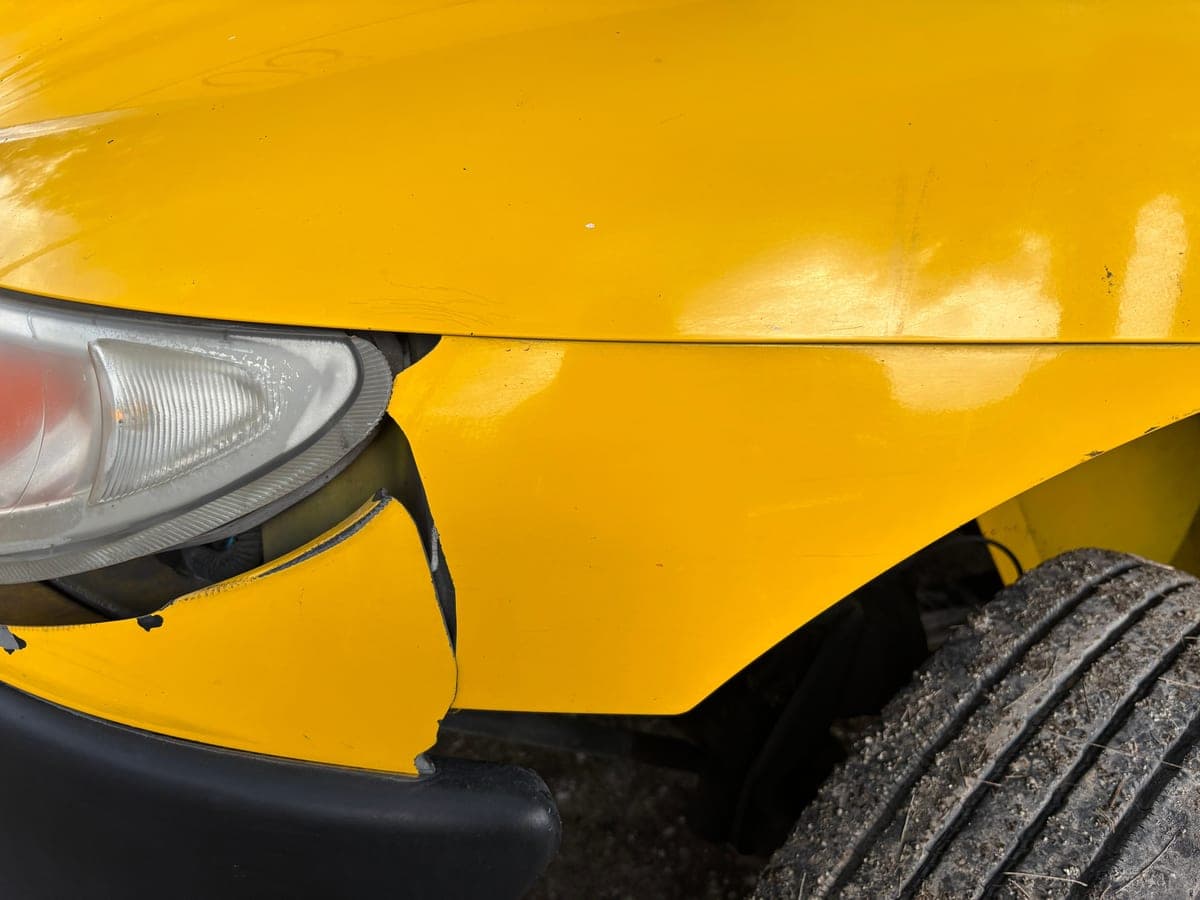
One thing, well: the sequence of events. Who was in which lane, who signaled, who stopped, in what order, at what relative speed. That is what most disputed collisions turn on, and it is the thing that is impossible to establish afterwards from two accounts and some damage.
This matters more than it sounds because the collisions that get disputed are rarely the dramatic ones. A T-bone at a junction has physical evidence. A lane-change scrape where both drivers insist the other moved has nothing but two stories, and that is precisely where footage ends the conversation in about four seconds.
What it does not do
- It does not usually lower your insurance. A handful of insurers offer a discount, most do not, and the ones that do offer a small one. Buying a dash cam as a financial product is the wrong reason. If your insurer offers a discount, take it as a bonus rather than a justification.
- It does not prove fault by itself. It provides evidence, which an adjuster or a court weighs alongside everything else. Footage that shows you doing something wrong is also evidence, and it will be looked at.
- It does not reliably read a plate at distance. This is the single biggest gap between what people expect and what they get. A plate two lanes over at night, at an angle, on a 1080p camera is often not legible. Frame rate and lens speed matter more than pixel count here — the $150 page covers why.
- It does not watch your parked car unless you wire it in. Parking mode needs power the 12V socket does not supply with the ignition off. That is a separate purchase and an afternoon. The battery page covers the cost of that decision.
Who it is clearly worth it for
- Daily commuters in traffic. Exposure is the whole argument. More miles in more traffic is more chance of the low-speed dispute a camera settles.
- Anyone who parks on a street or in a shared lot. Door dings and reversing incidents in parking lots are common, unadmitted, and exactly what parking mode is for.
- Anyone who has already been in a disputed collision. If you have had the argument once, you know what it is worth to not have it again.
- Parents of new drivers. Not primarily as surveillance — as evidence when a young driver in a cheap car gets blamed by default.
- Anyone driving somewhere with staged-collision fraud. A camera is the only defense against a deliberate brake-check that exists.
Who genuinely should not bother
- Very low annual mileage on quiet roads. If you drive two thousand miles a year on rural roads, exposure is low enough that the argument thins out.
- Garage parking at both ends, always. Removes the parking-mode half of the case entirely.
- A car you are selling within months. Adhesive mount, wiring, a card, setup time — for a car that will not be yours.
- Anyone who would rather have the same money as a phone mount and a charger. Genuinely. If your budget is $100 total and your phone currently rides in the cup holder, a mount and a charger will improve every single drive, and the camera will improve one drive in five years. That is a real trade and it is not obvious which way it goes.
The real cost, not the sticker cost
A dash cam is three purchases, and pages that quote only the first one are understating it:
- The camera. A genuinely good one starts around $80 — see the under-$100 page.
- An endurance card. Not optional, not the card from your camera bag. Add $20 to $30 and read the card page first.
- A hardwire kit, if you want parking mode. Another $20 to $30 and half an afternoon. The install guide is here.
Call it $110 without parking mode and $150 with. Against a typical collision excess, that is the argument, and it is a good one.
The honest summary
A dash cam is not exciting, will mostly record nothing, and is one of the best-value things you can put in a commuter car — for the narrow reason that it converts an argument into a video file. If that is worth $110 to you, buy one. If it is not, that is a perfectly reasonable position and the rest of this site has cheaper things that will improve your drive more often.
Every pick, with the working
Each entry lists the specifications the maker publishes, the axis scores those specifications produce, and what you give up. Rows that read “Not published” are not omissions on our side: they are things the maker will not commit to in writing, and they cost the product points on the transparency axis. Specifications compiled September 4, 2026.
Our pickThe card that outlives the camera
Samsung PRO Endurance microSD
Skip this one. Not a camera, and on this page it is the reminder that a dash cam is two purchases. A general-purpose card in a dash cam fails silently, so budget for this at the same time or the camera is not finished.
At 128GB Samsung rates this card at 70,080 hours of continuous Full HD recording and 820 TBW. The comparable SanDisk High Endurance card is rated at 10,000 hours and 117 TBW at the same capacity. That is a seven-to-one difference in the only specification that matters for a device that overwrites its storage every day of its life.
- Rated endurance at 128GB
- 70,080 hours of Full HD recording
- TBW at 128GB
- 820 TB written
- Speed class
- V30
- Read speed
- Up to 100 MB/s
- Write speed
- Up to 40 MB/s
- Warranty
- 5 years
- Operating range
- Not published
- List price
- Not published
What it gets right
- 70,080 rated hours at 128GB, seven times the nearest mainstream competitor
- 820 TBW at 128GB against 117 TBW for SanDisk High Endurance
- V30 speed class, which every camera in this ledger is happy with
- Rated for the exact duty cycle a dash cam imposes: continuous write, forever
Flaws
- Costs meaningfully more than a general-purpose card of the same capacity
- 40 MB/s write is fine for one or two channels and marginal for three at high bitrate
- Endurance ratings are the maker's own figures, not an independent test
The working behind the 9.3
- Heat headroom: not scored (weight 22%)
- The maker publishes no operating-temperature ceiling, so this axis is dropped and the other weights are re-normalized.
- Install effort: 10.0 (weight 24%)
- Drops in and sits there. No fixing of any kind, and it comes out again when you sell the car.
- Price against the ceiling: not scored (weight 24%)
- No published list price we could cite on the compile date, so this axis is dropped and the other weights are re-normalized.
- Written commitment: 10.0 (weight 15%)
- 60-month warranty. This is the only promise in the entire listing that a court would read, which is why it is scored and the marketing copy is not.
- Spec transparency: 7.5 (weight 15%)
- 6 of the 8 specifications we went looking for are published by the maker (75%). A blank row is never a guess here: it prints “Not published” and it costs the product points, because a figure nobody will commit to in writing is a figure you cannot check.
Axes with no published input are dropped and the remaining weights re-normalized, so a product is not punished for a category where an axis does not apply. Specifications compiled September 4, 2026 from Samsung PRO Endurance published endurance ratings.
2The best heat rating under $100
Vantrue E1
Vantrue publishes an operating range of -20 C to 70 C on this camera, which is the highest ceiling of anything here and 10 C above what the same company publishes for its own 4K model. It is a supercapacitor camera with GPS and a 2.7K sensor at a two-figure list price, which is an unusual combination, and it is the pick if your car sits in a sun-baked lot all day.
- Front resolution
- 2592 x 1944
- Alternate mode
- 1920 x 1080 at 60fps
- Power store
- Supercapacitor
- Operating range
- -20 C to 70 C (-4 F to 158 F)
- Max microSD
- 512 GB
- GPS
- Built in
- Wi-Fi
- Built in, app control
- Parking mode
- 24-hour, buffered motion detection
- Field of view
- Not published
- Published current draw
- Not published
List price $89.99 per Vantrue's own store, sale price (regular $129.99), captured on the compile date below. Not a live price and not what you will pay — the button is where the real number is.
What it gets right
- 70 C published ceiling — the highest of any camera in this ledger, and 10 C above Vantrue's own E1 Pro
- Supercapacitor rather than a lithium cell, which is the part that swells and dies in a hot cabin
- GPS and voice control at a list price under $100
- Takes a 512GB card, so a big endurance card will not be wasted on it
Flaws
- 2592x1944 is not 4K, and the marketing calls it 2.7K, which is a stretch of the usual naming
- Front only. A rear channel means a different camera
- Parking mode needs a hardwire kit that is not in the box
The working behind the 7.6
- Heat headroom: 10.0 (weight 22%)
- Published operating ceiling 70 C (158 F). A car parked in summer sun runs roughly 60-70 C inside, so 65 C and up is real headroom, 60 C is living at the limit, and anything under 55 C is a summer problem waiting to happen.
- Install effort: 6.0 (weight 24%)
- Adhesive pad onto the dashboard. Permanent in practice: repositioning means a new pad, and the pad is the part that fails first.
- Price against the ceiling: 7.0 (weight 24%)
- Listed at $89.99 on the compile date. This site's buyer has a practical ceiling around $150 for a single upgrade, so the scale rewards everything under $100 and falls away sharply past $150. The live price is very often different, and that is what the button is for.
- Written commitment: 7.0 (weight 15%)
- 18-month warranty. This is the only promise in the entire listing that a court would read, which is why it is scored and the marketing copy is not.
- Spec transparency: 8.0 (weight 15%)
- 8 of the 10 specifications we went looking for are published by the maker (80%). A blank row is never a guess here: it prints “Not published” and it costs the product points, because a figure nobody will commit to in writing is a figure you cannot check.
Axes with no published input are dropped and the remaining weights re-normalized, so a product is not punished for a category where an axis does not apply. Specifications compiled September 4, 2026 from Vantrue's E1 product page.
3The cheapest camera here worth owning
Vantrue E1 Lite
The same 70 C ceiling and the same supercapacitor as the E1, at 1080p and a lower list price. 1080p is enough to read a plate directly in front of you and not enough to read one two lanes over, and that trade is the entire decision. If the budget is the constraint, this is where to spend it rather than on a cheaper camera with an unpublished heat rating.
- Front resolution
- 1920 x 1080
- Power store
- Supercapacitor
- Operating range
- -20 C to 70 C (-4 F to 158 F)
- Wi-Fi
- Built in, app control
- GPS
- Not on this model
- Parking mode
- 24-hour, motion detection
- Max microSD
- Not published
- Field of view
- Not published
- Published current draw
- Not published
List price $79.99 per Vantrue's own store, sale price (regular $109.99), captured on the compile date below. Not a live price and not what you will pay — the button is where the real number is.
What it gets right
- 70 C published ceiling at the lowest list price in this ledger
- Supercapacitor, not a lithium cell
- Wi-Fi and app control at this money
- Small enough to hide behind the mirror, which is most of what a mini camera is for
Flaws
- 1080p. Plate legibility falls off fast at distance and at an angle
- No GPS on this model, so no speed or location stamp on the footage
- Parking mode needs a hardwire kit sold separately
The working behind the 7.6
- Heat headroom: 10.0 (weight 22%)
- Published operating ceiling 70 C (158 F). A car parked in summer sun runs roughly 60-70 C inside, so 65 C and up is real headroom, 60 C is living at the limit, and anything under 55 C is a summer problem waiting to happen.
- Install effort: 6.0 (weight 24%)
- Adhesive pad onto the dashboard. Permanent in practice: repositioning means a new pad, and the pad is the part that fails first.
- Price against the ceiling: 8.0 (weight 24%)
- Listed at $79.99 on the compile date. This site's buyer has a practical ceiling around $150 for a single upgrade, so the scale rewards everything under $100 and falls away sharply past $150. The live price is very often different, and that is what the button is for.
- Written commitment: 7.0 (weight 15%)
- 18-month warranty. This is the only promise in the entire listing that a court would read, which is why it is scored and the marketing copy is not.
- Spec transparency: 6.7 (weight 15%)
- 6 of the 9 specifications we went looking for are published by the maker (67%). A blank row is never a guess here: it prints “Not published” and it costs the product points, because a figure nobody will commit to in writing is a figure you cannot check.
Axes with no published input are dropped and the remaining weights re-normalized, so a product is not punished for a category where an axis does not apply. Specifications compiled September 4, 2026 from Vantrue's E1 Lite product page.
Prices last verified October 19, 2026. They move constantly; the figure on Amazon when you click is the real one.
Questions people actually ask
Will a dash cam lower my insurance premium?
Usually not. Some insurers offer a small discount and most do not. Treat any discount as a bonus rather than the reason to buy, because the real value is evidence in a disputed claim rather than a line on a renewal.
Are dash cams legal?
Recording the road from your own vehicle is broadly permitted, but two things vary by state: rules on what may be attached to a windshield, and rules on recording audio inside the cabin. Check your own state on both before mounting, and turn cabin audio off if you carry passengers who have not been told about it.
Do I need front and rear?
Front first. Rear cameras are a genuine upgrade and the second purchase, not the first. If you want both at once, the under-$100 page has the two-channel option.
How long does footage stay on the card?
Until it loops over. A 128GB card typically holds several hours of 2K footage before overwriting the oldest. That is why the habit that matters is saving the clip you want the same day, not next week.