How to hardwire a dash cam for parking mode
Eight steps, about forty minutes, and nothing gets cut. The job is routing a cable around the headliner and tapping two fuses, and the only decision that really matters is the cutoff voltage.
By Sawyer V. · Published · How we research
We have not tested any of this. Everything below is compiled from published manufacturer specifications, and the arithmetic is printed so you can check it. This page carries affiliate links: if you buy through one we earn a commission at no extra cost to you, and it does not change the order of the picks. Full disclosure.
The short version
Route the camera cable from behind the mirror, around the headliner, down the A-pillar and along the sill into the driver footwell. Find one always-live fuse and one ignition-switched fuse, tap both with add-a-circuit fuse taps, ground to a bare chassis bolt, and set the cutoff to the highest available setting — typically 12.4 V. Nothing is cut, the whole job reverses in ten minutes, and it takes about 30 to 45 minutes the first time.
| # | Pick | Install | Score | Price |
|---|---|---|---|---|
| 1 | VIOFO A119 Mini 2 The one to buy if you only buy one | Adhesive | 6.7/10 | $129.99 - view on Amazon |
| 2 | REDTIGER F7N Front and rear with the hardwire kit in the box | Adhesive | 6.3/10 | $99.99 - view on Amazon |
| 3 | VIOFO HK4 hardwire kit Turning parking mode from a feature into a working thing | Hardwire | 5.3/10 | $25.99 - view on Amazon |
Prices last verified October 19, 2026. They move constantly; the figure on Amazon when you click is the real one.
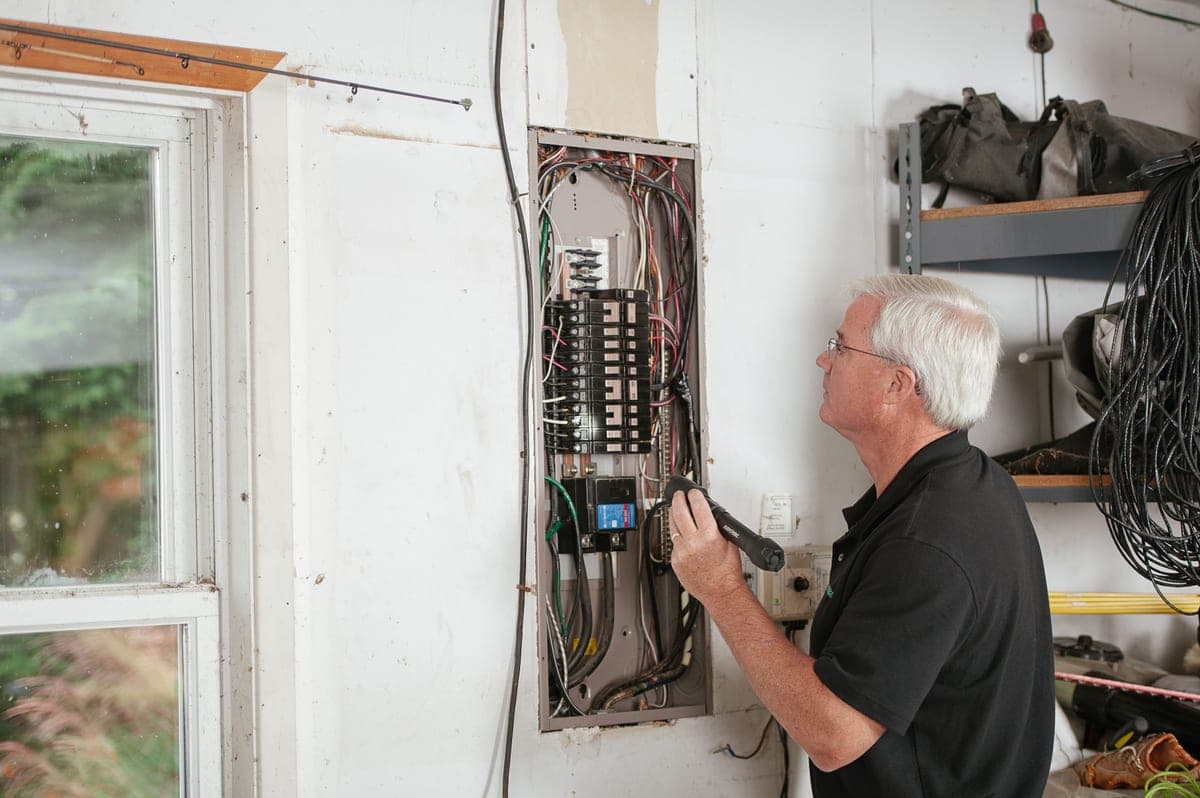
Why this is necessary at all
Your 12V socket stops supplying power when the ignition goes off, on most cars. Parking mode needs power with the ignition off. That is the entire problem, and a hardwire kit is the entire solution: it takes power from a permanently-live fuse, takes a signal from an ignition-switched fuse so the camera knows the engine has stopped, and cuts itself off when the battery drops below a voltage you set.
If you do not want parking mode, you do not need any of this. The 12V cable in the box covers every collision you are actually present for. The battery page is the right place to decide whether parking mode is worth the afternoon.
What you need
- The hardwire kit for your camera. These are not universal. VIOFO's HK4 is USB-C and fits VIOFO's USB-C cameras; other makers have their own.
- Add-a-circuit fuse taps in the size your car uses — mini, low-profile mini or micro2. Look at an existing fuse before buying. Some kits include a full set.
- A plastic trim tool. A screwdriver will mark the trim permanently.
- A circuit tester or multimeter to find which fuse is which.
- Cable ties for the slack in the footwell.
No wire cutters, no strippers, no soldering. If a set of instructions tells you to cut into the car's wiring, stop and find different instructions.
The eight steps
- Gather the kit. Everything above, on the passenger seat, before you start. The most common cause of an abandoned install is discovering mid-job that the fuse taps are the wrong size.
- Find the fuse box and identify two fuses. Usually the driver footwell or behind a kick panel; the owner's manual has the location and the map. With a circuit tester, probe fuses with the ignition off to find one that is live, then turn the ignition on to find one that only becomes live then. Write both down.
- Choose fuses that will not matter if they blow. See the note above. Also check the amperage: tap a 10A or 15A circuit rather than a 30A one, because the add-a-circuit is rated too.
- Set the cutoff before you fit anything. Highest setting. On VIOFO's HK4 the options are 11.8, 12.0, 12.2 and 12.4 V, VIOFO recommends the highest as the safest choice, and it documents around 0.3 V of detection tolerance — so a nominal 11.8 could really be 11.5. Set it now, while the box is in your hand.
- Route the cable. Start at the camera. Tuck the cable up into the gap where the headliner meets the windshield, across to the driver's side, down the A-pillar, then along the door sill trim into the footwell. The trim tool opens each gap enough to push the cable in; nothing needs to come off completely. Keep the cable out of the airbag path in the A-pillar — most cars have a curtain airbag there, and a cable routed across it becomes a projectile. Behind the trim and away from the folded bag is the rule.
- Fit the fuse taps. Pull the original fuse, seat it in the lower slot of the add-a-circuit, put the fuse supplied with the hardwire kit in the upper slot, and push the assembly into the empty fuse position. Constant lead to the always-live tap, ACC lead to the ignition-switched tap. Getting these the wrong way round means the camera never enters parking mode, or never leaves it.
- Ground it properly. Bare metal, bolted to the chassis. Not a painted panel, not a plastic bracket, not a seat rail that moves. Loosen an existing bolt, slip the ring terminal under it, tighten. A bad ground is the single most common cause of a hardwire install that works intermittently.
- Test before you put the trim back. Start the car: the camera should power up normally. Switch off and remove the key: the camera should enter parking mode rather than shutting down. If it shuts down, the constant and ACC leads are swapped or the constant tap is not actually constant. Fix it now, while everything is still open.
After it is working
- Leave the car overnight and check in the morning. Confirm parking mode recorded, and confirm the car starts normally. That is the real test.
- Note which fuses you used. Write it on a slip of paper in the glovebox. In three years, when something electrical is odd, you will want to know.
- Check the recordings once a month for the first quarter. Parking mode fails silently, and a card that has quietly filled or corrupted looks identical from the outside to one that is working.
When to pay somebody else
Three honest cases. If the car is leased or inside a warranty period and you are not comfortable with the conversation, a professional install costs less than the argument. If the fuse box is somewhere awkward — some cars put it behind the glovebox or under the hood — the job stops being forty minutes. And if you are not confident about identifying the airbag path in the A-pillar, that is a genuinely good reason to hand it over.
Otherwise, this is a routing job and a fuse job. Nothing gets cut, and it all comes back out in ten minutes when you sell the car.
Every pick, with the working
Each entry lists the specifications the maker publishes, the axis scores those specifications produce, and what you give up. Rows that read “Not published” are not omissions on our side: they are things the maker will not commit to in writing, and they cost the product points on the transparency axis. Specifications compiled September 4, 2026.
Our pickThe one to buy if you only buy one
VIOFO A119 Mini 2
A Sony STARVIS 2 IMX675 sensor at 2K 60fps, a supercapacitor, a published 65 C ceiling, an 18-month warranty and three named parking modes including buffered recording. VIOFO publishes more about this camera than anyone else here publishes about anything, and that is the reason it wins: every claim on the page is one you can check.
- Front resolution
- 2560 x 1440 at 60fps
- Image sensor
- Sony STARVIS 2 IMX675, 5MP
- Field of view
- 140 degrees
- Aperture
- f/1.6
- Power store
- Supercapacitor, no battery
- Operating range
- -20 C to 65 C (-4 F to 149 F)
- Storage temperature
- -20 C to 70 C
- Max microSD
- 512 GB
- Wi-Fi
- 2.4 GHz and 5 GHz
- Parking modes
- Auto event detection, time lapse, low bitrate
- Dimensions
- 1.81 x 1.77 x 2.94 in
- Published current draw
- Not published
List price $159.99 per VIOFO's own store, captured on the compile date below. Not a live price and not what you will pay — the button is where the real number is.
What it gets right
- Sony STARVIS 2 IMX675 with an f/1.6 lens — the best published low-light hardware in this ledger
- 2K at 60fps, which reads plates on moving cars better than 4K at 30fps does
- Published 65 C ceiling and a supercapacitor, so summer is designed for rather than hoped about
- Three named parking modes, including buffered recording that keeps the seconds before a trigger
- 18-month warranty, longer than most of this category
Flaws
- Front only, and adding the rear camera means a different model entirely
- The list price is well above the sub-$100 bracket most people start in
- Parking mode needs the HK4 hardwire kit, which is a separate purchase and a separate afternoon
The working behind the 6.7
- Heat headroom: 9.0 (weight 22%)
- Published operating ceiling 65 C (149 F). A car parked in summer sun runs roughly 60-70 C inside, so 65 C and up is real headroom, 60 C is living at the limit, and anything under 55 C is a summer problem waiting to happen.
- Install effort: 6.0 (weight 24%)
- Adhesive pad onto the dashboard. Permanent in practice: repositioning means a new pad, and the pad is the part that fails first.
- Price against the ceiling: 3.5 (weight 24%)
- Listed at $159.99 on the compile date. This site's buyer has a practical ceiling around $150 for a single upgrade, so the scale rewards everything under $100 and falls away sharply past $150. The live price is very often different, and that is what the button is for.
- Written commitment: 7.0 (weight 15%)
- 18-month warranty. This is the only promise in the entire listing that a court would read, which is why it is scored and the marketing copy is not.
- Spec transparency: 9.2 (weight 15%)
- 11 of the 12 specifications we went looking for are published by the maker (92%). A blank row is never a guess here: it prints “Not published” and it costs the product points, because a figure nobody will commit to in writing is a figure you cannot check.
Axes with no published input are dropped and the remaining weights re-normalized, so a product is not punished for a category where an axis does not apply. Specifications compiled September 4, 2026 from VIOFO's A119 Mini 2 product page.
2Front and rear with the hardwire kit in the box
REDTIGER F7N
Skip this one. It ships its hardwire kit in the box, which is the one way to avoid this entire page. If you have not bought a camera yet and you know you want parking mode, that is worth more than the spec differences between cameras.
The only camera here that ships the hardwire kit rather than selling it separately, which is worth more than it sounds: the kit is the thing that turns parking mode from a spec-sheet feature into a working one, and buying it later costs both money and a second afternoon. Front 4K plus a 1080p rear, and the storage cap is 256GB rather than 512GB.
- Front resolution
- 3840 x 2160 (4K UHD)
- Rear resolution
- 1920 x 1080
- Front field of view
- 170 degrees
- Rear field of view
- 140 degrees
- Max microSD
- 256 GB
- GPS
- Built in
- Wi-Fi
- 5.8 GHz
- Hardwire kit
- Included in the box
- Operating range
- Not published
- Power store
- Not published
List price $109.99 per REDTIGER's own store, sale price (regular $139.99), captured on the compile date below. Not a live price and not what you will pay — the button is where the real number is.
What it gets right
- Hardwire kit included, so parking mode works without a second purchase
- Front and rear in one box, with a 170-degree front lens
- STARVIS 2 sensor and 5.8GHz Wi-Fi at a list price under $150
- Screen on the body, which makes aiming the camera a two-minute job rather than a phone-app job
Flaws
- 256GB storage cap, half what most of this ledger accepts. Two channels fill a card twice as fast, so this is the wrong way round
- No published operating-temperature range
- The rear camera is 1080p, so it is evidence of an impact rather than a plate reader
The working behind the 6.3
- Heat headroom: not scored (weight 22%)
- The maker publishes no operating-temperature ceiling, so this axis is dropped and the other weights are re-normalized.
- Install effort: 6.0 (weight 24%)
- Adhesive pad onto the dashboard. Permanent in practice: repositioning means a new pad, and the pad is the part that fails first.
- Price against the ceiling: 6.0 (weight 24%)
- Listed at $109.99 on the compile date. This site's buyer has a practical ceiling around $150 for a single upgrade, so the scale rewards everything under $100 and falls away sharply past $150. The live price is very often different, and that is what the button is for.
- Written commitment: 5.5 (weight 15%)
- 12-month warranty. This is the only promise in the entire listing that a court would read, which is why it is scored and the marketing copy is not.
- Spec transparency: 8.0 (weight 15%)
- 8 of the 10 specifications we went looking for are published by the maker (80%). A blank row is never a guess here: it prints “Not published” and it costs the product points, because a figure nobody will commit to in writing is a figure you cannot check.
Axes with no published input are dropped and the remaining weights re-normalized, so a product is not punished for a category where an axis does not apply. Specifications compiled September 4, 2026 from REDTIGER's F7N series page.
3Turning parking mode from a feature into a working thing
VIOFO HK4 hardwire kit
A USB-C hardwire cable with an adjustable low-voltage cutoff at 11.8, 12.0, 12.2 or 12.4 volts and an ACC lead that tells the camera the engine is off. The cutoff is the part that matters: it is what stands between overnight parking mode and a car that will not start, and it is a setting rather than a hope.
- Cutoff voltages (12V)
- 11.8 / 12.0 / 12.2 / 12.4 V
- Cutoff voltages (24V)
- 23.6 / 24.0 / 24.4 / 24.8 V
- Voltage detection tolerance
- Approximately 0.3 V
- ACC detection
- Yes, yellow lead to ignition
- System compatibility
- 12V and 24V vehicles
- Connector
- USB-C
- List price
- Not published
- Warranty
- Not published
What it gets right
- Four selectable cutoff voltages, so the tradeoff between recording time and starting the car is yours to make
- ACC detection switches the camera into parking mode automatically when the ignition goes off
- Works on 12V and 24V systems
- Ships with a full set of circuit fuse taps, so the fuse box is not a second shopping trip
Flaws
- It is a hardwire job. Trim tools, a fuse box and half an hour minimum
- VIOFO documents roughly 0.3V of tolerance on the voltage detection, so set it higher than feels necessary
- Only fits VIOFO's USB-C cameras
The working behind the 5.3
- Heat headroom: not scored (weight 22%)
- The maker publishes no operating-temperature ceiling, so this axis is dropped and the other weights are re-normalized.
- Install effort: 4.0 (weight 24%)
- Wires into the fuse box. Half an hour, a fuse tap, a trim tool and a willingness to be upside down under the dash. This is the real cost of parking mode.
- Price against the ceiling: not scored (weight 24%)
- No published list price we could cite on the compile date, so this axis is dropped and the other weights are re-normalized.
- Written commitment: not scored (weight 15%)
- No warranty term published, so this axis is dropped and the other weights are re-normalized.
- Spec transparency: 7.5 (weight 15%)
- 6 of the 8 specifications we went looking for are published by the maker (75%). A blank row is never a guess here: it prints “Not published” and it costs the product points, because a figure nobody will commit to in writing is a figure you cannot check.
Axes with no published input are dropped and the remaining weights re-normalized, so a product is not punished for a category where an axis does not apply. Specifications compiled September 4, 2026 from VIOFO support: choosing a cut-off protection voltage.
Prices last verified October 19, 2026. They move constantly; the figure on Amazon when you click is the real one.
Questions people actually ask
How long does hardwiring a dash cam take?
Thirty to forty-five minutes the first time, and about fifteen the second. Most of it is routing the cable around the headliner and A-pillar; the fuse box part takes five minutes once you have identified the two fuses.
Will hardwiring void my warranty?
A fuse-tap installation cuts nothing and reverses completely, which is why it is the standard method. The original fuse stays in circuit in the lower slot of the add-a-circuit. If you are worried, photograph the fuse box before and after.
Which fuse should I use?
One always-live and one ignition-switched, both on low-consequence circuits: interior lighting, accessory socket or radio are the usual picks. Never tap airbags, ABS, engine management, exterior lighting or power steering.
What cutoff voltage should I set?
The highest available, typically 12.4 V. VIOFO recommends its own highest setting and documents about 0.3 V of detection tolerance, so a lower setting has less margin than the number suggests. The full arithmetic is on the battery page.
Can I hardwire a camera that came with only a 12V cable?
Only if the maker sells a hardwire kit for it. The kit is not just a cable — it contains the voltage-cutoff circuitry and the ACC detection. A bare cable spliced into a live fuse will happily flatten your battery, because nothing is watching the voltage.