The best tire shine and wheel cleaners
Wheels are the dirtiest part of a car and the easiest to damage cleaning. The published chemistry is what separates the two outcomes.
By Sawyer V. · Published · How we research
We have not tested any of this. Everything below is compiled from published manufacturer specifications, and the arithmetic is printed so you can check it. This page carries affiliate links: if you buy through one we earn a commission at no extra cost to you, and it does not change the order of the picks. Full disclosure.
The short answer
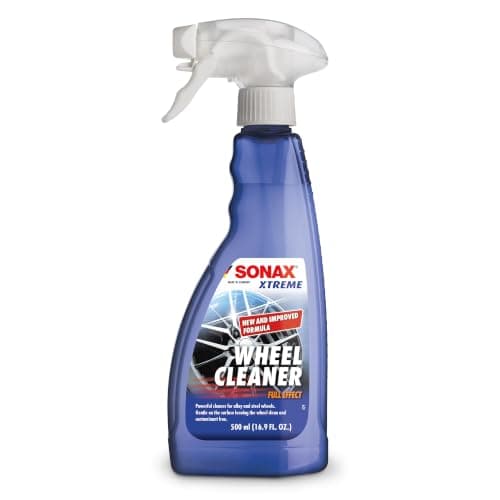
Buy an acid-free wheel cleaner and a gel tire dressing, in that order. SONAX Full Effect is pH neutral, publishes a 10 minute dwell limit and turns red as it reacts with embedded iron — so it tells you visually when the chemistry has worked. For tires, a gel goes where you put it; a spray mists onto your brakes and paint and then slings onto the panels on the first drive.
| # | Pick | Install | Score | Price |
|---|---|---|---|---|
| 1 | SONAX Wheel Cleaner Full Effect Knowing when it has finished working | Drops in | 8.9/10 | $16.99 - view on Amazon |
| 2 | Chemical Guys VRP Vinyl, Rubber, Plastic Protectant One bottle for tires, trim and the dashboard | Drops in | 8.3/10 | $11.97 - view on Amazon |
| 3 | Meguiar's Endurance Tire Gel A gloss finish that does not sling onto the paint | Drops in | 7.8/10 | $13.99 - view on Amazon |
Prices last verified October 26, 2026. They move constantly; the figure on Amazon when you click is the real one.
Acid-free is not a marketing word here
Wheel cleaners split into two chemistries and the difference is whether you can use them on your wheels without damage.
Acid cleaners dissolve brake dust fast and will etch, stain or dull finishes they were not designed for — polished aluminum and anodized finishes particularly. They exist because they work quickly on neglected steel wheels, and they are a poor default for a modern alloy with a clear coat on it.
SONAX Full Effect is acid-free and stated pH neutral, and it works differently: it contains a compound that reacts with embedded iron particles to form a water-soluble iron complex, which then rinses away. Slower than acid, and safe on the finishes SONAX names explicitly — chrome, aluminum, steel, clear coated, PVD, painted, plastic covers and magnesium.
Dwell time is a limit, not a suggestion
SONAX publishes a dwell of up to 10 minutes. Published dwell times are upper bounds and people read them as targets.
- Never apply to a hot wheel. Straight off a drive, the wheel is hot enough to flash the product dry, and dried chemical on a finish is where staining comes from
- Work one wheel at a time, not all four then back to the first. By the time you return, the first has been dwelling for far longer than published
- Keep it wet. If it starts drying before the time is up, rinse and repeat rather than pushing on
- Rinse thoroughly, including behind the spokes. Residue left in the barrel keeps working after you have finished looking at it
Iron removers smell strongly of sulfur while they react. That is the chemistry, not a faulty bottle, and it is why this is an outdoor job.
Why gel beats spray on tires
This is the most useful practical distinction on the page and it has nothing to do with how shiny the result is.
A spray dressing mists. Some lands on the tire and the rest lands on the wheel face, the brake caliper, the sill and the driveway. Dressing on a brake rotor is a genuine safety issue; dressing on paint is a mess to remove.
Meguiar's Endurance is a gel applied with a foam applicator. It goes where you put it, nowhere else, and the dose is controlled by how much you put on the pad.
| Meguiar's Endurance Gel | Chemical Guys VRP | |
|---|---|---|
| Form | Gel, applicator | Water-based cream |
| Stated durability | Not published | Not published |
| UV protection | Stated, against browning | Stated UV blockers |
| Finish | High gloss | Dry to touch, no residue |
| Surfaces | Tires | Tires, trim, interior plastic |
| Layering interval | Not published | 5-10 minutes between coats |
| Warranty | None | None |
Neither publishes a durability figure. Meguiar's says it lasts "for weeks" and that is the entire claim; VRP says nothing at all. That blank row is the category norm, and it is why the water-beading test on a washed tire is a better guide than anything on the bottle.
Sling, and how to not get it
Sling is dressing thrown off a spinning tire onto the paint above it, and it appears as a line of greasy spots along the lower doors and rear quarter after the first drive.
- Clean the tire first. Dressing over old dressing and road film cannot bond and comes straight back off
- Apply thinly with an applicator, working it into the sidewall rather than laying it on top
- Wipe the excess. This is the step everyone skips and it is the one that prevents sling entirely. A clean cloth over the whole sidewall after application
- Let it set before driving, ten minutes if you can
- Keep it off the tread. Meguiar's directions state this explicitly. Dressing on the contact patch is a traction problem
What the dressing is actually protecting against
Tire sidewalls turn brown and then crack, and that is not dirt — it is the rubber's own anti-ozonant waxes migrating to the surface and oxidizing under UV.
Both products here publish UV protection as a function, and that is the durable reason to dress tires rather than the cosmetic one. It is the same failure mode that kills exterior trim and interior plastic, which is why VRP covers all three — best dashboard protectants deals with the interior side of the same problem, including why gloss is the wrong finish in there.
For a car that lives outdoors the bigger lever is removing the sunlight rather than coating everything under it — best car covers.
The order of operations
Wheels and tires come first in any wash, before the paint. They are the dirtiest part of the car and the cleaners used on them are the ones you least want on a wet panel.
Use separate tools and separate towels, and keep them separate permanently. Brake dust is sharp metallic particulate and a wheel towel that touches paint drags it across clear coat — best microfiber towels for cars covers the color-coding rule that prevents it.
Paint protection goes on last, after everything else is clean and dry — best car waxes and paint sealants. And if you would rather buy one box than five bottles, best car detailing kits covers what the bundles actually contain.
Every pick, with the working
Each entry lists the specifications the maker publishes, the axis scores those specifications produce, and what you give up. Rows that read “Not published” are not omissions on our side: they are things the maker will not commit to in writing, and they cost the product points on the transparency axis. Specifications compiled September 4, 2026.
Our pickKnowing when it has finished working
SONAX Wheel Cleaner Full Effect
Acid-free, pH neutral, and it turns red as it reacts with embedded iron from brake dust — which makes it the only product on this page that tells you visually when the chemistry has done its job. It also publishes a dwell time and the specific wheel finishes it is safe on, which acid cleaners rarely do.
- Chemistry
- Acid-free, stated pH neutral
- Indicator
- Color change yellow-green to red on iron contact
- Dwell time
- Up to 10 minutes
- Container
- 500 ml
- Stated safe finishes
- Chrome, aluminum, steel, clear coat, PVD, painted, plastic, magnesium
- Warranty
- Not published
- List price
- Not published
What it gets right
- Acid-free and stated pH neutral, which is what makes it safe on finishes an acid cleaner would etch
- Color-change indicator — fluorescent yellow-green to deep red — shows the iron reaction happening
- Publishes a dwell time: up to 10 minutes
- Names the finishes it is safe on: chrome, aluminum, steel, clear coated, PVD, painted, plastic covers and magnesium
Flaws
- Iron removers smell strongly of sulfur while working; this is chemistry, not a defect, but it is unpleasant
- 500 ml and it is used generously on a set of wheels, so it does not last long
- Dwelling longer than stated on a hot wheel is how you get staining — the published time is a limit, not a suggestion
- No warranty
The working behind the 8.9
- Heat headroom: not scored (weight 22%)
- The maker publishes no operating-temperature ceiling, so this axis is dropped and the other weights are re-normalized.
- Install effort: 10.0 (weight 24%)
- Drops in and sits there. No fixing of any kind, and it comes out again when you sell the car.
- Price against the ceiling: not scored (weight 24%)
- No published list price we could cite on the compile date, so this axis is dropped and the other weights are re-normalized.
- Written commitment: not scored (weight 15%)
- No warranty term published, so this axis is dropped and the other weights are re-normalized.
- Spec transparency: 7.1 (weight 15%)
- 5 of the 7 specifications we went looking for are published by the maker (71%). A blank row is never a guess here: it prints “Not published” and it costs the product points, because a figure nobody will commit to in writing is a figure you cannot check.
Axes with no published input are dropped and the remaining weights re-normalized, so a product is not punished for a category where an axis does not apply. Specifications compiled September 4, 2026 from SONAX Wheel Cleaner Full Effect published composition, dwell time and finishes.
2One bottle for tires, trim and the dashboard
Chemical Guys VRP Vinyl, Rubber, Plastic Protectant
Skip this one. Excellent value and the wrong product if you only want tire shine. VRP is a multi-surface dressing, and its versatility is exactly why it is easy to misuse — layered for gloss on a dashboard it puts a reflection in your windshield. Buy it to do trim, tires and interior plastic adequately. Do not buy it expecting the sling-free gel finish of a dedicated tire product.
A water-based dressing that works on tires, exterior trim and interior plastic, which makes it the efficient buy if you resent owning four bottles that do one job each. Water-based matters: it dries to the touch rather than staying greasy, so it can go inside the car as well as on the tires.
- Stated durability
- Not published
- Base
- Water-based cream
- UV protection
- Stated UV blockers
- Finish
- Dry to the touch, no residue
- Layering interval
- 5-10 minutes between coats
- Warranty
- Not published
- List price
- Not published
What it gets right
- Water-based cream rather than solvent, so it finishes dry to the touch and leaves no residue
- Published UV blockers against the bleaching and cracking that kills exterior trim
- Genuinely multi-surface — tires, bumper trim, dash, door cards
- Published application method allows layering, with 5 to 10 minutes between coats for more gloss
Flaws
- No durability figure published, on any surface
- A dressing on a dashboard should be matte; layering VRP for gloss on an interior is how you get windshield reflections
- Dosing is by drops onto an applicator, so it is easy to over-apply and get sling
- No warranty
The working behind the 8.3
- Heat headroom: not scored (weight 22%)
- The maker publishes no operating-temperature ceiling, so this axis is dropped and the other weights are re-normalized.
- Install effort: 10.0 (weight 24%)
- Drops in and sits there. No fixing of any kind, and it comes out again when you sell the car.
- Price against the ceiling: not scored (weight 24%)
- No published list price we could cite on the compile date, so this axis is dropped and the other weights are re-normalized.
- Written commitment: not scored (weight 15%)
- No warranty term published, so this axis is dropped and the other weights are re-normalized.
- Spec transparency: 5.7 (weight 15%)
- 4 of the 7 specifications we went looking for are published by the maker (57%). A blank row is never a guess here: it prints “Not published” and it costs the product points, because a figure nobody will commit to in writing is a figure you cannot check.
Axes with no published input are dropped and the remaining weights re-normalized, so a product is not punished for a category where an axis does not apply. Specifications compiled September 4, 2026 from Chemical Guys VRP published composition, UV claim and application.
3A gloss finish that does not sling onto the paint
Meguiar's Endurance Tire Gel
A gel rather than a spray, which is the whole point: it goes where you put it instead of misting over the brake calipers and the sill. Meguiar's publishes UV protection as a function but puts no number on durability, so 'lasts for weeks' is the entire claim.
- Stated durability
- Not published
- Form
- Gel, applicator-applied
- UV protection
- Stated, against browning
- Container
- 16 fl oz
- Coverage
- Not published
- Warranty
- Not published
- List price
- Not published
What it gets right
- Gel consistency applied with an applicator — no overspray onto paint, brakes or the driveway
- Stated to resist washing and rain rather than needing reapplication after every wash
- Published UV protection function against browning, which is the actual failure mode of old tire rubber
- 16 oz goes a long way because you are dosing an applicator rather than spraying
Flaws
- No durability figure — 'lasts for weeks' is not a specification
- Applied heavily it will still sling on the first drive; the fix is wiping the excess, which people skip
- Needs a foam applicator, which is a second purchase if the bottle does not include one
- No warranty and no published coverage
The working behind the 7.8
- Heat headroom: not scored (weight 22%)
- The maker publishes no operating-temperature ceiling, so this axis is dropped and the other weights are re-normalized.
- Install effort: 10.0 (weight 24%)
- Drops in and sits there. No fixing of any kind, and it comes out again when you sell the car.
- Price against the ceiling: not scored (weight 24%)
- No published list price we could cite on the compile date, so this axis is dropped and the other weights are re-normalized.
- Written commitment: not scored (weight 15%)
- No warranty term published, so this axis is dropped and the other weights are re-normalized.
- Spec transparency: 4.3 (weight 15%)
- 3 of the 7 specifications we went looking for are published by the maker (43%). A blank row is never a guess here: it prints “Not published” and it costs the product points, because a figure nobody will commit to in writing is a figure you cannot check.
Axes with no published input are dropped and the remaining weights re-normalized, so a product is not punished for a category where an axis does not apply. Specifications compiled September 4, 2026 from Meguiar's Endurance Tire Gel product page.
Prices last verified October 26, 2026. They move constantly; the figure on Amazon when you click is the real one.
Questions people actually ask
Is acid-free wheel cleaner better?
For modern alloys, yes. Acid cleaners work fast and can etch or dull finishes including polished aluminum and anodized wheels. SONAX Full Effect is acid-free and stated pH neutral, and it publishes the specific finishes it is safe on.
Why does my wheel cleaner turn red?
That is the iron reaction. The cleaner contains a compound that bonds with embedded iron particles from brake dust to form a water-soluble complex, and the color change from yellow-green to red is that reaction happening. It is a visual indicator that the product is working.
How do I stop tire shine slinging onto my paint?
Use a gel rather than a spray, apply it thinly with an applicator, and wipe the excess off the sidewall afterwards. The wipe-off step is the one people skip and the one that prevents sling. Let it set for ten minutes before driving.
How long does tire shine last?
Neither product here publishes a figure. Meguiar's states its gel lasts "for weeks" and Chemical Guys publishes nothing. Expect to reapply after washing, and judge by whether the sidewall still looks black rather than by any claim.