The best dashboard protectants
Only one product in this category publishes a UV number you can compare. Everything else says 'UV protection' and stops, on a product whose entire job is UV protection.
By Sawyer V. · Published · How we research
We have not tested any of this. Everything below is compiled from published manufacturer specifications, and the arithmetic is printed so you can check it. This page carries affiliate links: if you buy through one we earn a commission at no extra cost to you, and it does not change the order of the picks. Full disclosure.
The short answer
Buy 303 Automotive Protectant, and buy a sun shade first. 303 is the only product here publishing a comparable UV figure — an SPF 40 equivalent — plus a stated reapplication interval of 30 to 45 days and a matte finish. The matte part matters more than it sounds: a glossy dashboard reflects into a raked windshield and puts a ghost image in your eyeline. But a windshield shade blocks the UV before it arrives, which beats any coating.
| # | Pick | Install | Score | Price |
|---|---|---|---|---|
| 1 | EcoNour Windshield Sun Shade The cheapest real temperature drop in the car | Drops in | 9.3/10 | $11.99 - view on Amazon |
| 2 | Meguiar's Ultimate Interior Detailer One bottle for the whole cabin | Drops in | 8.9/10 | $8.00 - view on Amazon |
| 3 | 303 Automotive Protectant A dashboard in permanent sunlight | Drops in | 8.7/10 | $16.98 - view on Amazon |
| 4 | Chemical Guys Easy All Interior Care Kit Doing it properly rather than quickly | Drops in | 7.7/10 | $39.99 - view on Amazon |
Prices last verified October 22, 2026. They move constantly; the figure on Amazon when you click is the real one.
What actually kills a dashboard
Ultraviolet light breaks the polymer chains in the plastics and vinyls a dashboard is made of. As those chains break, the material loses plasticizer, becomes brittle, and eventually cracks — and a cracked dashboard is permanent. No product reverses it.
Heat accelerates the process. A parked car reaches roughly 60-70 C inside, and the dashboard sits directly behind the largest piece of glass, in full sun, at the top of that range. It is the hardest-worked surface in the car by a wide margin.
A protectant works by leaving a sacrificial layer with UV absorbers in it. The layer takes the UV instead of the plastic, and it degrades doing so — which is exactly why reapplication intervals exist and why a product without one is unfalsifiable.
One published number, and a lot of adjectives
This is the finding on this category. The entire function of the product is UV protection, and almost nobody quantifies it.
| 303 Protectant | Meguiar's Interior Detailer | |
|---|---|---|
| UV figure | SPF 40 equivalent | None published |
| Reapplication interval | 30-45 days | 'Weeks', no figure |
| Finish | Matte, non-greasy | Satin, non-greasy |
| Surfaces | Vinyl, rubber, plastic, leather | All interior including screens |
| Cleans as well as protects | No — protectant only | Yes, one step |
| Warranty | Not applicable | Not applicable |
SPF as a unit is borrowed from sunscreen and applied to a surface coating, so it is an analogy rather than a laboratory equivalence. It is still a comparable number that a manufacturer has committed to in writing, which puts it a category ahead of “superior UV protection”.
Why matte, and not shiny
This is the practical argument that should decide the purchase for most people, and it has nothing to do with taste.
A windshield is steeply raked, which makes it partly a mirror for whatever sits beneath it. A dark matte dashboard reflects very little. A dashboard treated with a glossy dressing reflects a great deal, and that reflection appears in your view of the road as a ghost image of your own dash.
The shiny interior dressings that fill the detailing aisle produce exactly this. They look freshly cleaned in the driveway and put a reflection in your eyeline every sunny day afterwards. 303 dries matte specifically; Meguiar's finishes satin. Both avoid the problem; the high-gloss products do not.
The full diagnosis of driving glare, including the night version, is in how to stop glare while driving.
The second reason to avoid gloss
A greasy dashboard surface off-gasses and transfers, and the destination is the inside of your windshield. That is where the film that scatters oncoming headlights at night comes from, and a glossy silicone dressing on a hot dash contributes directly to it.
It is a genuinely circular problem: apply a greasy dressing, get a hazier windshield, then need to clean the glass more often. A non-greasy matte product breaks the cycle, and the glass cleaning method is in how to clean car windows without streaks.
Applying it
- Clean first. A protectant over dust seals the dust in. Use an interior cleaner and a microfiber, and let the surface dry
- Spray the cloth, not the dashboard. Overspray lands on the windshield interior and on the instrument cluster lens, both of which are then hazy
- Thin and even, then buff. Excess product stays tacky and collects dust, which is the opposite of the goal
- Keep it off the steering wheel, gear selector and pedals. Any protectant on a contact surface is a slip hazard. This is the one non-negotiable
- Keep it off screens unless the product states it is safe on them — Meguiar's does, 303 does not list screens
The thing that beats all of it
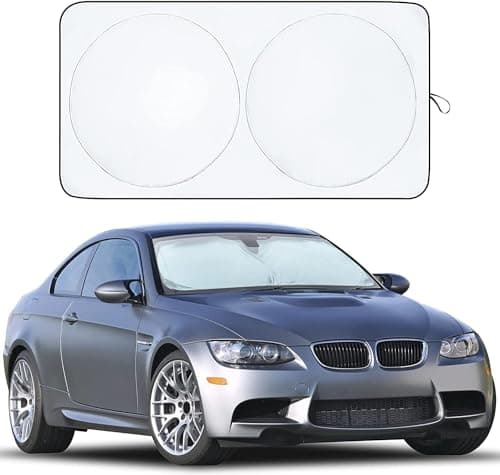
A protectant slows UV damage to the dashboard. A windshield shade stops the UV arriving at the dashboard, which is a better intervention by a wide margin — and it addresses the heat as well, which no coating does.
A shade also costs less than a year of protectant, requires no application, and has the secondary benefit of a cabin you can get into in August. If you buy one thing on this page, make it the shade — see best windshield sun shades and how to keep your car cool when parked.
Use both if you park outside regularly. The shade handles the hours the car is parked; the protectant handles the hours you are driving with the sun on the dash. The whole sun-protection argument is in how to protect your car interior from sun.
If the dashboard is already cracked
Nothing on this page helps. A crack is broken material, and protectant is a surface coating — applying it to a cracked dash makes the cracks slightly more visible if anything, because it evens out the surrounding surface.
The realistic options at that point are a dash cover, which hides it and adds UV protection to what remains, or replacement. And a shade from then on, so the rest of the dash does not follow.
The same UV story plays out on the outside of the car, where it clouds polycarbonate headlight lenses and costs you measurable light output at night. That one is reversible, though with abrasive work rather than a wipe best headlight restoration kits.
Every pick, with the working
Each entry lists the specifications the maker publishes, the axis scores those specifications produce, and what you give up. Rows that read “Not published” are not omissions on our side: they are things the maker will not commit to in writing, and they cost the product points on the transparency axis. Specifications compiled September 4, 2026.
Our pickThe cheapest real temperature drop in the car
EcoNour Windshield Sun Shade
240T polyester with a reflective coating and reinforced steel rings, in sizes from 53 by 30 up to 75 by 37 inches. EcoNour states its shades keep an interior up to 40 F cooler and block 99 percent of heat and UV. Those are the maker's own figures rather than an independent test, and even at half of them this is the best dollar-per-degree in the whole car.
- Material
- 240T polyester with reflective coating
- Frame
- Reinforced steel rings
- Sizes published
- 53x30, 59x29, 64x32, 66x27, 75x37 in
- Maker's temperature claim
- Up to 40 F cooler interior
- Maker's UV claim
- Blocks 99% of heat and UV
- Independent verification
- Not published
- Warranty
- Not published
List price $20.99 per EcoNour's own store, 53 x 30 in umbrella model, captured on the compile date below. Not a live price and not what you will pay — the button is where the real number is.
What it gets right
- Multiple published sizes, so you can actually match your windshield rather than fold a compromise
- Reinforced steel rings, which is what stops the frame collapsing after one summer
- Under $25 across most sizes
- Folds down small enough to live behind a seat rather than in the trunk
Flaws
- The 40 F figure is EcoNour's own claim, not an independent measurement, and the conditions behind it are not published
- You have to actually put it up every time, which is the real reason sun shades fail
- Sizing is on you: too small leaves a gap, too big will not sit flat
The working behind the 9.3
- Heat headroom: not scored (weight 22%)
- The maker publishes no operating-temperature ceiling, so this axis is dropped and the other weights are re-normalized.
- Install effort: 10.0 (weight 24%)
- Drops in and sits there. No fixing of any kind, and it comes out again when you sell the car.
- Price against the ceiling: 10.0 (weight 24%)
- Listed at $20.99 on the compile date. This site's buyer has a practical ceiling around $150 for a single upgrade, so the scale rewards everything under $100 and falls away sharply past $150. The live price is very often different, and that is what the button is for.
- Written commitment: not scored (weight 15%)
- No warranty term published, so this axis is dropped and the other weights are re-normalized.
- Spec transparency: 7.1 (weight 15%)
- 5 of the 7 specifications we went looking for are published by the maker (71%). A blank row is never a guess here: it prints “Not published” and it costs the product points, because a figure nobody will commit to in writing is a figure you cannot check.
Axes with no published input are dropped and the remaining weights re-normalized, so a product is not punished for a category where an axis does not apply. Specifications compiled September 4, 2026 from EcoNour's windshield sunshade range.
2One bottle for the whole cabin
Meguiar's Ultimate Interior Detailer
Skip this one. The better maintenance product and the weaker sun-protection one. It cleans and protects in one step across every surface including screens, which is genuinely useful — but it publishes no UV figure at all, and on a page about UV protection that is the specification that decides it.
Cleans and protects in a single step across every interior surface including navigation screens, which is what makes it the practical choice for maintenance rather than restoration. It publishes no UV figure, which is where the 303 beats it.
- Size
- 15.2 fl oz
- Surfaces
- All interior including screens, dash, door panels, console
- Finish
- Non-greasy satin
- UV
- UV inhibitors stated, no figure published
- Duration
- Stated as weeks, no interval published
- Warranty
- Not published
- List price
- Not published
What it gets right
- Stated safe on all interior surfaces including stereo and navigation screens — most protectants are not
- One step rather than two, which means it actually gets used
- Non-greasy satin finish, so no glare off the dash
- Stated to contain UV inhibitors against fading, browning and cracking
Flaws
- No published UV figure of any kind — 'superior UV protection' is not a specification
- A combined cleaner-protectant is a compromise at both jobs compared with doing them separately
- 'Lasts for weeks' is not an interval you can plan around
The working behind the 8.9
- Heat headroom: not scored (weight 22%)
- The maker publishes no operating-temperature ceiling, so this axis is dropped and the other weights are re-normalized.
- Install effort: 10.0 (weight 24%)
- Drops in and sits there. No fixing of any kind, and it comes out again when you sell the car.
- Price against the ceiling: not scored (weight 24%)
- No published list price we could cite on the compile date, so this axis is dropped and the other weights are re-normalized.
- Written commitment: not scored (weight 15%)
- No warranty term published, so this axis is dropped and the other weights are re-normalized.
- Spec transparency: 7.1 (weight 15%)
- 5 of the 7 specifications we went looking for are published by the maker (71%). A blank row is never a guess here: it prints “Not published” and it costs the product points, because a figure nobody will commit to in writing is a figure you cannot check.
Axes with no published input are dropped and the remaining weights re-normalized, so a product is not punished for a category where an axis does not apply. Specifications compiled September 4, 2026 from Meguiar's Ultimate Interior Detailer published information.
3A dashboard in permanent sunlight
303 Automotive Protectant
The only interior protectant here that publishes a comparable UV figure — an SPF 40 equivalent — instead of saying 'UV protection' and stopping. It also dries matte, which matters because a shiny dashboard reflects into the windshield.
- UV rating
- SPF 40 equivalent
- Duration per application
- 30 to 45 days
- Finish
- Matte, non-greasy
- Surfaces
- Vinyl, rubber, plastic, leather
- Warranty
- Not published
- List price
- Not published
What it gets right
- Publishes an SPF 40 rating, a number you can compare, where the category publishes adjectives
- Dries to a matte finish — a glossy dash reflects sunlight straight into the windshield in your eyeline
- Stated 30 to 45 days per application, so you know the reapplication interval rather than guessing
- Works on vinyl, rubber, plastic and leather, so one bottle covers the cabin
Flaws
- 30 to 45 days means this is a recurring job, not a one-time treatment
- Any protectant on a steering wheel or pedals is a slip hazard — keep it off contact surfaces
- It slows UV damage; it does not reverse a dashboard that has already cracked
The working behind the 8.7
- Heat headroom: not scored (weight 22%)
- The maker publishes no operating-temperature ceiling, so this axis is dropped and the other weights are re-normalized.
- Install effort: 10.0 (weight 24%)
- Drops in and sits there. No fixing of any kind, and it comes out again when you sell the car.
- Price against the ceiling: not scored (weight 24%)
- No published list price we could cite on the compile date, so this axis is dropped and the other weights are re-normalized.
- Written commitment: not scored (weight 15%)
- No warranty term published, so this axis is dropped and the other weights are re-normalized.
- Spec transparency: 6.7 (weight 15%)
- 4 of the 6 specifications we went looking for are published by the maker (67%). A blank row is never a guess here: it prints “Not published” and it costs the product points, because a figure nobody will commit to in writing is a figure you cannot check.
Axes with no published input are dropped and the remaining weights re-normalized, so a product is not punished for a category where an axis does not apply. Specifications compiled September 4, 2026 from 303 Automotive Protectant published specifications.
4Doing it properly rather than quickly
Chemical Guys Easy All Interior Care Kit
Leather cleaner and conditioner, streak-free glass spray, microfiber towels and quick wipes, sold as a set. The glass spray is the item that earns the kit its place: the film on the inside of a windshield is the single biggest contributor to night glare, and almost nobody owns a cleaner that removes it without leaving a haze.
- Contents
- Leather cleaner and conditioner, glass spray, microfiber towels, quick wipes
- Interior type
- Leather-focused
- Bottle volumes
- Not published
- List price
- Not published
- Warranty
- Not published
What it gets right
- Includes a proper glass cleaner, which is the most-skipped and most-valuable interior job
- Leather cleaner and conditioner as separate steps rather than a single 'wipe' product
- Microfiber towels included, so the kit is genuinely complete
- Chemical Guys publishes what is in each kit, which lets you compare kits rather than trusting a photo
Flaws
- Leather products are wasted on a cloth interior — check which kit matches your seats
- More expensive than a supermarket bundle, and for a car you keep clean anyway that is hard to justify
- Chemical Guys publishes no bottle volumes on the kit page, so value per ounce is unknowable
The working behind the 7.7
- Heat headroom: not scored (weight 22%)
- The maker publishes no operating-temperature ceiling, so this axis is dropped and the other weights are re-normalized.
- Install effort: 10.0 (weight 24%)
- Drops in and sits there. No fixing of any kind, and it comes out again when you sell the car.
- Price against the ceiling: not scored (weight 24%)
- No published list price we could cite on the compile date, so this axis is dropped and the other weights are re-normalized.
- Written commitment: not scored (weight 15%)
- No warranty term published, so this axis is dropped and the other weights are re-normalized.
- Spec transparency: 4.0 (weight 15%)
- 2 of the 5 specifications we went looking for are published by the maker (40%). A blank row is never a guess here: it prints “Not published” and it costs the product points, because a figure nobody will commit to in writing is a figure you cannot check.
Axes with no published input are dropped and the remaining weights re-normalized, so a product is not punished for a category where an axis does not apply. Specifications compiled September 4, 2026 from Chemical Guys' Easy All Interior Care Kit page.
Prices last verified October 22, 2026. They move constantly; the figure on Amazon when you click is the real one.
Questions people actually ask
Does dashboard protectant actually work?
It leaves a sacrificial layer containing UV absorbers, which slows degradation of the plastic beneath. It works and it is not permanent — 303 states a 30 to 45 day interval, which is the honest version.
Why should I avoid shiny dashboard products?
A glossy dash reflects into a raked windshield and puts a ghost image in your view of the road. Greasy dressings also transfer onto the inside of the glass, which is what scatters oncoming headlights at night.
How often should I apply it?
303 publishes 30 to 45 days. Meguiar's states “weeks” without a figure. Monthly is a reasonable rhythm for a car parked outside, less often for one that lives in a garage.
Can I use protectant on my steering wheel?
No. Any protectant on a contact surface is a slip hazard, and the steering wheel is the worst possible place for one. The same goes for the gear selector and pedals.