The best power banks for car travel
A power bank is for when you are away from the car, not in it. And the specification that decides whether you can fly with it is one almost nobody prints.
By Sawyer V. · Published · How we research
We have not tested any of this. Everything below is compiled from published manufacturer specifications, and the arithmetic is printed so you can check it. This page carries affiliate links: if you buy through one we earn a commission at no extra cost to you, and it does not change the order of the picks. Full disclosure.
The short answer
Buy the Anker 737 if you fly, the 313 if you do not. The 737 publishes 86.4 Wh explicitly, which is the number airlines actually use — the limit is 100 Wh, and it is stated in watt-hours, not the milliamp-hours every listing leads with. The 313's 10,000 mAh is the sensible size for road trips. Do not store any lithium pack in a parked car in summer — a cabin reaching 60-70 C is not where lithium cells should live.
| # | Pick | Install | Score | Price |
|---|---|---|---|---|
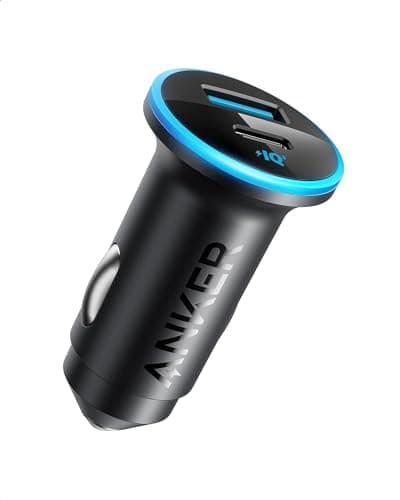
| 1 | Anker 323 Car Charger (52.5W) The one most people should actually buy | Plugs in | 9.2/10 | $14.99 - view on Amazon |
| 2 | Anker 737 Power Bank (PowerCore 24K) Charging a laptop away from the car | Plugs in | 8.1/10 | $109.99 - view on Amazon |
| 3 | Anker 313 Power Bank (PowerCore 10K) A phone that needs to survive the day | Plugs in | 7.7/10 | $20.89 - view on Amazon |
Prices last verified October 22, 2026. They move constantly; the figure on Amazon when you click is the real one.
Watt-hours is the number, and almost nobody prints it
Every power bank is sold on milliamp-hours, and milliamp-hours alone are meaningless without a voltage. A 10,000 mAh pack at 3.7V and a 10,000 mAh pack at 7.4V store completely different amounts of energy.
Watt-hours resolves it, because watt-hours is energy: capacity multiplied by voltage. It is also the unit airlines use. The widely applied limit for carry-on lithium batteries without special approval is 100 Wh, and it is stated in watt-hours on every airline page.
Anker publishes 86.4 Wh for the 737 explicitly, which is unusual and genuinely useful: it tells you the pack is under the limit without you having to work it out or hope. For any pack that does not publish it, the rough conversion is capacity in amp-hours times the cell voltage, which for most packs means dividing mAh by 1000 and multiplying by 3.7.
The rule that matters more than any specification
Do not leave a lithium power bank in a parked car in summer. A cabin reaches roughly 60-70 C, and neither Anker nor anyone else in this category publishes an operating temperature range for these packs.
Heat degrades lithium cells, permanently and cumulatively. A pack that lives in a glovebox through a hot summer will hold noticeably less charge afterwards, and the degradation is not recoverable.
This is the practical difference between a power bank and a 12V charger, and it is the reason a charger is the correct in-car product. A charger has no cells to degrade. It draws from the alternator, supplies power indefinitely while the engine runs, and is unbothered by being left in a hot car — the arithmetic on leaving one plugged in is in does a car charger drain your battery.
Sizing it honestly
| Anker 313 (10K) | Anker 737 (24K) | |
|---|---|---|
| Capacity | 10,000 mAh | 24,000 mAh |
| Watt-hours published | No | 86.4 Wh |
| Maximum power | Modest | 140 W in and out |
| Phone charges | 2-3 full (maker figure) | Several, plus a laptop top-up |
| Charges a laptop | Not meaningfully | Yes |
| Portable in a pocket | Yes | No |
The honest sizing advice: most people buy too large. A 10,000 mAh pack covers two to three full phone charges on Anker's own figure, which is more than a weekend needs, and it is small enough that bringing it indoors is not a chore — which matters, because bringing it indoors is the thing that keeps it healthy.
Buy the 24,000 mAh class only if you genuinely need to charge a laptop away from power. It is heavy, it is expensive, and it is luggage rather than a pocket item.
Charging a laptop from a pack
The 737's 140W in and out is the specification that makes this real. Most laptops charge over USB-C Power Delivery, and a pack that can deliver enough wattage will charge one properly rather than merely slowing the discharge.
Two things to check. First, your laptop's own required wattage — a high-power laptop under load can draw more than a pack supplies, in which case it charges only when idle or asleep. Second, the cable: a USB-C cable without an E-marker is capped at 3 A, about 60W at 20V, which will silently halve what a 140W pack can deliver.
In the car itself there is a better answer for laptops, and it is not a power bank — see can you charge a laptop in your car.
What a power bank is actually for
One thing it is definitively not for is starting the car. A pack can hold several times the energy of a jump starter and still be unable to turn an engine over, because the limit is peak current rather than capacity — power bank against jump starter works through the figures.
Once you accept that a charger is better in the car, the power bank's role becomes clear and genuinely useful:
- Away from the vehicle. A day out, a hike, a beach, a festival — anywhere the car is parked and you are not in it
- Flights and airports. Where the 86.4 Wh figure earns its keep
- A breakdown. A phone with navigation running goes flat quickly, and a dead car means no charger. This is a real argument for keeping one in the emergency kit — brought in from the heat between trips
- Rear passengers. Cheaper and less cluttered than running cables to the back seat
For the breakdown case specifically, a power bank is a complement to rather than a substitute for a jump starter — those store far more energy and are designed for a different job. See best portable jump starters and best emergency car kits.
Keeping it charged, which is the actual failure
The most common way a power bank fails you is that it was flat. They self-discharge slowly, and a pack that has sat in a bag for six months is not at the level you left it.
Two habits fix it: charge it at the start of any trip you might need it on, and top it up every few months regardless. Storing lithium cells at a middling charge rather than full or empty is generally kinder to them, which suits an occasional-use pack well.
And in the car, a proper 12V charger removes the problem entirely — that is the point of best USB-C car chargers and best multi-port car chargers.
Every pick, with the working
Each entry lists the specifications the maker publishes, the axis scores those specifications produce, and what you give up. Rows that read “Not published” are not omissions on our side: they are things the maker will not commit to in writing, and they cost the product points on the transparency axis. Specifications compiled September 4, 2026.
Our pickThe one most people should actually buy
Anker 323 Car Charger (52.5W)
Two ports, 52.5W total, and a published voltage table showing 30W maximum on the USB-C port. Thirty watts charges any phone at or near its own ceiling, which means the 67W chargers above it are selling you headroom nothing in your pocket can use. At $19.99 this is the honest default.
- Ports
- 1 x USB-C, 1 x USB-A
- Total output
- 52.5 W
- USB-C output
- 5V/3A, 9V/3A, 12V/2.5A, 15V/2A, 20V/1.5A (30 W max)
- USB-A output
- 5V/3A, 9V/2A, 10V/2.25A (22.5 W max)
- Input
- 12V at 5.6 A, 24V at 3.6 A
- Safety
- ActiveShield 2.0
- Model
- A2735
- Warranty
- 18 months
- Operating range
- Not published
List price $19.99 per Anker's own store, captured on the compile date below. Not a live price and not what you will pay — the button is where the real number is.
What it gets right
- Anker publishes the full PDO table — 5V/3A, 9V/3A, 12V/2.5A, 15V/2A, 20V/1.5A — rather than a headline number
- 30 W on USB-C is at or above what almost every phone will accept
- Input rated 12V and 24V, so it works in a truck as well as a car
- $19.99 list and physically small, which matters in a tight console
Flaws
- Two ports, not three. A second passenger and a tablet is one device too many
- 30 W will not charge a laptop at any useful speed
- The USB-A port tops out at 22.5 W, so it is the slow one
The working behind the 9.2
- Heat headroom: not scored (weight 22%)
- The maker publishes no operating-temperature ceiling, so this axis is dropped and the other weights are re-normalized.
- Install effort: 10.0 (weight 24%)
- Plugs into a 12V socket or a USB port. Nothing to mount, nothing to route, reversible in a second.
- Price against the ceiling: 10.0 (weight 24%)
- Listed at $19.99 on the compile date. This site's buyer has a practical ceiling around $150 for a single upgrade, so the scale rewards everything under $100 and falls away sharply past $150. The live price is very often different, and that is what the button is for.
- Written commitment: 7.0 (weight 15%)
- 18-month warranty. This is the only promise in the entire listing that a court would read, which is why it is scored and the marketing copy is not.
- Spec transparency: 8.9 (weight 15%)
- 8 of the 9 specifications we went looking for are published by the maker (89%). A blank row is never a guess here: it prints “Not published” and it costs the product points, because a figure nobody will commit to in writing is a figure you cannot check.
Axes with no published input are dropped and the remaining weights re-normalized, so a product is not punished for a category where an axis does not apply. Specifications compiled September 4, 2026 from Anker's 323 Car Charger product page.
2Charging a laptop away from the car
Anker 737 Power Bank (PowerCore 24K)
24,000 mAh at up to 140 W in and out, and — the specification that actually matters for travel — Anker publishes the watt-hour figure of 86.4 Wh, which sits under the 100 Wh airline carry-on limit.
- Capacity
- 24,000 mAh
- Energy
- 86.4 Wh (under the 100 Wh airline limit)
- Maximum power
- 140 W input and output
- Operating temperature
- Not published
- Warranty
- Not published
- List price
- Not published
What it gets right
- Publishes 86.4 Wh explicitly, which is the number airlines care about and almost nobody prints
- Up to 140 W input and output, enough for most laptops rather than just phones
- 24,000 mAh is several full phone charges plus a laptop top-up
- Charges itself fast, so it is realistic to refill between legs of a trip
Flaws
- Heavy and bulky compared with a 10K pack — this is luggage, not a pocket item
- Leaving any lithium pack in a parked car in summer is a bad idea, and no operating range is published
- Overkill if all you need is a phone topped up on a commute
The working behind the 8.1
- Heat headroom: not scored (weight 22%)
- The maker publishes no operating-temperature ceiling, so this axis is dropped and the other weights are re-normalized.
- Install effort: 10.0 (weight 24%)
- Plugs into a 12V socket or a USB port. Nothing to mount, nothing to route, reversible in a second.
- Price against the ceiling: not scored (weight 24%)
- No published list price we could cite on the compile date, so this axis is dropped and the other weights are re-normalized.
- Written commitment: not scored (weight 15%)
- No warranty term published, so this axis is dropped and the other weights are re-normalized.
- Spec transparency: 5.0 (weight 15%)
- 3 of the 6 specifications we went looking for are published by the maker (50%). A blank row is never a guess here: it prints “Not published” and it costs the product points, because a figure nobody will commit to in writing is a figure you cannot check.
Axes with no published input are dropped and the remaining weights re-normalized, so a product is not punished for a category where an axis does not apply. Specifications compiled September 4, 2026 from Anker 737 published specifications.
3A phone that needs to survive the day
Anker 313 Power Bank (PowerCore 10K)
Skip this one. In the car itself this is the wrong product entirely, and it is here to make that point. A 12V charger draws from the alternator continuously and never needs recharging; a power bank is a finite reserve you have to remember to refill. Buy the pack for away from the vehicle, and a charger for in it.
10,000 mAh is two to three full phone charges in something you can actually carry. For a car it is the sensible size: enough to matter, small enough that taking it inside on a hot day is not a chore.
- Capacity
- 10,000 mAh
- Phone charges
- Two to three full charges (maker figure)
- Operating temperature
- Not published
- Warranty
- Not published
- List price
- Not published
What it gets right
- 10,000 mAh gives two to three full smartphone charges on Anker's own figure
- Small and light enough to live in a bag rather than a trunk
- Far cheaper than a laptop-capable pack, and covers what most people actually need
- Easy to bring indoors, which matters because heat is what kills lithium cells
Flaws
- Will not charge a laptop meaningfully
- No published operating temperature range
- A power bank is a backup for a charger, not a replacement — in a car, a 12V charger is better in every way
The working behind the 7.7
- Heat headroom: not scored (weight 22%)
- The maker publishes no operating-temperature ceiling, so this axis is dropped and the other weights are re-normalized.
- Install effort: 10.0 (weight 24%)
- Plugs into a 12V socket or a USB port. Nothing to mount, nothing to route, reversible in a second.
- Price against the ceiling: not scored (weight 24%)
- No published list price we could cite on the compile date, so this axis is dropped and the other weights are re-normalized.
- Written commitment: not scored (weight 15%)
- No warranty term published, so this axis is dropped and the other weights are re-normalized.
- Spec transparency: 4.0 (weight 15%)
- 2 of the 5 specifications we went looking for are published by the maker (40%). A blank row is never a guess here: it prints “Not published” and it costs the product points, because a figure nobody will commit to in writing is a figure you cannot check.
Axes with no published input are dropped and the remaining weights re-normalized, so a product is not punished for a category where an axis does not apply. Specifications compiled September 4, 2026 from Anker 313 published specifications.
Prices last verified October 22, 2026. They move constantly; the figure on Amazon when you click is the real one.
Questions people actually ask
Can I take a power bank on a plane?
Generally yes in carry-on, under the widely applied 100 Wh limit. Anker publishes 86.4 Wh for the 737 specifically so you can confirm it. Rules vary by airline and jurisdiction, so check yours rather than relying on a general figure.
Can I leave a power bank in my car?
We would not. A parked cabin reaches roughly 60-70 C in summer, heat permanently degrades lithium cells, and no maker in this category publishes an operating range. Bring it inside.
Do I need a power bank if I have a car charger?
Not for driving. A charger is better in every way inside the car. A power bank is for when you are away from the vehicle, or for a breakdown when the car cannot supply anything.
What size power bank should I buy?
10,000 mAh covers two to three phone charges and stays pocketable. Step up to the 24,000 mAh class only if you need to charge a laptop away from power — it is heavier and more expensive for capacity most people do not use.