Power bank or jump starter?
The published figures make this look like the wrong way round: the power bank holds far more energy. Starting an engine is not an energy problem, which is why it still cannot do it.
By Sawyer V. · Published · How we research
We have not tested any of this. Everything below is compiled from published manufacturer specifications, and the arithmetic is printed so you can check it. This page carries affiliate links: if you buy through one we earn a commission at no extra cost to you, and it does not change the order of the picks. Full disclosure.
The short answer
They are not alternatives and neither substitutes for the other. A jump starter delivers a very large current for a couple of seconds into a battery; the NOCO GB40 publishes 1,000 peak amps from a pack of just 24 Wh. A power bank delivers a small current for hours; the Anker 737 publishes 86.4 Wh — over three times the stored energy — and a 140 W ceiling, which is nowhere near enough to turn a starter motor. If you can only buy one, buy the jump starter, because a dead battery strands you and a dead phone usually does not.
| # | Pick | Install | Score | Price |
|---|---|---|---|---|
| 1 | Anker 737 Power Bank (PowerCore 24K) Charging a laptop away from the car | Plugs in | 8.1/10 | $109.99 - view on Amazon |
| 2 | NOCO Boost Plus GB40 Not needing anybody else's car | Plugs in | 8.0/10 | Check price on Amazon |
| 3 | Anker 313 Power Bank (PowerCore 10K) A phone that needs to survive the day | Plugs in | 7.7/10 | $20.79 - view on Amazon |
Prices last verified September 28, 2026. They move constantly; the figure on Amazon when you click is the real one.
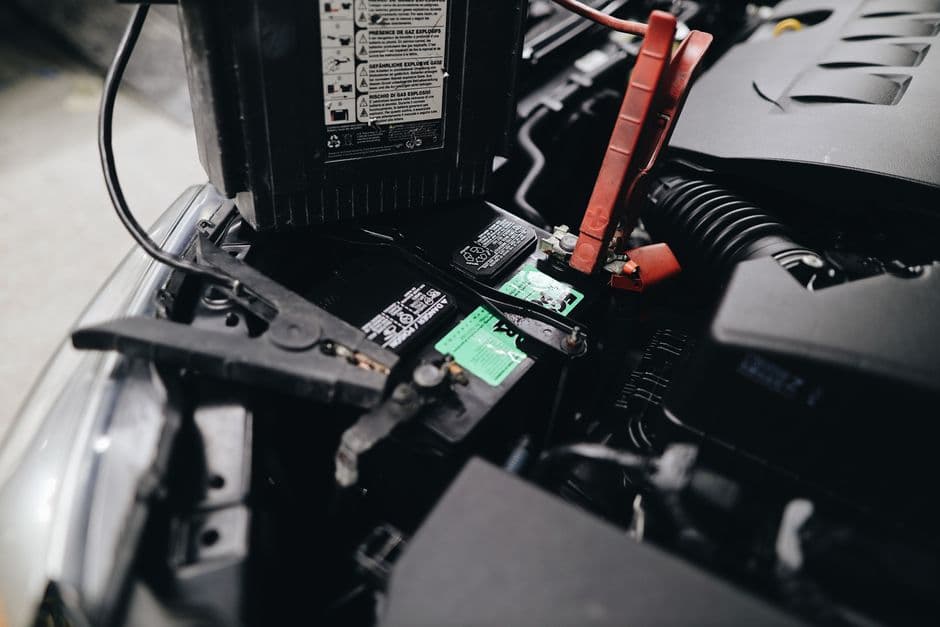
Why the bigger battery loses
This is the part that makes the whole comparison make sense, and it takes one paragraph.
Turning an engine over needs a very large current — hundreds of amps — for one or two seconds. Total energy barely matters, because the event is so short. What matters is how fast the pack can dump charge, which is a function of its cell chemistry, its internal resistance and the conductor it dumps through. A jump starter is built around that one requirement: heavy clamps, thick short cables, cells chosen for discharge rate.
A power bank is built around the opposite requirement. It stores as much energy as possible and releases it slowly and safely through a USB port, with a 140 W ceiling on the best of them. A USB port physically cannot pass starter-motor current, and there are no clamps to attach if it could. The Anker 737 holds 3.6 times the energy of the GB40 and is the wrong tool by a wide margin.
The published figures, side by side
| NOCO GB40 jump starter | Anker 737 power bank | |
|---|---|---|
| Stored energy | 24 Wh | 86.4 Wh |
| Peak output | 1,000 amps | 140 W |
| Starts an engine | Yes — gasoline to 6.0 L, diesel to 3.0 L | No |
| Charges a phone | Yes, but it is a small pack | Yes, several times over |
| Charges a laptop | No | Yes, at 140 W |
| Clamps included | Yes, spark-proof and reverse-polarity protected | No |
| Weight | 2.4 lb with clamps | Not published here |
| Airline carry-on | Check the carrier | Under the 100 Wh limit |
That last row is the one genuine advantage of the power bank as a travel item: Anker publishes86.4 Wh specifically because it sits under the 100 Wh threshold most airlines apply to lithium packs in hand luggage. A jump starter is a different conversation with the carrier.
Buy the jump starter when
- You park outside, do short trips, or the car sits for days at a time — the three things that flatten a battery.
- The car is more than about four years old on its original battery.
- You do not want to depend on a stranger stopping, which is the real alternative to owning one.
- Cold winters. Battery capacity falls sharply at low temperature and that is when marginal batteries fail.
Who should skip it: almost nobody who owns a car. This is the item this site recommends first on more pages than any other. The full comparison is on the jump starter page, and how to jump start a car covers using one safely.
Buy the power bank when
- You need power away from the vehicle — a campsite, a flight, a long day out of the car.
- You are charging a laptop, where a 140 W pack genuinely works and a car socket often does not.
- You fly regularly and want something under the airline watt-hour limit.
- You want a backup for when the car’s 12V socket fuse goes, which is a real failure mode.
Who should skip it: anyone buying one to charge a phone in the car. A 12V charger draws from the alternator continuously and never needs recharging itself, which makes a finite pack the wrong product for that job — the power bank page makes that argument in full, and a 12V charger costs a fraction as much.
If you are buying both
- Jump starter first. It solves the failure that ends your journey.
- Then a 12V charger, not a power bank, if the problem is keeping a phone alive while driving.
- Then a power bank, sized for what you do away from the car rather than in it.
- Charge both twice a year. Every lithium pack self-discharges, and the failure mode for both devices is identical: flat when you finally need it. Put it in the same calendar reminder as the smoke alarm.
A jump starter and a tire inflator between them cover most of what actually strands a commuter, which is the two-item kit the emergency kit page builds out from.
Every pick, with the working
Each entry lists the specifications the maker publishes, the axis scores those specifications produce, and what you give up. Rows that read “Not published” are not omissions on our side: they are things the maker will not commit to in writing, and they cost the product points on the transparency axis. Specifications compiled September 4, 2026.
Our pickCharging a laptop away from the car
Anker 737 Power Bank (PowerCore 24K)
24,000 mAh at up to 140 W in and out, and — the specification that actually matters for travel — Anker publishes the watt-hour figure of 86.4 Wh, which sits under the 100 Wh airline carry-on limit.
- Capacity
- 24,000 mAh
- Energy
- 86.4 Wh (under the 100 Wh airline limit)
- Maximum power
- 140 W input and output
- Operating temperature
- Not published
- Warranty
- Not published
- List price
- Not published
What it gets right
- Publishes 86.4 Wh explicitly, which is the number airlines care about and almost nobody prints
- Up to 140 W input and output, enough for most laptops rather than just phones
- 24,000 mAh is several full phone charges plus a laptop top-up
- Charges itself fast, so it is realistic to refill between legs of a trip
Flaws
- Heavy and bulky compared with a 10K pack — this is luggage, not a pocket item
- Leaving any lithium pack in a parked car in summer is a bad idea, and no operating range is published
- Overkill if all you need is a phone topped up on a commute
The working behind the 8.1
- Heat headroom: not scored (weight 22%)
- The maker publishes no operating-temperature ceiling, so this axis is dropped and the other weights are re-normalized.
- Install effort: 10.0 (weight 24%)
- Plugs into a 12V socket or a USB port. Nothing to mount, nothing to route, reversible in a second.
- Price against the ceiling: not scored (weight 24%)
- No published list price we could cite on the compile date, so this axis is dropped and the other weights are re-normalized.
- Written commitment: not scored (weight 15%)
- No warranty term published, so this axis is dropped and the other weights are re-normalized.
- Spec transparency: 5.0 (weight 15%)
- 3 of the 6 specifications we went looking for are published by the maker (50%). A blank row is never a guess here: it prints “Not published” and it costs the product points, because a figure nobody will commit to in writing is a figure you cannot check.
Axes with no published input are dropped and the remaining weights re-normalized, so a product is not punished for a category where an axis does not apply. Specifications compiled September 4, 2026 from Anker 737 published specifications.
2Not needing anybody else's car
NOCO Boost Plus GB40
1,000 peak amps out of a 24 watt-hour lithium pack that weighs 2.4 pounds, rated for gasoline engines to 6.0 liters and diesel to 3.0, with spark-proof clamps and reverse-polarity protection. It is the single accessory here that changes what happens on the worst morning of your year, and it fits in a glovebox.
- Peak amps
- 1,000 A
- Battery
- 24 Wh lithium-ion
- Engine ceiling
- Gasoline to 6.0 L, diesel to 3.0 L
- Starts per charge
- Up to 20
- Dimensions
- 7.7 x 3.2 x 1.7 in
- Weight
- 2.4 lb with clamps
- Light
- 100 lumens
- Safety
- Spark proof, reverse polarity protected
- Operating range
- Not published
List price $99.95 per NOCO's listed price, captured on the compile date below. Not a live price and not what you will pay — the button is where the real number is.
What it gets right
- 1,000 peak amps and up to 20 starts on one charge, both published
- Spark-proof and reverse-polarity protected, which matters when you are doing this in the dark
- 2.4 lb and 7.7 inches long — it genuinely lives in the car rather than the garage
- USB port and a 100-lumen light, so it is also the thing you reach for in a power cut
Flaws
- Lithium, so it self-discharges and needs topping up every few months or it is a brick when you need it
- 6.0 L gasoline and 3.0 L diesel is the published ceiling — a big diesel needs the bigger model
- $99.95 for something you hope never to use
The working behind the 8.0
- Heat headroom: not scored (weight 22%)
- The maker publishes no operating-temperature ceiling, so this axis is dropped and the other weights are re-normalized.
- Install effort: 10.0 (weight 24%)
- Plugs into a 12V socket or a USB port. Nothing to mount, nothing to route, reversible in a second.
- Price against the ceiling: 7.0 (weight 24%)
- Listed at $99.95 on the compile date. This site's buyer has a practical ceiling around $150 for a single upgrade, so the scale rewards everything under $100 and falls away sharply past $150. The live price is very often different, and that is what the button is for.
- Written commitment: 5.5 (weight 15%)
- 12-month warranty. This is the only promise in the entire listing that a court would read, which is why it is scored and the marketing copy is not.
- Spec transparency: 8.9 (weight 15%)
- 8 of the 9 specifications we went looking for are published by the maker (89%). A blank row is never a guess here: it prints “Not published” and it costs the product points, because a figure nobody will commit to in writing is a figure you cannot check.
Axes with no published input are dropped and the remaining weights re-normalized, so a product is not punished for a category where an axis does not apply. Specifications compiled September 4, 2026 from NOCO Boost Plus GB40 published specifications.
3A phone that needs to survive the day
Anker 313 Power Bank (PowerCore 10K)
Skip this one. In the car itself this is the wrong product. A 12V charger supplies power continuously from the alternator and never needs recharging; a power bank is for when you are away from the vehicle.
10,000 mAh is two to three full phone charges in something you can actually carry. For a car it is the sensible size: enough to matter, small enough that taking it inside on a hot day is not a chore.
- Capacity
- 10,000 mAh
- Phone charges
- Two to three full charges (maker figure)
- Operating temperature
- Not published
- Warranty
- Not published
- List price
- Not published
What it gets right
- 10,000 mAh gives two to three full smartphone charges on Anker's own figure
- Small and light enough to live in a bag rather than a trunk
- Far cheaper than a laptop-capable pack, and covers what most people actually need
- Easy to bring indoors, which matters because heat is what kills lithium cells
Flaws
- Will not charge a laptop meaningfully
- No published operating temperature range
- A power bank is a backup for a charger, not a replacement — in a car, a 12V charger is better in every way
The working behind the 7.7
- Heat headroom: not scored (weight 22%)
- The maker publishes no operating-temperature ceiling, so this axis is dropped and the other weights are re-normalized.
- Install effort: 10.0 (weight 24%)
- Plugs into a 12V socket or a USB port. Nothing to mount, nothing to route, reversible in a second.
- Price against the ceiling: not scored (weight 24%)
- No published list price we could cite on the compile date, so this axis is dropped and the other weights are re-normalized.
- Written commitment: not scored (weight 15%)
- No warranty term published, so this axis is dropped and the other weights are re-normalized.
- Spec transparency: 4.0 (weight 15%)
- 2 of the 5 specifications we went looking for are published by the maker (40%). A blank row is never a guess here: it prints “Not published” and it costs the product points, because a figure nobody will commit to in writing is a figure you cannot check.
Axes with no published input are dropped and the remaining weights re-normalized, so a product is not punished for a category where an axis does not apply. Specifications compiled September 4, 2026 from Anker 313 published specifications.
Prices last verified September 28, 2026. They move constantly; the figure on Amazon when you click is the real one.
Questions people actually ask
Can a power bank jump start a car?
No. Starting an engine needs hundreds of amps for a second or two, and a power bank releases energy slowly through a USB port — the Anker 737 tops out at 140 W, and it has no clamps. It holds more total energy than a jump starter and still cannot do the job, because the limit is peak current rather than capacity.
Can a jump starter charge my phone?
Usually yes, most have a USB output. But the GB40 is a 24 Wh pack against the 86.4 Wh of a proper power bank, so it is a small, heavy and expensive way to charge a phone. Treat it as a bonus rather than a reason to buy one.
Which should I buy first?
The jump starter. A flat battery ends the journey and needs a second vehicle or a stranger to fix without one; a flat phone is an inconvenience. If keeping a phone charged while driving is the actual problem, a 12V charger is the right answer rather than a power bank.
Do lithium jump starters lose charge sitting in the trunk?
Yes, slowly, and that is the main way they fail people. Both devices on this page self-discharge over months. Top both up on a schedule you will actually keep — twice a year is enough, and it is the difference between owning one and having one.