How to keep your car cool when it is parked
Seven things, ranked cheapest and easiest first, because the tactic you will actually do beats the one that works better on paper. Two of them are free.
By Sawyer V. · Published · How we research
We have not tested any of this. Everything below is compiled from published manufacturer specifications, and the arithmetic is printed so you can check it. This page carries affiliate links: if you buy through one we earn a commission at no extra cost to you, and it does not change the order of the picks. Full disclosure.
The short list, cheapest first
- Park facing away from the afternoon sun. Free. The windshield is the biggest aperture, so pointing it away is the largest free change available.
- Crack the windows a few millimeters. Free. Lets the hottest air at the headliner escape instead of accumulating.
- Use a windshield shade. Under $25, and the single biggest intervention you can buy.
- Cover the steering wheel and the seat belt buckles. A towel works. These are the two things that burn you.
- Vent before you cool. Windows down for the first minute, then air conditioning. Pushing out the hot air first is faster than trying to chill it.
| # | Pick | Install | Score | Price |
|---|---|---|---|---|
| 1 | EcoNour Windshield Sun Shade The cheapest real temperature drop in the car | Drops in | 9.3/10 | $11.99 - view on Amazon |
| 2 | Kinder Fluff Windshield Sun Shade The only UV claim here with a certification behind it | Drops in | 9.0/10 | Check price on Amazon |
| 3 | SEG Direct Microfiber Leather Wheel Cover The part of the car that burns you | Drops in | 8.6/10 | $19.99 - view on Amazon |
Prices last verified October 19, 2026. They move constantly; the figure on Amazon when you click is the real one.
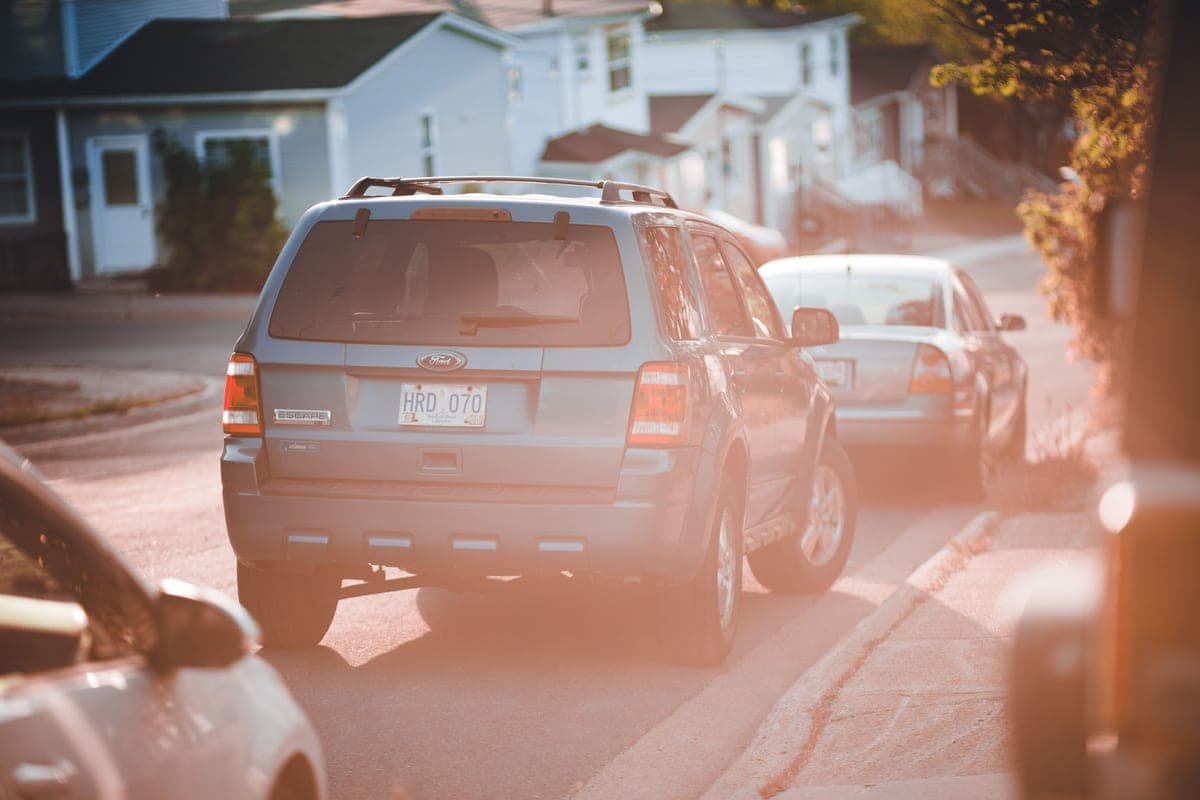
Why a parked car gets so hot
Sunlight passes through glass as visible and near-infrared light, hits the dark surfaces inside, and is re-radiated as longer-wave infrared. Glass is much less transparent to that longer wavelength, so the energy is trapped: it comes in easily and leaves slowly.
Which tells you exactly where the leverage is. Stop the energy coming in — that is the windshield shade and the parking angle — or give the trapped heat a way out, which is the cracked window. Everything on this page is one of those two things.
The seven tactics, ranked by effort
| Tactic | Cost | Effort | What it addresses |
|---|---|---|---|
| Park facing away from the sun | Free | None once it is a habit | Energy in, at the biggest aperture |
| Crack the windows a few mm | Free | Two seconds | Trapped hot air at the headliner |
| Windshield shade | Under $25 | Ten seconds, every time | Energy in, the dominant path |
| Cover the wheel and buckles | Free with a towel | Five seconds | The surfaces that burn you |
| Vent before cooling | Free | One minute | Hot air already in the cabin |
| Side window shades | $15 to $25 | Fit once | Energy in, secondary apertures |
| Ceramic window tint | Hundreds | A day at a shop | Energy in, permanently |
The free one people skip
The windshield is the largest and most steeply angled window on the car, which makes it the dominant path for solar energy. Point it away from where the sun will be when you come back and you have made the biggest available change for nothing.
The practical version: if you park at nine in the morning and return at five, the sun will be in the west. Park facing east. In a lot with a choice of orientation, that is a decision you make in three seconds.
Cracking the windows: how much, and the trade
Hot air rises and accumulates against the headliner. A gap of a few millimeters at the top of two windows lets it escape and lets cooler air in low, which is a convection loop rather than a seal.
The trade is security and rain, and it is real. A few millimeters is not an entry point; two inches is. Use your judgment about where the car is parked, and do not do it if rain is possible — a wet interior is a worse problem than a hot one, and it lasts longer.
The shade, which is the thing to actually buy
Under $25, blocks the dominant heat path, and helps everything in the car: the dashboard plastic, the steering wheel, the adhesive holding a phone mount on, and the dash cam living in the hottest strip of glass in the car.
Manufacturer claims in this category range from a certified 99.87% UVB blocking figure to a much rounder “up to 40 F cooler” with no stated conditions. The shade page sorts out which claims are testable and which are marketing, and covers sizing, which is the part that decides whether it works at all.
Cooling it down once you are back
The instinct is to get in, close the doors and put the air conditioning on maximum. That asks the system to chill a cabin full of very hot air, which takes a while.
Faster: open the windows for the first minute of driving with the fan on and the air conditioning off, so the hot air is physically pushed out and replaced with outside air. Then close up and switch the air conditioning on. You have removed the heat instead of cooling it.
And use fresh air rather than recirculate for that first minute — recirculating is recirculating the hot air you are trying to get rid of. Switch to recirculate once the cabin is close to outside temperature, which is when it becomes the more efficient mode.
What does not do much
- Solar-powered vent fans. Small, in a window gap, moving a trivial volume of air. The gap they need is doing most of the work on its own.
- Leaving the air conditioning running while parked. Fuel, and a running engine, for a car nobody is in.
- Dashboard covers alone. They protect the dashboard from UV, which is worth something, and they do not stop the energy entering the cabin. A windshield shade does both.
What not to leave in a hot car
Anything with a lithium battery, which is most portable electronics. That specifically includes a jump starter, which is a lithium pack that lives in your trunk precisely so it is there when you need it — heat shortens its life and it is worth knowing that a jump starter which has spent three summers in a trunk may not have the charge it claims.
Also: aerosol cans, sunscreen, anything in a plastic bottle you intend to drink, and anything electronic you care about. A dash cam is designed for the environment; the ones with published heat ceilings are on this page, and it is the only category on this site where makers publish the number at all.
Every pick, with the working
Each entry lists the specifications the maker publishes, the axis scores those specifications produce, and what you give up. Rows that read “Not published” are not omissions on our side: they are things the maker will not commit to in writing, and they cost the product points on the transparency axis. Specifications compiled September 4, 2026.
Our pickThe cheapest real temperature drop in the car
EcoNour Windshield Sun Shade
240T polyester with a reflective coating and reinforced steel rings, in sizes from 53 by 30 up to 75 by 37 inches. EcoNour states its shades keep an interior up to 40 F cooler and block 99 percent of heat and UV. Those are the maker's own figures rather than an independent test, and even at half of them this is the best dollar-per-degree in the whole car.
- Material
- 240T polyester with reflective coating
- Frame
- Reinforced steel rings
- Sizes published
- 53x30, 59x29, 64x32, 66x27, 75x37 in
- Maker's temperature claim
- Up to 40 F cooler interior
- Maker's UV claim
- Blocks 99% of heat and UV
- Independent verification
- Not published
- Warranty
- Not published
List price $20.99 per EcoNour's own store, 53 x 30 in umbrella model, captured on the compile date below. Not a live price and not what you will pay — the button is where the real number is.
What it gets right
- Multiple published sizes, so you can actually match your windshield rather than fold a compromise
- Reinforced steel rings, which is what stops the frame collapsing after one summer
- Under $25 across most sizes
- Folds down small enough to live behind a seat rather than in the trunk
Flaws
- The 40 F figure is EcoNour's own claim, not an independent measurement, and the conditions behind it are not published
- You have to actually put it up every time, which is the real reason sun shades fail
- Sizing is on you: too small leaves a gap, too big will not sit flat
The working behind the 9.3
- Heat headroom: not scored (weight 22%)
- The maker publishes no operating-temperature ceiling, so this axis is dropped and the other weights are re-normalized.
- Install effort: 10.0 (weight 24%)
- Drops in and sits there. No fixing of any kind, and it comes out again when you sell the car.
- Price against the ceiling: 10.0 (weight 24%)
- Listed at $20.99 on the compile date. This site's buyer has a practical ceiling around $150 for a single upgrade, so the scale rewards everything under $100 and falls away sharply past $150. The live price is very often different, and that is what the button is for.
- Written commitment: not scored (weight 15%)
- No warranty term published, so this axis is dropped and the other weights are re-normalized.
- Spec transparency: 7.1 (weight 15%)
- 5 of the 7 specifications we went looking for are published by the maker (71%). A blank row is never a guess here: it prints “Not published” and it costs the product points, because a figure nobody will commit to in writing is a figure you cannot check.
Axes with no published input are dropped and the remaining weights re-normalized, so a product is not punished for a category where an axis does not apply. Specifications compiled September 4, 2026 from EcoNour's windshield sunshade range.
2The only UV claim here with a certification behind it
Kinder Fluff Windshield Sun Shade
Reflective polyester in four published sizes, and the only shade in this ledger whose UV claim is stated as a certified test result rather than a round marketing number: 99.87% of UVB and 99.02% of UVA. Two decimal places is what a test report looks like; 99% is what a copywriter writes.
- Material
- Reflective polyester, 210T
- Certified UVB blocking
- 99.87%
- Certified UVA blocking
- 99.02%
- Sizes published
- 24x29 and 33x36 (two piece), 28x31, 64x36 (one piece)
- Cabin temperature claim
- Not published
- Frame
- Not published
- Warranty
- Not published
List price $20.90 per Kinder Fluff's own store, 64 x 36 in single piece, captured on the compile date below. Not a live price and not what you will pay — the button is where the real number is.
What it gets right
- Certified UV figures published to two decimal places, which is a testable claim rather than a slogan
- Four published sizes including a 64 x 36 in single piece and a 33 x 36 in two-piece
- Under $21 across the range
- Two-piece versions fold smaller, so they live behind a seat rather than in the trunk
Flaws
- Kinder Fluff publishes a UV figure and no cabin-temperature figure, so there is nothing to compare against EcoNour's claim
- Two-piece shades leave a seam down the middle of the windshield and a gap if you fit them carelessly
- 210T fabric rather than the 240T some competitors use, though neither publishes what that means in performance
The working behind the 9.0
- Heat headroom: not scored (weight 22%)
- The maker publishes no operating-temperature ceiling, so this axis is dropped and the other weights are re-normalized.
- Install effort: 10.0 (weight 24%)
- Drops in and sits there. No fixing of any kind, and it comes out again when you sell the car.
- Price against the ceiling: 10.0 (weight 24%)
- Listed at $20.9 on the compile date. This site's buyer has a practical ceiling around $150 for a single upgrade, so the scale rewards everything under $100 and falls away sharply past $150. The live price is very often different, and that is what the button is for.
- Written commitment: not scored (weight 15%)
- No warranty term published, so this axis is dropped and the other weights are re-normalized.
- Spec transparency: 5.7 (weight 15%)
- 4 of the 7 specifications we went looking for are published by the maker (57%). A blank row is never a guess here: it prints “Not published” and it costs the product points, because a figure nobody will commit to in writing is a figure you cannot check.
Axes with no published input are dropped and the remaining weights re-normalized, so a product is not punished for a category where an axis does not apply. Specifications compiled September 4, 2026 from Kinder Fluff's windshield sunshade product page.
3The part of the car that burns you
SEG Direct Microfiber Leather Wheel Cover
Skip this one. It insulates the surface you touch rather than stopping the heat arriving, so it treats the symptom. Useful, and second best — block the sun at the windshield first and the wheel never gets that hot.
Microfiber leather over a rubber lining, sized for a 14.5 to 15 inch wheel — and the sizing is the whole product, because a cover that is loose on the rim is worse than no cover at all. It is the cheapest fix for the single most unpleasant thing about getting into a car that has been in the sun.
- Fits wheel diameter
- 14.5 in to 15 in outer diameter
- Dimensions
- 14.96 x 14.96 x 0.2 in
- Outer material
- Microfiber leather
- Lining
- Rubber, non-slip
- Stated resistance
- Heat and cold resistant
- List price
- Not published
- Warranty
- Not published
- Operating range
- Not published
What it gets right
- Published fit range (14.5 to 15 in outer diameter) so you can measure before buying rather than guessing
- Rubber lining under the microfiber, which is what stops it rotating on the rim
- Insulates the one surface you have to grip immediately on a hot day
- Also hides a worn or sticky factory wheel, which is a real reason people buy these
Flaws
- Fitting one is a genuine wrestle — the material has to be warmed and stretched over the rim
- A cover that is even slightly loose will rotate under your hands, which is a safety problem rather than an annoyance
- Adds diameter, which on an already-thick wheel can make the grip too fat
The working behind the 8.6
- Heat headroom: not scored (weight 22%)
- The maker publishes no operating-temperature ceiling, so this axis is dropped and the other weights are re-normalized.
- Install effort: 10.0 (weight 24%)
- Drops in and sits there. No fixing of any kind, and it comes out again when you sell the car.
- Price against the ceiling: not scored (weight 24%)
- No published list price we could cite on the compile date, so this axis is dropped and the other weights are re-normalized.
- Written commitment: not scored (weight 15%)
- No warranty term published, so this axis is dropped and the other weights are re-normalized.
- Spec transparency: 6.3 (weight 15%)
- 5 of the 8 specifications we went looking for are published by the maker (63%). A blank row is never a guess here: it prints “Not published” and it costs the product points, because a figure nobody will commit to in writing is a figure you cannot check.
Axes with no published input are dropped and the remaining weights re-normalized, so a product is not punished for a category where an axis does not apply. Specifications compiled September 4, 2026 from SEG Direct wheel cover published specifications.
Prices last verified October 19, 2026. They move constantly; the figure on Amazon when you click is the real one.
Questions people actually ask
Does cracking the windows actually help?
Yes. Hot air accumulates against the headliner, and a gap of a few millimeters at the top of two windows lets it escape while cooler air enters lower down. The trade is security and rain, so use judgment about where the car is parked.
What is the fastest way to cool a hot car?
Drive with the windows open and the fan on for the first minute to physically push the hot air out, then close up and switch the air conditioning on. Use fresh air rather than recirculate until the cabin is near outside temperature.
Is a windshield sun shade worth buying?
It is the largest single intervention available for under $25 and it helps everything in the car, not just your comfort. The main reason people conclude otherwise is that they stop putting it up.
Do solar-powered car vent fans work?
Marginally. They move a small volume of air and they need a window gap to sit in, and that gap is doing most of the work by itself. The money is better spent on a shade.