Rain repellent or new wiper blades?
Both are sold for the same complaint and one of them makes the other unnecessary less often than people think. Judge the glass and the blade separately.
By Sawyer V. · Published · How we research
We have not tested any of this. Everything below is compiled from published manufacturer specifications, and the arithmetic is printed so you can check it. This page carries affiliate links: if you buy through one we earn a commission at no extra cost to you, and it does not change the order of the picks. Full disclosure.
The short answer
Diagnose the blade first, because a treatment cannot fix it. If the wipers chatter, streak, leave a band they never clear, or judder across the glass, the blade is worn or the glass is contaminated — replace the blade. If the blade sweeps cleanly and the problem is simply that heavy rain overwhelms the sweep, or that you cannot see at night when the glass is wet, a glass treatment is the right purchase. On a well-kept car the honest answer is usually both, in that order.
| # | Pick | Install | Score | Price |
|---|---|---|---|---|
| 1 | Aquapel Glass Treatment The longest published durability in the category | Drops in | 8.1/10 | $33.99 - view on Amazon |
| 2 | Rain-X Original Glass Water Repellent The cheapest way to find out whether you like the effect | Drops in | 7.8/10 | $7.98 - view on Amazon |
| 3 | Bosch ICON Beam Wiper Blade A windshield that ices up | Clips on | 7.4/10 | $52.72 - view on Amazon |
Prices last verified September 28, 2026. They move constantly; the figure on Amazon when you click is the real one.
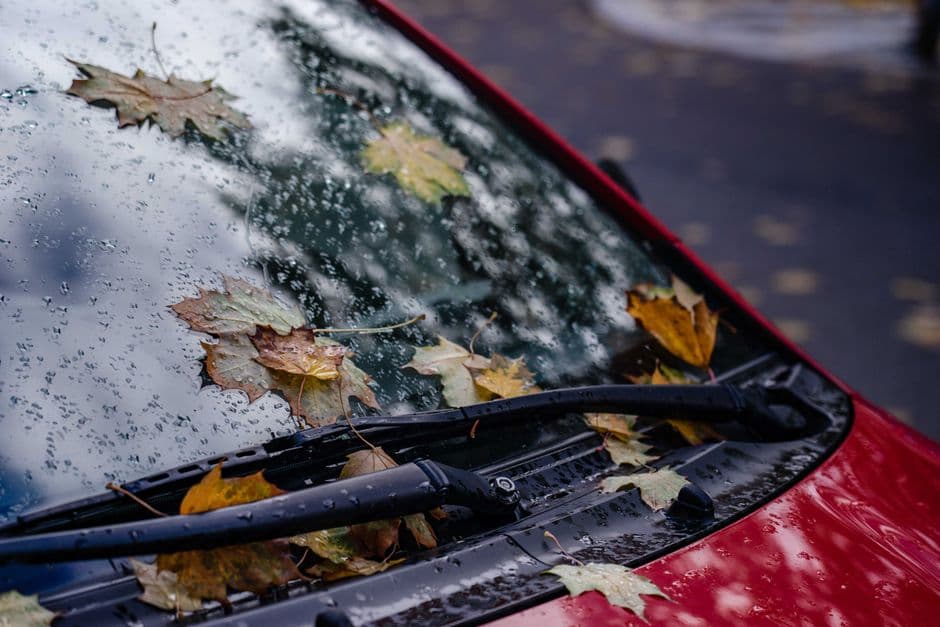
They do genuinely different things
A wiper blade removes water mechanically. A rubber edge in contact with glass, dragged across it. Its job is to leave a clear, even film-free sweep, and it fails by losing edge geometry — the rubber hardens, tears or takes a set, and then it smears instead of clearing.
A glass treatment changes the water’s contact angle. It bonds to the glass and makes the surface hydrophobic, so water beads up and is thrown off by airflow rather than spreading into a sheet. Above roughly 40 mph a treated windshield stays largely clear with the wipers off entirely.
Which means they are not substitutes. A treatment does nothing about a blade that smears. A blade does nothing about the sheet of water that forms between sweeps at speed.
Telling them apart
- Clean the glass properly first. A great deal of what gets blamed on blades is bonded road film. Wash the windshield, then feel it through a plastic bag — if it is rough, it is contaminated and both the blade and any treatment will underperform.
- Wet the glass and run one sweep. Streaks, a missed band, chatter or a juddering sound are blade symptoms. Replace it.
- Then drive in rain at 50 mph. If the sweep is clean but water sheets across the glass between passes, that is the gap a treatment fills.
- Check the washer fluid too. A blade dragged across a dry or dirty windshield smears no matter how new it is — washer fluid is the cheapest part of this system and the one people top up with water.
What each side publishes
| Glass treatment | New blade | |
|---|---|---|
| Fixes | Water sheeting, night glare through wet glass | Streaking, chatter, missed bands |
| Published durability | Aquapel states up to 6 months | Bosch publishes a warranty term |
| Application temperature | Rain-X: above 40 F | Any |
| Effort | 15 minutes, one panel | Minutes, clip-on |
| Repeat interval | Months | Roughly annually |
| Helps with the wipers off | Yes, above about 40 mph | No |
The durability spread in the treatment category is real and worth reading before you buy — the glass treatment page compares what each maker commits to, including the 40 F application rule that catches most people. The wiper page covers beam against framed construction and what actually kills a blade.
Buy the treatment when
- The blades already sweep cleanly and you want better visibility in heavy rain.
- You drive at highway speed in wet weather, where the airflow does the work for you.
- Night driving in rain is the specific complaint — beaded water scatters oncoming light far less than a sheet does.
- You have 15 minutes and the temperature is above the maker’s stated minimum.
Who should skip it: anyone whose wipers are currently smearing, and anyone driving mostly below about 30 mph in town, where there is not enough airflow to clear the beads and the wipers still do all the work.
Buy the blades when
- There is any streak, chatter, judder or band the sweep never clears.
- The rubber is visibly split, hardened or has taken a permanent curve.
- It has been about a year, which is the practical service life regardless of appearance.
- The car has sat outside through a summer — UV does more damage to a blade than use does.
Who should skip it: nobody, eventually. This is a consumable. The question is only whether a treatment should come with it.
The honest answer for most cars
Both, once a year, in the same afternoon, for less than the cost of one middling accessory. Fresh blades, glass properly cleaned and decontaminated, then a treatment applied above the stated temperature. That sequence fixes every failure mode on this page at once, and it is the single cheapest improvement to wet-weather visibility available.
If you are doing this as part of getting ready for winter, the full order — battery, glass, tires, traction — is on the winter accessories guide. For rain specifically, the heavy rain guide covers the deflectors and fluid that go with it.
Every pick, with the working
Each entry lists the specifications the maker publishes, the axis scores those specifications produce, and what you give up. Rows that read “Not published” are not omissions on our side: they are things the maker will not commit to in writing, and they cost the product points on the transparency axis. Specifications compiled September 4, 2026.
Our pickThe longest published durability in the category
Aquapel Glass Treatment
The only glass treatment here that publishes a duration in months rather than leaving you to guess: up to 6 months on a windshield and up to 18 on side glass, from a fluoropolymer that Aquapel states bonds chemically to the glass rather than sitting on top of it. That difference in chemistry is the stated reason for the difference in duration.
- Stated durability
- Up to 6 months windshield, up to 18 months side glass
- Chemistry
- Fluoropolymer, chemically bonded
- Container
- Single-use applicator
- Application temperature
- Not published
- Warranty
- Not published
- List price
- Not published
What it gets right
- Publishes durability — up to 6 months on the windshield, up to 18 months on side windows
- Fluoropolymer stated to bond chemically with the glass rather than forming a surface coating
- Single-use applicator, so the dosing decision is made for you
- Side-window durability is the figure nobody else publishes, and side glass is where wipers cannot help you
Flaws
- Sold as a single-use applicator, so a second car or a re-do is another purchase
- Costs several times what the spray-on competition does
- The '6 times longer' comparison is Aquapel's own claim against unnamed products, not a test
- No warranty published
The working behind the 8.1
- Heat headroom: not scored (weight 22%)
- The maker publishes no operating-temperature ceiling, so this axis is dropped and the other weights are re-normalized.
- Install effort: 10.0 (weight 24%)
- Drops in and sits there. No fixing of any kind, and it comes out again when you sell the car.
- Price against the ceiling: not scored (weight 24%)
- No published list price we could cite on the compile date, so this axis is dropped and the other weights are re-normalized.
- Written commitment: not scored (weight 15%)
- No warranty term published, so this axis is dropped and the other weights are re-normalized.
- Spec transparency: 5.0 (weight 15%)
- 3 of the 6 specifications we went looking for are published by the maker (50%). A blank row is never a guess here: it prints “Not published” and it costs the product points, because a figure nobody will commit to in writing is a figure you cannot check.
Axes with no published input are dropped and the remaining weights re-normalized, so a product is not punished for a category where an axis does not apply. Specifications compiled September 4, 2026 from Aquapel published durability and bonding mechanism.
2The cheapest way to find out whether you like the effect
Rain-X Original Glass Water Repellent
The product that made this category, and the one with the least published about it. Rain-X states no durability figure at all, and the one number it does publish is a constraint people miss: it must be applied above 40 F, which rules out applying it on the cold morning that reminded you to buy it.
- Stated durability
- Not published
- Application temperature
- Above 40 F
- Container
- 3.5 oz and 7 oz
- Chemistry
- Not published
- Applications for full coverage
- Two, per published directions
- Warranty
- Not published
- List price
- Not published
What it gets right
- Cheapest entry to the category by a wide margin, in 3.5 oz and 7 oz bottles
- Publishes a clear application temperature floor — above 40 F
- Application is a wipe-on, haze, wipe-off cycle with no cure time before driving
- Works on any exterior glass, including mirrors
Flaws
- No durability figure published anywhere — how long it lasts is left entirely to you to discover
- The above-40 F requirement means it must be applied in advance of the season you want it for, in a heated garage or a warm spell
- Needs two applications for uniform coverage per Rain-X's own directions, and the haze stage is fiddly
- No warranty
The working behind the 7.8
- Heat headroom: not scored (weight 22%)
- The maker publishes no operating-temperature ceiling, so this axis is dropped and the other weights are re-normalized.
- Install effort: 10.0 (weight 24%)
- Drops in and sits there. No fixing of any kind, and it comes out again when you sell the car.
- Price against the ceiling: not scored (weight 24%)
- No published list price we could cite on the compile date, so this axis is dropped and the other weights are re-normalized.
- Written commitment: not scored (weight 15%)
- No warranty term published, so this axis is dropped and the other weights are re-normalized.
- Spec transparency: 4.3 (weight 15%)
- 3 of the 7 specifications we went looking for are published by the maker (43%). A blank row is never a guess here: it prints “Not published” and it costs the product points, because a figure nobody will commit to in writing is a figure you cannot check.
Axes with no published input are dropped and the remaining weights re-normalized, so a product is not punished for a category where an axis does not apply. Specifications compiled September 4, 2026 from Rain-X Original Glass Water Repellent published directions.
3A windshield that ices up
Bosch ICON Beam Wiper Blade
A bracketless beam blade with a published warranty term, which most wiper blades do not carry. The bracketless design is the functional point: no metal frame means nothing for ice to pack into and jack the blade off the glass.
- Construction
- Bracketless beam, no joints or hinges
- Tension
- Dual steel springs, tension spring arcing
- Rubber
- FX dual rubber, stated heat and ozone resistant
- Warranty
- 12 months
- Rated life
- Not published
- List price
- Not published
What it gets right
- Bracketless beam construction — no joints or hinges for ice and snow to build up in, which is why framed blades lift in winter
- Tension spring arcing applies pressure along the whole blade rather than at a few contact points
- Published 12-month warranty, which is rare on a wear item in this category
- FX dual rubber stated to resist heat and ozone deterioration, the two things that harden a wiper
Flaws
- The 'up to 40% longer life' figure is Bosch's own comparative claim, not an independent test
- Beam blades cost noticeably more than framed blades that clear glass adequately in mild climates
- Blade life is not published in months or wipes, only as a relative claim
- Sold singly on many listings, so a pair is two purchases
The working behind the 7.4
- Heat headroom: not scored (weight 22%)
- The maker publishes no operating-temperature ceiling, so this axis is dropped and the other weights are re-normalized.
- Install effort: 9.0 (weight 24%)
- Clips onto a vent blade or a headrest post. Two minutes, no tools, no adhesive, no residue.
- Price against the ceiling: not scored (weight 24%)
- No published list price we could cite on the compile date, so this axis is dropped and the other weights are re-normalized.
- Written commitment: 5.5 (weight 15%)
- 12-month warranty. This is the only promise in the entire listing that a court would read, which is why it is scored and the marketing copy is not.
- Spec transparency: 6.7 (weight 15%)
- 4 of the 6 specifications we went looking for are published by the maker (67%). A blank row is never a guess here: it prints “Not published” and it costs the product points, because a figure nobody will commit to in writing is a figure you cannot check.
Axes with no published input are dropped and the remaining weights re-normalized, so a product is not punished for a category where an axis does not apply. Specifications compiled September 4, 2026 from Bosch ICON published construction and warranty.
Prices last verified September 28, 2026. They move constantly; the figure on Amazon when you click is the real one.
Questions people actually ask
Does Rain-X replace the need for wipers?
No. Above roughly 40 mph a treated windshield stays largely clear on airflow alone, but below that the wipers still do the work, and no treatment clears the heavy spray thrown up by a truck. It reduces how much you need them; it does not replace them.
Can I put a glass treatment on with old wipers?
You can, and it is the wrong order. A worn blade leaves contamination the treatment then bonds over, so it streaks and fails early. Fit the blade, clean and decontaminate the glass, then apply the treatment.
Why do my new wipers still streak?
Almost always bonded road film on the glass rather than the blade. Wash the windshield and feel it through a thin plastic bag — if it feels rough, decontaminate it. Dry or dirty washer fluid is the other common cause.
How long does a rain repellent last?
It varies by product and the spread is wide. Aquapel states up to six months; other products commit to considerably less. Rain-X also publishes an application rule that catches people out — the glass needs to be above 40 F.