The best rain repellents for car glass
The cheapest product in this category publishes no durability figure at all. The dearest publishes eighteen months. That spread is the whole decision.
By Sawyer V. · Published · How we research
We have not tested any of this. Everything below is compiled from published manufacturer specifications, and the arithmetic is printed so you can check it. This page carries affiliate links: if you buy through one we earn a commission at no extra cost to you, and it does not change the order of the picks. Full disclosure.
The short answer
Aquapel publishes up to 6 months on a windshield and up to 18 months on side glass. Rain-X Original publishes no durability figure at all. The difference is chemistry: Aquapel states its fluoropolymer bonds chemically to the glass, while the cheaper treatments form a surface layer. Whichever you use, Rain-X publishes one constraint everybody misses — apply above 40 F, which means doing it before the weather you want it for.
| # | Pick | Install | Score | Price |
|---|---|---|---|---|
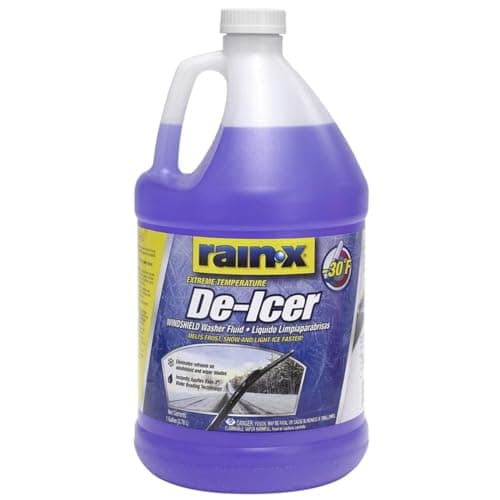
| 1 | Rain-X De-Icer Windshield Washer Fluid A windshield that freezes overnight | Drops in | 9.5/10 | $18.99 - view on Amazon |
| 2 | Aquapel Glass Treatment The longest published durability in the category | Drops in | 8.1/10 | $33.99 - view on Amazon |
| 3 | Rain-X Original Glass Water Repellent The cheapest way to find out whether you like the effect | Drops in | 7.8/10 | $7.98 - view on Amazon |
Prices last verified October 26, 2026. They move constantly; the figure on Amazon when you click is the real one.
What a glass treatment does, and when it matters
A treated windshield makes water bead and roll off instead of sheeting across the glass. At speed, airflow clears the beads without the wipers running at all.
That sounds cosmetic and is not. The real gain is at night in heavy rain, where wipers smear a film across the glass and every oncoming headlight scatters through it. Beaded water scatters less. It is one of the few cheap purchases that measurably improves what you can see when seeing is hardest.
It is also the only thing that helps your side glass, which has no wipers at all. Aquapel publishing a separate, much longer figure for side windows is not a footnote — side glass is where a treatment does its most useful work, because there is no alternative.
The published durability spread
| Aquapel | Rain-X Original | Rain-X Cerami-X | |
|---|---|---|---|
| Stated durability, windshield | Up to 6 months | Not published | Up to 6 weeks |
| Stated durability, side glass | Up to 18 months | Not published | Not published |
| Chemistry | Fluoropolymer, bonded | Not published | Not published |
| Application temperature | Not published | Above 40 F | Not published |
| Format | Single-use applicator | 3.5 / 7 oz bottle | Spray bottle |
| Applications for coverage | One | Two, per directions | Not published |
| Warranty | None | None | None |
Six weeks against six months is a factor of four, and it is the kind of gap that reverses a cost comparison. Aquapel costs several times what a bottle of Rain-X does and comes as a single-use applicator, but if the published figures hold it is doing four to five times the work per application, on a job whose real cost is the twenty minutes of your afternoon.
The 40 F rule, which catches everybody
Rain-X's published directions state the product must be applied in temperatures above 40 F. This is the detail that turns a rainy-morning purchase into a wasted afternoon.
The sequence is always the same. It rains hard, the wipers smear, you buy a bottle, you apply it in the driveway in November, and it hazes unevenly and does not last. The product is fine. The glass was too cold for it to cure.
- Apply in early autumn, or during a warm spell, or in a heated garage — a season ahead of when you want it
- Glass temperature matters, not air temperature. A windshield in shade on a cool day is colder than the forecast
- Clean glass first, properly. A treatment over road film bonds to the film, which then washes off with the treatment on it
Applying it so it actually works
- Wash and dry the glass. Then clean it again with a glass cleaner — the inside of a wash mitt leaves residue
- Decontaminate if the glass feels rough. Bonded contamination on a windshield feels like fine sandpaper and blocks the treatment from reaching the glass
- Apply in overlapping circles, working one section at a time. Rain-X publishes a two-application process for complete and uniform coverage
- Let the haze form, then buff it off with a clean low-pile towel — best microfiber towels for cars
- Do the side windows too. They have no wipers, and on Aquapel's own figures the treatment lasts three times longer there
The streaking people complain about is almost always incomplete buffing at the haze stage, or applying over glass that was not properly clean. Both are process, not product.
What a treatment will not fix
If the wipers chatter, streak or leave a band of unwiped glass, a repellent will not help and may make it more obvious.
Blade rubber hardens with heat and ozone whether you use the wipers or not, and the wiping edge rounds off. A treated windshield with worn blades still smears — the treatment reduces how often you need the blades, it does not improve them — best windshield wipers.
Some drivers also find treated glass makes wipers judder at low speed, because there is less water for the blade to float on. Using the intermittent setting less is usually the answer, which is the point of the treatment anyway.
And in winter the fluid in the reservoir matters more than the coating on the glass. Summer fluid freezes in the lines and on the blades, which is the actual failure on a cold morning — what to keep in your car in winter.
Which one to buy
- You want to do this once a year: Aquapel. It is the only product publishing a duration in months, and the only one publishing a separate figure for side glass
- You want to try the effect cheaply: Rain-X Original, applied above 40 F, accepting that how long it lasts is unpublished and you will find out
- You want the cleaning and the repellency in one step: Rain-X Cerami-X, which publishes up to 6 weeks
None of the three carries a warranty, which is normal for a consumable. All three sit well inside this site's price ceiling, and the cost difference between them is smaller than the cost of doing the job three times.
Every pick, with the working
Each entry lists the specifications the maker publishes, the axis scores those specifications produce, and what you give up. Rows that read “Not published” are not omissions on our side: they are things the maker will not commit to in writing, and they cost the product points on the transparency axis. Specifications compiled September 4, 2026.
Our pickA windshield that freezes overnight
Rain-X De-Icer Windshield Washer Fluid
Skip this one. Not a glass treatment, and on this page because people buy it expecting one. Washer fluid with a repellent additive cleans and leaves a trace of treatment behind; it does not build the bonded layer a dedicated treatment does. It is a genuinely good product for a different job — freeze protection — and it is not a substitute for the two above it.
Publishes an actual freeze point rather than a season name, which is the entire point of buying winter fluid. The -30 F formula is the one to buy if your winter genuinely gets there; anything labeled only 'all season' is a guess.
- Freeze protection
- -30 F (extreme) / -25 F (heavy duty)
- Boiling point
- 186 F (on the -25 F formula)
- Flash point
- 84 F (on the -25 F formula)
- Maximum pH
- 8.5
- Dilution
- Use undiluted
- Extra function
- Water-beading treatment, anti-refreeze
- List price
- Not published
What it gets right
- Publishes a freeze protection figure in degrees — -30 F on the extreme formula, -25 F on the heavy duty
- Also publishes boiling point, flash point and pH on the technical data, which almost no consumer fluid does
- Prevents refreeze on the glass and the wiper blades, which is where summer fluid fails badly
- Applies water-beading treatment as it cleans
Flaws
- Must be used undiluted — topping up over summer fluid dilutes the freeze protection and you will not know by how much
- A winter fluid in a summer climate is money spent on protection you never use
- Fluid does not fix worn wiper blades, which is more often the real cause of poor visibility
The working behind the 9.5
- Heat headroom: not scored (weight 22%)
- The maker publishes no operating-temperature ceiling, so this axis is dropped and the other weights are re-normalized.
- Install effort: 10.0 (weight 24%)
- Drops in and sits there. No fixing of any kind, and it comes out again when you sell the car.
- Price against the ceiling: not scored (weight 24%)
- No published list price we could cite on the compile date, so this axis is dropped and the other weights are re-normalized.
- Written commitment: not scored (weight 15%)
- No warranty term published, so this axis is dropped and the other weights are re-normalized.
- Spec transparency: 8.6 (weight 15%)
- 6 of the 7 specifications we went looking for are published by the maker (86%). A blank row is never a guess here: it prints “Not published” and it costs the product points, because a figure nobody will commit to in writing is a figure you cannot check.
Axes with no published input are dropped and the remaining weights re-normalized, so a product is not punished for a category where an axis does not apply. Specifications compiled September 4, 2026 from Rain-X De-Icer published specifications.
2The longest published durability in the category
Aquapel Glass Treatment
The only glass treatment here that publishes a duration in months rather than leaving you to guess: up to 6 months on a windshield and up to 18 on side glass, from a fluoropolymer that Aquapel states bonds chemically to the glass rather than sitting on top of it. That difference in chemistry is the stated reason for the difference in duration.
- Stated durability
- Up to 6 months windshield, up to 18 months side glass
- Chemistry
- Fluoropolymer, chemically bonded
- Container
- Single-use applicator
- Application temperature
- Not published
- Warranty
- Not published
- List price
- Not published
What it gets right
- Publishes durability — up to 6 months on the windshield, up to 18 months on side windows
- Fluoropolymer stated to bond chemically with the glass rather than forming a surface coating
- Single-use applicator, so the dosing decision is made for you
- Side-window durability is the figure nobody else publishes, and side glass is where wipers cannot help you
Flaws
- Sold as a single-use applicator, so a second car or a re-do is another purchase
- Costs several times what the spray-on competition does
- The '6 times longer' comparison is Aquapel's own claim against unnamed products, not a test
- No warranty published
The working behind the 8.1
- Heat headroom: not scored (weight 22%)
- The maker publishes no operating-temperature ceiling, so this axis is dropped and the other weights are re-normalized.
- Install effort: 10.0 (weight 24%)
- Drops in and sits there. No fixing of any kind, and it comes out again when you sell the car.
- Price against the ceiling: not scored (weight 24%)
- No published list price we could cite on the compile date, so this axis is dropped and the other weights are re-normalized.
- Written commitment: not scored (weight 15%)
- No warranty term published, so this axis is dropped and the other weights are re-normalized.
- Spec transparency: 5.0 (weight 15%)
- 3 of the 6 specifications we went looking for are published by the maker (50%). A blank row is never a guess here: it prints “Not published” and it costs the product points, because a figure nobody will commit to in writing is a figure you cannot check.
Axes with no published input are dropped and the remaining weights re-normalized, so a product is not punished for a category where an axis does not apply. Specifications compiled September 4, 2026 from Aquapel published durability and bonding mechanism.
3The cheapest way to find out whether you like the effect
Rain-X Original Glass Water Repellent
The product that made this category, and the one with the least published about it. Rain-X states no durability figure at all, and the one number it does publish is a constraint people miss: it must be applied above 40 F, which rules out applying it on the cold morning that reminded you to buy it.
- Stated durability
- Not published
- Application temperature
- Above 40 F
- Container
- 3.5 oz and 7 oz
- Chemistry
- Not published
- Applications for full coverage
- Two, per published directions
- Warranty
- Not published
- List price
- Not published
What it gets right
- Cheapest entry to the category by a wide margin, in 3.5 oz and 7 oz bottles
- Publishes a clear application temperature floor — above 40 F
- Application is a wipe-on, haze, wipe-off cycle with no cure time before driving
- Works on any exterior glass, including mirrors
Flaws
- No durability figure published anywhere — how long it lasts is left entirely to you to discover
- The above-40 F requirement means it must be applied in advance of the season you want it for, in a heated garage or a warm spell
- Needs two applications for uniform coverage per Rain-X's own directions, and the haze stage is fiddly
- No warranty
The working behind the 7.8
- Heat headroom: not scored (weight 22%)
- The maker publishes no operating-temperature ceiling, so this axis is dropped and the other weights are re-normalized.
- Install effort: 10.0 (weight 24%)
- Drops in and sits there. No fixing of any kind, and it comes out again when you sell the car.
- Price against the ceiling: not scored (weight 24%)
- No published list price we could cite on the compile date, so this axis is dropped and the other weights are re-normalized.
- Written commitment: not scored (weight 15%)
- No warranty term published, so this axis is dropped and the other weights are re-normalized.
- Spec transparency: 4.3 (weight 15%)
- 3 of the 7 specifications we went looking for are published by the maker (43%). A blank row is never a guess here: it prints “Not published” and it costs the product points, because a figure nobody will commit to in writing is a figure you cannot check.
Axes with no published input are dropped and the remaining weights re-normalized, so a product is not punished for a category where an axis does not apply. Specifications compiled September 4, 2026 from Rain-X Original Glass Water Repellent published directions.
Prices last verified October 26, 2026. They move constantly; the figure on Amazon when you click is the real one.
Questions people actually ask
How long does Rain-X last?
Rain-X publishes no durability figure for the Original Glass Water Repellent. Its Cerami-X product publishes up to 6 weeks. Aquapel is the only treatment here publishing a figure in months — up to 6 on a windshield and up to 18 on side glass.
Can I apply a rain repellent in cold weather?
Rain-X publishes a floor of 40 F for application. That means applying it in advance of the season you want it for, during a warm spell or in a heated garage — not on the cold wet morning that reminded you to buy it.
Does rain repellent damage wiper blades?
No, but it can make them judder at low speed because there is less water on the glass for the blade to float on. Using a slower intermittent setting usually resolves it, and a treated windshield needs the wipers less often anyway.
Should I treat the side windows too?
Yes — side glass has no wipers, so a treatment is the only thing that clears it. On Aquapel's published figures the coating also lasts around three times longer there than on a windshield, because there is no blade wearing it off.