Magnetic vs clamp car mounts
A magnet is faster every single time you use it. A clamp cannot let go. Which matters more depends on your phone, your case and your roads.
By Sawyer V. · Published · How we research
We have not tested any of this. Everything below is compiled from published manufacturer specifications, and the arithmetic is printed so you can check it. This page carries affiliate links: if you buy through one we earn a commission at no extra cost to you, and it does not change the order of the picks. Full disclosure.
The decision
Buy magnetic if your phone has MagSafe or Qi2 magnets built in. Buy a clamp if it does not. That single question settles it for most people. A magnet aligned by the phone's own magnet ring is fast, secure and does not block wireless charging. A magnet relying on a stick-on steel plate is a downgrade in every direction — it blocks wireless charging permanently and its adhesive fails in heat. Clamps also damp vibration better, which matters on rough roads.
| # | Pick | Install | Score | Price |
|---|---|---|---|---|
| 1 | Scosche MagicMount Pro2 Magnetic hold without paying for Qi2 | Clips on | 9.0/10 | Check price on Amazon |
| 2 | ESR HaloLock Qi2 with CryoBoost The heat problem, solved at the mount | Clips on | 8.8/10 | Check price on Amazon |
| 3 | iOttie Easy One Touch 5 Air Vent The default vent mount | Clips on | 8.3/10 | Check price on Amazon |
| 4 | Belkin BoostCharge Pro Qi2 Car Charger The one that comes with everything it needs | Clips on | 8.2/10 | $39.99 - view on Amazon |
Prices last verified October 22, 2026. They move constantly; the figure on Amazon when you click is the real one.
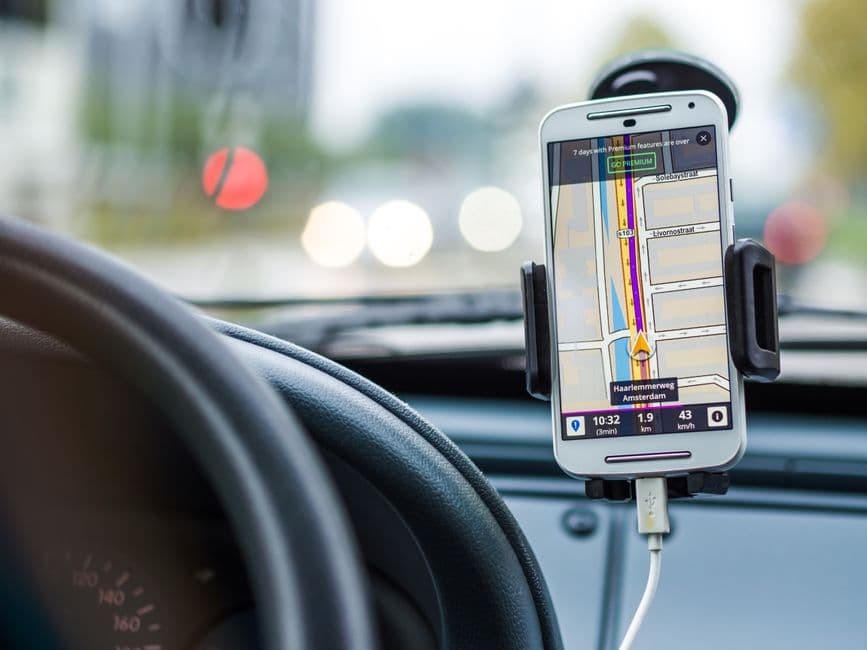
The two mechanisms
A clamp holds the phone by its edges with spring-loaded or ratcheting arms. It is a mechanical grip and it cannot release without something physically moving.
A magnetic mount holds the phone by attraction between magnets in the mount and either magnets in the phone or a ferrous plate attached to it. There is nothing mechanical to fail and nothing to operate.
| Magnetic | Clamp | |
|---|---|---|
| One-handed use | Yes, instantly | Usually, with a good design |
| Holds a heavy phone | Depends on magnet strength and case | Yes, mechanically |
| Works with a thick case | Weakens sharply with distance | Yes, within the clamp range |
| Blocks wireless charging | Only if using a stick-on plate | No |
| Damps vibration | No — couples rigidly | Yes, through the arms |
| Fits any phone | Needs magnets or a plate | Within published dimensions |
The stick-on plate is the whole problem
Magnetic mounts split into two entirely different products depending on how the phone side works, and they get sold as if they were the same thing.
Phones with built-in magnets — MagSafe on iPhones, Qi2 as the open standard that adopted the same magnet ring geometry — attach directly. The ring is positioned around the charging coil, so the mount aligns rather than blocks, and alignment is exactly what makes wireless charging viable in a moving car.
Phones without magnets need a thin steel disc adhered to the back of the phone or inside the case. That disc sits directly over the charging coil and blocks wireless charging entirely, everywhere, not just in the car. And its adhesive is on the hottest surface of a device that lives in a car — it fails eventually, while holding your phone.
Magnet strength, distance, and why cases matter so much
Magnetic force falls off very sharply with distance. A few extra millimeters of case between the phone's magnets and the mount's magnets costs far more holding power than people expect.
This is why a magnetic mount that feels rock solid with a slim case can feel marginal with a rugged one, and why the same mount behaves differently for two people with the same phone. It is also why magnetic mounts are more likely to let go over a pothole than a clamp — the holding force has a hard ceiling, and a sharp vertical acceleration can exceed it.
Practical rule: if you use a thick or rugged case and your phone is at the heavy end, a clamp is the safer mechanism. See best mounts for big phones.
The vibration point, which almost nobody makes
A clamp holds the phone through spring-loaded arms with some compliance in them. A magnetic mount couples the phone rigidly to the mount body, and through it to whatever the mount is attached to.
On smooth roads this is academic. On a rough surface — a work truck on an unpaved road is the clearest case — the magnetic mount transmits considerably more vibration into the phone than a clamp does.
That matters because modern phone cameras use optical or sensor-shift image stabilization, with a lens or sensor element suspended on tiny actuators. Those are designed for handheld movement; sustained vibration is outside what they were built for, and Apple has published guidance specifically about motorcycle mounts for this reason. Car vibration is far lower and the risk correspondingly smaller, but the direction is real — the full picture is in do car mounts damage your phone.
If the mount also charges
Once charging is involved, magnetic wins decisively — because alignment is the entire problem with wireless charging in a car.
Standard Qi requires the coils to line up, and a phone dropped roughly onto a flat pad in a moving car does not line up. You arrive and it did not charge, because it shifted an inch on the first corner. A magnet ring makes misalignment physically difficult, which is why every credible charging mount is magnetic.
The heat trade-off does not go away: wireless charging is lossy, the losses are heat, and a hot phone throttles its own charging. The ESR CryoBoost's active fan is the only design in this ledger that addresses that directly rather than working around it — best wireless charging car mounts and ESR HaloLock vs CryoBoost.
Deciding
- Phone has MagSafe or Qi2 magnets, smooth roads, want charging: magnetic, without hesitation
- Phone has no magnets: clamp, or buy a magnetic case rather than a stick-on plate
- Thick rugged case and a heavy phone: clamp
- Rough roads or a work vehicle: clamp, for the damping — best phone mounts for trucks
- You swap between several phones: clamp, since it does not care what the phone is
Whichever mechanism you pick, the position decision is separate and arguably matters more — vent vs dashboard vs windshield works through it, and where to mount your phone in a car covers the visibility side.
Every pick, with the working
Each entry lists the specifications the maker publishes, the axis scores those specifications produce, and what you give up. Rows that read “Not published” are not omissions on our side: they are things the maker will not commit to in writing, and they cost the product points on the transparency axis. Specifications compiled September 4, 2026.
Our pickMagnetic hold without paying for Qi2
Scosche MagicMount Pro2
N50 neodymium magnets that Scosche states are 30 percent stronger than the original MagicMount, rated to three pounds with the heavy-duty plate, in a head that converts between four mounting positions. On an iPhone 12 or later it grabs the MagSafe ring directly with no plate at all, which makes it the cheapest way to get magnetic convenience.
- Magnet
- N50 neodymium, stated 30% stronger than the original MagicMount
- Weight capacity
- Up to 3 lb with the heavy-duty MagicPlate
- Mounting options
- Vent, FreeFlow vent, dash, swing-arm dash
- MagSafe
- Attaches directly on iPhone 12 and later
- Dimensions
- 7.84 x 3.74 x 3.94 in
- Weight
- 0.6 lb
- Warranty
- Not published
- Operating range
- Not published
List price $24.99 per Scosche's own store, sale price (regular $39.99), captured on the compile date below. Not a live price and not what you will pay — the button is where the real number is.
What it gets right
- Four mounting configurations in one box: standard vent, FreeFlow vent, dash and swing-arm dash
- Works with MagSafe rings directly on iPhone 12 and later, no adhesive plate needed
- 3 lb rated hold with the heavy-duty plate
- $24.99 sale price against a $39.99 list
Flaws
- Android phones and cases without a magnet ring need a stick-on plate, which is permanent on that case
- Magnetic mounts hold worse in a hard corner than a mechanical cradle does
- No charging
The working behind the 9.0
- Heat headroom: not scored (weight 22%)
- The maker publishes no operating-temperature ceiling, so this axis is dropped and the other weights are re-normalized.
- Install effort: 9.0 (weight 24%)
- Clips onto a vent blade or a headrest post. Two minutes, no tools, no adhesive, no residue.
- Price against the ceiling: 10.0 (weight 24%)
- Listed at $24.99 on the compile date. This site's buyer has a practical ceiling around $150 for a single upgrade, so the scale rewards everything under $100 and falls away sharply past $150. The live price is very often different, and that is what the button is for.
- Written commitment: not scored (weight 15%)
- No warranty term published, so this axis is dropped and the other weights are re-normalized.
- Spec transparency: 7.5 (weight 15%)
- 6 of the 8 specifications we went looking for are published by the maker (75%). A blank row is never a guess here: it prints “Not published” and it costs the product points, because a figure nobody will commit to in writing is a figure you cannot check.
Axes with no published input are dropped and the remaining weights re-normalized, so a product is not punished for a category where an axis does not apply. Specifications compiled September 4, 2026 from Scosche's MagicMount Pro2 page.
2The heat problem, solved at the mount
ESR HaloLock Qi2 with CryoBoost
Qi2 certified 15W with an actual cooling fan built into the mount. That sounds like a gimmick until you have watched a phone throttle its own charging to a crawl on a summer afternoon while running navigation. Wireless charging in a hot car is a thermal problem before it is a power problem, and this is the only mount here that addresses it directly.
- Wireless standard
- Qi2 certified
- Wireless output
- 15 W
- Cooling
- CryoBoost active fan plus heat-dissipating components
- Required input
- USB-C PD source of 20 W or more
- Attachment
- Vent mount
- Magnet
- MagSafe compatible alignment
- Warranty
- Not published
- Operating range
- Not published
List price $39.99 per ESR's own store, sale price (regular $59.99), captured on the compile date below. Not a live price and not what you will pay — the button is where the real number is.
What it gets right
- Qi2 certified at the full 15W, not a 7.5W mount described as fast
- Active cooling fan, which is the difference between 15W sustained and 15W for four minutes
- Magnetic alignment does the aiming for you, one-handed, without looking
- $39.99 sale against a $59.99 list
Flaws
- Needs a USB-C source of 20W or more, which most cars do not have from the factory — budget for a car charger too
- There is a fan in your car, and you can hear it when the stereo is off
- Vent mounting means a blocked vent, on the mount whose selling point is cooling
The working behind the 8.8
- Heat headroom: not scored (weight 22%)
- The maker publishes no operating-temperature ceiling, so this axis is dropped and the other weights are re-normalized.
- Install effort: 9.0 (weight 24%)
- Clips onto a vent blade or a headrest post. Two minutes, no tools, no adhesive, no residue.
- Price against the ceiling: 9.5 (weight 24%)
- Listed at $39.99 on the compile date. This site's buyer has a practical ceiling around $150 for a single upgrade, so the scale rewards everything under $100 and falls away sharply past $150. The live price is very often different, and that is what the button is for.
- Written commitment: not scored (weight 15%)
- No warranty term published, so this axis is dropped and the other weights are re-normalized.
- Spec transparency: 7.5 (weight 15%)
- 6 of the 8 specifications we went looking for are published by the maker (75%). A blank row is never a guess here: it prints “Not published” and it costs the product points, because a figure nobody will commit to in writing is a figure you cannot check.
Axes with no published input are dropped and the remaining weights re-normalized, so a product is not punished for a category where an axis does not apply. Specifications compiled September 4, 2026 from ESR's Qi2 CryoBoost car charger page.
3The default vent mount
iOttie Easy One Touch 5 Air Vent
A twist-lock vent clamp and the one-handed cradle iOttie has been refining for a decade, at $24.95. It grips the phone mechanically rather than magnetically, which means it does not care what case you have, and it costs a quarter of what the Qi2 chargers cost because it does not charge anything.
- Attachment
- Twist-lock air vent
- Hold
- Mechanical cradle, one-touch lock and release
- Orientation
- Portrait or landscape
- Cable management
- Magnetic cord organizer
- SKU
- HLCRIO172
- Weight capacity
- Not published
- Operating range
- Not published
List price $24.95 per iOttie's own store, captured on the compile date below. Not a live price and not what you will pay — the button is where the real number is.
What it gets right
- Twist-lock vent attachment rather than a spring clip, which is the difference between staying put and rattling loose
- Mechanical cradle works with any case, any thickness, and any phone that fits
- One-handed lock and release, which is the entire point of the product line
- $24.95 list, the cheapest way to solve the problem properly
Flaws
- Blocks a vent, and in summer that vent is the one you wanted
- No charging, so the cable still has to come from somewhere
- A heavy phone on a thin vent blade will still droop over time on some cars
The working behind the 8.3
- Heat headroom: not scored (weight 22%)
- The maker publishes no operating-temperature ceiling, so this axis is dropped and the other weights are re-normalized.
- Install effort: 9.0 (weight 24%)
- Clips onto a vent blade or a headrest post. Two minutes, no tools, no adhesive, no residue.
- Price against the ceiling: 10.0 (weight 24%)
- Listed at $24.95 on the compile date. This site's buyer has a practical ceiling around $150 for a single upgrade, so the scale rewards everything under $100 and falls away sharply past $150. The live price is very often different, and that is what the button is for.
- Written commitment: 5.5 (weight 15%)
- 12-month warranty. This is the only promise in the entire listing that a court would read, which is why it is scored and the marketing copy is not.
- Spec transparency: 7.1 (weight 15%)
- 5 of the 7 specifications we went looking for are published by the maker (71%). A blank row is never a guess here: it prints “Not published” and it costs the product points, because a figure nobody will commit to in writing is a figure you cannot check.
Axes with no published input are dropped and the remaining weights re-normalized, so a product is not punished for a category where an axis does not apply. Specifications compiled September 4, 2026 from iOttie's Easy One Touch 5 Air Vent page.
4The one that comes with everything it needs
Belkin BoostCharge Pro Qi2 Car Charger
Qi2 at 15W with the 20W USB-C car power supply and a five-foot tethered cable in the box, plus a two-year warranty and Belkin's connected-equipment cover. Every other wireless mount here needs a car charger you buy separately; this one does not, and once you add that cost the price gap narrows considerably.
- Wireless standard
- Qi2 certified
- Wireless output
- 15 W
- In the box
- Mount, 5 ft tethered USB-C cable, 20 W USB-C PD car supply
- Warranty
- 2 years, plus connected equipment cover to $2,500
- Attachment
- Vent mount
- Orientation
- Portrait or landscape
- Cooling
- Not published
- Operating range
- Not published
List price $71.99 per Belkin's own store, captured on the compile date below. Not a live price and not what you will pay — the button is where the real number is.
What it gets right
- 20W USB-C PD car power supply included, so the box is genuinely complete
- Two-year warranty, the longest of any mount in this ledger
- Qi2 certified 15W with one-handed alignment in portrait or landscape
- Tethered 5 ft cable with a strap and rear holder, so it does not become a loose-cable problem
Flaws
- $71.99 list, comfortably the most expensive mount here
- No active cooling, so sustained 15W in a hot car is optimistic
- Vent mounting only
The working behind the 8.2
- Heat headroom: not scored (weight 22%)
- The maker publishes no operating-temperature ceiling, so this axis is dropped and the other weights are re-normalized.
- Install effort: 9.0 (weight 24%)
- Clips onto a vent blade or a headrest post. Two minutes, no tools, no adhesive, no residue.
- Price against the ceiling: 8.0 (weight 24%)
- Listed at $71.99 on the compile date. This site's buyer has a practical ceiling around $150 for a single upgrade, so the scale rewards everything under $100 and falls away sharply past $150. The live price is very often different, and that is what the button is for.
- Written commitment: 8.0 (weight 15%)
- 24-month warranty. This is the only promise in the entire listing that a court would read, which is why it is scored and the marketing copy is not.
- Spec transparency: 7.5 (weight 15%)
- 6 of the 8 specifications we went looking for are published by the maker (75%). A blank row is never a guess here: it prints “Not published” and it costs the product points, because a figure nobody will commit to in writing is a figure you cannot check.
Axes with no published input are dropped and the remaining weights re-normalized, so a product is not punished for a category where an axis does not apply. Specifications compiled September 4, 2026 from Belkin's Qi2 15W magnetic car charger page.
Prices last verified October 22, 2026. They move constantly; the figure on Amazon when you click is the real one.
Questions people actually ask
Do magnets damage phones?
No. Phone storage is flash memory, which holds charge rather than magnetic orientation — the mechanism that damaged hard drives does not apply. Apple and the Qi2 standard both put magnet rings inside phones deliberately.
Will a magnetic mount hold my phone over a pothole?
Usually, with built-in magnets and a slim case. Holding force has a hard ceiling and falls sharply with case thickness, so a heavy phone in a rugged case on a bad road is where magnets are most likely to let go.
Can I use a magnetic mount with a wireless charger?
Yes, if the magnets are in the phone or a magnetic case — that is exactly what MagSafe and Qi2 mounts do. No, if you are using a stick-on steel plate, which sits over the coil and blocks charging entirely.
Which is faster to use?
Magnetic, clearly. You place the phone and it attaches; you pull and it releases. A good clamp is one-handed but never as quick, and that difference is felt several times a day.