The best dash cams for teen drivers
A young driver in a cheap car gets blamed by default, and that is the argument for the camera. Four picks for a first car, chosen on heat tolerance and simplicity rather than on features a teenager will never open.
By Sawyer V. · Published · How we research
We have not tested any of this. Everything below is compiled from published manufacturer specifications, and the arithmetic is printed so you can check it. This page carries affiliate links: if you buy through one we earn a commission at no extra cost to you, and it does not change the order of the picks. Full disclosure.
The short answer
Buy the Vantrue E1 Lite. It publishes a 70 C operating ceiling and uses a supercapacitor rather than a lithium cell, it is small enough to disappear behind the mirror, and it costs little enough that fitting it to a first car is not a difficult decision. Frame the purchase as evidence rather than supervision — the value is that a new driver in a cheap car has a record when somebody assumes the collision was their fault, which is the thing that actually happens.
| # | Pick | Install | Score | Price |
|---|---|---|---|---|
| 1 | Vantrue E1 The best heat rating under $100 | Adhesive | 7.6/10 | $99.99 - view on Amazon |
| 2 | Vantrue E1 Lite The cheapest camera here worth owning | Adhesive | 7.6/10 | $99.99 - view on Amazon |
| 3 | Garmin Dash Cam Mini 3 Disappearing behind the mirror | Adhesive | 6.9/10 | $99.99 - view on Amazon |
| 4 | REDTIGER F7N Front and rear with the hardwire kit in the box | Adhesive | 6.3/10 | $99.99 - view on Amazon |
Prices last verified October 19, 2026. They move constantly; the figure on Amazon when you click is the real one.
The argument that actually holds up
There are two reasons people buy a camera for a teenager, and only one of them survives contact with reality.
The weak one is supervision. A dash cam records the road, not the speedometer in any legible way, and reviewing hours of footage to catch someone driving badly is a job nobody does twice. If monitoring is genuinely the goal, a telematics device or the insurer's own app does that job properly and this does not.
The strong one is evidence. A young driver in an older car is the default assumption in a disputed collision — by the other driver, often by a witness, and sometimes by an adjuster. Footage ends that conversation, and it is the same argument the worth-it page makes for everybody, with the bias turned up.
What matters in this specific car
- It has to survive being ignored. Nobody is going to check the card, open the app or update the firmware. That argues for a supercapacitor over a lithium cell, a published heat ceiling, and a camera that just runs.
- The car probably parks outside. School lots, street parking, a driveway in the sun. Heat is the failure mode, and the published ceilings on this page are 70 C for the Vantrue cameras and unpublished for most of the market — the comparison is here.
- Simple beats capable. Voice control, screens and app features are things to fiddle with. A camera that switches on with the ignition and is never touched again is the correct product.
- Cheap enough not to argue about. First cars get sold, traded and occasionally written off. This is not the place for the expensive camera.
Have the conversation before you fit it
A camera discovered rather than discussed is a camera that gets unplugged, and an unplugged camera is worth nothing on the day it mattered.
The framing that tends to work is the honest one: this is here so that if somebody hits you, you are not arguing about it on your own. That is true, it is the actual reason, and it is a materially different proposition from “I am going to watch how you drive”.
If audio is switched on, that is a separate conversation, and it captures passengers who have not agreed to anything. The legal page covers the consent question, and audio off is the simple default.
Parking mode, and whether it is worth the afternoon
A school parking lot is exactly the environment parking mode exists for — low-speed reversing incidents, door dings, nobody admitting anything. It is also a hardwire job in a car that may not be yours to wire.
The honest answer is that it is worth it if the car is staying in the family for a few years and not worth it if it is a two-year stopgap. The install guide covers the job, and the battery page covers what it costs — which matters more than usual here, because an older first car often has an older battery.
What this actually costs
- The camera: the E1 Lite is the cheapest thing on this site worth owning.
- An endurance card: not optional, and the one component that fails silently. Card comparison here.
- A hardwire kit: only if you decided parking mode is worth it.
Call it under a hundred dollars without parking mode. Against a first-year insurance excess on a young driver's policy, that is not a close call.
What we cannot tell you
Whether the footage would satisfy your insurer, because that depends on your insurer. We have not fitted any of these cameras and we say so. What is here is each maker's published operating range, power store, resolution and card ceiling, sourced and linked — the method is here.
Every pick, with the working
Each entry lists the specifications the maker publishes, the axis scores those specifications produce, and what you give up. Rows that read “Not published” are not omissions on our side: they are things the maker will not commit to in writing, and they cost the product points on the transparency axis. Specifications compiled September 4, 2026.
Our pickThe best heat rating under $100
Vantrue E1
Vantrue publishes an operating range of -20 C to 70 C on this camera, which is the highest ceiling of anything here and 10 C above what the same company publishes for its own 4K model. It is a supercapacitor camera with GPS and a 2.7K sensor at a two-figure list price, which is an unusual combination, and it is the pick if your car sits in a sun-baked lot all day.
- Front resolution
- 2592 x 1944
- Alternate mode
- 1920 x 1080 at 60fps
- Power store
- Supercapacitor
- Operating range
- -20 C to 70 C (-4 F to 158 F)
- Max microSD
- 512 GB
- GPS
- Built in
- Wi-Fi
- Built in, app control
- Parking mode
- 24-hour, buffered motion detection
- Field of view
- Not published
- Published current draw
- Not published
List price $89.99 per Vantrue's own store, sale price (regular $129.99), captured on the compile date below. Not a live price and not what you will pay — the button is where the real number is.
What it gets right
- 70 C published ceiling — the highest of any camera in this ledger, and 10 C above Vantrue's own E1 Pro
- Supercapacitor rather than a lithium cell, which is the part that swells and dies in a hot cabin
- GPS and voice control at a list price under $100
- Takes a 512GB card, so a big endurance card will not be wasted on it
Flaws
- 2592x1944 is not 4K, and the marketing calls it 2.7K, which is a stretch of the usual naming
- Front only. A rear channel means a different camera
- Parking mode needs a hardwire kit that is not in the box
The working behind the 7.6
- Heat headroom: 10.0 (weight 22%)
- Published operating ceiling 70 C (158 F). A car parked in summer sun runs roughly 60-70 C inside, so 65 C and up is real headroom, 60 C is living at the limit, and anything under 55 C is a summer problem waiting to happen.
- Install effort: 6.0 (weight 24%)
- Adhesive pad onto the dashboard. Permanent in practice: repositioning means a new pad, and the pad is the part that fails first.
- Price against the ceiling: 7.0 (weight 24%)
- Listed at $89.99 on the compile date. This site's buyer has a practical ceiling around $150 for a single upgrade, so the scale rewards everything under $100 and falls away sharply past $150. The live price is very often different, and that is what the button is for.
- Written commitment: 7.0 (weight 15%)
- 18-month warranty. This is the only promise in the entire listing that a court would read, which is why it is scored and the marketing copy is not.
- Spec transparency: 8.0 (weight 15%)
- 8 of the 10 specifications we went looking for are published by the maker (80%). A blank row is never a guess here: it prints “Not published” and it costs the product points, because a figure nobody will commit to in writing is a figure you cannot check.
Axes with no published input are dropped and the remaining weights re-normalized, so a product is not punished for a category where an axis does not apply. Specifications compiled September 4, 2026 from Vantrue's E1 product page.
2The cheapest camera here worth owning
Vantrue E1 Lite
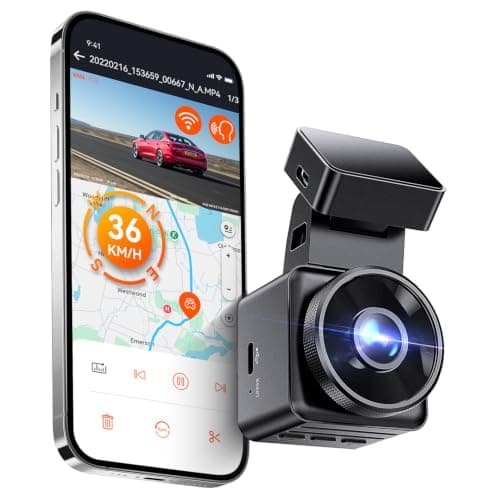
The same 70 C ceiling and the same supercapacitor as the E1, at 1080p and a lower list price. 1080p is enough to read a plate directly in front of you and not enough to read one two lanes over, and that trade is the entire decision. If the budget is the constraint, this is where to spend it rather than on a cheaper camera with an unpublished heat rating.
- Front resolution
- 1920 x 1080
- Power store
- Supercapacitor
- Operating range
- -20 C to 70 C (-4 F to 158 F)
- Wi-Fi
- Built in, app control
- GPS
- Not on this model
- Parking mode
- 24-hour, motion detection
- Max microSD
- Not published
- Field of view
- Not published
- Published current draw
- Not published
List price $79.99 per Vantrue's own store, sale price (regular $109.99), captured on the compile date below. Not a live price and not what you will pay — the button is where the real number is.
What it gets right
- 70 C published ceiling at the lowest list price in this ledger
- Supercapacitor, not a lithium cell
- Wi-Fi and app control at this money
- Small enough to hide behind the mirror, which is most of what a mini camera is for
Flaws
- 1080p. Plate legibility falls off fast at distance and at an angle
- No GPS on this model, so no speed or location stamp on the footage
- Parking mode needs a hardwire kit sold separately
The working behind the 7.6
- Heat headroom: 10.0 (weight 22%)
- Published operating ceiling 70 C (158 F). A car parked in summer sun runs roughly 60-70 C inside, so 65 C and up is real headroom, 60 C is living at the limit, and anything under 55 C is a summer problem waiting to happen.
- Install effort: 6.0 (weight 24%)
- Adhesive pad onto the dashboard. Permanent in practice: repositioning means a new pad, and the pad is the part that fails first.
- Price against the ceiling: 8.0 (weight 24%)
- Listed at $79.99 on the compile date. This site's buyer has a practical ceiling around $150 for a single upgrade, so the scale rewards everything under $100 and falls away sharply past $150. The live price is very often different, and that is what the button is for.
- Written commitment: 7.0 (weight 15%)
- 18-month warranty. This is the only promise in the entire listing that a court would read, which is why it is scored and the marketing copy is not.
- Spec transparency: 6.7 (weight 15%)
- 6 of the 9 specifications we went looking for are published by the maker (67%). A blank row is never a guess here: it prints “Not published” and it costs the product points, because a figure nobody will commit to in writing is a figure you cannot check.
Axes with no published input are dropped and the remaining weights re-normalized, so a product is not punished for a category where an axis does not apply. Specifications compiled September 4, 2026 from Vantrue's E1 Lite product page.
3Disappearing behind the mirror
Garmin Dash Cam Mini 3
Car-key sized, 1080p, 140 degrees, voice control, and a Parking Guard feature that now needs a paid Garmin Vault subscription and constant power. It is the camera to buy if the thing you dislike most about dash cams is looking at them. It is also the camera where you pay a real premium over the Vantrue and ROVE options for 1080p, and Garmin's advantage is the app and the support rather than the sensor.
- Front resolution
- 1080p HD
- Field of view
- 140 degrees
- Wireless
- 2.4 GHz Wi-Fi
- Max microSD
- 512 GB
- Voice control
- Yes
- Parking mode
- Parking Guard, needs a paid Vault subscription
- Operating range
- -4 F to 140 F (-20 C to 60 C)
- Power store
- Not published
List price $99.99 per Amazon listing, October 1, 2026, captured on the compile date below. Not a live price and not what you will pay — the button is where the real number is.
What it gets right
- Genuinely tiny — it hides behind the mirror and you forget it exists
- Voice control, so locking a clip does not mean reaching for the windshield
- Garmin Drive app with Live View, and Garmin actually maintains its apps for years
- Takes a 512GB card
Flaws
- 1080p at a price where 2K and 4K cameras exist
- Parking Guard needs Wi-Fi, the app and a paid Vault subscription, which is a different dependency from a plain hardwired parking mode
- No screen at all, so framing the shot is entirely a phone job
The working behind the 6.9
- Heat headroom: 7.5 (weight 22%)
- Published operating ceiling 60 C (140 F). A car parked in summer sun runs roughly 60-70 C inside, so 65 C and up is real headroom, 60 C is living at the limit, and anything under 55 C is a summer problem waiting to happen.
- Install effort: 6.0 (weight 24%)
- Adhesive pad onto the dashboard. Permanent in practice: repositioning means a new pad, and the pad is the part that fails first.
- Price against the ceiling: 7.0 (weight 24%)
- Listed at $99.99 on the compile date. This site's buyer has a practical ceiling around $150 for a single upgrade, so the scale rewards everything under $100 and falls away sharply past $150. The live price is very often different, and that is what the button is for.
- Written commitment: 5.5 (weight 15%)
- 12-month warranty. This is the only promise in the entire listing that a court would read, which is why it is scored and the marketing copy is not.
- Spec transparency: 8.8 (weight 15%)
- 7 of the 8 specifications we went looking for are published by the maker (88%). A blank row is never a guess here: it prints “Not published” and it costs the product points, because a figure nobody will commit to in writing is a figure you cannot check.
Axes with no published input are dropped and the remaining weights re-normalized, so a product is not punished for a category where an axis does not apply. Specifications compiled September 4, 2026 from Garmin's Dash Cam Mini 3 product page.
4Front and rear with the hardwire kit in the box
REDTIGER F7N
Skip this one. It is a lot of camera and it has a screen in the windshield, which in a new driver's car is one more thing to look at. The hardwire kit in the box is genuinely useful, and everything else about it is aimed at somebody who wants to interact with a dash cam. A teenager does not.
The only camera here that ships the hardwire kit rather than selling it separately, which is worth more than it sounds: the kit is the thing that turns parking mode from a spec-sheet feature into a working one, and buying it later costs both money and a second afternoon. Front 4K plus a 1080p rear, and the storage cap is 256GB rather than 512GB.
- Front resolution
- 3840 x 2160 (4K UHD)
- Rear resolution
- 1920 x 1080
- Front field of view
- 170 degrees
- Rear field of view
- 140 degrees
- Max microSD
- 256 GB
- GPS
- Built in
- Wi-Fi
- 5.8 GHz
- Hardwire kit
- Included in the box
- Operating range
- Not published
- Power store
- Not published
List price $109.99 per REDTIGER's own store, sale price (regular $139.99), captured on the compile date below. Not a live price and not what you will pay — the button is where the real number is.
What it gets right
- Hardwire kit included, so parking mode works without a second purchase
- Front and rear in one box, with a 170-degree front lens
- STARVIS 2 sensor and 5.8GHz Wi-Fi at a list price under $150
- Screen on the body, which makes aiming the camera a two-minute job rather than a phone-app job
Flaws
- 256GB storage cap, half what most of this ledger accepts. Two channels fill a card twice as fast, so this is the wrong way round
- No published operating-temperature range
- The rear camera is 1080p, so it is evidence of an impact rather than a plate reader
The working behind the 6.3
- Heat headroom: not scored (weight 22%)
- The maker publishes no operating-temperature ceiling, so this axis is dropped and the other weights are re-normalized.
- Install effort: 6.0 (weight 24%)
- Adhesive pad onto the dashboard. Permanent in practice: repositioning means a new pad, and the pad is the part that fails first.
- Price against the ceiling: 6.0 (weight 24%)
- Listed at $109.99 on the compile date. This site's buyer has a practical ceiling around $150 for a single upgrade, so the scale rewards everything under $100 and falls away sharply past $150. The live price is very often different, and that is what the button is for.
- Written commitment: 5.5 (weight 15%)
- 12-month warranty. This is the only promise in the entire listing that a court would read, which is why it is scored and the marketing copy is not.
- Spec transparency: 8.0 (weight 15%)
- 8 of the 10 specifications we went looking for are published by the maker (80%). A blank row is never a guess here: it prints “Not published” and it costs the product points, because a figure nobody will commit to in writing is a figure you cannot check.
Axes with no published input are dropped and the remaining weights re-normalized, so a product is not punished for a category where an axis does not apply. Specifications compiled September 4, 2026 from REDTIGER's F7N series page.
Prices last verified October 19, 2026. They move constantly; the figure on Amazon when you click is the real one.
Questions people actually ask
Will a dash cam show me how my teenager is driving?
Barely, and not usefully. It records the road rather than the speedometer, and nobody reviews hours of footage twice. If monitoring is the goal, telematics or an insurer's app does that job and a dash cam does not.
Should I tell them it is there?
Yes. A camera discovered rather than discussed gets unplugged, and an unplugged camera is worth nothing. The honest framing — this exists so you are not arguing alone if somebody hits you — is also the accurate one.
Is 1080p enough for a first car?
For the collisions a new driver is actually exposed to — immediately in front of the car — yes. 1080p struggles to read a plate at distance or at an angle, which matters more for hit-and-run than for a disputed junction.
Does it need parking mode?
A school lot is a good case for it, and it is a hardwire job. Worth doing if the car is staying in the family a few years; skip it for a short-term first car, especially one with an older battery.