The best car accessories for a new driver
A new driver has an older car, less experience of things going wrong, and less money than the person the rest of this site is written for. That changes the order completely.
By Sawyer V. · Published · How we research
We have not tested any of this. Everything below is compiled from published manufacturer specifications, and the arithmetic is printed so you can check it. This page carries affiliate links: if you buy through one we earn a commission at no extra cost to you, and it does not change the order of the picks. Full disclosure.
The short answer
Phone mount, charger, dash cam — in that order, and stop when the money runs out. A mount because the alternative is a phone in a lap, which is the specific thing a new driver should never be doing. A charger because a flat phone in an unfamiliar place is the problem underneath most other problems. A dash cam because a young driver in an older car gets blamed by default and footage ends that conversation. Everything after that is for the bad morning, which they have not had yet — and which is what makes it easy to skip and expensive to have skipped.
| # | Pick | Install | Score | Price |
|---|---|---|---|---|
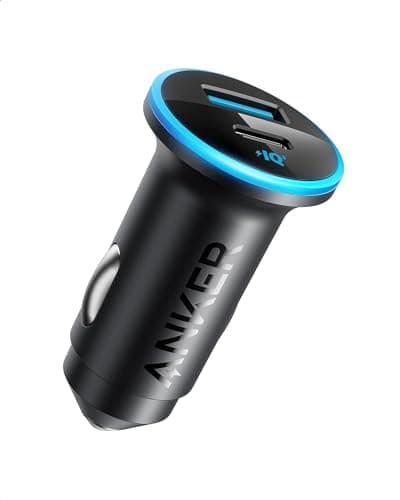
| 1 | Anker 323 Car Charger (52.5W) The one most people should actually buy | Plugs in | 9.2/10 | $14.99 - view on Amazon |
| 2 | Anker Bolder LC90 Flashlight A light that is not your phone | Drops in | 8.8/10 | Check price on Amazon |
| 3 | AstroAI Digital Tire Gauge (150 PSI) Knowing what your tires are actually at | Drops in | 8.4/10 | $6.99 - view on Amazon |
| 4 | iOttie Easy One Touch 5 Air Vent The default vent mount | Clips on | 8.3/10 | Check price on Amazon |
| 5 | NOCO Boost Plus GB40 Not needing anybody else's car | Plugs in | 8.0/10 | Check price on Amazon |
| 6 | Vantrue E1 Lite The cheapest camera here worth owning | Adhesive | 7.6/10 | $99.99 - view on Amazon |
Prices last verified October 19, 2026. They move constantly; the figure on Amazon when you click is the real one.
Why this list is not the commuter list
The commuter list is ordered by how often you touch something. A new driver has three differences that reorder it:
At the other end of a driving life the reordering is different again — vision, comfort over distance and getting help when it is further away. That is the list for older drivers.
- An older car. First cars are cheap cars, which means an older battery, older tires and more things that fail without warning.
- No experience of things going wrong. An experienced driver knows what a soft tire feels like and roughly what to do about a flat battery. A new driver has read about both.
- Less money. The list has to survive being cut off halfway.
So the ordering here is: things that prevent a bad decision, then things that prevent a bad morning.
1. A phone mount, about $25
The safety argument is stronger here than anywhere else on this site. A phone in a lap, a cup holder or a hand is a genuinely dangerous habit, and habits formed in the first year are the ones that stick.
A vent mount with a twist-lock is the right default — nothing adhesive to fail in summer, nothing suctioned to fail in winter, and it comes off in a second when the car is sold. The vent page covers the twist-lock versus spring-clip distinction that separates the ones that last.
2. A car charger, about $20
A flat phone is the problem behind most other problems for a new driver: no maps, no way to call anyone, no way to explain where they are. It is also entirely preventable.
You need much less power than the marketing suggests — 30 W on USB-C covers any phone, and the arithmetic is on the wattage page. Buy a cable that lives in the car permanently and never leaves it.
3. A dash cam, about $80 plus a card
The default assumption in a disputed collision involving a young driver in an older car is that the young driver was at fault. Sometimes by the other driver, sometimes by a witness, occasionally by an adjuster.
Footage removes the argument. That is the entire value and it is a bigger deal at this age than at any other. The teen driver page covers the choice properly — buy on published heat ceiling rather than resolution, because a first car parks outside — and it is direct about the fact that a dash cam is evidence rather than supervision.
4. A jump starter, about $100
An older car has an older battery, and a flat battery is the most common way a car fails to start. For a new driver it is also the most stressful, because the alternatives are asking a stranger or calling someone.
NOCO publishes 1,000 peak amps in a 2.4 lb pack, and — the number that actually answers the question — an engine-size ceiling of 6.0 liters gasoline. The jump starter page covers the twice-a-year charging habit, which matters more for a young driver because nobody is going to remember it unless it is in a calendar.
5. A tire pressure gauge, about $15
Cheap, small, and it teaches the habit. An experienced driver notices a soft tire; a new one does not, and drives on it until the warning light comes on — which on most cars is around 25% below the correct pressure.
Monthly checks, cold, against the sticker in the door jamb rather than the number on the tire sidewall. The gauge page covers why the published accuracy figure matters and why TPMS is not a substitute.
6. A flashlight, about $25
Because everything above happens in the dark eventually, and because a phone is the thing you call for help with rather than the thing you light a wheel change with. The flashlight page covers the three published figures worth checking.
Three budgets
| Budget | Buy | Covers |
|---|---|---|
| About $45 | Mount and charger | The daily habits, and a phone that never dies |
| About $150 | Plus a dash cam and an endurance card | The disputed collision |
| About $290 | Plus jump starter, gauge and flashlight | The bad morning as well |
If somebody else is buying — a parent, a birthday — the gifts page is written for exactly that and the jump starter is the top pick on it.
What is deliberately not on this list
- A tire inflator. Genuinely useful and one item too many at this budget. The gauge tells them there is a problem; a gas station has air. Worth adding later.
- Comfort products. Cushions and lumbar supports are for people doing long drives regularly, and adjusting the seat properly is free and comes first for everyone.
- Wireless charging. Three times the price of a mount plus a cable, and it needs a 20 W source the car probably does not have.
- Anything that requires wiring. Parking mode means a hardwire kit and an afternoon under the dash, on a car that may be sold in two years.
Every pick, with the working
Each entry lists the specifications the maker publishes, the axis scores those specifications produce, and what you give up. Rows that read “Not published” are not omissions on our side: they are things the maker will not commit to in writing, and they cost the product points on the transparency axis. Specifications compiled September 4, 2026.
Our pickThe one most people should actually buy
Anker 323 Car Charger (52.5W)
Two ports, 52.5W total, and a published voltage table showing 30W maximum on the USB-C port. Thirty watts charges any phone at or near its own ceiling, which means the 67W chargers above it are selling you headroom nothing in your pocket can use. At $19.99 this is the honest default.
- Ports
- 1 x USB-C, 1 x USB-A
- Total output
- 52.5 W
- USB-C output
- 5V/3A, 9V/3A, 12V/2.5A, 15V/2A, 20V/1.5A (30 W max)
- USB-A output
- 5V/3A, 9V/2A, 10V/2.25A (22.5 W max)
- Input
- 12V at 5.6 A, 24V at 3.6 A
- Safety
- ActiveShield 2.0
- Model
- A2735
- Warranty
- 18 months
- Operating range
- Not published
List price $19.99 per Anker's own store, captured on the compile date below. Not a live price and not what you will pay — the button is where the real number is.
What it gets right
- Anker publishes the full PDO table — 5V/3A, 9V/3A, 12V/2.5A, 15V/2A, 20V/1.5A — rather than a headline number
- 30 W on USB-C is at or above what almost every phone will accept
- Input rated 12V and 24V, so it works in a truck as well as a car
- $19.99 list and physically small, which matters in a tight console
Flaws
- Two ports, not three. A second passenger and a tablet is one device too many
- 30 W will not charge a laptop at any useful speed
- The USB-A port tops out at 22.5 W, so it is the slow one
The working behind the 9.2
- Heat headroom: not scored (weight 22%)
- The maker publishes no operating-temperature ceiling, so this axis is dropped and the other weights are re-normalized.
- Install effort: 10.0 (weight 24%)
- Plugs into a 12V socket or a USB port. Nothing to mount, nothing to route, reversible in a second.
- Price against the ceiling: 10.0 (weight 24%)
- Listed at $19.99 on the compile date. This site's buyer has a practical ceiling around $150 for a single upgrade, so the scale rewards everything under $100 and falls away sharply past $150. The live price is very often different, and that is what the button is for.
- Written commitment: 7.0 (weight 15%)
- 18-month warranty. This is the only promise in the entire listing that a court would read, which is why it is scored and the marketing copy is not.
- Spec transparency: 8.9 (weight 15%)
- 8 of the 9 specifications we went looking for are published by the maker (89%). A blank row is never a guess here: it prints “Not published” and it costs the product points, because a figure nobody will commit to in writing is a figure you cannot check.
Axes with no published input are dropped and the remaining weights re-normalized, so a product is not punished for a category where an axis does not apply. Specifications compiled September 4, 2026 from Anker's 323 Car Charger product page.
2A light that is not your phone
Anker Bolder LC90 Flashlight
900 lumens from a CREE LED, a published 6-hour runtime, IPX5 water resistance and five modes including strobe and SOS, on a rechargeable 18650. Using a phone as a flashlight at the roadside drains the one device you need to call for help, which is the entire argument for keeping a real one in the car.
- Output
- 900 lumens, CREE LED
- Runtime
- Up to 6 hours
- Ingress rating
- IPX5
- Modes
- High, medium, low, strobe, SOS
- Beam
- Zoomable
- Battery
- Rechargeable 18650, included
- Stated beam distance
- Over 660 ft
- Operating range
- Not published
What it gets right
- Published lumens (900), runtime (6 h) and ingress rating (IPX5) — all three, which is rare at this price
- Rechargeable 18650 included, so there is no scramble for AAs
- Zoomable from flood to spot, which covers both 'find the dropped bolt' and 'signal from the shoulder'
- SOS and strobe modes, which are exactly the modes a roadside light needs
Flaws
- IPX5 is rain resistance, not submersion. Fine for a breakdown, not for dropping in a puddle
- A lithium cell in a hot trunk self-discharges, so it needs charging on a schedule like the jump starter does
- 900 lumens on high for 6 hours is not the same as 900 lumens for 6 hours; brightness steps down between modes
The working behind the 8.8
- Heat headroom: not scored (weight 22%)
- The maker publishes no operating-temperature ceiling, so this axis is dropped and the other weights are re-normalized.
- Install effort: 10.0 (weight 24%)
- Drops in and sits there. No fixing of any kind, and it comes out again when you sell the car.
- Price against the ceiling: not scored (weight 24%)
- No published list price we could cite on the compile date, so this axis is dropped and the other weights are re-normalized.
- Written commitment: 7.0 (weight 15%)
- 18-month warranty. This is the only promise in the entire listing that a court would read, which is why it is scored and the marketing copy is not.
- Spec transparency: 8.8 (weight 15%)
- 7 of the 8 specifications we went looking for are published by the maker (88%). A blank row is never a guess here: it prints “Not published” and it costs the product points, because a figure nobody will commit to in writing is a figure you cannot check.
Axes with no published input are dropped and the remaining weights re-normalized, so a product is not punished for a category where an axis does not apply. Specifications compiled September 4, 2026 from Anker Bolder LC90 published specifications.
3Knowing what your tires are actually at
AstroAI Digital Tire Gauge (150 PSI)
0 to 150 PSI, factory calibrated to plus or minus 1 PSI, reading in 0.1 increments across four units with a backlit screen. The gas-station gauge you have been trusting is almost certainly worse than this, and this costs about the same as one tank of fuel.
- Range
- 0-150 PSI / 0-10 Bar / 0-10 Kgf/cm2 / 0-1000 kPa
- Accuracy
- Plus or minus 1 PSI
- Calibration standard
- ANSI B40.7, AstroAI UK listing only
- Resolution
- 0.1 PSI
- Display
- Backlit LCD, 4 selectable units
- Auto shut-off
- 30 seconds
- List price
- Not published
- Warranty
- 1 year, stated
What it gets right
- Published accuracy of plus or minus 1 PSI, stated in the listing title — almost nothing else in this category states an accuracy figure at all
- Reads to 0.1 PSI, which matters because a 3 PSI error is the difference between correct and noticeably underinflated
- Backlit screen, because tire pressures get checked in the dark more often than not
- Auto shut-off after 30 seconds, so the battery lasts
Flaws
- 150 PSI range is far beyond a passenger car, so the useful part of the scale is the bottom fifth
- A digital gauge has a battery, and a battery in a glovebox is a battery you will find dead
- It measures. It does not inflate — that is a separate tool
The working behind the 8.4
- Heat headroom: not scored (weight 22%)
- The maker publishes no operating-temperature ceiling, so this axis is dropped and the other weights are re-normalized.
- Install effort: 10.0 (weight 24%)
- Drops in and sits there. No fixing of any kind, and it comes out again when you sell the car.
- Price against the ceiling: not scored (weight 24%)
- No published list price we could cite on the compile date, so this axis is dropped and the other weights are re-normalized.
- Written commitment: 5.5 (weight 15%)
- 12-month warranty. This is the only promise in the entire listing that a court would read, which is why it is scored and the marketing copy is not.
- Spec transparency: 8.8 (weight 15%)
- 7 of the 8 specifications we went looking for are published by the maker (88%). A blank row is never a guess here: it prints “Not published” and it costs the product points, because a figure nobody will commit to in writing is a figure you cannot check.
Axes with no published input are dropped and the remaining weights re-normalized, so a product is not punished for a category where an axis does not apply. Specifications compiled September 4, 2026 from AstroAI 150 PSI gauge published specifications.
4The default vent mount
iOttie Easy One Touch 5 Air Vent
A twist-lock vent clamp and the one-handed cradle iOttie has been refining for a decade, at $24.95. It grips the phone mechanically rather than magnetically, which means it does not care what case you have, and it costs a quarter of what the Qi2 chargers cost because it does not charge anything.
- Attachment
- Twist-lock air vent
- Hold
- Mechanical cradle, one-touch lock and release
- Orientation
- Portrait or landscape
- Cable management
- Magnetic cord organizer
- SKU
- HLCRIO172
- Weight capacity
- Not published
- Operating range
- Not published
List price $24.95 per iOttie's own store, captured on the compile date below. Not a live price and not what you will pay — the button is where the real number is.
What it gets right
- Twist-lock vent attachment rather than a spring clip, which is the difference between staying put and rattling loose
- Mechanical cradle works with any case, any thickness, and any phone that fits
- One-handed lock and release, which is the entire point of the product line
- $24.95 list, the cheapest way to solve the problem properly
Flaws
- Blocks a vent, and in summer that vent is the one you wanted
- No charging, so the cable still has to come from somewhere
- A heavy phone on a thin vent blade will still droop over time on some cars
The working behind the 8.3
- Heat headroom: not scored (weight 22%)
- The maker publishes no operating-temperature ceiling, so this axis is dropped and the other weights are re-normalized.
- Install effort: 9.0 (weight 24%)
- Clips onto a vent blade or a headrest post. Two minutes, no tools, no adhesive, no residue.
- Price against the ceiling: 10.0 (weight 24%)
- Listed at $24.95 on the compile date. This site's buyer has a practical ceiling around $150 for a single upgrade, so the scale rewards everything under $100 and falls away sharply past $150. The live price is very often different, and that is what the button is for.
- Written commitment: 5.5 (weight 15%)
- 12-month warranty. This is the only promise in the entire listing that a court would read, which is why it is scored and the marketing copy is not.
- Spec transparency: 7.1 (weight 15%)
- 5 of the 7 specifications we went looking for are published by the maker (71%). A blank row is never a guess here: it prints “Not published” and it costs the product points, because a figure nobody will commit to in writing is a figure you cannot check.
Axes with no published input are dropped and the remaining weights re-normalized, so a product is not punished for a category where an axis does not apply. Specifications compiled September 4, 2026 from iOttie's Easy One Touch 5 Air Vent page.
5Not needing anybody else's car
NOCO Boost Plus GB40
Skip this one. The single most valuable thing on this list and the one most likely to be beyond a first-car budget at about $100. It is the skip only on price — if somebody else is buying (see the gifts page), this is what they should buy. If the budget is genuinely tight, everything above it comes first.
1,000 peak amps out of a 24 watt-hour lithium pack that weighs 2.4 pounds, rated for gasoline engines to 6.0 liters and diesel to 3.0, with spark-proof clamps and reverse-polarity protection. It is the single accessory here that changes what happens on the worst morning of your year, and it fits in a glovebox.
- Peak amps
- 1,000 A
- Battery
- 24 Wh lithium-ion
- Engine ceiling
- Gasoline to 6.0 L, diesel to 3.0 L
- Starts per charge
- Up to 20
- Dimensions
- 7.7 x 3.2 x 1.7 in
- Weight
- 2.4 lb with clamps
- Light
- 100 lumens
- Safety
- Spark proof, reverse polarity protected
- Operating range
- Not published
List price $99.95 per NOCO's listed price, captured on the compile date below. Not a live price and not what you will pay — the button is where the real number is.
What it gets right
- 1,000 peak amps and up to 20 starts on one charge, both published
- Spark-proof and reverse-polarity protected, which matters when you are doing this in the dark
- 2.4 lb and 7.7 inches long — it genuinely lives in the car rather than the garage
- USB port and a 100-lumen light, so it is also the thing you reach for in a power cut
Flaws
- Lithium, so it self-discharges and needs topping up every few months or it is a brick when you need it
- 6.0 L gasoline and 3.0 L diesel is the published ceiling — a big diesel needs the bigger model
- $99.95 for something you hope never to use
The working behind the 8.0
- Heat headroom: not scored (weight 22%)
- The maker publishes no operating-temperature ceiling, so this axis is dropped and the other weights are re-normalized.
- Install effort: 10.0 (weight 24%)
- Plugs into a 12V socket or a USB port. Nothing to mount, nothing to route, reversible in a second.
- Price against the ceiling: 7.0 (weight 24%)
- Listed at $99.95 on the compile date. This site's buyer has a practical ceiling around $150 for a single upgrade, so the scale rewards everything under $100 and falls away sharply past $150. The live price is very often different, and that is what the button is for.
- Written commitment: 5.5 (weight 15%)
- 12-month warranty. This is the only promise in the entire listing that a court would read, which is why it is scored and the marketing copy is not.
- Spec transparency: 8.9 (weight 15%)
- 8 of the 9 specifications we went looking for are published by the maker (89%). A blank row is never a guess here: it prints “Not published” and it costs the product points, because a figure nobody will commit to in writing is a figure you cannot check.
Axes with no published input are dropped and the remaining weights re-normalized, so a product is not punished for a category where an axis does not apply. Specifications compiled September 4, 2026 from NOCO Boost Plus GB40 published specifications.
6The cheapest camera here worth owning
Vantrue E1 Lite
The same 70 C ceiling and the same supercapacitor as the E1, at 1080p and a lower list price. 1080p is enough to read a plate directly in front of you and not enough to read one two lanes over, and that trade is the entire decision. If the budget is the constraint, this is where to spend it rather than on a cheaper camera with an unpublished heat rating.
- Front resolution
- 1920 x 1080
- Power store
- Supercapacitor
- Operating range
- -20 C to 70 C (-4 F to 158 F)
- Wi-Fi
- Built in, app control
- GPS
- Not on this model
- Parking mode
- 24-hour, motion detection
- Max microSD
- Not published
- Field of view
- Not published
- Published current draw
- Not published
List price $79.99 per Vantrue's own store, sale price (regular $109.99), captured on the compile date below. Not a live price and not what you will pay — the button is where the real number is.
What it gets right
- 70 C published ceiling at the lowest list price in this ledger
- Supercapacitor, not a lithium cell
- Wi-Fi and app control at this money
- Small enough to hide behind the mirror, which is most of what a mini camera is for
Flaws
- 1080p. Plate legibility falls off fast at distance and at an angle
- No GPS on this model, so no speed or location stamp on the footage
- Parking mode needs a hardwire kit sold separately
The working behind the 7.6
- Heat headroom: 10.0 (weight 22%)
- Published operating ceiling 70 C (158 F). A car parked in summer sun runs roughly 60-70 C inside, so 65 C and up is real headroom, 60 C is living at the limit, and anything under 55 C is a summer problem waiting to happen.
- Install effort: 6.0 (weight 24%)
- Adhesive pad onto the dashboard. Permanent in practice: repositioning means a new pad, and the pad is the part that fails first.
- Price against the ceiling: 8.0 (weight 24%)
- Listed at $79.99 on the compile date. This site's buyer has a practical ceiling around $150 for a single upgrade, so the scale rewards everything under $100 and falls away sharply past $150. The live price is very often different, and that is what the button is for.
- Written commitment: 7.0 (weight 15%)
- 18-month warranty. This is the only promise in the entire listing that a court would read, which is why it is scored and the marketing copy is not.
- Spec transparency: 6.7 (weight 15%)
- 6 of the 9 specifications we went looking for are published by the maker (67%). A blank row is never a guess here: it prints “Not published” and it costs the product points, because a figure nobody will commit to in writing is a figure you cannot check.
Axes with no published input are dropped and the remaining weights re-normalized, so a product is not punished for a category where an axis does not apply. Specifications compiled September 4, 2026 from Vantrue's E1 Lite product page.
Prices last verified October 19, 2026. They move constantly; the figure on Amazon when you click is the real one.
Questions people actually ask
What should I buy first for a new driver?
A phone mount. Under $25, two minutes to fit, and it prevents the specific habit — phone in the lap — that a new driver should never form. Habits from the first year are the ones that stick.
Is a dash cam worth it for a young driver?
More than for anyone else. A young driver in an older car is the default assumption in a disputed collision, and footage removes the argument. Buy on published heat ceiling rather than resolution, and leave the audio off.
How much should I spend in total?
About $45 covers the daily essentials — mount and charger. About $150 adds a dash cam and a proper card. About $290 covers the bad morning as well, with a jump starter, gauge and flashlight.
Should a new driver's car have parking mode?
Probably not. It means a hardwire kit and an afternoon under the dash, often on a car that will be sold within a couple of years and that may have an older battery the drain would not suit.
Sources
- iOttie Easy One Touch 5 Air Vent published specifications and price
- Vantrue E1 Lite published operating temperature and price
- Anker 323 Car Charger published output table and price
- NOCO Boost Plus GB40 published peak amps and engine ceiling
- AstroAI 150 PSI gauge published accuracy and calibration standard
- Anker Bolder LC90 published lumens, runtime and IPX rating