What car accessories can you install yourself?
Most of it is genuinely a plug-in job. The line worth respecting runs through airbag deployment paths and anything requiring a permanent electrical connection.
By Sawyer V. · Published · How we research
We have not tested any of this. Everything below is compiled from published manufacturer specifications, and the arithmetic is printed so you can check it. This page carries affiliate links: if you buy through one we earn a commission at no extra cost to you, and it does not change the order of the picks. Full disclosure.
The short answer
Almost everything, except anything crossing an airbag path or needing a permanent electrical connection. Mounts, chargers, mats, organizers, shades and dash cams on the 12V socket are all genuinely plug-in jobs. Seat covers need airbag-compatible stitching. Hardwiring means choosing a fuse and grounding properly. And pillar trim on any car with curtain airbags is not casual trim to remove — that is the deployment path.
| # | Pick | Install | Score | Price |
|---|---|---|---|---|
| 1 | Anker 335 Car Charger (67W) Three devices, no arguments | Plugs in | 9.0/10 | $42.99 - view on Amazon |
| 2 | iOttie Easy One Touch 5 Air Vent The default vent mount | Clips on | 8.3/10 | Check price on Amazon |
| 3 | WeatherTech Side Window Deflectors Cracking the windows in the rain | Clips on | 8.3/10 | $136.95 - view on Amazon |
| 4 | FH Group Universal Cloth Seat Covers Covering a seat you have already ruined | Drops in | 8.1/10 | $44.97 - view on Amazon |
| 5 | VIOFO HK4 hardwire kit Turning parking mode from a feature into a working thing | Hardwire | 5.3/10 | $25.99 - view on Amazon |
Prices last verified October 22, 2026. They move constantly; the figure on Amazon when you click is the real one.
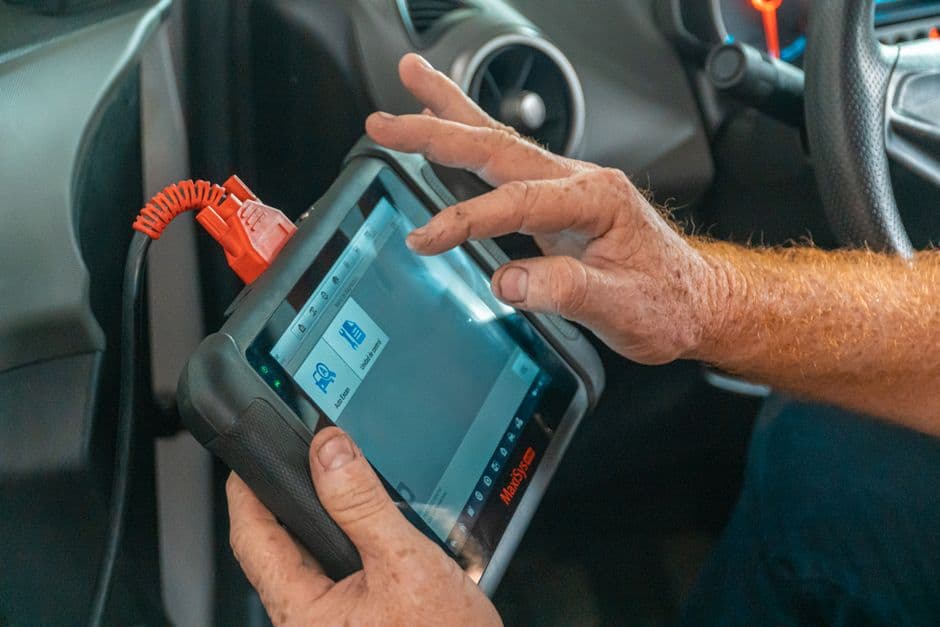
Four tiers
| Tier | Nothing disturbed | Examples |
|---|---|---|
| 1. Plug in and go | Nothing | Chargers, mats, organizers, shades, bins, gap fillers |
| 2. Attach to a surface | Adhesive or a clip | Phone mounts, dash cams on 12V, deflectors |
| 3. Needs care | Airbag or seat systems | Seat covers, cable routing, cup holder mounts in tight consoles |
| 4. Real electrical work | Fuse box and grounding | Hardwire kits, flush-mounted USB, head units |
Tier one: genuinely nothing to it
A large share of what this site covers falls here, and it is worth saying plainly because people over-estimate the difficulty and pay for fitting they do not need.
- 12V chargers. Plug in. The socket circuit is typically fused at 10 to 15 A, which is more headroom than most factory USB ports offer — how to add USB ports to an older car
- Floor mats, cargo liners, organizers, bins, gap fillers, sun shades. Drop in
- Cup holder phone mounts. Which is part of their appeal — no adhesive, no clip, no airbag question — best cup holder phone mounts
Tier two: surfaces, and where not to stick things
Anything adhering to or clipping onto the car is easy, with two placement rules that are not negotiable.
The second rule is windshield obstruction. Several states regulate what may be attached to a windshield and where, and the general shape is consistent: keep the driver's forward view clear. The reasoning applies to phone mounts and dash cams alike — where to mount your phone in a car and are dash cams legal.
For adhesive specifically: clean the surface with isopropyl alcohol, press firmly for the time the instructions state, and leave it before hanging weight on it. Most adhesive failures are surface preparation failures, which is the substance of why your phone mount keeps falling.
Tier three: seats, and cables that cross the car
Seat covers are the case people underestimate. Side airbags deploy through a designed breakaway seam in the seat's outer bolster, and a cover without a matching seam can obstruct or misdirect deployment.
FH Group states its stitching is officially tested, which is the specification to look for. A cover that does not state airbag compatibility on a seat with side airbags is not a cover to fit — full detail in best car seat covers.
Rear dash cam cables are the other tier-three job. Running a cable the length of the car is straightforward, and the route matters:
- Along the headliner edge, not through pillar trim. Curtain airbags deploy from the roof rail down the A, B and C pillars, and a cable pinned under that trim is in the deployment path
- Leave a service loop at any hinge the cable crosses. A tailgate flexes the cable every time it opens, and that is how rear channels fail
- If trim needs force, stop. Pillar trim on a car with curtain airbags is not user-serviceable trim
The full account is in best dual channel dash cams.
Tier four: real electrical work
Hardwiring is where a job stops being an accessory install and becomes vehicle electrics. It is very doable, and it is not a first project.
A dash cam hardwire kit requires identifying a suitable fuse, deciding between a switched and a constant circuit, fitting an add-a-fuse in the correct orientation, and grounding to bare metal rather than to painted trim. Get the orientation wrong and the add-a-fuse bypasses the protection it exists to provide.
Two things make it worth doing properly rather than avoiding. A hardwire kit with a low-voltage cutoff is what makes parking mode safe — the VIOFO HK4 publishes cutoff behavior — and without one you are drawing from the battery with nothing to stop you. The arithmetic is in does parking mode drain your battery and the method in how to hardwire a dash cam.
Flush-mounted USB ports and head unit replacements are the same tier with more consequences: a hole in the dash is irreversible, a head unit swap typically needs a harness adapter, dash kit, steering wheel control interface and antenna adapter, and on cars where the screen also runs the climate control it may not be practical at all — how to add CarPlay to an older car.
The rules that apply to all of it
- Look up your car before you start. The owner's manual has jacking points, fuse ratings, roof load limits and airbag locations. Two minutes now beats a surprise later
- Never work behind an airbag panel or route anything through pillar trim on a car with curtain airbags
- Nothing rigid where a body part goes in a crash. Which rules out seat-back tablet holders at head height and steering wheel trays over an airbag — car accessories that are not worth buying
- Test before you tidy. Confirm everything works before tucking cables away, not after
- Keep the original parts. Anything you remove, keep — it matters when you sell the car
When to pay someone
Pay for a head unit swap on a car where the screen also runs climate or vehicle settings. Pay for anything requiring dashboard removal. Pay if the job needs pillar trim off and you are not confident about the airbags.
Do not pay for a phone mount, a charger, floor mats, an organizer, a sun shade, a dash cam on the 12V socket, or window deflectors. Those are genuinely a few minutes each, and the difficulty is consistently over-stated.
If you are assembling a car from nothing, the ordered lists are under $50, under $100 and for commuters.
Every pick, with the working
Each entry lists the specifications the maker publishes, the axis scores those specifications produce, and what you give up. Rows that read “Not published” are not omissions on our side: they are things the maker will not commit to in writing, and they cost the product points on the transparency axis. Specifications compiled September 4, 2026.
Our pickThree devices, no arguments
Anker 335 Car Charger (67W)
Two USB-C and one USB-A totaling 67W, with a per-port ceiling of 35W. That per-port number is the whole difference between this and the 535: 35W charges any phone at full speed and charges a laptop slowly. For a car with two phones and a tablet in it, this is the right one and it is the cheaper one.
- Ports
- 2 x USB-C, 1 x USB-A
- Total output
- 67 W
- Maximum per port
- 35 W
- Protocols
- USB Power Delivery and PPS
- Safety
- ActiveShield 2.0
- Model
- A2736H11-1
- Warranty
- 18 months
- Operating range
- Not published
List price $29.99 per Best Buy listing for A2736H11-1, captured on the compile date below. Not a live price and not what you will pay — the button is where the real number is.
What it gets right
- Three ports, so the passenger argument ends
- PD and PPS support, which is what Samsung phones need for their fastest charging
- 35W per port is more than any phone can take, so nothing is bottlenecked
- ActiveShield 2.0 thermal management, and an 18-month warranty
Flaws
- 35W per-port ceiling means a laptop charges slowly even though the unit says 67W
- Three ports in one 12V socket is a physically chunky thing in a tight console
- Anker does not publish an operating-temperature range
The working behind the 9.0
- Heat headroom: not scored (weight 22%)
- The maker publishes no operating-temperature ceiling, so this axis is dropped and the other weights are re-normalized.
- Install effort: 10.0 (weight 24%)
- Plugs into a 12V socket or a USB port. Nothing to mount, nothing to route, reversible in a second.
- Price against the ceiling: 9.5 (weight 24%)
- Listed at $29.99 on the compile date. This site's buyer has a practical ceiling around $150 for a single upgrade, so the scale rewards everything under $100 and falls away sharply past $150. The live price is very often different, and that is what the button is for.
- Written commitment: 7.0 (weight 15%)
- 18-month warranty. This is the only promise in the entire listing that a court would read, which is why it is scored and the marketing copy is not.
- Spec transparency: 8.8 (weight 15%)
- 7 of the 8 specifications we went looking for are published by the maker (88%). A blank row is never a guess here: it prints “Not published” and it costs the product points, because a figure nobody will commit to in writing is a figure you cannot check.
Axes with no published input are dropped and the remaining weights re-normalized, so a product is not punished for a category where an axis does not apply. Specifications compiled September 4, 2026 from Anker's 335 Car Charger product page.
2The default vent mount
iOttie Easy One Touch 5 Air Vent
A twist-lock vent clamp and the one-handed cradle iOttie has been refining for a decade, at $24.95. It grips the phone mechanically rather than magnetically, which means it does not care what case you have, and it costs a quarter of what the Qi2 chargers cost because it does not charge anything.
- Attachment
- Twist-lock air vent
- Hold
- Mechanical cradle, one-touch lock and release
- Orientation
- Portrait or landscape
- Cable management
- Magnetic cord organizer
- SKU
- HLCRIO172
- Weight capacity
- Not published
- Operating range
- Not published
List price $24.95 per iOttie's own store, captured on the compile date below. Not a live price and not what you will pay — the button is where the real number is.
What it gets right
- Twist-lock vent attachment rather than a spring clip, which is the difference between staying put and rattling loose
- Mechanical cradle works with any case, any thickness, and any phone that fits
- One-handed lock and release, which is the entire point of the product line
- $24.95 list, the cheapest way to solve the problem properly
Flaws
- Blocks a vent, and in summer that vent is the one you wanted
- No charging, so the cable still has to come from somewhere
- A heavy phone on a thin vent blade will still droop over time on some cars
The working behind the 8.3
- Heat headroom: not scored (weight 22%)
- The maker publishes no operating-temperature ceiling, so this axis is dropped and the other weights are re-normalized.
- Install effort: 9.0 (weight 24%)
- Clips onto a vent blade or a headrest post. Two minutes, no tools, no adhesive, no residue.
- Price against the ceiling: 10.0 (weight 24%)
- Listed at $24.95 on the compile date. This site's buyer has a practical ceiling around $150 for a single upgrade, so the scale rewards everything under $100 and falls away sharply past $150. The live price is very often different, and that is what the button is for.
- Written commitment: 5.5 (weight 15%)
- 12-month warranty. This is the only promise in the entire listing that a court would read, which is why it is scored and the marketing copy is not.
- Spec transparency: 7.1 (weight 15%)
- 5 of the 7 specifications we went looking for are published by the maker (71%). A blank row is never a guess here: it prints “Not published” and it costs the product points, because a figure nobody will commit to in writing is a figure you cannot check.
Axes with no published input are dropped and the remaining weights re-normalized, so a product is not punished for a category where an axis does not apply. Specifications compiled September 4, 2026 from iOttie's Easy One Touch 5 Air Vent page.
3Cracking the windows in the rain
WeatherTech Side Window Deflectors
The only deflector that states it uses a DOT-approved glazing material, in 3 mm UV-treated acrylic cut to the specific vehicle. On a part that sits in your side vision permanently, the glazing claim is the one worth having.
- Material
- 3 mm lightly tinted acrylic
- Glazing
- US DOT-approved glazing material
- UV
- UV treated against fading
- Fit
- Vehicle-specific, in-channel
- Tint options
- Light or dark smoke
- Warranty
- Not published
- List price
- Not published
What it gets right
- The only deflectors stated to use a US DOT-approved glazing material
- 3 mm acrylic with a UV treatment, so it does not haze and yellow the way cheap film-thin deflectors do
- Cut to the vehicle's exact window channel rather than taped to the outside of the door
- Lets you leave windows cracked in rain, which is the single most useful thing they do for cabin heat
Flaws
- In-channel fitment means they sit in the window run — if fitted badly they can affect how the glass seats
- Vehicle-specific, so worthless when you change cars
- They are in your side field of view permanently, and a dark tint option makes that worse
- No published warranty term
The working behind the 8.3
- Heat headroom: not scored (weight 22%)
- The maker publishes no operating-temperature ceiling, so this axis is dropped and the other weights are re-normalized.
- Install effort: 9.0 (weight 24%)
- Clips onto a vent blade or a headrest post. Two minutes, no tools, no adhesive, no residue.
- Price against the ceiling: not scored (weight 24%)
- No published list price we could cite on the compile date, so this axis is dropped and the other weights are re-normalized.
- Written commitment: not scored (weight 15%)
- No warranty term published, so this axis is dropped and the other weights are re-normalized.
- Spec transparency: 7.1 (weight 15%)
- 5 of the 7 specifications we went looking for are published by the maker (71%). A blank row is never a guess here: it prints “Not published” and it costs the product points, because a figure nobody will commit to in writing is a figure you cannot check.
Axes with no published input are dropped and the remaining weights re-normalized, so a product is not punished for a category where an axis does not apply. Specifications compiled September 4, 2026 from WeatherTech Side Window Deflectors published specifications.
4Covering a seat you have already ruined
FH Group Universal Cloth Seat Covers
Semi-universal cloth covers with 3 mm of breathable foam backing and — this is the specification that matters — stitching designed to let a side airbag deploy through the seam, which FH Group states is tested. A seat cover without that is a genuine safety problem, and plenty of cheap ones do not mention it at all.
- Airbag compatibility
- Stitched for side-airbag deployment, stated as tested
- Padding
- 3 mm breathable foam backing
- Care
- Machine washable, air dry
- Fit
- Semi-universal; full set or front set
- Material weight
- Not published
- Durability rating
- Not published
- List price
- Not published
- Warranty
- Not published
What it gets right
- Airbag-compatible stitching, stated as officially tested. This is the one specification to insist on
- 3 mm breathable foam backing, published, which is what stops them feeling like a bin bag
- Machine washable, which is the entire point for anyone with children or a dog
- Semi-universal fit covering most sedans, SUVs and trucks, with full-set and front-only options
Flaws
- Semi-universal means it will never look like upholstery. It looks like a cover, because it is one
- Getting them taut takes far longer than the listing suggests, and a loose cover slides
- FH Group publishes no material weight or durability figure, only the foam thickness
The working behind the 8.1
- Heat headroom: not scored (weight 22%)
- The maker publishes no operating-temperature ceiling, so this axis is dropped and the other weights are re-normalized.
- Install effort: 10.0 (weight 24%)
- Drops in and sits there. No fixing of any kind, and it comes out again when you sell the car.
- Price against the ceiling: not scored (weight 24%)
- No published list price we could cite on the compile date, so this axis is dropped and the other weights are re-normalized.
- Written commitment: not scored (weight 15%)
- No warranty term published, so this axis is dropped and the other weights are re-normalized.
- Spec transparency: 5.0 (weight 15%)
- 4 of the 8 specifications we went looking for are published by the maker (50%). A blank row is never a guess here: it prints “Not published” and it costs the product points, because a figure nobody will commit to in writing is a figure you cannot check.
Axes with no published input are dropped and the remaining weights re-normalized, so a product is not punished for a category where an axis does not apply. Specifications compiled September 4, 2026 from FH Group seat cover published specifications.
5Turning parking mode from a feature into a working thing
VIOFO HK4 hardwire kit
Skip this one. The one item on this page we would not call a beginner job. A hardwire kit means identifying a fuse, choosing switched versus constant, fitting an add-a-fuse correctly and grounding to bare metal — with airbag wiring behind the same trim. It is very doable and it is not the first thing to attempt.
A USB-C hardwire cable with an adjustable low-voltage cutoff at 11.8, 12.0, 12.2 or 12.4 volts and an ACC lead that tells the camera the engine is off. The cutoff is the part that matters: it is what stands between overnight parking mode and a car that will not start, and it is a setting rather than a hope.
- Cutoff voltages (12V)
- 11.8 / 12.0 / 12.2 / 12.4 V
- Cutoff voltages (24V)
- 23.6 / 24.0 / 24.4 / 24.8 V
- Voltage detection tolerance
- Approximately 0.3 V
- ACC detection
- Yes, yellow lead to ignition
- System compatibility
- 12V and 24V vehicles
- Connector
- USB-C
- List price
- Not published
- Warranty
- Not published
What it gets right
- Four selectable cutoff voltages, so the tradeoff between recording time and starting the car is yours to make
- ACC detection switches the camera into parking mode automatically when the ignition goes off
- Works on 12V and 24V systems
- Ships with a full set of circuit fuse taps, so the fuse box is not a second shopping trip
Flaws
- It is a hardwire job. Trim tools, a fuse box and half an hour minimum
- VIOFO documents roughly 0.3V of tolerance on the voltage detection, so set it higher than feels necessary
- Only fits VIOFO's USB-C cameras
The working behind the 5.3
- Heat headroom: not scored (weight 22%)
- The maker publishes no operating-temperature ceiling, so this axis is dropped and the other weights are re-normalized.
- Install effort: 4.0 (weight 24%)
- Wires into the fuse box. Half an hour, a fuse tap, a trim tool and a willingness to be upside down under the dash. This is the real cost of parking mode.
- Price against the ceiling: not scored (weight 24%)
- No published list price we could cite on the compile date, so this axis is dropped and the other weights are re-normalized.
- Written commitment: not scored (weight 15%)
- No warranty term published, so this axis is dropped and the other weights are re-normalized.
- Spec transparency: 7.5 (weight 15%)
- 6 of the 8 specifications we went looking for are published by the maker (75%). A blank row is never a guess here: it prints “Not published” and it costs the product points, because a figure nobody will commit to in writing is a figure you cannot check.
Axes with no published input are dropped and the remaining weights re-normalized, so a product is not punished for a category where an axis does not apply. Specifications compiled September 4, 2026 from VIOFO support: choosing a cut-off protection voltage.
Prices last verified October 22, 2026. They move constantly; the figure on Amazon when you click is the real one.
Questions people actually ask
Can I fit a dash cam myself?
On the 12V socket, yes — it is a few minutes. Hardwiring for parking mode is a different job requiring fuse identification, an add-a-fuse fitted correctly and a proper ground. Doable, but not a first project.
Are seat covers safe to fit myself?
Yes, if the cover states airbag-compatible stitching. Side airbags deploy through a breakaway seam in the seat bolster, and a cover without a matching seam can obstruct deployment. FH Group states its stitching is officially tested.
Why should I not route cables through pillar trim?
Curtain airbags deploy from the roof rail down the A, B and C pillars. A cable pinned under that trim is in the deployment path. Route along the headliner edge instead, and if trim needs force, stop.
What is the hardest common accessory install?
A head unit replacement, because it typically needs a harness adapter, dash kit, steering wheel control interface and antenna adapter — and on cars where the screen also runs climate control it may not be practical at all.