How to add CarPlay to an older car
The single most common mistake in this category is buying a wireless CarPlay adapter for a car that has no CarPlay. Those convert wired to wireless. They cannot create it.
By Sawyer V. · Published · How we research
We have not tested any of this. Everything below is compiled from published manufacturer specifications, and the arithmetic is printed so you can check it. This page carries affiliate links: if you buy through one we earn a commission at no extra cost to you, and it does not change the order of the picks. Full disclosure.
The short answer
There are three real routes, and a wireless adapter is not one of them. Wireless CarPlay adapters convert a car's existing wired CarPlay to wireless — they cannot add CarPlay to a car that never had it. Your actual options are: replace the head unit with a CarPlay-capable one, add a standalone CarPlay screen that mounts on the dash, or skip CarPlay entirely and add a Bluetooth adapter plus a phone mount, which covers most of what people actually want for a fraction of the cost.
| # | Pick | Install | Score | Price |
|---|---|---|---|---|
| 1 | AAWireless TWO Android Auto specifically | Plugs in | 8.6/10 | $64.99 - view on Amazon |
| 2 | CarlinKit 5.0 (CPC200-2air) Making factory wired CarPlay wireless | Plugs in | 8.2/10 | $54.99 - view on Amazon |
| 3 | Anker Soundsync A3352 Bluetooth Receiver An older car with a working aux socket | Plugs in | 8.1/10 | Check price on Amazon |
Prices last verified October 20, 2026. They move constantly; the figure on Amazon when you click is the real one.
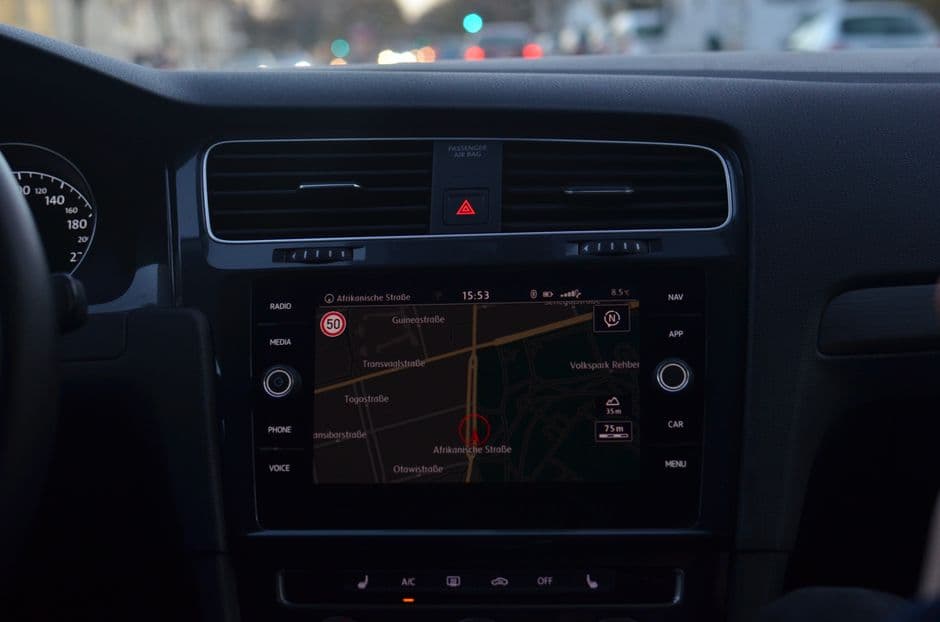
Why the adapter does not work
A wireless CarPlay adapter is a bridge. It talks to your phone over Wi-Fi and Bluetooth, presents itself to the car as a wired CarPlay phone, and passes the session through. The entire mechanism depends on the car having a CarPlay implementation for it to plug into.
Without one, the car sees a USB device it does not recognize and nothing happens. There is no firmware to update and no setting to enable — the head unit simply does not contain the software.
This is worth stating bluntly because the listings do not. We covered how these adapters actually work in wireless CarPlay adapters explained, and the wired-versus-wireless trade in wireless vs wired CarPlay.
The three routes that do work
| Route | Install | Keeps factory look | Reversible |
|---|---|---|---|
| Replace the head unit | Significant — trim, harness, adapters | Depends on the car | Yes, if you keep the original |
| Standalone dash screen | Moderate — mount and power | No | Yes |
| Bluetooth adapter plus phone mount | Minimal | Yes | Yes |
Route one: replace the head unit
The proper answer, and the one that gives you a real integrated experience: navigation on the car's screen, steering wheel controls, reversing camera input on many units.
What people underestimate is that the head unit is the cheap part. A modern car integrates the radio into systems that have nothing to do with audio, so a swap typically also needs:
- A vehicle-specific wiring harness adapter, so you are not cutting factory wiring
- A dash kit to fill the gap between the new unit and the car's trim
- A steering wheel control interface, or you lose the buttons on the wheel
- An antenna adapter, since connector standards vary
- A data interface module on cars where the radio also displays climate, vehicle settings or parking sensors
On a car where the screen also runs the climate control or the trip computer, a swap may not be practical at all without losing functions. Check what your specific car needs before committing — the answer varies enormously between vehicles of the same age.
Route two: a standalone CarPlay screen
These are self-contained displays that mount on or above the dashboard, run CarPlay themselves, and send audio to the car either by Bluetooth, by an aux cable, or by an FM transmitter built into the unit.
The appeal is that they need no integration at all. Power from the 12V socket, audio out by whatever your car supports, and a suction or adhesive mount. No trim removal, no harness, no risk to factory wiring, and it comes out when you sell the car.
The costs are real: it looks like an aftermarket screen stuck to the dash, it adds another object in your field of view, it is one more thing drawing from the 12V socket, and audio quality depends entirely on which output path your car supports. Where they make most sense is a car you like and intend to keep, whose head unit cannot practically be replaced.
Mount placement matters here as much as for a phone — a screen high on a dash can obstruct your view, and the same field-of-view considerations we discussed for dash cams in are dash cams legal apply.
Route three: do not add CarPlay at all
This is the route most people should take, and almost nobody considers it. Ask what you actually want CarPlay for. For the overwhelming majority the honest answer is three things: music from the phone, navigation you can see, and calls without holding the handset.
All three are available for a small fraction of a head unit swap:
- Audio and calls: a Bluetooth aux adapter, if your car has a 3.5 mm socket. See best Bluetooth adapters for older cars. No aux socket means an FM transmitter
- Navigation: your phone in a mount at eye level, which is arguably better than a dashboard screen because the maps are always current. See best vent mounts
- Power: a decent 12V charger so the phone survives the drive — best USB-C car chargers
The whole combination costs less than the dash kit alone for a head unit swap, installs in about ten minutes, and moves to your next car. What you give up is steering wheel integration and having it all on one screen.
If you have an Android phone
Everything above applies identically to Android Auto, with the same misconception attached: a wireless Android Auto adapter needs the car to already have wired Android Auto.
Worth knowing if you are shopping: several adapters sold in this category are CarPlay only, including the Ottocast U2-AIR Pro and the CarlinKit 3.0. AAWireless publishes a 115 ms latency figure for the TWO — the only latency figure stated anywhere in the category — and requires Android 11 or higher. See best wireless Android Auto adapters.
The fourth route, which sits between an adapter and a head unit swap: a self-contained screen that suction-mounts to the dash, runs both platforms itself and connects to the car only for power and audio — best portable CarPlay screens.
If route one is the one you are taking, the units themselves are compared on the figure that actually describes them — continuous power rather than the peak on the box — in best car stereos and head units.
Every pick, with the working
Each entry lists the specifications the maker publishes, the axis scores those specifications produce, and what you give up. Rows that read “Not published” are not omissions on our side: they are things the maker will not commit to in writing, and they cost the product points on the transparency axis. Specifications compiled September 4, 2026.
Our pickAndroid Auto specifically
AAWireless TWO
An Android Auto adapter from the team that built the category, at $65, with a published 115 ms latency figure and a multifunction button for switching between paired phones. That button is the reason it wins for a shared car: every other adapter in this ledger makes swapping phones a settings exercise.
- Platform
- Android Auto
- Phone requirement
- Android 11 or higher
- Connection
- Bluetooth handshake, then Wi-Fi
- Published latency
- 115 ms
- Controls
- Multifunction button: switch phone, pause, re-pair
- Requirement
- Factory wired Android Auto must already be present
- Working temperature
- Not published
- Warranty
- Not published
List price $65.00 per AAWireless' own store, captured on the compile date below. Not a live price and not what you will pay — the button is where the real number is.
What it gets right
- Published latency figure (115 ms) — nobody else in this category publishes one at all
- Multifunction button switches paired phones, pauses the connection or restarts pairing without a phone app
- Built specifically for Android Auto rather than as a CarPlay product with Android bolted on
- $65, which undercuts the CarPlay-only adapters that publish less
Flaws
- Requires Android 11 or higher, published as a hard floor
- Same absolute prerequisite as every adapter here: the car must already have factory wired Android Auto
- AAWireless publishes no operating-temperature range, on a device that lives in the car permanently
The working behind the 8.6
- Heat headroom: not scored (weight 22%)
- The maker publishes no operating-temperature ceiling, so this axis is dropped and the other weights are re-normalized.
- Install effort: 10.0 (weight 24%)
- Plugs into a 12V socket or a USB port. Nothing to mount, nothing to route, reversible in a second.
- Price against the ceiling: 8.0 (weight 24%)
- Listed at $65 on the compile date. This site's buyer has a practical ceiling around $150 for a single upgrade, so the scale rewards everything under $100 and falls away sharply past $150. The live price is very often different, and that is what the button is for.
- Written commitment: not scored (weight 15%)
- No warranty term published, so this axis is dropped and the other weights are re-normalized.
- Spec transparency: 7.5 (weight 15%)
- 6 of the 8 specifications we went looking for are published by the maker (75%). A blank row is never a guess here: it prints “Not published” and it costs the product points, because a figure nobody will commit to in writing is a figure you cannot check.
Axes with no published input are dropped and the remaining weights re-normalized, so a product is not punished for a category where an axis does not apply. Specifications compiled September 4, 2026 from AAWireless' TWO product page.
2Making factory wired CarPlay wireless
CarlinKit 5.0 (CPC200-2air)
Skip this one. It is an excellent product and it is the wrong purchase for the question in this page's title. A wireless adapter needs your car to already have wired CarPlay to convert. If your car has no CarPlay at all, this will do nothing when you plug it in, and it is the most common returned purchase in the category.
A dongle that plugs into the USB port your wired CarPlay already uses and turns it wireless, on 2.4 and 5 GHz, drawing 0.75 watts. CarlinKit states compatibility with more than 800 car models from 2016 onwards. The prerequisite is absolute: your car must already have wired CarPlay or Android Auto. This adds no CarPlay to a car that has none.
- Wi-Fi
- 2.4 GHz and 5.0 GHz
- Power consumption
- 0.75 W
- Power input
- 5 V +/- 0.2 V, 1.0 A
- Vehicle compatibility
- Stated 800+ models from 2016 with factory wired CarPlay or Android Auto
- Requirement
- Factory wired CarPlay or Android Auto must already be present
- Dimensions
- 76 x 43 x 12.3 mm
- Brand exclusion
- Stated not compatible with BMW vehicles
- List price
- Not published
- Operating range
- Not published
- Warranty
- 1 year
What it gets right
- Removes the single most annoying thirty seconds of every commute
- Dual band 2.4 and 5 GHz, published, which is what keeps the link stable
- 0.75 W draw, published, so it is not a parasitic load worth worrying about
- Nothing to install: it plugs into the existing USB port
Flaws
- Requires factory wired CarPlay or Android Auto already present. This is not optional
- Adds a handshake delay at startup, which is shorter than plugging a cable in but not zero
- Firmware updates are a manual job through a web interface, and they are occasionally necessary
The working behind the 8.2
- Heat headroom: not scored (weight 22%)
- The maker publishes no operating-temperature ceiling, so this axis is dropped and the other weights are re-normalized.
- Install effort: 10.0 (weight 24%)
- Plugs into a 12V socket or a USB port. Nothing to mount, nothing to route, reversible in a second.
- Price against the ceiling: not scored (weight 24%)
- No published list price we could cite on the compile date, so this axis is dropped and the other weights are re-normalized.
- Written commitment: 5.5 (weight 15%)
- 12-month warranty. This is the only promise in the entire listing that a court would read, which is why it is scored and the marketing copy is not.
- Spec transparency: 8.0 (weight 15%)
- 8 of the 10 specifications we went looking for are published by the maker (80%). A blank row is never a guess here: it prints “Not published” and it costs the product points, because a figure nobody will commit to in writing is a figure you cannot check.
Axes with no published input are dropped and the remaining weights re-normalized, so a product is not punished for a category where an axis does not apply. Specifications compiled September 4, 2026 from CarlinKit's 2air product page.
3An older car with a working aux socket
Anker Soundsync A3352 Bluetooth Receiver
Skip this one. If your car has no aux socket this does nothing at all — check for the 3.5 mm jack before you buy, not after. An FM transmitter is the fallback for a car without one.
The cheapest real upgrade available to a car with an aux socket and no Bluetooth. It publishes an operating temperature range, which is genuinely rare, and it runs on its own battery so nothing has to be plugged in.
- Operating temperature
- -10 C to 55 C (14 F to 131 F)
- Battery
- 180 mAh
- Playback time
- Up to 12 hours
- Charge time
- About 2 hours
- Multipoint
- Two devices simultaneously
- Range
- 10 m / 33 ft
- Profiles
- HFP, A2DP, AVRCP
- Dimensions
- 50 x 29 x 10 mm
- Weight
- 12.2 g
- Direction
- Receiver only — cannot transmit
- Warranty
- Not published
- List price
- Not published
What it gets right
- Publishes an operating temperature range of -10 C to 55 C — almost nothing in this category publishes one at all
- 12 hours of playback on a 180 mAh battery, charging in about 2 hours
- Connects to two devices at once, so a second phone can take a call without unpairing the first
- 50 x 29 x 10 mm and 12.2 g — small enough to stick anywhere
Flaws
- 55 C ceiling is the lowest of any device on this site, and a parked car in summer runs 60-70 C. Take it inside
- Receiver only. It cannot send audio out of the car to headphones
- A battery device means one more thing to charge, unlike a socket-powered kit
- No published warranty term
The working behind the 8.1
- Heat headroom: 6.0 (weight 22%)
- Published operating ceiling 55 C (131 F). A car parked in summer sun runs roughly 60-70 C inside, so 65 C and up is real headroom, 60 C is living at the limit, and anything under 55 C is a summer problem waiting to happen.
- Install effort: 10.0 (weight 24%)
- Plugs into a 12V socket or a USB port. Nothing to mount, nothing to route, reversible in a second.
- Price against the ceiling: not scored (weight 24%)
- No published list price we could cite on the compile date, so this axis is dropped and the other weights are re-normalized.
- Written commitment: not scored (weight 15%)
- No warranty term published, so this axis is dropped and the other weights are re-normalized.
- Spec transparency: 8.3 (weight 15%)
- 10 of the 12 specifications we went looking for are published by the maker (83%). A blank row is never a guess here: it prints “Not published” and it costs the product points, because a figure nobody will commit to in writing is a figure you cannot check.
Axes with no published input are dropped and the remaining weights re-normalized, so a product is not punished for a category where an axis does not apply. Specifications compiled September 4, 2026 from Anker Soundsync A3352 manual specification table.
Prices last verified October 20, 2026. They move constantly; the figure on Amazon when you click is the real one.
Questions people actually ask
Will a wireless CarPlay adapter work if my car has no CarPlay?
No. It converts existing wired CarPlay to wireless. With no CarPlay implementation in the head unit there is nothing for it to bridge to, and plugging it in does nothing at all.
Can I update my car's software to add CarPlay?
Almost never. A small number of manufacturers offered retrofit programmes for specific model years through dealers. For most cars the hardware simply does not have the capability and no update exists.
Will I lose my steering wheel controls with a new head unit?
Not if you buy the correct steering wheel control interface for your vehicle. Without one, yes — the buttons stop working. It is one of several parts beyond the head unit itself that a swap typically requires.
Is a standalone CarPlay screen worth it?
It is a reasonable compromise for a car whose head unit cannot practically be replaced. You get the interface without touching factory wiring, at the cost of an obvious aftermarket screen on the dash and audio routed through whatever path your car supports.