The best engine air filters
Two published intervals four times apart, one lifetime warranty, and a long-running argument about oil reaching a sensor. Here is what each side actually publishes.
By Sawyer V. · Published · How we research
We have not tested any of this. Everything below is compiled from published manufacturer specifications, and the arithmetic is printed so you can check it. This page carries affiliate links: if you buy through one we earn a commission at no extra cost to you, and it does not change the order of the picks. Full disclosure.
The short answer
Paper for most people, oiled cotton if you will genuinely maintain it. FRAM publishes 12 months or 12,000 miles and references ISO 5011 efficiency testing. K&N publishes a lifetime limited warranty and a service interval up to 50,000 miles under normal highway driving. The oiled-cotton-versus-mass-airflow-sensor dispute is genuine and unresolved — K&N states contamination is not possible, independent reports disagree, and both sides emphasize not over-oiling.
| # | Pick | Install | Score | Price |
|---|---|---|---|---|
| 1 | K&N High-Flow Engine Air Filter A lifetime warranty and a 50,000 mile interval | Drops in | 8.8/10 | Check price on Amazon |
| 2 | Bosch HEPA Cabin Filter The only filter here tested to a named standard | Drops in | 8.3/10 | $13.12 - view on Amazon |
| 3 | FRAM Extra Guard Engine Air Filter A published interval and a named test standard | Drops in | 7.8/10 | $28.19 - view on Amazon |
Prices last verified October 26, 2026. They move constantly; the figure on Amazon when you click is the real one.
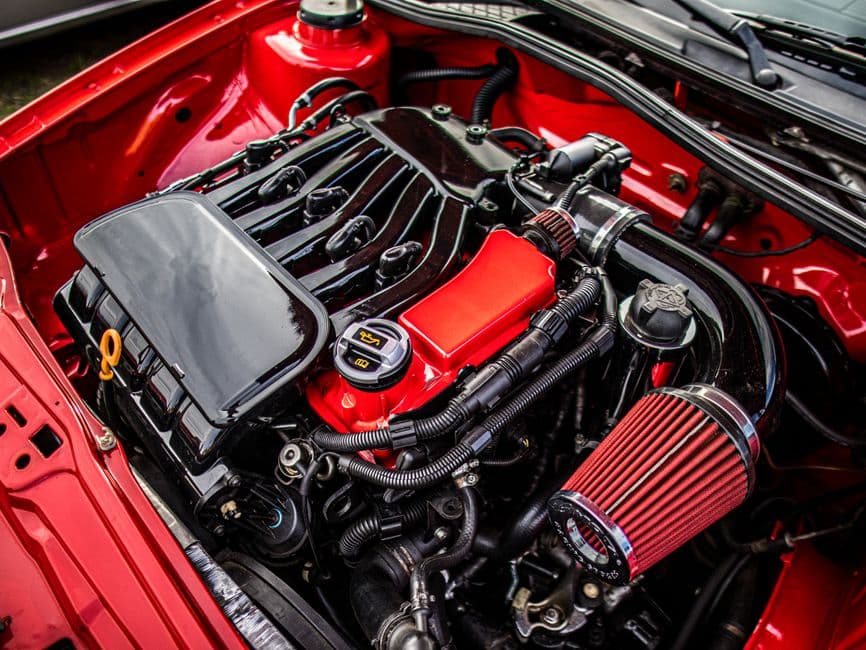
Two filters, two philosophies
Disposable paper is a pleated dry element. It filters well, restricts airflow slightly more, costs very little, and you throw it away and fit another.
Washable oiled cotton is layers of cotton gauze coated in a tacky oil that traps particles. It flows more air, lasts far longer between services, and requires you to clean, dry and re-oil it correctly.
| FRAM Extra Guard | K&N High-Flow | |
|---|---|---|
| Media | Dry pleated paper | 4-6 layers oiled cotton |
| Service interval | 12 months / 12,000 miles | Up to 50,000 miles highway |
| Test standard | ISO 5011 referenced | Not published |
| Published efficiency | Not published | Not published |
| Airflow claim | Not published | Up to 50% more than paper |
| Warranty | Not published | Lifetime limited |
| Maintenance required | None — replace it | Clean, dry, re-oil |
Two things stand out. FRAM references a named standard — ISO 5011 — for efficiency testing, which almost nothing in consumer filtration does, though it does not publish the resulting percentage. And K&N carries a lifetime limited warranty on engine air filters, which is the strongest written commitment in this ledger's filtration category.
Neither publishes an efficiency percentage. That is the gap on both sides, and it is the figure that would settle the filtration half of the argument.
The mass airflow sensor dispute
This is the reason people hesitate over oiled filters, and it deserves stating as a dispute rather than as a verdict.
A mass airflow sensor sits downstream of the air filter and measures incoming air using a heated element. It is sensitive to contamination — a film on the element changes its readings, and the engine management acts on wrong information.
This site cannot settle it, and will not pretend to. What it can say is that the failure mode everyone describes is over-oiling after a wash, and that a filter you never wash cannot be over-oiled. Paper sidesteps the argument entirely.
What "more airflow" actually buys
K&N publishes up to 50% more airflow than paper, and states this can provide an increase in horsepower.
That is true and it is worth understanding in proportion. On a naturally aspirated engine running a factory intake, the air filter is rarely the restriction that limits output — the throttle body, the intake tract and the exhaust all sit in the same path. A freer filter in an otherwise standard system produces a small change.
The real-world case where airflow matters is the opposite one: a clogged filter genuinely restricts an engine, and most cars on the road are running a filter nobody has looked at in years. Replacing a dirty paper filter with a clean paper filter recovers more than upgrading a clean filter to a freer one.
There is a trade in the other direction too. More airflow generally means coarser filtration, and neither maker publishes an efficiency percentage to quantify it. A filter's first job is keeping abrasive particulate out of an engine.
Changing one, which is usually five minutes
The engine air filter lives in a plastic housing in the engine bay, usually held by clips or a few screws, and on most cars needs no tools at all.
- Find the airbox. A large plastic box with a wide duct running to the engine. Not the cabin filter, which is behind the glovebox
- Release the clips and lift the lid. If it will not lift, look for screws underneath the lip
- Note the orientation of the old filter before removing it
- Wipe out the housing. There will be leaves and grit, and tipping them into the intake is the one way to make things worse
- Fit the new one flat, seat the seal all the way round, and clip the lid down
The seal is the part people get wrong. A filter sitting proud at one corner lets unfiltered air past it, which defeats the whole component. Run a finger around the edge before closing the lid.
It is not the cabin filter
If you are not sure which of the two your car is asking for, or which one causes the symptom you have, cabin filter against engine air filter settles it in a table.
These get confused constantly and they do unrelated jobs.
- Engine air filter — in the engine bay, feeds the engine, affects how the car runs
- Cabin air filter — usually behind the glovebox, feeds the vents, affects what you breathe and how quickly the windows demist — best cabin air filters
If your complaint is weak airflow from the vents or a smell in the cabin, it is the cabin filter and this page is the wrong one. If your complaint is a check engine light, it is neither — read the code first — best OBD2 scanners.
Which to buy
- You want to fit it and forget it: FRAM, at 12 months or 12,000 miles, with a named test standard referenced and no oil anywhere
- You will genuinely wash and re-oil it: K&N, for the lifetime warranty and the 50,000 mile interval — and use the minimum oil, on the crown of the pleats, with a full 24-hour wick
- You have never checked yours: either. The filter currently fitted is almost certainly the problem, and replacing it is the win
Whatever you fit, follow the vehicle manufacturer's interval rather than the filter maker's if the two differ — dusty conditions shorten it considerably. The rest of what an older car rewards is in best car accessories for older cars.
Every pick, with the working
Each entry lists the specifications the maker publishes, the axis scores those specifications produce, and what you give up. Rows that read “Not published” are not omissions on our side: they are things the maker will not commit to in writing, and they cost the product points on the transparency axis. Specifications compiled September 4, 2026.
Our pickA lifetime warranty and a 50,000 mile interval
K&N High-Flow Engine Air Filter
Washable oiled cotton with a lifetime limited warranty and a published service interval up to 50,000 miles under normal highway driving. It also sits at the center of a genuine, unresolved dispute about oil migrating onto mass airflow sensors, which this page does not pretend to settle.
- Media
- 4-6 layers oiled cotton
- Service interval
- Up to 50,000 miles, normal highway driving
- Airflow claim
- Up to 50% more than paper
- Published efficiency
- Not published
- Test standard
- Not published
- Warranty
- Lifetime limited
- List price
- Not published
What it gets right
- No-Hassle Lifetime Limited Warranty on engine air filters, the strongest commitment in filtration
- Published service interval: up to 50,000 miles under normal highway driving, down to 100 miles in desert racing
- Four to six layers of pleated oiled cotton, stated to flow up to 50% more air than paper
- Washable and reusable, so the running cost after purchase is a cleaning kit
Flaws
- Oiled cotton filters and mass airflow sensor contamination is a genuine unresolved dispute — K&N states contamination is not possible, and independent reports disagree
- Over-oiling after a wash is the failure mode everyone warns about, and the guidance is to use the absolute minimum oil and let it wick for 24 hours
- Higher airflow generally means coarser filtration, and K&N publishes no efficiency percentage to compare against paper
- Higher up-front cost, recovered only if you actually clean and reuse it
The working behind the 8.8
- Heat headroom: not scored (weight 22%)
- The maker publishes no operating-temperature ceiling, so this axis is dropped and the other weights are re-normalized.
- Install effort: 10.0 (weight 24%)
- Drops in and sits there. No fixing of any kind, and it comes out again when you sell the car.
- Price against the ceiling: not scored (weight 24%)
- No published list price we could cite on the compile date, so this axis is dropped and the other weights are re-normalized.
- Written commitment: 10.0 (weight 15%)
- 1200-month warranty. This is the only promise in the entire listing that a court would read, which is why it is scored and the marketing copy is not.
- Spec transparency: 5.7 (weight 15%)
- 4 of the 7 specifications we went looking for are published by the maker (57%). A blank row is never a guess here: it prints “Not published” and it costs the product points, because a figure nobody will commit to in writing is a figure you cannot check.
Axes with no published input are dropped and the remaining weights re-normalized, so a product is not punished for a category where an axis does not apply. Specifications compiled September 4, 2026 from K&N published construction, service interval and warranty.
2The only filter here tested to a named standard
Bosch HEPA Cabin Filter
Skip this one. A cabin filter, not an engine one, and on this page because people conflate them constantly. An engine air filter feeds the engine and affects how it runs. A cabin filter feeds the vents and affects what you breathe. They are in different places, they are replaced on different schedules, and changing one does nothing for the other.
Publishes 99.97% efficiency at 0.3 microns and names the test standard it was measured against — ISO 29463-3. A named third-party test method is almost unheard of anywhere in car accessories, and it is the reason this is the pick for anyone buying a filter for air quality rather than for smell.
- Stated efficiency
- 99.97%
- Particle size measured
- 0.3 microns
- Test standard
- ISO 29463-3
- Media
- HEPA
- Replacement guideline
- Not published
- Warranty
- Not published
- List price
- Not published
What it gets right
- Publishes efficiency AND the particle size it is measured at: 99.97% at 0.3 microns
- Names the test standard — ISO 29463-3 — which means the figure can be checked rather than trusted
- 0.3 microns is well below the 2.5 micron PM2.5 threshold, so fine particulate is inside its rated range
- Drop-in replacement like any other cabin filter; no tools for most vehicles
Flaws
- HEPA media is denser, and denser media restricts airflow — expect less punch from the vents than an OE-grade filter
- Costs noticeably more than a standard particulate filter
- Filtration is not deodorizing; this is not the filter to buy for a smell
- No warranty published
The working behind the 8.3
- Heat headroom: not scored (weight 22%)
- The maker publishes no operating-temperature ceiling, so this axis is dropped and the other weights are re-normalized.
- Install effort: 10.0 (weight 24%)
- Drops in and sits there. No fixing of any kind, and it comes out again when you sell the car.
- Price against the ceiling: not scored (weight 24%)
- No published list price we could cite on the compile date, so this axis is dropped and the other weights are re-normalized.
- Written commitment: not scored (weight 15%)
- No warranty term published, so this axis is dropped and the other weights are re-normalized.
- Spec transparency: 5.7 (weight 15%)
- 4 of the 7 specifications we went looking for are published by the maker (57%). A blank row is never a guess here: it prints “Not published” and it costs the product points, because a figure nobody will commit to in writing is a figure you cannot check.
Axes with no published input are dropped and the remaining weights re-normalized, so a product is not punished for a category where an axis does not apply. Specifications compiled September 4, 2026 from Bosch HEPA Cabin Filter published efficiency and ISO test standard.
3A published interval and a named test standard
FRAM Extra Guard Engine Air Filter
Publishes a replacement interval in both months and miles — 12 months or 12,000 miles — and references ISO 5011 testing of filter efficiency. Disposable paper with no oil anywhere near a mass airflow sensor, which sidesteps the argument entirely.
- Media
- Dry pleated paper
- Service interval
- 12 months or 12,000 miles
- Airflow claim
- Not published
- Published efficiency
- Not published
- Test standard
- ISO 5011 referenced
- Warranty
- Not published
- List price
- Not published
What it gets right
- Published replacement interval: up to 12 months or 12,000 miles (20,000 km)
- FRAM references ISO 5011 testing for filter efficiency — a named standard
- Dry paper media, so there is no oil to migrate anywhere and no washing procedure to get wrong
- Costs a fraction of a washable filter, and fitment part numbers are published per vehicle
Flaws
- Disposable — a new one every year is a recurring cost the washable filters do not have
- No efficiency percentage published alongside the ISO 5011 reference
- Paper media flows less air than oiled cotton, which is the trade you are accepting
- No warranty published
The working behind the 7.8
- Heat headroom: not scored (weight 22%)
- The maker publishes no operating-temperature ceiling, so this axis is dropped and the other weights are re-normalized.
- Install effort: 10.0 (weight 24%)
- Drops in and sits there. No fixing of any kind, and it comes out again when you sell the car.
- Price against the ceiling: not scored (weight 24%)
- No published list price we could cite on the compile date, so this axis is dropped and the other weights are re-normalized.
- Written commitment: not scored (weight 15%)
- No warranty term published, so this axis is dropped and the other weights are re-normalized.
- Spec transparency: 4.3 (weight 15%)
- 3 of the 7 specifications we went looking for are published by the maker (43%). A blank row is never a guess here: it prints “Not published” and it costs the product points, because a figure nobody will commit to in writing is a figure you cannot check.
Axes with no published input are dropped and the remaining weights re-normalized, so a product is not punished for a category where an axis does not apply. Specifications compiled September 4, 2026 from FRAM Extra Guard published interval and test standard reference.
Prices last verified October 26, 2026. They move constantly; the figure on Amazon when you click is the real one.
Questions people actually ask
Are K&N air filters bad for mass airflow sensors?
It is a genuine unresolved dispute. K&N states contamination is not possible; independent reports describe oil migrating from over-oiled filters onto the sensor. Both sides emphasize the same mitigation — use the absolute minimum oil and let it wick 24 hours before starting.
How often should I change an engine air filter?
FRAM publishes 12 months or 12,000 miles for its paper filter. K&N publishes up to 50,000 miles for washable oiled cotton under normal highway driving. Follow your vehicle manufacturer's interval where it differs, and shorten it in dusty conditions.
Does a performance air filter add horsepower?
K&N publishes up to 50% more airflow and states it can increase horsepower. On a standard engine the filter is rarely the restriction, so the change is small. Replacing a clogged filter recovers far more than upgrading a clean one.
Is the engine air filter the same as the cabin filter?
No. The engine filter is in the engine bay and feeds the engine. The cabin filter is usually behind the glovebox and feeds the vents. Different locations, different intervals, and changing one does nothing for the other.