The best OBD2 scanners
Price is not what separates these. What separates them is which of your car's systems they can see at all, and a cheap reader is blind to the light most people buy one for.
By Sawyer V. · Published · How we research
We have not tested any of this. Everything below is compiled from published manufacturer specifications, and the arithmetic is printed so you can check it. This page carries affiliate links: if you buy through one we earn a commission at no extra cost to you, and it does not change the order of the picks. Full disclosure.
The short answer
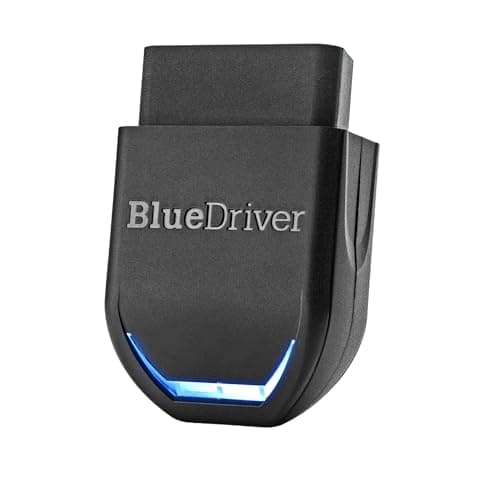
Buy the BlueDriver Pro unless you already know you need bidirectional control. The question that decides this purchase is not price — it is which systems the tool can read. A budget reader sees engine codes and nothing else. BlueDriver publishes its five protocols by name and states that enhanced ABS, SRS and transmission diagnostics work on 13 named brands. Check your car is one of them before you buy, because outside that list you get generic OBD2 that a $25 reader also gives you.
| # | Pick | Install | Score | Price |
|---|---|---|---|---|
| 1 | BlueDriver Pro OBD2 Scanner Reading more than the engine light | Plugs in | 9.0/10 | $94.94 - view on Amazon |
| 2 | ANCEL AD310 OBD2 Code Reader Finding out why the light is on, and nothing more | Plugs in | 8.7/10 | $26.99 - view on Amazon |
| 3 | Innova 5610 CarScan Pro Actually testing a component, not just reading a code | Plugs in | 8.7/10 | $349.99 - view on Amazon |
Prices last verified October 24, 2026. They move constantly; the figure on Amazon when you click is the real one.
What we ranked these on
We have not used any of these tools. What follows is compiled from what each maker publishes, and the ranking runs on four criteria in the order they decide a purchase:
- Systems visible. Engine only, or engine plus ABS, SRS and transmission. This is the whole decision and it is the thing listings obscure most
- Published protocol support. A maker naming the five OBD2 protocols is telling you something checkable. “Works on most cars” is not
- Brand coverage for enhanced codes. Enhanced diagnostics are always brand-limited. The question is whether the maker names the brands
- Bidirectional capability. Whether the tool can command a component or only listen to it
The three tiers, and where each one stops
| ANCEL AD310 | BlueDriver Pro | Innova 5610 | |
|---|---|---|---|
| Engine codes | Yes | Yes | Yes |
| ABS / SRS / transmission | No — stated | 13 named brands | Yes |
| Protocols published by name | No | All five | No |
| Bidirectional control | No | No | Yes |
| Live data | Yes | Yes | Graph, record, playback |
| Own screen | Yes | No — uses your phone | Yes |
| Subscription | None | None | Updates included |
The middle row is the one that matters. A check-engine light is an engine code and any of these will read it. An ABS light or an airbag light lives in a different module, and reading it requires a tool that speaks to that module — which the budget reader states plainly it does not.
Why published protocols are worth something
OBD2 is a connector standard and a set of five signaling protocols underneath it: ISO15765-4 (CAN), ISO14230-4 (KWP2000), ISO9141-2, J1850 VPW and J1850 PWM. Every 1996-and- later US-market car uses one of them, and CAN has been mandatory since 2008.
BlueDriver publishes all five by name. That is a small thing and it is the kind of small thing this site weights, because a maker willing to list its protocols is a maker you can check rather than one asking you to trust a compatibility claim.
Bidirectional, and why most people do not need it
Every scanner here reads. The Innova 5610 also writes: it can command a component to actuate, so you can tell an ABS pump to cycle or an injector to fire and watch what happens.
That is the difference between diagnosing from a code and testing a hypothesis. A code tells you a circuit reported a fault; a bidirectional test tells you whether the part responds. For anyone doing their own repairs past the parts-cannon stage, it is the capability worth paying for.
It also actuates real components on a real car. That is a way to cause a problem you did not have, and it is a good reason not to buy this tier because it sounds more capable. Buy it because you intend to use it.
A screen, or your phone
BlueDriver is a dongle with no display — everything happens in a free app. That is why it can be small and why it has no subscription, and it means a flat phone is a scanner you cannot use.
A handheld with its own screen has no such dependency and works in a car park with no signal. The trade is a small screen, a short cable and working in the footwell rather than sitting in the seat with a phone.
If you go the phone route, this is one more argument for a charger that actually charges — best USB-C car chargers, and why a car's own USB port frequently is not enough is in USB-A vs USB-C in the car.
What a scanner will not do
It will not tell you what is broken. It tells you which circuit reported a fault, which is the start of a diagnosis rather than the end of one. A code for an oxygen sensor circuit very often means a wiring or vacuum problem upstream rather than a failed sensor.
Clearing a code does not fix anything either — it turns the light off until the fault recurs, and it wipes the readiness monitors an emissions test needs, which can mean failing a test for a car that would otherwise pass. Clear codes after a repair, not before a test.
Freeze frame is the underused feature: it captures the conditions at the moment the fault set — speed, load, coolant temperature — which is often more diagnostic than the code itself.
Which one to buy
- A check-engine light and nothing else: the budget reader does that job completely, with its own screen and no phone dependency
- An ABS or airbag light, and one of the 13 named brands: BlueDriver
- You do your own repairs and want to test rather than guess: the bidirectional tool
- An unusual or gray-market vehicle: check protocol and brand support specifically before buying anything
And if the fault you are chasing turns out to be a battery that will not hold charge rather than a sensor, that is a different tool — best car battery chargers. A weak battery throws surprisingly odd codes.
Two things people reach for instead of reading the code, and what each can honestly do: a fuel additive, where nobody publishes a measured result — best fuel additives and injector cleaners — and an engine air filter, which does affect how the car runs and is the cheapest thing on the list — best engine air filters.
Every pick, with the working
Each entry lists the specifications the maker publishes, the axis scores those specifications produce, and what you give up. Rows that read “Not published” are not omissions on our side: they are things the maker will not commit to in writing, and they cost the product points on the transparency axis. Specifications compiled September 4, 2026.
Our pickReading more than the engine light
BlueDriver Pro OBD2 Scanner
Publishes its five supported protocols by name and states plainly that enhanced ABS, SRS and transmission diagnostics work on 13 named brands rather than implying they work everywhere. No subscription, which in this category is genuinely unusual.
- Protocols
- ISO15765-4 (CAN), ISO14230-4 (KWP2000), ISO9141-2, J1850 VPW, J1850 PWM
- Vehicle coverage
- 1996+ North American cars, SUVs and light trucks
- Enhanced diagnostics
- ABS, SRS, transmission on 13 named brands
- Connection
- Bluetooth to iOS or Android
- Subscription
- None
- Screen
- None — uses your phone
- Warranty
- Not published
- List price
- Not published
What it gets right
- Publishes the actual protocols: ISO15765-4 CAN, ISO14230-4 KWP2000, ISO9141-2, J1850 VPW and J1850 PWM
- Enhanced ABS, SRS and transmission codes on 13 named brands — and it names them rather than saying 'most vehicles'
- No subscription and no cables; it is a Bluetooth dongle plus a free app
- Works on 1996 and newer North American cars, SUVs and light trucks
Flaws
- Enhanced diagnostics are brand-limited. Outside those 13 makes you get generic OBD2, which a $25 reader also gives you
- It has no screen of its own, so a flat phone is a scanner you cannot use
- Manufacturing origin is not published
- No published warranty term
The working behind the 9.0
- Heat headroom: not scored (weight 22%)
- The maker publishes no operating-temperature ceiling, so this axis is dropped and the other weights are re-normalized.
- Install effort: 10.0 (weight 24%)
- Plugs into a 12V socket or a USB port. Nothing to mount, nothing to route, reversible in a second.
- Price against the ceiling: not scored (weight 24%)
- No published list price we could cite on the compile date, so this axis is dropped and the other weights are re-normalized.
- Written commitment: not scored (weight 15%)
- No warranty term published, so this axis is dropped and the other weights are re-normalized.
- Spec transparency: 7.5 (weight 15%)
- 6 of the 8 specifications we went looking for are published by the maker (75%). A blank row is never a guess here: it prints “Not published” and it costs the product points, because a figure nobody will commit to in writing is a figure you cannot check.
Axes with no published input are dropped and the remaining weights re-normalized, so a product is not punished for a category where an axis does not apply. Specifications compiled September 4, 2026 from BlueDriver Pro published protocols and coverage.
2Finding out why the light is on, and nothing more
ANCEL AD310 OBD2 Code Reader
Skip this one. It is honest about its limits, which is why it is here — but those limits catch people out. It reads engine codes only. If the light on your dash is ABS or airbag, this reader cannot see it, and that is the exact situation in which somebody buys a scanner in a hurry.
A handheld reader that does exactly one job: pull and clear engine codes, show live data and freeze frame. It states plainly that it does not do ABS, SRS or transmission, which is more honest than most of the category.
- Reads
- Engine codes, live data, freeze frame, I/M readiness
- Does not read
- ABS, SRS (airbag), transmission
- Power
- From the OBD2 port
- Screen
- Built in
- Warranty
- Not published
- List price
- Not published
What it gets right
- States its limits: engine codes only, no ABS, SRS or transmission diagnostics
- Reads live data, I/M readiness and freeze frame — the snapshot of conditions when the fault set
- Draws power from the OBD2 port, so there is no battery to be flat
- Has its own screen, so it works without a phone
Flaws
- Engine systems only. An airbag or ABS light is invisible to it
- A wired handheld with a short cable means working in the footwell
- No published warranty term
The working behind the 8.7
- Heat headroom: not scored (weight 22%)
- The maker publishes no operating-temperature ceiling, so this axis is dropped and the other weights are re-normalized.
- Install effort: 10.0 (weight 24%)
- Plugs into a 12V socket or a USB port. Nothing to mount, nothing to route, reversible in a second.
- Price against the ceiling: not scored (weight 24%)
- No published list price we could cite on the compile date, so this axis is dropped and the other weights are re-normalized.
- Written commitment: not scored (weight 15%)
- No warranty term published, so this axis is dropped and the other weights are re-normalized.
- Spec transparency: 6.7 (weight 15%)
- 4 of the 6 specifications we went looking for are published by the maker (67%). A blank row is never a guess here: it prints “Not published” and it costs the product points, because a figure nobody will commit to in writing is a figure you cannot check.
Axes with no published input are dropped and the remaining weights re-normalized, so a product is not punished for a category where an axis does not apply. Specifications compiled September 4, 2026 from ANCEL AD310 published functions.
3Actually testing a component, not just reading a code
Innova 5610 CarScan Pro
Bidirectional, which is the capability that separates a scanner from a code reader: it can command a component — an ABS pump, an injector — rather than only listening. Full-system coverage including ABS, SRS and transmission.
- Bidirectional
- Yes — sends commands to components
- Systems covered
- Engine, ABS, SRS, transmission
- Live data
- Graph, record and playback
- Coverage
- About 99% of 1996+ US and Canadian market vehicles
- Warranty
- Not published
- List price
- Not published
What it gets right
- Bidirectional control, so you can command components to test them rather than guessing from a code
- Full-system diagnostics: engine, ABS, SRS and transmission
- Graphs, records and plays back live data rather than showing a single number
- Stated to work on about 99% of 1996+ US and Canadian market vehicles
Flaws
- Bidirectional testing can actuate real components. That is powerful and it is also a way to cause a problem you did not have
- Considerably more tool than someone chasing one check-engine light needs
- No published warranty term
The working behind the 8.7
- Heat headroom: not scored (weight 22%)
- The maker publishes no operating-temperature ceiling, so this axis is dropped and the other weights are re-normalized.
- Install effort: 10.0 (weight 24%)
- Plugs into a 12V socket or a USB port. Nothing to mount, nothing to route, reversible in a second.
- Price against the ceiling: not scored (weight 24%)
- No published list price we could cite on the compile date, so this axis is dropped and the other weights are re-normalized.
- Written commitment: not scored (weight 15%)
- No warranty term published, so this axis is dropped and the other weights are re-normalized.
- Spec transparency: 6.7 (weight 15%)
- 4 of the 6 specifications we went looking for are published by the maker (67%). A blank row is never a guess here: it prints “Not published” and it costs the product points, because a figure nobody will commit to in writing is a figure you cannot check.
Axes with no published input are dropped and the remaining weights re-normalized, so a product is not punished for a category where an axis does not apply. Specifications compiled September 4, 2026 from Innova 5610 published capabilities.
Prices last verified October 24, 2026. They move constantly; the figure on Amazon when you click is the real one.
Questions people actually ask
Will a cheap OBD2 reader read my airbag light?
No. Budget readers cover engine codes only, and the AD310 states this plainly. Airbag (SRS) and ABS codes live in separate modules that require a tool with enhanced access for your specific brand.
Does clearing a code fix the problem?
No — it turns the light off until the fault recurs. It also resets the readiness monitors an emissions test checks, which can cause a test failure on a car that would otherwise pass. Clear after a repair, not before a test.
What does bidirectional mean on a scan tool?
It can send commands to components rather than only reading from them — telling an ABS pump to cycle, for instance, and watching whether it responds. It turns a code into a testable hypothesis, and it can also actuate real parts, so it deserves care.
Do I need a subscription for an OBD2 scanner?
Not for any of these. BlueDriver states no subscription, the budget reader needs nothing, and Innova states updates are included. Subscriptions do appear elsewhere in this category, so it is worth checking the specific listing.