The best cabin air filters
Two filters here publish an efficiency percentage. They are not comparable, and the difference is not the one percent it looks like.
By Sawyer V. · Published · How we research
We have not tested any of this. Everything below is compiled from published manufacturer specifications, and the arithmetic is printed so you can check it. This page carries affiliate links: if you buy through one we earn a commission at no extra cost to you, and it does not change the order of the picks. Full disclosure.
The short answer
Bosch publishes 99.97% at 0.3 microns, tested to ISO 29463-3. FRAM publishes up to 98% of particles in the 5-100 micron range. Those are not close figures — they are measured on particles roughly twenty times different in size, and only the Bosch number covers the fine particulate people buy a filter for. Buy Bosch for air quality, FRAM for smells, and check your owner's manual before either, because denser media restricts airflow.
| # | Pick | Install | Score | Price |
|---|---|---|---|---|
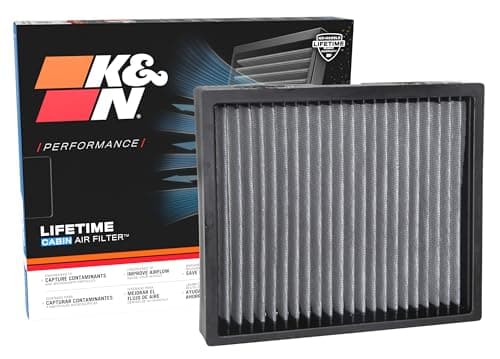
| 1 | K&N Lifetime Washable Cabin Air Filter Not buying another one | Drops in | 8.4/10 | $44.99 - view on Amazon |
| 2 | Bosch HEPA Cabin Filter The only filter here tested to a named standard | Drops in | 8.3/10 | $13.12 - view on Amazon |
| 3 | FRAM Fresh Breeze Cabin Air Filter Smells rather than particles | Drops in | 8.3/10 | $19.95 - view on Amazon |
Prices last verified October 26, 2026. They move constantly; the figure on Amazon when you click is the real one.
98% and 99.97% are not one percent apart
This is the most misleading comparison in car accessories and it is not anybody lying. Both makers publish accurate figures. The trap is that a percentage with no particle size attached means nothing, and most listings print the percentage without the particle size.
FRAM states its Fresh Breeze filter keeps up to 98% of road dust and pollen out of the cabin, and it publishes the size range those particles occupy: 5 to 100 microns. That is dust, pollen, grit and leaf debris — the visible end of the spectrum.
Bosch states 99.97% at 0.3 microns, and names the test standard used to measure it: ISO 29463-3. Nothing on this page is more unusual than a named third-party test standard on a consumer car part.
What each one publishes
| Bosch HEPA | FRAM Fresh Breeze | K&N washable | |
|---|---|---|---|
| Stated efficiency | 99.97% | Up to 98% | Not published |
| Particle size measured | 0.3 microns | 5-100 microns | Not published |
| Test standard | ISO 29463-3 | Not published | Not published |
| Media | HEPA | Baking soda + carbon | Washable, reusable |
| Deodorizing | No | Yes, primary function | Stated treated |
| Replacement | Not published | 12 months or OE interval | Wash and reuse |
| Warranty | None | None | Lifetime limited |
FRAM does something else worth crediting: it names the compounds used in its deodorizing tests — isovaleric acid for sweaty odors, geosmin for earthy ones, and dog hair. Naming the test substance is a step beyond claiming the result, and nothing else in this category does it.
The trade nobody mentions: airflow
A filter that catches more also restricts more. This is not a design flaw, it is physics, and it is the reason HEPA is not simply the right answer for everyone.
Denser media means the blower motor pushes air through more resistance. In practice that shows up as less punch from the vents on the same fan setting, slower demisting, and a blower that works harder for the same result. On a car with a marginal blower it is noticeable.
The counterweight: a clogged standard filter restricts airflow far more than a clean HEPA one. Most people's airflow complaint is a filter nobody has changed in four years, not the grade of filter fitted.
If your windows take a long time to clear, check the filter before blaming anything else — how to defog your windshield covers why the cabin filter sits directly in that airflow path.
If the problem is a smell, filtration is not the fix
Worth separating clearly, because people buy the wrong filter for this constantly.
A particulate filter — including a HEPA one — traps particles. Odor molecules are gases and pass straight through. That is why FRAM's product uses activated carbon and baking soda, which adsorb volatile compounds rather than straining them out, and why it is the pick if your complaint is that the car smells rather than that the air is dirty.
But a filter is the last step, not the first. If the car smells, something in it is producing the smell, and the filter is downstream of the cause — how to get smells out of your car works through finding it. A moldy air conditioning evaporator in particular will out-produce any filter you fit.
And a cabin filter is not an air purifier. The two get confused because both claim to clean cabin air, and they work at different points in the system — best car air purifiers.
Fitting one, which is usually a ten-minute job
On most cars the cabin filter lives behind the glovebox and comes out without tools. K&N states installation typically takes under five minutes with none.
- Find the part number for your exact car. Fitment is vehicle-specific and the brand matters less than the number — every maker here publishes a lookup
- Empty the glovebox and release the stops at each side so it drops fully down. This is the step that feels wrong and is correct
- Note the airflow arrow on the old filter before you remove it. Fitted backwards, a filter still filters but the pleats load unevenly
- Vacuum the housing while it is open. There will be leaves in it
- Fit the new one, arrow the same way, and put the glovebox back
FRAM publishes a 12-month replacement guideline and is explicit that the vehicle manufacturer's stated interval takes precedence. Check the manual; some cars specify considerably shorter in dusty conditions.
Which one to buy
- Traffic pollution, allergies, wildfire smoke: Bosch HEPA. It is the only one measured at a particle size that covers fine particulate, against a named standard
- The car smells and the source is gone: FRAM Fresh Breeze, for the carbon and baking soda rather than the filtration figure
- You genuinely will wash it: K&N, for the lifetime warranty — accepting that no efficiency figure is published
Whichever you buy, the honest headline is that almost any new filter beats the four-year-old one currently in the car, and the cheapest useful thing on this page is checking whether yours has ever been changed.
Not to be confused with the filter in the engine bay, which feeds the engine rather than the vents and runs on a completely different interval — best engine air filters.
Every pick, with the working
Each entry lists the specifications the maker publishes, the axis scores those specifications produce, and what you give up. Rows that read “Not published” are not omissions on our side: they are things the maker will not commit to in writing, and they cost the product points on the transparency axis. Specifications compiled September 4, 2026.
Our pickNot buying another one
K&N Lifetime Washable Cabin Air Filter
Skip this one. The lifetime warranty is real and it is the only one in this category. But a cabin filter's job is filtration, and K&N publishes no efficiency percentage, no particle size and no test standard — the three figures its competitors do publish. You are trading a measurable filtration claim for a maintenance one, and for most buyers that is the wrong trade.
Washable, reusable and carrying a lifetime limited warranty — the only written commitment in this category. What it does not carry is a published efficiency figure or a test standard, so you are trading a measurable filtration claim for a maintenance one.
- Stated efficiency
- Not published
- Particle size measured
- Not published
- Test standard
- Not published
- Media
- Washable, reusable
- Stated install time
- Under 5 minutes, no tools
- Warranty
- Lifetime limited
- List price
- Not published
What it gets right
- No-Hassle Lifetime Limited Warranty, the only warranty of any length in this category
- Washable and reusable rather than disposable, so the running cost after purchase is a wash every so often
- K&N states installation is typically under five minutes with no tools
- Pre-treated and ready to install out of the box
Flaws
- No published filtration efficiency percentage and no particle size — the two numbers the competition does publish
- No named test standard
- Washing and drying properly takes time, and a filter refitted damp is worse than the one you took out
- Higher up-front cost, recovered only if you actually keep washing it
The working behind the 8.4
- Heat headroom: not scored (weight 22%)
- The maker publishes no operating-temperature ceiling, so this axis is dropped and the other weights are re-normalized.
- Install effort: 10.0 (weight 24%)
- Drops in and sits there. No fixing of any kind, and it comes out again when you sell the car.
- Price against the ceiling: not scored (weight 24%)
- No published list price we could cite on the compile date, so this axis is dropped and the other weights are re-normalized.
- Written commitment: 10.0 (weight 15%)
- 1200-month warranty. This is the only promise in the entire listing that a court would read, which is why it is scored and the marketing copy is not.
- Spec transparency: 4.3 (weight 15%)
- 3 of the 7 specifications we went looking for are published by the maker (43%). A blank row is never a guess here: it prints “Not published” and it costs the product points, because a figure nobody will commit to in writing is a figure you cannot check.
Axes with no published input are dropped and the remaining weights re-normalized, so a product is not punished for a category where an axis does not apply. Specifications compiled September 4, 2026 from K&N cabin air filter published warranty and reusability.
2The only filter here tested to a named standard
Bosch HEPA Cabin Filter
Publishes 99.97% efficiency at 0.3 microns and names the test standard it was measured against — ISO 29463-3. A named third-party test method is almost unheard of anywhere in car accessories, and it is the reason this is the pick for anyone buying a filter for air quality rather than for smell.
- Stated efficiency
- 99.97%
- Particle size measured
- 0.3 microns
- Test standard
- ISO 29463-3
- Media
- HEPA
- Replacement guideline
- Not published
- Warranty
- Not published
- List price
- Not published
What it gets right
- Publishes efficiency AND the particle size it is measured at: 99.97% at 0.3 microns
- Names the test standard — ISO 29463-3 — which means the figure can be checked rather than trusted
- 0.3 microns is well below the 2.5 micron PM2.5 threshold, so fine particulate is inside its rated range
- Drop-in replacement like any other cabin filter; no tools for most vehicles
Flaws
- HEPA media is denser, and denser media restricts airflow — expect less punch from the vents than an OE-grade filter
- Costs noticeably more than a standard particulate filter
- Filtration is not deodorizing; this is not the filter to buy for a smell
- No warranty published
The working behind the 8.3
- Heat headroom: not scored (weight 22%)
- The maker publishes no operating-temperature ceiling, so this axis is dropped and the other weights are re-normalized.
- Install effort: 10.0 (weight 24%)
- Drops in and sits there. No fixing of any kind, and it comes out again when you sell the car.
- Price against the ceiling: not scored (weight 24%)
- No published list price we could cite on the compile date, so this axis is dropped and the other weights are re-normalized.
- Written commitment: not scored (weight 15%)
- No warranty term published, so this axis is dropped and the other weights are re-normalized.
- Spec transparency: 5.7 (weight 15%)
- 4 of the 7 specifications we went looking for are published by the maker (57%). A blank row is never a guess here: it prints “Not published” and it costs the product points, because a figure nobody will commit to in writing is a figure you cannot check.
Axes with no published input are dropped and the remaining weights re-normalized, so a product is not punished for a category where an axis does not apply. Specifications compiled September 4, 2026 from Bosch HEPA Cabin Filter published efficiency and ISO test standard.
3Smells rather than particles
FRAM Fresh Breeze Cabin Air Filter
The only cabin filter here built around deodorizing rather than filtration, using baking soda and carbon, and FRAM even names the compounds it tested against. Read its efficiency figure carefully though: 98% sounds close to the HEPA filter's 99.97% and is measured on particles roughly twenty times larger.
- Stated efficiency
- Up to 98% of road dust and pollen
- Particle size measured
- 5-100 microns
- Media
- ARM & HAMMER baking soda plus activated carbon
- Replacement guideline
- 12 months, or the OE interval
- Test standard
- Not published
- Warranty
- Not published
- List price
- Not published
What it gets right
- Publishes an efficiency figure with the particle size attached — up to 98% of road dust and pollen in the 5-100 micron range
- Names the compounds used in deodorizing tests: isovaleric acid, geosmin and dog hair
- Baking soda plus activated carbon, which addresses odor rather than only particulate
- FRAM publishes a 12-month replacement guideline, with the caveat to follow the vehicle manufacturer's interval
Flaws
- The 98% figure applies to 5-100 micron particles — it says nothing about the fine particulate a HEPA filter is rated on
- Carbon and baking soda are consumed over time; the deodorizing function fades before the filter clogs
- Fitment is vehicle-specific, so the part number matters more than the brand
- No warranty published
The working behind the 8.3
- Heat headroom: not scored (weight 22%)
- The maker publishes no operating-temperature ceiling, so this axis is dropped and the other weights are re-normalized.
- Install effort: 10.0 (weight 24%)
- Drops in and sits there. No fixing of any kind, and it comes out again when you sell the car.
- Price against the ceiling: not scored (weight 24%)
- No published list price we could cite on the compile date, so this axis is dropped and the other weights are re-normalized.
- Written commitment: not scored (weight 15%)
- No warranty term published, so this axis is dropped and the other weights are re-normalized.
- Spec transparency: 5.7 (weight 15%)
- 4 of the 7 specifications we went looking for are published by the maker (57%). A blank row is never a guess here: it prints “Not published” and it costs the product points, because a figure nobody will commit to in writing is a figure you cannot check.
Axes with no published input are dropped and the remaining weights re-normalized, so a product is not punished for a category where an axis does not apply. Specifications compiled September 4, 2026 from FRAM Fresh Breeze published efficiency, particle range and test method.
Prices last verified October 26, 2026. They move constantly; the figure on Amazon when you click is the real one.
Questions people actually ask
Is a HEPA cabin filter worth it?
If you want fine particulate captured, yes — Bosch is the only filter here publishing an efficiency at 0.3 microns against a named standard, ISO 29463-3. The trade is airflow: denser media restricts the blower, which is noticeable on cars with a weak fan.
What does 98% cabin filter efficiency mean?
Nothing, without the particle size. FRAM's 98% is measured on particles of 5 to 100 microns — dust and pollen. It is not comparable with a HEPA filter's 99.97% at 0.3 microns, which is a completely different size class.
Will a cabin air filter get rid of a smell in my car?
Only a carbon or baking soda filter will help, because odors are gases that pass through a particulate filter. And it treats the symptom — if the car smells, something is producing the smell and the filter is downstream of it.
How often should I change a cabin air filter?
FRAM publishes a 12-month guideline and states the vehicle manufacturer's interval takes precedence. Check your owner's manual; dusty conditions shorten it considerably. Most cars on the road are running one much older than that.