The best car safes and valuables storage
No safe in a car is more than a delay. Understanding exactly what you are buying — time, and the appearance of difficulty — is what makes it a sensible purchase rather than false confidence.
By Sawyer V. · Published · How we research
We have not tested any of this. Everything below is compiled from published manufacturer specifications, and the arithmetic is printed so you can check it. This page carries affiliate links: if you buy through one we earn a commission at no extra cost to you, and it does not change the order of the picks. Full disclosure.
The short answer
Buy on published steel gauge and how it anchors, and be clear about what it buys. Console Vault publishes 12-gauge cold rolled plate steel with welded tab-and-notch seams, fitted to the specific vehicle so it is held by the console rather than sitting loose. That is a real specification in a category full of “heavy duty steel”. It is a delay, not a barrier — and the free step, taking everything visible out of the car, prevents more break-ins than any box.
| # | Pick | Install | Score | Price |
|---|---|---|---|---|
| 1 | Apple AirTag Finding a car you parked, not one that was taken | Drops in | 8.9/10 | $89.00 - view on Amazon |
| 2 | Auto Drive Hard-Sided Trunk Organizer When the load rating is the thing you care about | Drops in | 8.8/10 | Check price on Amazon |
| 3 | Console Vault In-Vehicle Safe Something that cannot simply be carried away | Drops in | 8.3/10 | $351.98 - view on Amazon |
Prices last verified October 24, 2026. They move constantly; the figure on Amazon when you click is the real one.
Steel gauge is the specification
The word “safe” is unregulated on these products, and most of the category publishes nothing you can check. Steel gauge is the exception and it is the number to look for.
Gauge runs backwards: a lower number is thicker steel. Console Vault publishes 12-gauge cold rolled plate, which is substantial for something that fits in a console. A box advertising “heavy duty steel” with no gauge is telling you nothing, and in this category that silence usually means thin.
The second construction detail worth having is how the seams are made. Console Vault publishes welded tab-and-notch seams — the panels interlock and are then welded, so the joint resists prying rather than relying on the weld alone. A folded-and-spot-welded box opens at the seam.
| Specification | Console Vault |
|---|---|
| Material | 12-gauge cold rolled plate steel |
| Seams | Welded tab and notch |
| Fit | Vehicle-specific, 40+ applications |
| Modification needed | None stated |
| Lock options | Multiple, including 4-digit combination |
| Attack or pry rating | Not published |
| Warranty | Not published |
The two blanks matter. Domestic gun safes and commercial safes carry attack ratings — a stated number of minutes against defined tools. Nothing in the car category publishes one, so there is no way to compare resistance between products except by construction detail.
Anchoring, which decides whether it works at all
A safe that can be picked up is not a safe. It is a locked box somebody now opens at leisure somewhere else, and this is the single most common failure in this category.
There are three approaches, and they are not equivalent:
- Vehicle-specific console fitment. The box is shaped to drop into the existing console and is retained by it. Nothing to carry away without dismantling the console — the strongest of the three and the reason we rank it first
- Bolted through the floor or a seat frame. Very strong, and it means drilling your car, which is irreversible and needs care about what is underneath — fuel lines, wiring and the airbag looms discussed in what car accessories can you install yourself
- A steel cable to a seat frame. The weakest, and it is what most portable lockboxes ship with. A cable delays a determined thief by the time it takes to cut it, which is not long — but it does defeat the grab-and-run case
The step that prevents more thefts than any box
Most vehicle break-ins are opportunistic and visual. Somebody walks a row of parked cars, looks in, and picks the one with something worth the risk showing.
So the highest-value action is free: take everything out, and leave nothing visible. Not the bag, not the charger, not the coat over something, not the sunglasses. A car with an empty interior is a car that gets skipped in favor of the one two spaces down.
And a caution people miss: transferring items to the trunk in the parking lotdefeats the point entirely, because that is the moment somebody is watching. Do it before you arrive.
A safe is for the things you cannot take with you and cannot leave visible — documents, a spare key, tools you need on site. It is not a substitute for an empty cabin.
What not to keep in the car at all
A glove box is an unlocked plastic compartment on most cars, and even where it locks the lock is trivial. Some things should not be in a vehicle regardless of what box they are in.
- Spare keys. A spare key found in a car is the car
- Garage door remotes. A remote plus the registration address in the glove box is a house key
- Documents with your home address. Registration and insurance carry it, which is worth a moment's thought — many people carry copies and keep originals elsewhere, and requirements vary by state. The fuller version is in best glove box and console organizers
- Anything with account numbers on it
The constraint nobody designs around
A sealed steel box inside a car that reaches roughly 60-70 C in summer is a small oven, and it is a worse environment than the cabin around it because there is no airflow at all.
That rules out a surprising amount of what people want to store: medication, anything lithium, cosmetics, and documents that will cockle in heat. A safe is for objects that tolerate heat — keys, cards, cash, tools.
It is also worth knowing that no maker in this category publishes an operating temperature range or any fire rating, so a car safe should not be assumed to protect contents from anything except hands.
What pairs with it
A safe protects contents. It does nothing about the car, and a tracker does nothing about prevention — they address different halves and neither replaces the other. The third piece is deterrence, which is what a steering wheel lock buys: a visible reason for somebody to choose a different car.
Be precise about what a tracker actually is, though: a Bluetooth tag has no GPS and reports only when somebody else's phone passes it, which in the scenario you are worried about is often nowhere — best car trackers.
A dash cam in parking mode is the more useful companion, because it records the approach rather than reporting the aftermath. It needs a hardwire kit with a low-voltage cutoff — best dash cams with parking mode.
Every pick, with the working
Each entry lists the specifications the maker publishes, the axis scores those specifications produce, and what you give up. Rows that read “Not published” are not omissions on our side: they are things the maker will not commit to in writing, and they cost the product points on the transparency axis. Specifications compiled September 4, 2026.
Our pickFinding a car you parked, not one that was taken
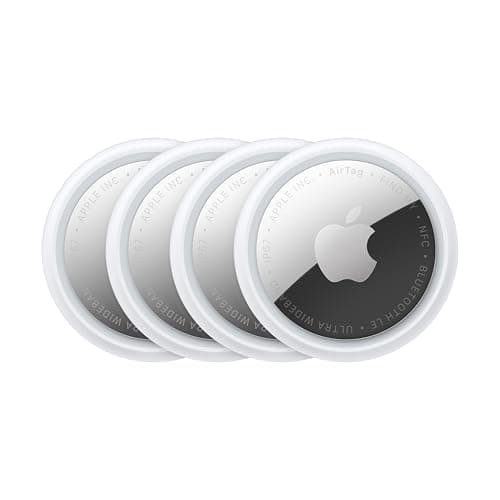
Apple AirTag
Skip this one. If you want to recover a stolen vehicle, this is the wrong device — a thief's phone may alert them to it, and it goes silent the moment the car is somewhere without people. A true cellular GPS tracker with a subscription is the product for that job.
Worth being precise about what this is: it is not a GPS tracker. It has no GPS receiver and no cellular radio. It reports its position by being detected by other people's Apple devices, which works well where there are people and not at all where there are not.
- Positioning
- Bluetooth via nearby Apple devices — no GPS, no cellular
- Battery
- CR2032, stated about 1 year
- Precision Finding
- Ultra-wideband, iPhone 11 and later
- Subscription
- None
- Works without nearby devices
- No
- Warranty
- Not published
- List price
- Not published
What it gets right
- No subscription and no SIM, unlike every true GPS tracker
- CR2032 battery stated to last about a year, replaceable without tools
- Precision Finding via ultra-wideband on iPhone 11 and later, for the last few meters
- Small enough to hide in a car and cheap enough to treat as disposable
Flaws
- It is NOT a GPS tracker. No GPS receiver, no cellular — it depends entirely on nearby Apple devices to report a position
- In a rural area, an underground garage or a container, it reports nothing
- Apple's unwanted-tracking alerts are designed to notify someone being followed, which by design limits covert use
- Apple ecosystem only; the Android equivalent is a different product
The working behind the 8.9
- Heat headroom: not scored (weight 22%)
- The maker publishes no operating-temperature ceiling, so this axis is dropped and the other weights are re-normalized.
- Install effort: 10.0 (weight 24%)
- Drops in and sits there. No fixing of any kind, and it comes out again when you sell the car.
- Price against the ceiling: not scored (weight 24%)
- No published list price we could cite on the compile date, so this axis is dropped and the other weights are re-normalized.
- Written commitment: not scored (weight 15%)
- No warranty term published, so this axis is dropped and the other weights are re-normalized.
- Spec transparency: 7.1 (weight 15%)
- 5 of the 7 specifications we went looking for are published by the maker (71%). A blank row is never a guess here: it prints “Not published” and it costs the product points, because a figure nobody will commit to in writing is a figure you cannot check.
Axes with no published input are dropped and the remaining weights re-normalized, so a product is not punished for a category where an axis does not apply. Specifications compiled September 4, 2026 from AirTag published battery, technology and range comparison.
2When the load rating is the thing you care about
Auto Drive Hard-Sided Trunk Organizer
Skip this one. A rigid organizer is storage, not security, and the two get conflated by listings using the word 'lockable'. A latched plastic box in a trunk delays nobody. It is a good organizer and it is on this page only to draw the line between tidy and secure.
18.5 by 16.54 by 9.96 inches with a published maximum load of 5 kilograms, which is the only organizer here that publishes a load rating at all. Hard sides mean it stands up empty, which is the opposite trade from the collapsible one: it holds its shape always and it takes its space always.
- Dimensions
- 18.5 x 16.54 x 9.96 in
- Maximum load
- 5 kg (about 11 lb)
- Construction
- Hard sided, collapsible
- Compartments
- Not published
- Securing
- Not published
- Warranty
- Not published
List price $17.82 per Walmart listing, captured on the compile date below. Not a live price and not what you will pay — the button is where the real number is.
What it gets right
- Publishes a maximum load, which nobody else in this category does
- Hard sides hold shape whether it is full or empty
- Collapses flat when you genuinely need the whole trunk
- Cheap
Flaws
- 5 kg is about eleven pounds, which is one bag of shopping and not two
- Smaller than the DRIVE Auto in every dimension
- Hard sides mean it takes its footprint even when it holds one thing
The working behind the 8.8
- Heat headroom: not scored (weight 22%)
- The maker publishes no operating-temperature ceiling, so this axis is dropped and the other weights are re-normalized.
- Install effort: 10.0 (weight 24%)
- Drops in and sits there. No fixing of any kind, and it comes out again when you sell the car.
- Price against the ceiling: 10.0 (weight 24%)
- Listed at $17.82 on the compile date. This site's buyer has a practical ceiling around $150 for a single upgrade, so the scale rewards everything under $100 and falls away sharply past $150. The live price is very often different, and that is what the button is for.
- Written commitment: not scored (weight 15%)
- No warranty term published, so this axis is dropped and the other weights are re-normalized.
- Spec transparency: 5.0 (weight 15%)
- 3 of the 6 specifications we went looking for are published by the maker (50%). A blank row is never a guess here: it prints “Not published” and it costs the product points, because a figure nobody will commit to in writing is a figure you cannot check.
Axes with no published input are dropped and the remaining weights re-normalized, so a product is not punished for a category where an axis does not apply. Specifications compiled September 4, 2026 from Auto Drive hard-sided trunk organizer listing.
3Something that cannot simply be carried away
Console Vault In-Vehicle Safe
Publishes the steel gauge — 12-gauge cold rolled plate with welded tab-and-notch seams — which is the only specification that separates a safe from a lockable box. Vehicle-specific so it drops into the existing console without modification.
- Material
- 12-gauge cold rolled plate steel
- Seams
- Welded tab and notch
- Fit
- Vehicle-specific, 40+ applications, no modification stated
- Lock options
- Multiple, including 4-digit combination
- Attack or pry rating
- Not published
- Warranty
- Not published
- List price
- Not published
What it gets right
- Publishes 12-gauge cold rolled plate steel construction rather than 'heavy duty steel'
- Welded tab-and-notch seams, which is a construction detail that resists prying at the joint
- Vehicle-specific fit into the existing center console, so it is anchored by the console rather than sitting loose
- Offered across 40+ vehicle applications with no modification stated as necessary
- Multiple lock options including a 4-digit combination
Flaws
- No safe in a car is more than a delay. Given time and privacy, a determined thief with tools gets in
- Vehicle-specific, so it does not move to your next car
- It occupies the console storage you were already using
- No published warranty term, and no published pry or attack rating
The working behind the 8.3
- Heat headroom: not scored (weight 22%)
- The maker publishes no operating-temperature ceiling, so this axis is dropped and the other weights are re-normalized.
- Install effort: 10.0 (weight 24%)
- Drops in and sits there. No fixing of any kind, and it comes out again when you sell the car.
- Price against the ceiling: not scored (weight 24%)
- No published list price we could cite on the compile date, so this axis is dropped and the other weights are re-normalized.
- Written commitment: not scored (weight 15%)
- No warranty term published, so this axis is dropped and the other weights are re-normalized.
- Spec transparency: 5.7 (weight 15%)
- 4 of the 7 specifications we went looking for are published by the maker (57%). A blank row is never a guess here: it prints “Not published” and it costs the product points, because a figure nobody will commit to in writing is a figure you cannot check.
Axes with no published input are dropped and the remaining weights re-normalized, so a product is not punished for a category where an axis does not apply. Specifications compiled September 4, 2026 from Console Vault published steel gauge and construction.
Prices last verified October 24, 2026. They move constantly; the figure on Amazon when you click is the real one.
Questions people actually ask
Are car safes actually secure?
They are a delay rather than a barrier. Given privacy and tools, anything in a car can be defeated — the vehicle around it is sheet metal and glass. What a safe does is move an opportunistic theft from seconds into minutes.
What steel gauge should a car safe be?
Lower gauge is thicker steel. Console Vault publishes 12-gauge cold rolled plate, which is substantial for a console-sized box. A product advertising “heavy duty steel” with no gauge published is telling you nothing.
Is a cable-secured lockbox good enough?
It defeats grab-and-run and delays a determined thief only briefly. A vehicle-specific console fitment, retained by the console itself, is meaningfully stronger and does not require drilling your car.
Can I store medication or electronics in a car safe?
Not sensibly. A sealed steel box in a cabin reaching 60-70 C has no airflow at all, and no maker publishes an operating temperature range or fire rating. Keys, cards, cash and tools — not lithium or medication.