The best car trackers
The most-bought device in this category has no GPS receiver in it. That distinction decides whether it finds your car in a parking structure or reports nothing at all.
By Sawyer V. · Published · How we research
We have not tested any of this. Everything below is compiled from published manufacturer specifications, and the arithmetic is printed so you can check it. This page carries affiliate links: if you buy through one we earn a commission at no extra cost to you, and it does not change the order of the picks. Full disclosure.
The short answer
A Bluetooth tag is not a GPS tracker, and the difference decides everything. An AirTag has no GPS receiver and no cellular radio. It reports a position only when another Apple device passes near enough to detect it — which works well in a city and not at all in a rural area, an underground garage, or a container. It has no subscription because it has no radio to pay for. A true GPS tracker has both, and therefore a monthly cost.
| # | Pick | Install | Score | Price |
|---|---|---|---|---|
| 1 | Apple AirTag Finding a car you parked, not one that was taken | Drops in | 8.9/10 | $89.00 - view on Amazon |
| 2 | Console Vault In-Vehicle Safe Something that cannot simply be carried away | Drops in | 8.3/10 | $351.98 - view on Amazon |
| 3 | LeeKooLuu 7 in Wireless Backup Camera Adding reversing vision without running a video cable | Hardwire | 7.2/10 | $79.98 - view on Amazon |
Prices last verified October 24, 2026. They move constantly; the figure on Amazon when you click is the real one.
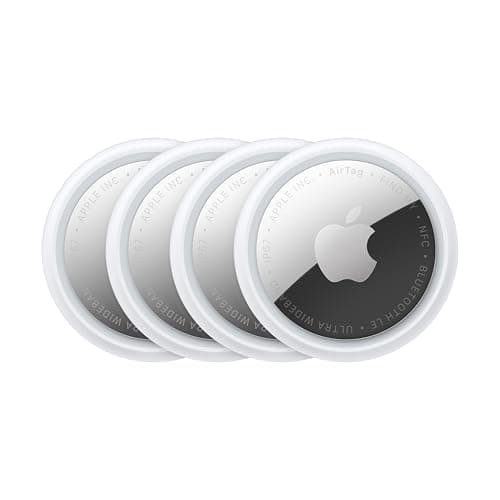
What a Bluetooth tag actually does
This is the most misunderstood product in car accessories, and the misunderstanding is expensive because people rely on it for a job it cannot do.
An AirTag contains a Bluetooth radio, an ultra-wideband chip and a coin cell. It does not contain a GPS receiver and it does not contain a cellular modem. It has no idea where it is.
What it does is broadcast an encrypted identifier. Any nearby Apple device that hears it reports that device's location to Apple, anonymously, and you see that position. The tag is not locating itself; it is being spotted by a passing crowd.
The two categories
| Bluetooth tag | True GPS tracker | |
|---|---|---|
| Knows its own position | No | Yes — GPS receiver |
| Reports without nearby phones | No | Yes — cellular |
| Works underground | Only if people pass | No — GPS needs sky view |
| Subscription | None | Yes, for the cellular service |
| Battery | CR2032, about 1 year | Rechargeable or hardwired, much shorter |
| Live tracking | No | Yes |
| Anti-stalking alerts | Yes, by design | Generally not |
The subscription is not a business model imposed on you — it is the cost of a SIM and a cellular data plan, which is the thing that lets the device report from anywhere. A tracker advertising true GPS with no ongoing cost is worth examining closely.
Which job you are actually solving
- Finding where you parked. A Bluetooth tag is ideal, and the ultra-wideband Precision Finding on newer iPhones genuinely walks you to it in the last few meters
- Knowing where a family member's car is. A true GPS tracker, with their knowledge — see the consent section below
- Recovering a stolen vehicle. A true GPS tracker, and be realistic about what happens next: this is information for police rather than a recovery plan of your own
- Monitoring a teen driver. A GPS tracker with a family plan, openly. Several insurers also offer telematics that does this as part of a policy
The feature that limits covert use, deliberately
Apple built unwanted-tracking alerts into the AirTag: an iPhone that detects an unfamiliar tag traveling with it over time notifies its owner, and the tag itself eventually starts emitting a sound.
That is a safety feature and it is working as intended. It also means a Bluetooth tag hidden in a vehicle is likely to announce itself to anyone driving that vehicle with a compatible phone — which limits its usefulness against a thief and is a deliberate design decision rather than a flaw.
Being clear about it: placing a tracker on a vehicle you do not own or share, to monitor a person without their knowledge, is unlawful in many jurisdictions and the rules vary considerably. We are not going to advise on that beyond saying it is a legal question with real consequences, and the answer depends on where you are and on the relationship. This site describes what products do; it does not help anyone use them to track a person covertly.
Where a tag goes, and the heat problem
For the legitimate find-my-car use, placement is a trade between concealment and signal.
Bluetooth is attenuated by metal. A tag inside a metal console, under a metal seat frame or in the trunk under a spare wheel is a tag that transmits considerably less far, which directly reduces the chance a passing phone hears it. Somewhere concealed but not enclosed in metal is the compromise — a door pocket, under a seat in the cabin, inside a soft trim panel.
Heat is the other consideration. A parked car reaches roughly 60-70 C inside in summer, and no maker in this category publishes an operating temperature range. A coin cell in a hot cabin will not last the stated year. Expect to replace it more often than the specification implies, and check it before you need it — the same problem as every lithium device left in a car, covered in best power banks for car travel.
What actually protects a car
A tracker is a recovery tool, not a prevention tool. It does nothing until after the car is gone, and by then the outcome is largely out of your hands.
Prevention is unglamorous and works better. Nothing visible left in the cabin. A steering lock, which is a visual deterrent that makes a car a slower target than the one next to it. Parking under lighting. And for the contents rather than the car, something bolted in that cannot simply be carried away — best car safes and valuables storage.
A dash cam in parking mode is the other half of this: it records the approach rather than reporting the aftermath, and it needs a hardwire kit with a low-voltage cutoff to do it without flattening the battery — best dash cams with parking mode and does parking mode drain your battery.
Every pick, with the working
Each entry lists the specifications the maker publishes, the axis scores those specifications produce, and what you give up. Rows that read “Not published” are not omissions on our side: they are things the maker will not commit to in writing, and they cost the product points on the transparency axis. Specifications compiled September 4, 2026.
Our pickFinding a car you parked, not one that was taken
Apple AirTag
Skip this one. It is the best-known product here and the wrong one for the job most people buy it for. It has no GPS and no cellular radio — it reports a position only when somebody else's Apple device happens to detect it. For finding where you parked, excellent. For recovering a stolen vehicle, it goes silent the moment the car is somewhere without people.
Worth being precise about what this is: it is not a GPS tracker. It has no GPS receiver and no cellular radio. It reports its position by being detected by other people's Apple devices, which works well where there are people and not at all where there are not.
- Positioning
- Bluetooth via nearby Apple devices — no GPS, no cellular
- Battery
- CR2032, stated about 1 year
- Precision Finding
- Ultra-wideband, iPhone 11 and later
- Subscription
- None
- Works without nearby devices
- No
- Warranty
- Not published
- List price
- Not published
What it gets right
- No subscription and no SIM, unlike every true GPS tracker
- CR2032 battery stated to last about a year, replaceable without tools
- Precision Finding via ultra-wideband on iPhone 11 and later, for the last few meters
- Small enough to hide in a car and cheap enough to treat as disposable
Flaws
- It is NOT a GPS tracker. No GPS receiver, no cellular — it depends entirely on nearby Apple devices to report a position
- In a rural area, an underground garage or a container, it reports nothing
- Apple's unwanted-tracking alerts are designed to notify someone being followed, which by design limits covert use
- Apple ecosystem only; the Android equivalent is a different product
The working behind the 8.9
- Heat headroom: not scored (weight 22%)
- The maker publishes no operating-temperature ceiling, so this axis is dropped and the other weights are re-normalized.
- Install effort: 10.0 (weight 24%)
- Drops in and sits there. No fixing of any kind, and it comes out again when you sell the car.
- Price against the ceiling: not scored (weight 24%)
- No published list price we could cite on the compile date, so this axis is dropped and the other weights are re-normalized.
- Written commitment: not scored (weight 15%)
- No warranty term published, so this axis is dropped and the other weights are re-normalized.
- Spec transparency: 7.1 (weight 15%)
- 5 of the 7 specifications we went looking for are published by the maker (71%). A blank row is never a guess here: it prints “Not published” and it costs the product points, because a figure nobody will commit to in writing is a figure you cannot check.
Axes with no published input are dropped and the remaining weights re-normalized, so a product is not punished for a category where an axis does not apply. Specifications compiled September 4, 2026 from AirTag published battery, technology and range comparison.
2Something that cannot simply be carried away
Console Vault In-Vehicle Safe
Publishes the steel gauge — 12-gauge cold rolled plate with welded tab-and-notch seams — which is the only specification that separates a safe from a lockable box. Vehicle-specific so it drops into the existing console without modification.
- Material
- 12-gauge cold rolled plate steel
- Seams
- Welded tab and notch
- Fit
- Vehicle-specific, 40+ applications, no modification stated
- Lock options
- Multiple, including 4-digit combination
- Attack or pry rating
- Not published
- Warranty
- Not published
- List price
- Not published
What it gets right
- Publishes 12-gauge cold rolled plate steel construction rather than 'heavy duty steel'
- Welded tab-and-notch seams, which is a construction detail that resists prying at the joint
- Vehicle-specific fit into the existing center console, so it is anchored by the console rather than sitting loose
- Offered across 40+ vehicle applications with no modification stated as necessary
- Multiple lock options including a 4-digit combination
Flaws
- No safe in a car is more than a delay. Given time and privacy, a determined thief with tools gets in
- Vehicle-specific, so it does not move to your next car
- It occupies the console storage you were already using
- No published warranty term, and no published pry or attack rating
The working behind the 8.3
- Heat headroom: not scored (weight 22%)
- The maker publishes no operating-temperature ceiling, so this axis is dropped and the other weights are re-normalized.
- Install effort: 10.0 (weight 24%)
- Drops in and sits there. No fixing of any kind, and it comes out again when you sell the car.
- Price against the ceiling: not scored (weight 24%)
- No published list price we could cite on the compile date, so this axis is dropped and the other weights are re-normalized.
- Written commitment: not scored (weight 15%)
- No warranty term published, so this axis is dropped and the other weights are re-normalized.
- Spec transparency: 5.7 (weight 15%)
- 4 of the 7 specifications we went looking for are published by the maker (57%). A blank row is never a guess here: it prints “Not published” and it costs the product points, because a figure nobody will commit to in writing is a figure you cannot check.
Axes with no published input are dropped and the remaining weights re-normalized, so a product is not punished for a category where an axis does not apply. Specifications compiled September 4, 2026 from Console Vault published steel gauge and construction.
3Adding reversing vision without running a video cable
LeeKooLuu 7 in Wireless Backup Camera
Publishes an ingress rating and an operating-temperature range, which on a camera bolted to the outside of a vehicle are the two specifications that actually decide whether it survives. IP69 and a stated -22 F to 176 F, which is a wider range than most of this category will commit to. The monitor is a 7 in suction-mount screen and the link is pre-paired Bluetooth.
- Resolution
- 1080p
- Ingress protection
- IP69
- Operating temperature
- -22 F to 176 F (-30 C to 80 C)
- Monitor
- 7 in, windshield suction mount
- Link
- Bluetooth, pre-paired
- Cameras supported
- 2, with split screen
- Sensor
- Not published
- Field of view
- Not published
- Warranty
- Not published
List price $79.98 per Amazon listing, September 24, 2026, captured on the compile date below. Not a live price and not what you will pay — the button is where the real number is.
What it gets right
- Publishes IP69 ingress protection — this is an exterior component and most competitors publish nothing
- Publishes an operating range of -22 F to 176 F (-30 C to 80 C), which brackets what a bumper actually sees
- Pre-paired out of the box, so there is no pairing step during a 15-minute install
- Supports a second camera with split-screen on the same monitor, front or rear
Flaws
- Publishes no image sensor part number and no field of view, so 'night vision' is a word rather than a figure
- Wireless removes the video cable and not the power cable — the camera still needs a feed, usually the reverse light
- A 7 in monitor on the windshield is a large object in the cabin, and it is not integrated with the car
- No published warranty term
The working behind the 7.2
- Heat headroom: 10.0 (weight 22%)
- Published operating ceiling 80 C (176 F). A car parked in summer sun runs roughly 60-70 C inside, so 65 C and up is real headroom, 60 C is living at the limit, and anything under 55 C is a summer problem waiting to happen.
- Install effort: 4.0 (weight 24%)
- Wires into the fuse box. Half an hour, a fuse tap, a trim tool and a willingness to be upside down under the dash. This is the real cost of parking mode.
- Price against the ceiling: 8.0 (weight 24%)
- Listed at $79.98 on the compile date. This site's buyer has a practical ceiling around $150 for a single upgrade, so the scale rewards everything under $100 and falls away sharply past $150. The live price is very often different, and that is what the button is for.
- Written commitment: not scored (weight 15%)
- No warranty term published, so this axis is dropped and the other weights are re-normalized.
- Spec transparency: 6.7 (weight 15%)
- 6 of the 9 specifications we went looking for are published by the maker (67%). A blank row is never a guess here: it prints “Not published” and it costs the product points, because a figure nobody will commit to in writing is a figure you cannot check.
Axes with no published input are dropped and the remaining weights re-normalized, so a product is not punished for a category where an axis does not apply. Specifications compiled September 4, 2026 from the LeeKooLuu 7 in wireless backup camera listing.
Prices last verified October 24, 2026. They move constantly; the figure on Amazon when you click is the real one.
Questions people actually ask
Is an AirTag a GPS tracker?
No. It has no GPS receiver and no cellular radio. It reports a position only when a nearby Apple device detects it and reports that device's location. In a rural area or an underground garage it reports nothing.
Why do real GPS trackers need a subscription?
Because they contain a cellular modem and SIM, and the subscription pays for that data connection. It is what lets the device report from anywhere rather than depending on passing phones.
Will a hidden tag alert a car thief?
Likely, yes. Unwanted-tracking alerts notify someone traveling with an unfamiliar tag, and the tag eventually emits a sound. That is a deliberate safety feature and it limits covert use by design.
Can I put a tracker on someone else's car?
Tracking a person without their knowledge is unlawful in many jurisdictions and the rules vary considerably. It is a legal question with real consequences, and not one this site will advise on.