What to do if your car breaks down
Being struck by another vehicle is the most likely serious injury in a breakdown. Every decision below follows from that one fact.
By Sawyer V. · Published · How we research
We have not tested any of this. Everything below is compiled from published manufacturer specifications, and the arithmetic is printed so you can check it. This page carries affiliate links: if you buy through one we earn a commission at no extra cost to you, and it does not change the order of the picks. Full disclosure.
The short version
Hazard lights, get off the carriageway, decide whether to stay in the car. That last one is the judgment call and it depends on the road: on a fast highway with a narrow shoulder, staying belted inside is frequently safer than standing beside it, while a wide verge with a barrier means getting out and behind the barrier. The mechanical problem barely matters in the first two minutes — being struck by another vehicle is the actual risk.
| # | Pick | Install | Score | Price |
|---|---|---|---|---|
| 1 | First Aid Only 335-Piece OSHA Kit A kit whose contents are defined by a standard | Drops in | 9.5/10 | $37.44 - view on Amazon |
| 2 | CARTMAN Warning Triangle Kit (3 pack) Being seen before someone hits you | Drops in | 8.9/10 | $27.99 - view on Amazon |
| 3 | Anker Bolder LC90 Flashlight A light that is not your phone | Drops in | 8.8/10 | Check price on Amazon |
| 4 | NOCO Boost Plus GB40 Not needing anybody else's car | Plugs in | 8.0/10 | Check price on Amazon |
| 5 | Anker 313 Power Bank (PowerCore 10K) A phone that needs to survive the day | Plugs in | 7.7/10 | $20.89 - view on Amazon |
Prices last verified October 22, 2026. They move constantly; the figure on Amazon when you click is the real one.
The first thirty seconds
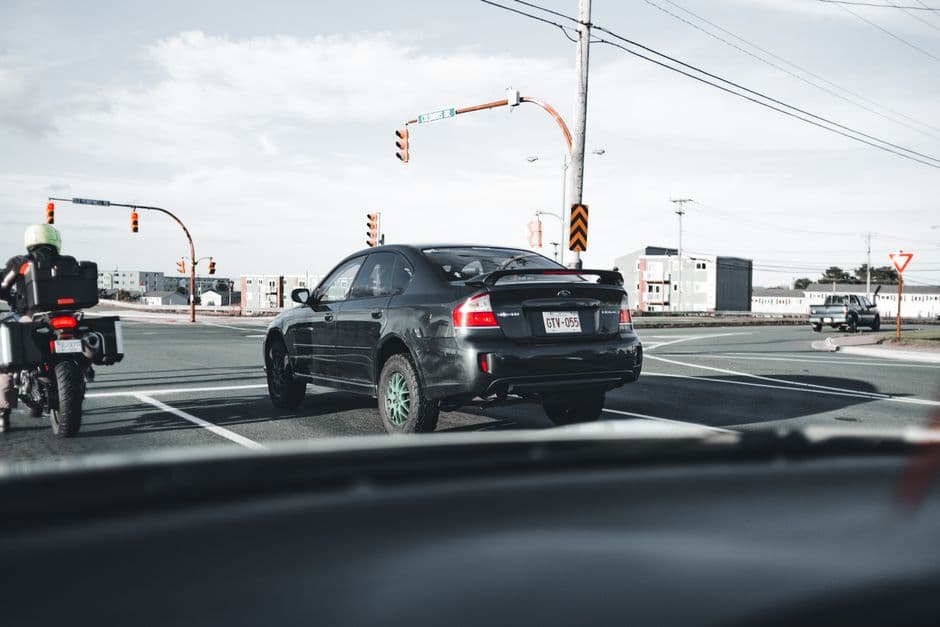
Hazard lights first, immediately, before you have worked out what is wrong or where you are going. They cost nothing, they take a second, and they begin warning traffic while you are still deciding everything else.
Then use whatever momentum you have. A car that has lost power still rolls and still steers — the steering will be much heavier without assistance and the brakes will need far more pedal force, but both work. Aim for the right shoulder, an exit, a side road, anywhere off the carriageway.
Get further off than feels necessary. A car with two wheels still on the carriageway is an obstruction; the same car entirely on a wide shoulder is a parked vehicle. That difference matters more than the extra ten yards costs you.
Stay in the car, or get out?
This is the genuine judgment call and there is no single right answer, which is why generic advice on it is unhelpful.
- Stay in, belted, on a fast road with a narrow shoulder and no barrier. A car is a structure designed to absorb impact and you are restrained inside it. Standing beside it on a two-foot shoulder puts you in the path with no protection at all
- Get out and behind the barrier where there is one, or where there is a wide verge. Behind a barrier is comfortably the safest place available
- Get out immediately regardless if there is any smell of fuel, any smoke, or any sign of fire. That reverses the priority entirely
If you get out, everyone leaves by the doors on the side away from traffic, and nobody stands between the car and oncoming vehicles. The instinct to stand at the front looking at the engine is exactly the wrong one.
Giving a location that helps
The single most useful thing you can do on the phone is say precisely where you are, and it is the thing people find hardest under stress.
- Highway markers and mileposts. Small numbered posts at the roadside, the most precise reference available
- The last exit number you passed, and the direction you were traveling
- Your phone's coordinates. Every phone can display them, and it is worth knowing how on yours before you need it
- Landmarks and junction names as a fallback
Say which side of the road, and whether you are on the shoulder or in a lane. Both change how the response is dispatched.
Triangles, and the honest caveat
Warning triangles extend how far back approaching drivers get notice, which is the most useful thing you can add to hazard lights.
Placing them means walking back along the roadside with traffic passing, which is itself the most dangerous action in this whole scenario. On a fast highway with a narrow shoulder and no barrier, that risk can genuinely exceed the benefit.
If you do it: high-visibility vest on first, walk facing traffic, stay on the shoulder or behind the barrier, and place the first triangle far enough back that drivers can see, react and change lanes. Beyond a curve or a crest rather than on it. Full detail in best warning triangles and road flares.
The things you can actually fix at the roadside
Most breakdowns are not roadside-fixable, and attempting a repair on a live carriageway is rarely the right call. Two exceptions are common enough to prepare for.
A flat battery. Far and away the most common. A jump pack turns it into a two-minute delay — NOCO's GB40 has reverse-polarity protection and spark-proof clamps, and the connection order still matters. See best portable jump starters and how to jump start a car.
A puncture. Sealant and an inflator handle a tread puncture in a few minutes; a wheel change takes fifteen and puts you kneeling beside the road. Slime publishes what it seals — 1/4 in, tread only — and its 3 day or 100 mile limit. See best tire repair kits and how to change a tire.
Everything else — overheating, a warning light, a noise, anything electrical — is a call for assistance rather than a roadside diagnosis.
A warning light is the one roadside symptom you can actually read rather than guess at. A code reader plugged into the OBD2 port tells you whether you are looking at a misfire or an emissions sensor, which is the difference between calling a tow and driving home gently best OBD2 scanners.
Your phone is the critical item
Once the car is dead, your phone is your only link to help, and a flat phone in a dead car is a genuinely bad position. Two mitigations.
Conserve it immediately. Screen brightness down, navigation closed, low-power mode on. A phone that has been running maps at full brightness may have far less left than you assume.
Carry a charged power bank. This is one of the strongest arguments for owning one, because the car's own charger is useless when the car has no power. Keep it charged and bring it indoors between trips, since heat degrades lithium cells and no maker publishes an operating range — best power banks for car travel.
At night, and in winter
A breakdown at night is the same sequence with visibility as the dominant factor. A flashlight makes you visible and lets you see — Anker publishes 900 lumens, up to 6 hours and IPX5 for the Bolder LC90, all three figures, which is rare in that category. See best flashlights for a car.
In cold weather the calculation shifts again: staying in the vehicle becomes more attractive for warmth, and a blanket in the car matters more than most equipment. What belongs in the car seasonally is in what to keep in your car in winter.
The full kit, and where each item should live so it is reachable when it matters, are in best emergency car kits and where to store emergency gear in your car.
Every pick, with the working
Each entry lists the specifications the maker publishes, the axis scores those specifications produce, and what you give up. Rows that read “Not published” are not omissions on our side: they are things the maker will not commit to in writing, and they cost the product points on the transparency axis. Specifications compiled September 4, 2026.
Our pickA kit whose contents are defined by a standard
First Aid Only 335-Piece OSHA Kit
335 pieces built to an OSHA-compliant contents list rather than to a number on the box. That is the only meaningful way to judge a first aid kit: the piece count tells you nothing, the standard the contents are drawn from tells you everything. First Aid Only states supplies adequate for up to 100 people, which is generous for one car.
- Piece count
- 335
- Rated for
- Up to 100 people
- Standard
- OSHA-compliant contents
- Reference standard
- ANSI/ISEA Z308.1 minimum workplace requirements
- Intended use
- Home, car, travel and office
- Case
- Wall-mountable plastic, clear cover, compartments
- Warranty
- Not published
List price $37.44 per Amazon listing, September 27, 2026, captured on the compile date below. Not a live price and not what you will pay — the button is where the real number is.
What it gets right
- Contents built against an OSHA-compliant list, which traces to ANSI/ISEA Z308.1 minimum requirements
- Stated adequate for up to 100 people, so the quantities are generous for one car
- Published piece count of 335 alongside the standard, not instead of it
- Clear cover and individual compartments, so you can find one item under pressure
Flaws
- Workplace kits are weighted toward cuts and abrasions, not roadside trauma
- The case is wall-mountable and built for a shelf, not for a trunk that gets wet
- No published warranty, and consumables have expiry dates you have to track yourself
The working behind the 9.5
- Heat headroom: not scored (weight 22%)
- The maker publishes no operating-temperature ceiling, so this axis is dropped and the other weights are re-normalized.
- Install effort: 10.0 (weight 24%)
- Drops in and sits there. No fixing of any kind, and it comes out again when you sell the car.
- Price against the ceiling: 9.5 (weight 24%)
- Listed at $37.44 on the compile date. This site's buyer has a practical ceiling around $150 for a single upgrade, so the scale rewards everything under $100 and falls away sharply past $150. The live price is very often different, and that is what the button is for.
- Written commitment: not scored (weight 15%)
- No warranty term published, so this axis is dropped and the other weights are re-normalized.
- Spec transparency: 8.6 (weight 15%)
- 6 of the 7 specifications we went looking for are published by the maker (86%). A blank row is never a guess here: it prints “Not published” and it costs the product points, because a figure nobody will commit to in writing is a figure you cannot check.
Axes with no published input are dropped and the remaining weights re-normalized, so a product is not punished for a category where an axis does not apply. Specifications compiled September 4, 2026 from the First Aid Only 335-piece OSHA kit listing.
2Being seen before someone hits you
CARTMAN Warning Triangle Kit (3 pack)
Built to FMVSS 571.125, which is a real federal standard with defined shape, size and performance requirements for roadside warning devices. In a category full of vague safety language, a named standard is the whole specification.
- Standard
- FMVSS 571.125 / 49 CFR Part 571.125
- Pack
- 3 triangles with case
- Visibility
- Reflective panels plus fluorescent plates
- Base
- Weighted non-skid
- Power
- None required
- Warranty
- Not published
- List price
- Not published
What it gets right
- Identical to the United States FMVSS 571.125 standard (49 CFR Part 571.125), which sets shape, size and performance requirements
- Reflective panels plus fluorescent plates, so they work in daylight and at night
- Weighted, non-skid bases that stay put in wind rather than blowing into traffic
- Sold as three, which is what the standard scenario actually calls for
- No battery, so it cannot be flat when you need it
Flaws
- Bulky compared with an LED flare, and they only fold so far
- Setting them out means walking back along a live carriageway, which is itself the dangerous part
- No published warranty term
The working behind the 8.9
- Heat headroom: not scored (weight 22%)
- The maker publishes no operating-temperature ceiling, so this axis is dropped and the other weights are re-normalized.
- Install effort: 10.0 (weight 24%)
- Drops in and sits there. No fixing of any kind, and it comes out again when you sell the car.
- Price against the ceiling: not scored (weight 24%)
- No published list price we could cite on the compile date, so this axis is dropped and the other weights are re-normalized.
- Written commitment: not scored (weight 15%)
- No warranty term published, so this axis is dropped and the other weights are re-normalized.
- Spec transparency: 7.1 (weight 15%)
- 5 of the 7 specifications we went looking for are published by the maker (71%). A blank row is never a guess here: it prints “Not published” and it costs the product points, because a figure nobody will commit to in writing is a figure you cannot check.
Axes with no published input are dropped and the remaining weights re-normalized, so a product is not punished for a category where an axis does not apply. Specifications compiled September 4, 2026 from CARTMAN warning triangle published standard compliance.
3A light that is not your phone
Anker Bolder LC90 Flashlight
900 lumens from a CREE LED, a published 6-hour runtime, IPX5 water resistance and five modes including strobe and SOS, on a rechargeable 18650. Using a phone as a flashlight at the roadside drains the one device you need to call for help, which is the entire argument for keeping a real one in the car.
- Output
- 900 lumens, CREE LED
- Runtime
- Up to 6 hours
- Ingress rating
- IPX5
- Modes
- High, medium, low, strobe, SOS
- Beam
- Zoomable
- Battery
- Rechargeable 18650, included
- Stated beam distance
- Over 660 ft
- Operating range
- Not published
What it gets right
- Published lumens (900), runtime (6 h) and ingress rating (IPX5) — all three, which is rare at this price
- Rechargeable 18650 included, so there is no scramble for AAs
- Zoomable from flood to spot, which covers both 'find the dropped bolt' and 'signal from the shoulder'
- SOS and strobe modes, which are exactly the modes a roadside light needs
Flaws
- IPX5 is rain resistance, not submersion. Fine for a breakdown, not for dropping in a puddle
- A lithium cell in a hot trunk self-discharges, so it needs charging on a schedule like the jump starter does
- 900 lumens on high for 6 hours is not the same as 900 lumens for 6 hours; brightness steps down between modes
The working behind the 8.8
- Heat headroom: not scored (weight 22%)
- The maker publishes no operating-temperature ceiling, so this axis is dropped and the other weights are re-normalized.
- Install effort: 10.0 (weight 24%)
- Drops in and sits there. No fixing of any kind, and it comes out again when you sell the car.
- Price against the ceiling: not scored (weight 24%)
- No published list price we could cite on the compile date, so this axis is dropped and the other weights are re-normalized.
- Written commitment: 7.0 (weight 15%)
- 18-month warranty. This is the only promise in the entire listing that a court would read, which is why it is scored and the marketing copy is not.
- Spec transparency: 8.8 (weight 15%)
- 7 of the 8 specifications we went looking for are published by the maker (88%). A blank row is never a guess here: it prints “Not published” and it costs the product points, because a figure nobody will commit to in writing is a figure you cannot check.
Axes with no published input are dropped and the remaining weights re-normalized, so a product is not punished for a category where an axis does not apply. Specifications compiled September 4, 2026 from Anker Bolder LC90 published specifications.
4Not needing anybody else's car
NOCO Boost Plus GB40
1,000 peak amps out of a 24 watt-hour lithium pack that weighs 2.4 pounds, rated for gasoline engines to 6.0 liters and diesel to 3.0, with spark-proof clamps and reverse-polarity protection. It is the single accessory here that changes what happens on the worst morning of your year, and it fits in a glovebox.
- Peak amps
- 1,000 A
- Battery
- 24 Wh lithium-ion
- Engine ceiling
- Gasoline to 6.0 L, diesel to 3.0 L
- Starts per charge
- Up to 20
- Dimensions
- 7.7 x 3.2 x 1.7 in
- Weight
- 2.4 lb with clamps
- Light
- 100 lumens
- Safety
- Spark proof, reverse polarity protected
- Operating range
- Not published
List price $99.95 per NOCO's listed price, captured on the compile date below. Not a live price and not what you will pay — the button is where the real number is.
What it gets right
- 1,000 peak amps and up to 20 starts on one charge, both published
- Spark-proof and reverse-polarity protected, which matters when you are doing this in the dark
- 2.4 lb and 7.7 inches long — it genuinely lives in the car rather than the garage
- USB port and a 100-lumen light, so it is also the thing you reach for in a power cut
Flaws
- Lithium, so it self-discharges and needs topping up every few months or it is a brick when you need it
- 6.0 L gasoline and 3.0 L diesel is the published ceiling — a big diesel needs the bigger model
- $99.95 for something you hope never to use
The working behind the 8.0
- Heat headroom: not scored (weight 22%)
- The maker publishes no operating-temperature ceiling, so this axis is dropped and the other weights are re-normalized.
- Install effort: 10.0 (weight 24%)
- Plugs into a 12V socket or a USB port. Nothing to mount, nothing to route, reversible in a second.
- Price against the ceiling: 7.0 (weight 24%)
- Listed at $99.95 on the compile date. This site's buyer has a practical ceiling around $150 for a single upgrade, so the scale rewards everything under $100 and falls away sharply past $150. The live price is very often different, and that is what the button is for.
- Written commitment: 5.5 (weight 15%)
- 12-month warranty. This is the only promise in the entire listing that a court would read, which is why it is scored and the marketing copy is not.
- Spec transparency: 8.9 (weight 15%)
- 8 of the 9 specifications we went looking for are published by the maker (89%). A blank row is never a guess here: it prints “Not published” and it costs the product points, because a figure nobody will commit to in writing is a figure you cannot check.
Axes with no published input are dropped and the remaining weights re-normalized, so a product is not punished for a category where an axis does not apply. Specifications compiled September 4, 2026 from NOCO Boost Plus GB40 published specifications.
5A phone that needs to survive the day
Anker 313 Power Bank (PowerCore 10K)
Skip this one. In the car itself this is the wrong product. A 12V charger supplies power continuously from the alternator and never needs recharging; a power bank is for when you are away from the vehicle.
10,000 mAh is two to three full phone charges in something you can actually carry. For a car it is the sensible size: enough to matter, small enough that taking it inside on a hot day is not a chore.
- Capacity
- 10,000 mAh
- Phone charges
- Two to three full charges (maker figure)
- Operating temperature
- Not published
- Warranty
- Not published
- List price
- Not published
What it gets right
- 10,000 mAh gives two to three full smartphone charges on Anker's own figure
- Small and light enough to live in a bag rather than a trunk
- Far cheaper than a laptop-capable pack, and covers what most people actually need
- Easy to bring indoors, which matters because heat is what kills lithium cells
Flaws
- Will not charge a laptop meaningfully
- No published operating temperature range
- A power bank is a backup for a charger, not a replacement — in a car, a 12V charger is better in every way
The working behind the 7.7
- Heat headroom: not scored (weight 22%)
- The maker publishes no operating-temperature ceiling, so this axis is dropped and the other weights are re-normalized.
- Install effort: 10.0 (weight 24%)
- Plugs into a 12V socket or a USB port. Nothing to mount, nothing to route, reversible in a second.
- Price against the ceiling: not scored (weight 24%)
- No published list price we could cite on the compile date, so this axis is dropped and the other weights are re-normalized.
- Written commitment: not scored (weight 15%)
- No warranty term published, so this axis is dropped and the other weights are re-normalized.
- Spec transparency: 4.0 (weight 15%)
- 2 of the 5 specifications we went looking for are published by the maker (40%). A blank row is never a guess here: it prints “Not published” and it costs the product points, because a figure nobody will commit to in writing is a figure you cannot check.
Axes with no published input are dropped and the remaining weights re-normalized, so a product is not punished for a category where an axis does not apply. Specifications compiled September 4, 2026 from Anker 313 published specifications.
Prices last verified October 22, 2026. They move constantly; the figure on Amazon when you click is the real one.
Questions people actually ask
Should I stay in my car after a breakdown?
On a fast road with a narrow shoulder and no barrier, staying belted inside is frequently safer than standing beside it. Where there is a barrier or wide verge, get out on the non-traffic side and behind it. Any smell of fuel or smoke reverses this — get out.
How do I tell them where I am?
Highway markers or mileposts are the most precise. Otherwise the last exit number and direction of travel, or your phone's coordinates — worth learning how to display those before you need them.
Can I steer if the engine dies?
Yes. Steering and brakes both work without engine power, just much more heavily — assistance is lost, so both need far more effort. Use the momentum you have to get off the carriageway.
What is the most common roadside breakdown?
A flat battery, by a wide margin, followed by punctures. Both are the two things a driver can realistically resolve at the roadside, which is why a jump pack and a tire repair kit are the highest-value items to carry.