How to defog your windshield fast
The fastest method uses the air conditioning even in winter, because the compressor is a dehumidifier and fog is a humidity problem.
By Sawyer V. · Published · How we research
We have not tested any of this. Everything below is compiled from published manufacturer specifications, and the arithmetic is printed so you can check it. This page carries affiliate links: if you buy through one we earn a commission at no extra cost to you, and it does not change the order of the picks. Full disclosure.
The short version
Air conditioning on, recirculate off, airflow to the windshield, temperature up, fan high. The counterintuitive part is the air conditioning in winter: the compressor is a dehumidifier, and interior fog is condensed humidity rather than a temperature problem. Recirculate is the setting that actively works against you, because it keeps the moist air you are breathing inside the car. If the glass fogs unusually easily, the cause is usually a film on the inside of it.
| # | Pick | Install | Score | Price |
|---|---|---|---|---|
| 1 | Rain-X De-Icer Windshield Washer Fluid A windshield that freezes overnight | Drops in | 9.5/10 | $18.99 - view on Amazon |
| 2 | Armor All 8-Piece Car Cleaning Kit Inside and outside in one box | Drops in | 9.2/10 | $42.99 - view on Amazon |
| 3 | Chemical Guys Easy All Interior Care Kit Doing it properly rather than quickly | Drops in | 7.7/10 | $39.99 - view on Amazon |
Prices last verified October 22, 2026. They move constantly; the figure on Amazon when you click is the real one.
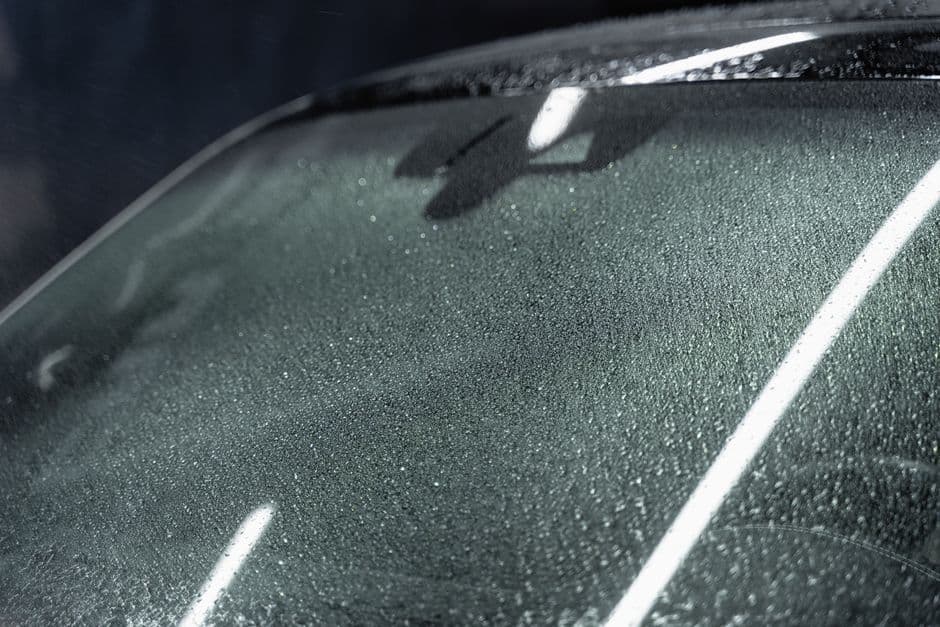
Why the inside of a windshield fogs
Air holds a certain amount of water vapor, and how much depends on its temperature — warmer air holds more. Cool that air and at some point it can no longer hold what it has, and the excess condenses on the nearest cold surface. In a car that surface is the glass.
The moisture comes from you. Breathing puts a surprising amount of water into a small sealed space, and so do wet coats, wet shoes, wet floor mats and a damp carpet. Two people on a cold morning fog a windscreen quickly.
Once you see it as a humidity problem rather than a temperature problem, the correct settings follow directly — you need to remove moisture and get drier air onto the glass, in that order.
The air conditioning trick, explained
The single most useful thing to know about defogging is that the air conditioning compressor should be on, in winter, with the heat up.
An air conditioning system works by passing cabin air over a cold evaporator. Water condenses out onto that surface and drains away — which is the puddle under a parked car on a hot day. The air leaving the system is therefore drier than the air entering it, regardless of what temperature you then heat it back up to.
So air conditioning plus heat is not a contradiction. The compressor dries the air and the heater matrix warms it, and dry warm air onto cold glass is exactly what clears fog fastest. Most cars run the compressor automatically in defrost mode for this reason, whatever the outside temperature.
Recirculate is the setting working against you
Recirculate closes the intake from outside and circulates cabin air instead. It exists for two good reasons: it cools a hot car faster because it is re-cooling already-cooled air, and it keeps out exhaust fumes in traffic.
For fog it is exactly wrong. The cabin air is the humid air — it is the air you have been breathing into — and recirculating it means concentrating the moisture rather than removing it. People often find the fog gets worse the longer they run the fan, and this is why.
Turn recirculate off and the system draws outside air, which on a cold day is almost always drier in absolute terms than the air in the car. Many cars disable recirculate automatically in defrost mode, and if yours does, that is why.
The reason your glass fogs more than it should
If your windshield fogs unusually readily, or fogs in patterns, the cause is very often a film on the inside of the glass.
The film is mostly your car's own doing. Plastics, vinyl, adhesives and foams in a hot cabin release volatile compounds, and those condense on the coolest surface — the inside of the windshield. It builds slowly enough that you never notice it, and it gives water vapor something to bond to, which means fog forms earlier and clears more slowly.
Cleaning it makes a genuine and immediate difference. Use a dedicated glass cleaner and two microfiber cloths, one to clean and one to buff dry, and expect the first cloth to come away visibly dirty even on glass that looked clean. The streak-free method is in how to clean car windows without streaks.
Products marketed as anti-fog treatments work by leaving a surfactant film that makes water spread into a sheet rather than bead into droplets. They do something, and they do considerably less than cleaning genuinely dirty glass in the first place.
Find the water, because it is coming from somewhere
Persistent fogging that returns immediately, or a car that smells damp, means there is standing water in it. Warm it up and that water evaporates into the cabin, and you are fighting a supply you have not cut off. Once the car is genuinely dry, a silica gel dehumidifier bag keeps the overnight humidity down so there is less to condense in the first place.
- Carpet under the floor mats. Rubber mats in particular trap water against the carpet rather than letting it dry — lift them and check
- The spare wheel well. A low point under a lid, so it collects leaks and nobody looks
- Blocked sunroof or air conditioning drains. Both dump water into the cabin when they clog, and both are common
- A clogged cabin air filter. Damp organic matter in the ventilation path, which also produces the musty smell — how to get smells out of your car
Dry the carpet properly if it is wet, and fix the ingress rather than the symptom. All-weather mats with a raised lip help contain the water you bring in on your shoes — best all-weather floor mats.
Ice on the outside is a different job
Everything above is about condensation. Ice on the outside is a separate problem and the answer is time, a scraper, and washer fluid rated for the temperature.
Fluid rating is one of the few genuinely checkable specifications in car care. Rain-X publishes freeze protection to -30 F on its extreme formula and -25 F on the heavy duty one, along with boiling point, flash point and pH. A fluid labeled only “all season” is a guess.
Two cautions. Use winter fluid undiluted — topping up over summer fluid dilutes the freeze protection by an amount you cannot know. And never pour hot water on a frozen windshield: the thermal shock can crack glass, particularly glass with an existing chip.
The rest of the cold-weather kit is in what to keep in your car in winter.
Every pick, with the working
Each entry lists the specifications the maker publishes, the axis scores those specifications produce, and what you give up. Rows that read “Not published” are not omissions on our side: they are things the maker will not commit to in writing, and they cost the product points on the transparency axis. Specifications compiled September 4, 2026.
Our pickA windshield that freezes overnight
Rain-X De-Icer Windshield Washer Fluid
Publishes an actual freeze point rather than a season name, which is the entire point of buying winter fluid. The -30 F formula is the one to buy if your winter genuinely gets there; anything labeled only 'all season' is a guess.
- Freeze protection
- -30 F (extreme) / -25 F (heavy duty)
- Boiling point
- 186 F (on the -25 F formula)
- Flash point
- 84 F (on the -25 F formula)
- Maximum pH
- 8.5
- Dilution
- Use undiluted
- Extra function
- Water-beading treatment, anti-refreeze
- List price
- Not published
What it gets right
- Publishes a freeze protection figure in degrees — -30 F on the extreme formula, -25 F on the heavy duty
- Also publishes boiling point, flash point and pH on the technical data, which almost no consumer fluid does
- Prevents refreeze on the glass and the wiper blades, which is where summer fluid fails badly
- Applies water-beading treatment as it cleans
Flaws
- Must be used undiluted — topping up over summer fluid dilutes the freeze protection and you will not know by how much
- A winter fluid in a summer climate is money spent on protection you never use
- Fluid does not fix worn wiper blades, which is more often the real cause of poor visibility
The working behind the 9.5
- Heat headroom: not scored (weight 22%)
- The maker publishes no operating-temperature ceiling, so this axis is dropped and the other weights are re-normalized.
- Install effort: 10.0 (weight 24%)
- Drops in and sits there. No fixing of any kind, and it comes out again when you sell the car.
- Price against the ceiling: not scored (weight 24%)
- No published list price we could cite on the compile date, so this axis is dropped and the other weights are re-normalized.
- Written commitment: not scored (weight 15%)
- No warranty term published, so this axis is dropped and the other weights are re-normalized.
- Spec transparency: 8.6 (weight 15%)
- 6 of the 7 specifications we went looking for are published by the maker (86%). A blank row is never a guess here: it prints “Not published” and it costs the product points, because a figure nobody will commit to in writing is a figure you cannot check.
Axes with no published input are dropped and the remaining weights re-normalized, so a product is not punished for a category where an axis does not apply. Specifications compiled September 4, 2026 from Rain-X De-Icer published specifications.
2Inside and outside in one box
Armor All 8-Piece Car Cleaning Kit
Eight pieces covering both halves of the car: glass wipes, interior detailer, wash and wax, wheel and tire cleaner, tire foam and a microfiber cloth, with published volumes on each bottle. The published volumes are why it is here — it is the only kit in this ledger where you can work out what you are actually getting.
- Pieces
- 8
- Glass
- Glass cleaning wipes, 20 count
- Interior
- Interior detailer, 16 fl oz
- Wash
- Ultra Shine wash and wax, 16 fl oz
- Wheels
- Extreme wheel and tire cleaner, 24 fl oz
- Tires
- Tire foam, 20 fl oz
- Cloths
- 1 microfiber cloth
- List price
- Not published
- Warranty
- Not published
What it gets right
- Published volumes on every bottle (16 oz detailer, 16 oz wash and wax, 24 oz wheel cleaner, 20 oz tire foam)
- Covers exterior as well as interior, which the specialist interior kits do not
- Glass wipes rather than a spray, which is the format that actually gets used in a car
- Widely stocked, so it is the one you can buy today
Flaws
- Generalist products. Each one is beaten by a specialist, and you are buying breadth rather than depth
- No leather-specific product, so a leather interior needs something else anyway
- One microfiber cloth in an eight-piece kit is optimistic
The working behind the 9.2
- Heat headroom: not scored (weight 22%)
- The maker publishes no operating-temperature ceiling, so this axis is dropped and the other weights are re-normalized.
- Install effort: 10.0 (weight 24%)
- Drops in and sits there. No fixing of any kind, and it comes out again when you sell the car.
- Price against the ceiling: not scored (weight 24%)
- No published list price we could cite on the compile date, so this axis is dropped and the other weights are re-normalized.
- Written commitment: not scored (weight 15%)
- No warranty term published, so this axis is dropped and the other weights are re-normalized.
- Spec transparency: 7.8 (weight 15%)
- 7 of the 9 specifications we went looking for are published by the maker (78%). A blank row is never a guess here: it prints “Not published” and it costs the product points, because a figure nobody will commit to in writing is a figure you cannot check.
Axes with no published input are dropped and the remaining weights re-normalized, so a product is not punished for a category where an axis does not apply. Specifications compiled September 4, 2026 from Armor All 8-piece kit published contents.
3Doing it properly rather than quickly
Chemical Guys Easy All Interior Care Kit
Leather cleaner and conditioner, streak-free glass spray, microfiber towels and quick wipes, sold as a set. The glass spray is the item that earns the kit its place: the film on the inside of a windshield is the single biggest contributor to night glare, and almost nobody owns a cleaner that removes it without leaving a haze.
- Contents
- Leather cleaner and conditioner, glass spray, microfiber towels, quick wipes
- Interior type
- Leather-focused
- Bottle volumes
- Not published
- List price
- Not published
- Warranty
- Not published
What it gets right
- Includes a proper glass cleaner, which is the most-skipped and most-valuable interior job
- Leather cleaner and conditioner as separate steps rather than a single 'wipe' product
- Microfiber towels included, so the kit is genuinely complete
- Chemical Guys publishes what is in each kit, which lets you compare kits rather than trusting a photo
Flaws
- Leather products are wasted on a cloth interior — check which kit matches your seats
- More expensive than a supermarket bundle, and for a car you keep clean anyway that is hard to justify
- Chemical Guys publishes no bottle volumes on the kit page, so value per ounce is unknowable
The working behind the 7.7
- Heat headroom: not scored (weight 22%)
- The maker publishes no operating-temperature ceiling, so this axis is dropped and the other weights are re-normalized.
- Install effort: 10.0 (weight 24%)
- Drops in and sits there. No fixing of any kind, and it comes out again when you sell the car.
- Price against the ceiling: not scored (weight 24%)
- No published list price we could cite on the compile date, so this axis is dropped and the other weights are re-normalized.
- Written commitment: not scored (weight 15%)
- No warranty term published, so this axis is dropped and the other weights are re-normalized.
- Spec transparency: 4.0 (weight 15%)
- 2 of the 5 specifications we went looking for are published by the maker (40%). A blank row is never a guess here: it prints “Not published” and it costs the product points, because a figure nobody will commit to in writing is a figure you cannot check.
Axes with no published input are dropped and the remaining weights re-normalized, so a product is not punished for a category where an axis does not apply. Specifications compiled September 4, 2026 from Chemical Guys' Easy All Interior Care Kit page.
Prices last verified October 22, 2026. They move constantly; the figure on Amazon when you click is the real one.
Questions people actually ask
Should I use air conditioning to defog in winter?
Yes. The compressor dries the air, and interior fog is a humidity problem. Air conditioning plus heat gives you warm dry air, which clears glass faster than heat alone. Most cars run the compressor automatically in defrost mode.
Why does my windshield fog up more when I turn the fan on?
Almost certainly recirculate is on, so you are circulating the humid air you have been breathing rather than drawing drier air from outside. Turn recirculate off.
Why does my car fog up so easily?
Usually a film on the inside of the glass from off-gassing interior plastics, which gives moisture something to condense on. Sometimes standing water in the carpet or spare wheel well. Clean the glass first; then go looking for water.
Can I pour warm water on an iced windshield?
No. Thermal shock can crack glass, especially glass with an existing chip. Use a scraper and washer fluid rated for the temperature — Rain-X publishes down to -30 F on its extreme formula.