How to get smells out of your car
Every smell has a physical source. An air freshener adds a second smell on top of the first, which is why the car ends up smelling of vanilla and damp.
By Sawyer V. · Published · How we research
We have not tested any of this. Everything below is compiled from published manufacturer specifications, and the arithmetic is printed so you can check it. This page carries affiliate links: if you buy through one we earn a commission at no extra cost to you, and it does not change the order of the picks. Full disclosure.
The short version
Find the source and remove it. Everything else is theater. A smell is a volatile compound coming off a physical thing — spilled milk in a carpet, a wet floor mat, a clogged cabin filter, mold on the air conditioning evaporator. Air fresheners add a scent on top and change nothing. Work in order: empty, find, vacuum, clean, replace the cabin filter, dry the car out. Treat the air last, if at all.
| # | Pick | Install | Score | Price |
|---|---|---|---|---|
| 1 | Armor All 8-Piece Car Cleaning Kit Inside and outside in one box | Drops in | 9.2/10 | $42.99 - view on Amazon |
| 2 | ThisWorx Car Vacuum Reaching the trunk without an extension lead | Plugs in | 9.2/10 | $19.94 - view on Amazon |
| 3 | Chemical Guys Easy All Interior Care Kit Doing it properly rather than quickly | Drops in | 7.7/10 | $39.99 - view on Amazon |
Prices last verified October 20, 2026. They move constantly; the figure on Amazon when you click is the real one.
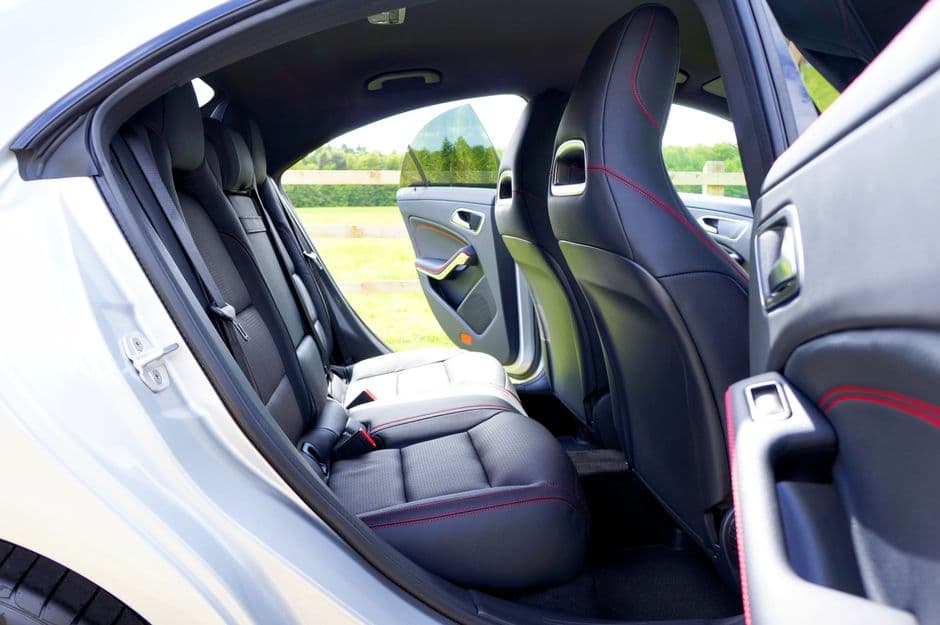
Why air fresheners make it worse
An air freshener does one of two things. Most of them add a strong scent that your nose registers alongside the original smell rather than instead of it — which is how a car ends up smelling of vanilla and damp carpet at the same time.
Some contain compounds that genuinely reduce your perception of other odors, which is arguably worse: the smell is still there, its source is still there, and you have removed your own ability to notice it. Whatever was rotting continues to rot.
Neither addresses a physical source. If a smell has lasted more than a few days, something in the car is producing it continuously, and that thing is findable.
Finding the source
This is unglamorous and it is the entire job. Empty the car completely — including the trunk, the spare wheel well, and the door pockets — and then get low and work systematically.
The places people miss, in rough order of how often they turn out to be the answer:
- Under the front seats. Where everything that falls between the seat and the console ends up. Move the seat to both extremes to see the whole floor
- The seat crease. Where the base meets the back. Liquid runs into it and stays
- The spare wheel well. A low point under a lid, so it collects water from a leak and nobody opens it for years
- Under the floor mats. Especially rubber ones, which trap moisture against the carpet rather than letting it evaporate
- Seat belts. They absorb, and they retract into a housing where they stay damp. Pull each one fully out and smell it
- The trunk carpet edges. Where a leaking taillight seal or a blocked drain shows up first
The cabin air filter, which almost nobody checks
Modern cars filter the air coming into the cabin, and that filter collects leaves, dust, pollen and moisture. Left long enough it becomes a damp mat of organic material sitting directly in your ventilation path, and every time you turn the fan on, the car blows air through it and into your face.
The tell is a musty smell that appears or intensifies when you switch the fan on and is weaker with the fan off. If that describes your car, the filter is very likely the answer.
On most vehicles it lives behind the glovebox, and the job is a five-minute one requiring no tools beyond releasing the glovebox stops. Filters are inexpensive. If you cannot remember replacing yours, it is due.
The air conditioning evaporator
The other ventilation-path source, and the harder one. The evaporator is a cold surface deep in the dashboard that pulls moisture out of the air — that is where the water dripping under your car on a hot day comes from.
A cold, permanently damp surface in the dark is exactly what mold wants. When it takes hold, the result is the smell people describe as “dirty socks” that appears for the first thirty seconds after starting the air conditioning.
One habit genuinely reduces this: switch the air conditioning compressor off a few minutes before the end of a journey, leaving the fan running. The airflow dries the evaporator before the car is parked. Doing that consistently is more effective than any treatment sold for the problem afterwards.
Cleaning fabric properly
The mistake with fabric is spraying cleaner on and letting it dry. That leaves both the original contaminant and the cleaner in the material, and adds moisture, which is what the smell wanted in the first place.
- Vacuum thoroughly first, with a crevice tool into every seam
- Apply cleaner to a cloth rather than flooding the surface
- Agitate with a soft brush to lift the contaminant out of the fibers
- Blot with a dry microfiber cloth — this is the step that removes it
- Dry the area completely before closing the car up
For organic sources specifically — milk, vomit, urine — an enzyme cleaner does something a detergent cannot: it breaks down the proteins producing the smell rather than diluting them. Detergent moves the problem around; enzymes consume it. Full method and product notes in how to clean your car interior and best car cleaning kits.
What to do after the source is gone
With the cause removed, ventilation and time do most of the remaining work. Leave the car open in dry weather; a few hours of air movement clears a great deal.
If you want help, choose an absorber over a scent. Activated charcoal bags and bicarbonate of soda both work by adsorbing volatile compounds rather than masking them, cost very little, and have the considerable advantage that they cannot hide a returning problem.
And prevent the recurrence. Most car smells are food, drink and damp, all of which arrive the same way — so a bin that gets emptied and mats that come out to dry are the actual fix. See best car trash cans, best all-weather floor mats and, if the source rides in the back regularly, best dog car seat covers.
Two categories sit either side of that advice and get confused for each other constantly. Fresheners add a scent and do nothing to the source, which is fine once the source is gone and actively unhelpful before best car air fresheners. Cabin purifiers filter particulates rather than odor molecules, so they are a different purchase solving a different problem best car air purifiers.
And change the cabin filter while you are at it. It sits in the airflow path of everything you have just cleaned, a carbon and baking soda filter addresses odor rather than particles, and most cars on the road are running one that has never been changed — best cabin air filters.
Every pick, with the working
Each entry lists the specifications the maker publishes, the axis scores those specifications produce, and what you give up. Rows that read “Not published” are not omissions on our side: they are things the maker will not commit to in writing, and they cost the product points on the transparency axis. Specifications compiled September 4, 2026.
Our pickInside and outside in one box
Armor All 8-Piece Car Cleaning Kit
Eight pieces covering both halves of the car: glass wipes, interior detailer, wash and wax, wheel and tire cleaner, tire foam and a microfiber cloth, with published volumes on each bottle. The published volumes are why it is here — it is the only kit in this ledger where you can work out what you are actually getting.
- Pieces
- 8
- Glass
- Glass cleaning wipes, 20 count
- Interior
- Interior detailer, 16 fl oz
- Wash
- Ultra Shine wash and wax, 16 fl oz
- Wheels
- Extreme wheel and tire cleaner, 24 fl oz
- Tires
- Tire foam, 20 fl oz
- Cloths
- 1 microfiber cloth
- List price
- Not published
- Warranty
- Not published
What it gets right
- Published volumes on every bottle (16 oz detailer, 16 oz wash and wax, 24 oz wheel cleaner, 20 oz tire foam)
- Covers exterior as well as interior, which the specialist interior kits do not
- Glass wipes rather than a spray, which is the format that actually gets used in a car
- Widely stocked, so it is the one you can buy today
Flaws
- Generalist products. Each one is beaten by a specialist, and you are buying breadth rather than depth
- No leather-specific product, so a leather interior needs something else anyway
- One microfiber cloth in an eight-piece kit is optimistic
The working behind the 9.2
- Heat headroom: not scored (weight 22%)
- The maker publishes no operating-temperature ceiling, so this axis is dropped and the other weights are re-normalized.
- Install effort: 10.0 (weight 24%)
- Drops in and sits there. No fixing of any kind, and it comes out again when you sell the car.
- Price against the ceiling: not scored (weight 24%)
- No published list price we could cite on the compile date, so this axis is dropped and the other weights are re-normalized.
- Written commitment: not scored (weight 15%)
- No warranty term published, so this axis is dropped and the other weights are re-normalized.
- Spec transparency: 7.8 (weight 15%)
- 7 of the 9 specifications we went looking for are published by the maker (78%). A blank row is never a guess here: it prints “Not published” and it costs the product points, because a figure nobody will commit to in writing is a figure you cannot check.
Axes with no published input are dropped and the remaining weights re-normalized, so a product is not punished for a category where an axis does not apply. Specifications compiled September 4, 2026 from Armor All 8-piece kit published contents.
2Reaching the trunk without an extension lead
ThisWorx Car Vacuum
A 106 W corded vacuum drawing 8.8 amps from the 12V socket, with a 16-foot cord and a metal turbine. The cord is the reason to buy the corded one: sixteen feet reaches the trunk of most cars from the front socket, and a cordless handheld runs out of battery halfway through the back seat.
- Power
- 106 W
- Current draw
- 8.8 A
- Cord length
- 16 ft
- Weight
- 2.4 lb
- Power source
- 12 V socket
- Filter
- HEPA, spare included
- Attachments
- Flathead, extendable, brush nozzle
- Suction (kPa or air watts)
- Not published
- Warranty
- Not published
What it gets right
- 16 ft cord, published — genuinely reaches every corner of a normal car from one socket
- 106 W and 8.8 A published, which is more useful than the 'high power' every listing in this category claims
- 2.4 lb, so it is easy to hold at an angle under a seat for five minutes
- Ships with three attachments, a spare HEPA filter and a bag, so it is complete out of the box
Flaws
- ThisWorx publishes no suction figure in kPa or air watts, which is the number that would let you compare it to anything
- 8.8 A is a real load on the 12V socket; run the engine
- Corded means the cord is always in the way of what you are vacuuming
The working behind the 9.2
- Heat headroom: not scored (weight 22%)
- The maker publishes no operating-temperature ceiling, so this axis is dropped and the other weights are re-normalized.
- Install effort: 10.0 (weight 24%)
- Plugs into a 12V socket or a USB port. Nothing to mount, nothing to route, reversible in a second.
- Price against the ceiling: not scored (weight 24%)
- No published list price we could cite on the compile date, so this axis is dropped and the other weights are re-normalized.
- Written commitment: not scored (weight 15%)
- No warranty term published, so this axis is dropped and the other weights are re-normalized.
- Spec transparency: 7.8 (weight 15%)
- 7 of the 9 specifications we went looking for are published by the maker (78%). A blank row is never a guess here: it prints “Not published” and it costs the product points, because a figure nobody will commit to in writing is a figure you cannot check.
Axes with no published input are dropped and the remaining weights re-normalized, so a product is not punished for a category where an axis does not apply. Specifications compiled September 4, 2026 from ThisWorx car vacuum published specifications.
3Doing it properly rather than quickly
Chemical Guys Easy All Interior Care Kit
Leather cleaner and conditioner, streak-free glass spray, microfiber towels and quick wipes, sold as a set. The glass spray is the item that earns the kit its place: the film on the inside of a windshield is the single biggest contributor to night glare, and almost nobody owns a cleaner that removes it without leaving a haze.
- Contents
- Leather cleaner and conditioner, glass spray, microfiber towels, quick wipes
- Interior type
- Leather-focused
- Bottle volumes
- Not published
- List price
- Not published
- Warranty
- Not published
What it gets right
- Includes a proper glass cleaner, which is the most-skipped and most-valuable interior job
- Leather cleaner and conditioner as separate steps rather than a single 'wipe' product
- Microfiber towels included, so the kit is genuinely complete
- Chemical Guys publishes what is in each kit, which lets you compare kits rather than trusting a photo
Flaws
- Leather products are wasted on a cloth interior — check which kit matches your seats
- More expensive than a supermarket bundle, and for a car you keep clean anyway that is hard to justify
- Chemical Guys publishes no bottle volumes on the kit page, so value per ounce is unknowable
The working behind the 7.7
- Heat headroom: not scored (weight 22%)
- The maker publishes no operating-temperature ceiling, so this axis is dropped and the other weights are re-normalized.
- Install effort: 10.0 (weight 24%)
- Drops in and sits there. No fixing of any kind, and it comes out again when you sell the car.
- Price against the ceiling: not scored (weight 24%)
- No published list price we could cite on the compile date, so this axis is dropped and the other weights are re-normalized.
- Written commitment: not scored (weight 15%)
- No warranty term published, so this axis is dropped and the other weights are re-normalized.
- Spec transparency: 4.0 (weight 15%)
- 2 of the 5 specifications we went looking for are published by the maker (40%). A blank row is never a guess here: it prints “Not published” and it costs the product points, because a figure nobody will commit to in writing is a figure you cannot check.
Axes with no published input are dropped and the remaining weights re-normalized, so a product is not punished for a category where an axis does not apply. Specifications compiled September 4, 2026 from Chemical Guys' Easy All Interior Care Kit page.
Prices last verified October 20, 2026. They move constantly; the figure on Amazon when you click is the real one.
Questions people actually ask
How do I get a smoke smell out of a car?
It is the hardest case, because tar deposits on every surface including the headliner and inside the ventilation ducts. It needs every hard surface cleaned, the fabric and headliner treated, and the cabin filter replaced. Partial cleaning gives partial results.
Why does my car smell only when the air conditioning is on?
That points at the ventilation path — either a clogged cabin filter or microbial growth on the evaporator. Replace the filter first, since it is cheap and easy. Running the fan without the compressor for the last few minutes of a drive helps prevent recurrence.
Does an ozone generator work?
Ozone does oxidize odor compounds, and it is also a respiratory irritant that requires the vehicle to be unoccupied during treatment and thoroughly aired afterwards. It also does nothing about a source that is still present. We would exhaust the source-removal steps first.
How long should it take for a smell to go?
Once the source is genuinely removed and the car is dry, days rather than weeks. If it comes back, the source is still there — which usually means moisture, and moisture usually means a leak.