How to stop glare while driving
Glare has four separate sources and people treat them as one. The dashboard reflecting into your windshield is the one nobody diagnoses.
By Sawyer V. · Published · How we research
We have not tested any of this. Everything below is compiled from published manufacturer specifications, and the arithmetic is printed so you can check it. This page carries affiliate links: if you buy through one we earn a commission at no extra cost to you, and it does not change the order of the picks. Full disclosure.
The short answer
Diagnose which of the four it is before buying anything. Low sun ahead is a visor and sunglasses problem. Sun on a passenger is a side shade problem. Night glare from oncoming headlights is almost always a dirty or pitted windshield rather than the other driver. And a glossy dashboard reflecting into the windshield is the one nobody spots — the fix for that is a matte protectant, not a shiny one.
| # | Pick | Install | Score | Price |
|---|---|---|---|---|
| 1 | EcoNour Windshield Sun Shade The cheapest real temperature drop in the car | Drops in | 9.3/10 | $11.99 - view on Amazon |
| 2 | 303 Automotive Protectant A dashboard in permanent sunlight | Drops in | 8.7/10 | $16.98 - view on Amazon |
| 3 | EcoNour Car Side Window Sun Shade (2 pack) A rear passenger in afternoon sun | Drops in | 8.6/10 | $17.99 - view on Amazon |
| 4 | Chemical Guys Easy All Interior Care Kit Doing it properly rather than quickly | Drops in | 7.7/10 | $39.99 - view on Amazon |
Prices last verified October 22, 2026. They move constantly; the figure on Amazon when you click is the real one.
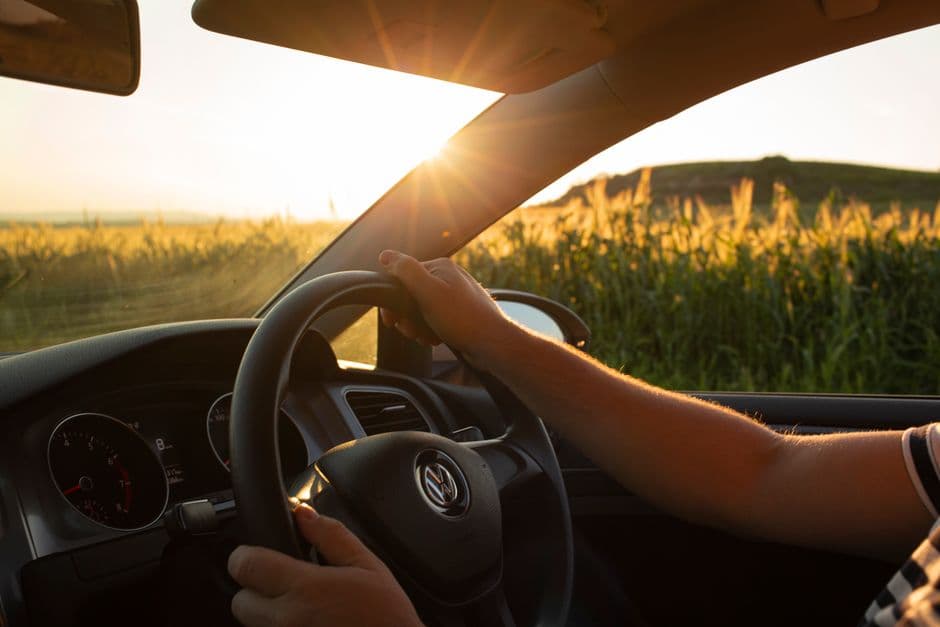
Four sources, four fixes
| Symptom | Source | Fix |
|---|---|---|
| Low sun straight ahead | Direct sun | Visor, polarized sunglasses |
| Sun on a passenger's face | Side glass | Stretch mesh side shade |
| Starbursts at night | Windshield condition | Clean glass, check for pitting |
| Dashboard image in the glass | Reflection off a glossy dash | Matte protectant |
The one nobody diagnoses
Look at your windshield on a bright day and you may see your dashboard reflected in it — a ghostly image of the dash top, sitting in your view of the road.
It happens because a windshield is steeply raked, so it acts partly as a mirror for whatever is beneath it. A dark matte dashboard reflects very little. A dashboard that has been treated with a glossy protectant, or one with a shiny vinyl finish, reflects a great deal.
This is the strongest practical argument against the shiny interior dressings the detailing aisle is full of. A glossy dash looks freshly cleaned in the driveway and puts a reflection in your eyeline every sunny day afterwards.
The fix is a matte protectant. 303 Automotive Protectant publishes an SPF 40 equivalent rating and dries to a matte finish specifically, which is the combination you want: UV protection without the reflection. Meguiar's Ultimate Interior Detailer also finishes satin rather than glossy. The comparison is in best dashboard protectants.
Night glare is almost always your windshield
Oncoming headlights that produce a starburst, a halo, or a smear across the glass are generally not the other driver's fault. They are a windshield problem, and there are three contributors.
- The interior film. Interior plastics off-gas in a hot cabin and condense on the coolest surface, which is the inside of the windshield. That film scatters light, and scattering is what turns a point of light into a starburst. It builds so gradually that nobody notices
- Pitting. Years of road debris leaves thousands of microscopic craters in the outer surface. Each one scatters light. Pitting is not cleanable — it is the reason an old windshield is worse at night than a new one, and the only fix is replacement
- Wiper smear. Worn blades leave a film that is invisible in daylight and catches every oncoming headlight at night
Cleaning the inside of the glass properly is the cheapest and most effective intervention here, and the result surprises people — the first cloth comes away visibly dirty from glass that looked clean. The method is in how to clean car windows without streaks.
If cleaning does not fix it, hold a light at an angle across the outer surface and look for pitting. If the glass is heavily pitted, no product solves that.
Polarized lenses, and where they backfire
Glare off a wet road, a car roof or a body panel is largely polarized light, and polarized sunglasses block it specifically. For low-sun driving they do something no tinted lens can.
Two limitations worth knowing. Windshields are laminated, and the interlayer can interact with polarized lenses to produce visible patterns or blotches in the glass — mildly distracting rather than dangerous, but real.
More significantly, polarized lenses can make some LCD screens hard or impossible to read at certain angles, and modern cars are full of LCD screens. If your instrument cluster or head unit goes dark when you tilt your head, that is why.
Sun on a passenger
A different problem with a different product. A rear passenger in afternoon sun cannot move out of it, cannot reach a visor, and — if it is a child — cannot do anything but be unhappy about it.
A stretch mesh side shade covers the whole door aperture and still lets the window open, which is the failure of every suction-cup panel. It is a screen rather than a blackout, and EcoNour does not publish a UV-blocking percentage, which we would rather state than fill in. See best side window sun shades.
Note that this is the passenger's problem rather than the driver's. Anything on the front side windows is subject to visibility rules in many states, and it is also in your own field of view for mirror checks — the same reasoning as in where to mount your phone in a car.
The gap between the visor and the mirror is the one patch a visor structurally cannot cover, and it is the patch that puts sun directly in your eyes on an east-west road at either end of the day best sun visor extenders.
The parked car version
Glare when you first get in is a different thing again: a dashboard that has been in the sun for hours is both blindingly bright and roughly 60-70 C, and a hot glossy dash is the worst possible reflector.
A windshield shade solves the temperature and the immediate glare together, and it also slows the UV degradation that eventually cracks a dashboard — which is the same reason to use a protectant. Both are covered in best windshield sun shades and how to protect your car interior from sun.
What to do, in order
- Clean the inside of the windshield. Free, and it is the fix more often than anything else
- Look for a dashboard reflection and switch to a matte protectant if you find one
- Replace worn wiper blades. Cheap, and smear is invisible until dark
- Clear the dash top of anything glossy or light-colored
- Buy polarized sunglasses for low sun, accepting the LCD trade-off
- Add a side shade if the complaint is a passenger rather than you
One related visibility problem with a free fix: most blind spots come from door mirrors aimed to show the side of your own car. Re-aiming them outward costs nothing and recovers more than any stick-on mirror does — best blind spot mirrors.
One self-inflicted source worth adding to the list: bright interior accent lighting raises your eyes' adaptation level at night, which reduces how well you see into unlit areas outside the car — best car interior LED lighting.
Every pick, with the working
Each entry lists the specifications the maker publishes, the axis scores those specifications produce, and what you give up. Rows that read “Not published” are not omissions on our side: they are things the maker will not commit to in writing, and they cost the product points on the transparency axis. Specifications compiled September 4, 2026.
Our pickThe cheapest real temperature drop in the car
EcoNour Windshield Sun Shade
240T polyester with a reflective coating and reinforced steel rings, in sizes from 53 by 30 up to 75 by 37 inches. EcoNour states its shades keep an interior up to 40 F cooler and block 99 percent of heat and UV. Those are the maker's own figures rather than an independent test, and even at half of them this is the best dollar-per-degree in the whole car.
- Material
- 240T polyester with reflective coating
- Frame
- Reinforced steel rings
- Sizes published
- 53x30, 59x29, 64x32, 66x27, 75x37 in
- Maker's temperature claim
- Up to 40 F cooler interior
- Maker's UV claim
- Blocks 99% of heat and UV
- Independent verification
- Not published
- Warranty
- Not published
List price $20.99 per EcoNour's own store, 53 x 30 in umbrella model, captured on the compile date below. Not a live price and not what you will pay — the button is where the real number is.
What it gets right
- Multiple published sizes, so you can actually match your windshield rather than fold a compromise
- Reinforced steel rings, which is what stops the frame collapsing after one summer
- Under $25 across most sizes
- Folds down small enough to live behind a seat rather than in the trunk
Flaws
- The 40 F figure is EcoNour's own claim, not an independent measurement, and the conditions behind it are not published
- You have to actually put it up every time, which is the real reason sun shades fail
- Sizing is on you: too small leaves a gap, too big will not sit flat
The working behind the 9.3
- Heat headroom: not scored (weight 22%)
- The maker publishes no operating-temperature ceiling, so this axis is dropped and the other weights are re-normalized.
- Install effort: 10.0 (weight 24%)
- Drops in and sits there. No fixing of any kind, and it comes out again when you sell the car.
- Price against the ceiling: 10.0 (weight 24%)
- Listed at $20.99 on the compile date. This site's buyer has a practical ceiling around $150 for a single upgrade, so the scale rewards everything under $100 and falls away sharply past $150. The live price is very often different, and that is what the button is for.
- Written commitment: not scored (weight 15%)
- No warranty term published, so this axis is dropped and the other weights are re-normalized.
- Spec transparency: 7.1 (weight 15%)
- 5 of the 7 specifications we went looking for are published by the maker (71%). A blank row is never a guess here: it prints “Not published” and it costs the product points, because a figure nobody will commit to in writing is a figure you cannot check.
Axes with no published input are dropped and the remaining weights re-normalized, so a product is not punished for a category where an axis does not apply. Specifications compiled September 4, 2026 from EcoNour's windshield sunshade range.
2A dashboard in permanent sunlight
303 Automotive Protectant
The only interior protectant here that publishes a comparable UV figure — an SPF 40 equivalent — instead of saying 'UV protection' and stopping. It also dries matte, which matters because a shiny dashboard reflects into the windshield.
- UV rating
- SPF 40 equivalent
- Duration per application
- 30 to 45 days
- Finish
- Matte, non-greasy
- Surfaces
- Vinyl, rubber, plastic, leather
- Warranty
- Not published
- List price
- Not published
What it gets right
- Publishes an SPF 40 rating, a number you can compare, where the category publishes adjectives
- Dries to a matte finish — a glossy dash reflects sunlight straight into the windshield in your eyeline
- Stated 30 to 45 days per application, so you know the reapplication interval rather than guessing
- Works on vinyl, rubber, plastic and leather, so one bottle covers the cabin
Flaws
- 30 to 45 days means this is a recurring job, not a one-time treatment
- Any protectant on a steering wheel or pedals is a slip hazard — keep it off contact surfaces
- It slows UV damage; it does not reverse a dashboard that has already cracked
The working behind the 8.7
- Heat headroom: not scored (weight 22%)
- The maker publishes no operating-temperature ceiling, so this axis is dropped and the other weights are re-normalized.
- Install effort: 10.0 (weight 24%)
- Drops in and sits there. No fixing of any kind, and it comes out again when you sell the car.
- Price against the ceiling: not scored (weight 24%)
- No published list price we could cite on the compile date, so this axis is dropped and the other weights are re-normalized.
- Written commitment: not scored (weight 15%)
- No warranty term published, so this axis is dropped and the other weights are re-normalized.
- Spec transparency: 6.7 (weight 15%)
- 4 of the 6 specifications we went looking for are published by the maker (67%). A blank row is never a guess here: it prints “Not published” and it costs the product points, because a figure nobody will commit to in writing is a figure you cannot check.
Axes with no published input are dropped and the remaining weights re-normalized, so a product is not punished for a category where an axis does not apply. Specifications compiled September 4, 2026 from 303 Automotive Protectant published specifications.
3A rear passenger in afternoon sun
EcoNour Car Side Window Sun Shade (2 pack)
A stretch mesh sock that goes over the whole door frame rather than a suction-cup square that covers a third of the glass. The trade is that it is a screen, not a blackout: it cuts glare and direct sun while you can still see out and still lower the window.
- Sizes offered
- 18 x 20 in, 36 x 17 in, XL 24 x 38 in
- Material
- Nylon, spandex and rubber stretch mesh
- Fitment
- Over the door frame, not on the glass
- Window still opens
- Yes
- Pack size
- 2
- UV blocking percentage
- Not published
- List price
- Not published
- Warranty
- Not published
What it gets right
- Covers the full window aperture instead of a suction-cupped rectangle in the middle of it
- Breathable stretch fabric means the window still opens with the shade fitted
- No suction cups, so nothing falls off the glass on a hot day
- Sold in pairs, which is what a car with two rear windows actually needs
Flaws
- It is a mesh screen. It reduces glare and direct sun; it is not a blackout and does not make the back seat dark
- Sizing is by window aperture, and a shade sized for a sedan will not stretch over a minivan frame
- No published UV-blocking percentage or UPF rating for the mesh
The working behind the 8.6
- Heat headroom: not scored (weight 22%)
- The maker publishes no operating-temperature ceiling, so this axis is dropped and the other weights are re-normalized.
- Install effort: 10.0 (weight 24%)
- Drops in and sits there. No fixing of any kind, and it comes out again when you sell the car.
- Price against the ceiling: not scored (weight 24%)
- No published list price we could cite on the compile date, so this axis is dropped and the other weights are re-normalized.
- Written commitment: not scored (weight 15%)
- No warranty term published, so this axis is dropped and the other weights are re-normalized.
- Spec transparency: 6.3 (weight 15%)
- 5 of the 8 specifications we went looking for are published by the maker (63%). A blank row is never a guess here: it prints “Not published” and it costs the product points, because a figure nobody will commit to in writing is a figure you cannot check.
Axes with no published input are dropped and the remaining weights re-normalized, so a product is not punished for a category where an axis does not apply. Specifications compiled September 4, 2026 from EcoNour side window shade published specifications.
4Doing it properly rather than quickly
Chemical Guys Easy All Interior Care Kit
Leather cleaner and conditioner, streak-free glass spray, microfiber towels and quick wipes, sold as a set. The glass spray is the item that earns the kit its place: the film on the inside of a windshield is the single biggest contributor to night glare, and almost nobody owns a cleaner that removes it without leaving a haze.
- Contents
- Leather cleaner and conditioner, glass spray, microfiber towels, quick wipes
- Interior type
- Leather-focused
- Bottle volumes
- Not published
- List price
- Not published
- Warranty
- Not published
What it gets right
- Includes a proper glass cleaner, which is the most-skipped and most-valuable interior job
- Leather cleaner and conditioner as separate steps rather than a single 'wipe' product
- Microfiber towels included, so the kit is genuinely complete
- Chemical Guys publishes what is in each kit, which lets you compare kits rather than trusting a photo
Flaws
- Leather products are wasted on a cloth interior — check which kit matches your seats
- More expensive than a supermarket bundle, and for a car you keep clean anyway that is hard to justify
- Chemical Guys publishes no bottle volumes on the kit page, so value per ounce is unknowable
The working behind the 7.7
- Heat headroom: not scored (weight 22%)
- The maker publishes no operating-temperature ceiling, so this axis is dropped and the other weights are re-normalized.
- Install effort: 10.0 (weight 24%)
- Drops in and sits there. No fixing of any kind, and it comes out again when you sell the car.
- Price against the ceiling: not scored (weight 24%)
- No published list price we could cite on the compile date, so this axis is dropped and the other weights are re-normalized.
- Written commitment: not scored (weight 15%)
- No warranty term published, so this axis is dropped and the other weights are re-normalized.
- Spec transparency: 4.0 (weight 15%)
- 2 of the 5 specifications we went looking for are published by the maker (40%). A blank row is never a guess here: it prints “Not published” and it costs the product points, because a figure nobody will commit to in writing is a figure you cannot check.
Axes with no published input are dropped and the remaining weights re-normalized, so a product is not punished for a category where an axis does not apply. Specifications compiled September 4, 2026 from Chemical Guys' Easy All Interior Care Kit page.
Prices last verified October 22, 2026. They move constantly; the figure on Amazon when you click is the real one.
Questions people actually ask
Why do headlights look like starbursts at night?
Light scattering, usually from a film on the inside of the windshield or from pitting in the outer surface. Clean the inside first — it is free and it is the cause more often than people expect. Pitting cannot be cleaned away.
Why can I see my dashboard reflected in the windshield?
A raked windshield acts partly as a mirror, and a glossy dashboard gives it something to reflect. Glossy interior dressings cause this. A matte protectant such as 303, which publishes an SPF 40 rating and dries matte, avoids it.
Are polarized sunglasses good for driving?
Yes for glare off wet roads and body panels, which is largely polarized light. Be aware they can make some LCD screens unreadable at certain angles and can show patterns in a laminated windshield.
Do anti-glare windshield films work?
Anything applied to a windshield is subject to visibility rules that vary by state, and in most cases clean glass and a matte dashboard achieve more. Deal with those first before adding a film.