The best dash cams
A parked car reaches 60 to 70 C in summer. Only a minority of dash cam makers will tell you what temperature theirs survives, and that single fact reorders the entire market.
By Sawyer V. · Published · How we research
We have not tested any of this. Everything below is compiled from published manufacturer specifications, and the arithmetic is printed so you can check it. This page carries affiliate links: if you buy through one we earn a commission at no extra cost to you, and it does not change the order of the picks. Full disclosure.
The short answer
Buy the Vantrue E1 for heat headroom, or the VIOFO A119 Mini 2 for the best all-round value. Vantrue publishes a 70 C operating ceiling — and publishes 60 C for its more expensive 4K flagship, which tells you the cheaper camera has more headroom than the halo product. Ignore resolution as your primary filter: a 4K camera at a low bitrate reads plates worse than a good 2K one. Budget for a high-endurance card as part of the purchase, not afterwards.
| # | Pick | Install | Score | Price |
|---|---|---|---|---|
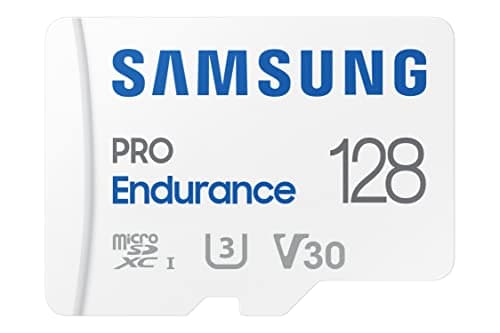
| 1 | Samsung PRO Endurance microSD The card that outlives the camera | Drops in | 9.3/10 | $76.99 - view on Amazon |
| 2 | Vantrue E1 The best heat rating under $100 | Adhesive | 7.6/10 | Check price on Amazon |
| 3 | VIOFO A119 Mini 2 The one to buy if you only buy one | Adhesive | 6.7/10 | Check price on Amazon |
| 4 | ROVE R2-4K The most sensor for the money | Adhesive | 6.3/10 | $119.99 - view on Amazon |
| 5 | Garmin Dash Cam 57 A discontinued camera worth knowing about | Adhesive | 5.7/10 | $259.50 - view on Amazon |
| 6 | VIOFO A229 Plus 1CH A screen, voice control and room to add a rear camera | Adhesive | 5.5/10 | $189.99 - view on Amazon |
Prices last verified October 24, 2026. They move constantly; the figure on Amazon when you click is the real one.
The four criteria, in order
We have not fitted or tested any of these. Everything below is compiled from what each maker publishes, and the ranking runs on the specifications that decide whether footage exists at all rather than how good it looks when it does.
- Published operating-temperature ceiling. A parked car reaches roughly 60-70 C inside. A camera that publishes nothing is an unknown you discover in August
- Supercapacitor rather than lithium battery. The power store's only job is holding enough charge to close the current file cleanly when power drops. A supercapacitor tolerates heat far better
- Card endurance, sized properly. Continuous overwriting in a hot car is close to the worst case for flash memory
- Loop recording with a file lock that works. Table stakes, and both occasionally fail
Resolution appears nowhere in that list, deliberately. The full reasoning is in dash cam resolution explained, and the whole feature hierarchy is in dash cam features you actually need.
The specification most makers will not publish
| Camera | Published ceiling | Reading |
|---|---|---|
| Vantrue E1 / E1 Lite | 70 C | Real headroom, stated |
| VIOFO A229 Plus | 65 C | Adequate, stated |
| VIOFO A119 Mini 2 | Published | Stated |
| Garmin Dash Cam 57 | Published | Stated |
| Rove R2-4K | Not published | Unknown |
| Most of this market | Not published | Unknown |
The Vantrue line contains the finding that best characterizes this category: Vantrue publishes 70 C for the E1 and E1 Lite and 60 C for the more expensive 4K E1 Pro. The cheaper camera has more heat headroom than the flagship, and you would never guess that from the price or the marketing.
The picks
Vantrue E1 — best heat headroom. The published 70 C ceiling is the highest stated figure among the mainstream cameras here, on a compact body. If your car parks outside in a hot climate, this is the specification that should decide your purchase and this is the camera that publishes it.
VIOFO A119 Mini 2 — best all-round. VIOFO publishes its sensor and its specifications rather than leading with a resolution number, and the Mini form factor sits behind the mirror without adding a visible object to the glass. The full review covers the one trade-off buried in those specifications, and the upgrade this camera will never accept.
VIOFO A229 Plus — best if you want a rear channel. 65 C published, supercapacitor, and the rear resolution stated separately rather than buried. Budget an evening for the install: a rear camera means a cable the length of the car, covered in best dual channel dash cams.
Garmin Dash Cam 57 — best GPS implementation. The difference between cameras with GPS is not whether they have a receiver but whether you can get the data back out in a readable form. Garmin's player overlays speed and position and exports it — best dash cams with GPS.
The purchase people forget
The most common way dash cam footage does not exist is not a broken camera. It is a working camera writing to a card that failed months ago, and nothing tells you.
Dash cam use is close to the worst case for flash memory: continuous sequential writes, overwritten forever, in a car swinging from below freezing to 60-70 C in a day. Consumer cards are not specified for it.
The published endurance figures are an order of magnitude apart. Samsung PRO Endurance publishes 70,080 hours and 820 TBW at 128 GB against SanDisk High Endurance at 10,000 hours and 117 TBW. Buy the card as part of the camera purchase — best microSD cards for a dash cam.
Which qualified page you actually need
This page is the overall answer. Most people arrive with a more specific question, and the specific pages rank differently because the criteria change.
- A budget: under $100 or under $150
- A hot climate: best dash cams for hot weather
- Parking coverage: best dash cams with parking mode — and read the battery arithmetic first
- Front and rear: best dual channel dash cams
- Carrying passengers for money: best dash cams for rideshare
- A truck or SUV: best dash cams for trucks and SUVs
- No windshield space, or you want a reversing view: best mirror dash cams
Two things to settle before buying
Whether it is legal where you drive. Windshield obstruction rules vary by state, and audio recording varies more — several states require all-party consent for recording a conversation, which matters if the camera has an interior microphone. Are dash cams legal covers both.
Whether you want one at all. We argued both sides in are dash cams worth it. The honest summary: it is insurance against a specific and not-very-likely event, and its value is entirely in whether it is still recording when that event happens — which is why this page ranks on heat and cards rather than pixels.
Once fitted, the two habits that keep it working are formatting the card in the camera monthly and actually watching a clip occasionally — how to maintain a dash cam. And the ten seconds that matter after an incident are in how to save dash cam footage.
At the budget end the three brands that dominate the listings are almost impossible to separate on features, and separate immediately on what they publish — only one of them states an operating temperature ceiling — Rove vs REDTIGER vs Vantrue.
Every pick, with the working
Each entry lists the specifications the maker publishes, the axis scores those specifications produce, and what you give up. Rows that read “Not published” are not omissions on our side: they are things the maker will not commit to in writing, and they cost the product points on the transparency axis. Specifications compiled September 4, 2026.
Our pickThe card that outlives the camera
Samsung PRO Endurance microSD
At 128GB Samsung rates this card at 70,080 hours of continuous Full HD recording and 820 TBW. The comparable SanDisk High Endurance card is rated at 10,000 hours and 117 TBW at the same capacity. That is a seven-to-one difference in the only specification that matters for a device that overwrites its storage every day of its life.
- Rated endurance at 128GB
- 70,080 hours of Full HD recording
- TBW at 128GB
- 820 TB written
- Speed class
- V30
- Read speed
- Up to 100 MB/s
- Write speed
- Up to 40 MB/s
- Warranty
- 5 years
- Operating range
- Not published
- List price
- Not published
What it gets right
- 70,080 rated hours at 128GB, seven times the nearest mainstream competitor
- 820 TBW at 128GB against 117 TBW for SanDisk High Endurance
- V30 speed class, which every camera in this ledger is happy with
- Rated for the exact duty cycle a dash cam imposes: continuous write, forever
Flaws
- Costs meaningfully more than a general-purpose card of the same capacity
- 40 MB/s write is fine for one or two channels and marginal for three at high bitrate
- Endurance ratings are the maker's own figures, not an independent test
The working behind the 9.3
- Heat headroom: not scored (weight 22%)
- The maker publishes no operating-temperature ceiling, so this axis is dropped and the other weights are re-normalized.
- Install effort: 10.0 (weight 24%)
- Drops in and sits there. No fixing of any kind, and it comes out again when you sell the car.
- Price against the ceiling: not scored (weight 24%)
- No published list price we could cite on the compile date, so this axis is dropped and the other weights are re-normalized.
- Written commitment: 10.0 (weight 15%)
- 60-month warranty. This is the only promise in the entire listing that a court would read, which is why it is scored and the marketing copy is not.
- Spec transparency: 7.5 (weight 15%)
- 6 of the 8 specifications we went looking for are published by the maker (75%). A blank row is never a guess here: it prints “Not published” and it costs the product points, because a figure nobody will commit to in writing is a figure you cannot check.
Axes with no published input are dropped and the remaining weights re-normalized, so a product is not punished for a category where an axis does not apply. Specifications compiled September 4, 2026 from Samsung PRO Endurance published endurance ratings.
2The best heat rating under $100
Vantrue E1
Vantrue publishes an operating range of -20 C to 70 C on this camera, which is the highest ceiling of anything here and 10 C above what the same company publishes for its own 4K model. It is a supercapacitor camera with GPS and a 2.7K sensor at a two-figure list price, which is an unusual combination, and it is the pick if your car sits in a sun-baked lot all day.
- Front resolution
- 2592 x 1944
- Alternate mode
- 1920 x 1080 at 60fps
- Power store
- Supercapacitor
- Operating range
- -20 C to 70 C (-4 F to 158 F)
- Max microSD
- 512 GB
- GPS
- Built in
- Wi-Fi
- Built in, app control
- Parking mode
- 24-hour, buffered motion detection
- Field of view
- Not published
- Published current draw
- Not published
List price $89.99 per Vantrue's own store, sale price (regular $129.99), captured on the compile date below. Not a live price and not what you will pay — the button is where the real number is.
What it gets right
- 70 C published ceiling — the highest of any camera in this ledger, and 10 C above Vantrue's own E1 Pro
- Supercapacitor rather than a lithium cell, which is the part that swells and dies in a hot cabin
- GPS and voice control at a list price under $100
- Takes a 512GB card, so a big endurance card will not be wasted on it
Flaws
- 2592x1944 is not 4K, and the marketing calls it 2.7K, which is a stretch of the usual naming
- Front only. A rear channel means a different camera
- Parking mode needs a hardwire kit that is not in the box
The working behind the 7.6
- Heat headroom: 10.0 (weight 22%)
- Published operating ceiling 70 C (158 F). A car parked in summer sun runs roughly 60-70 C inside, so 65 C and up is real headroom, 60 C is living at the limit, and anything under 55 C is a summer problem waiting to happen.
- Install effort: 6.0 (weight 24%)
- Adhesive pad onto the dashboard. Permanent in practice: repositioning means a new pad, and the pad is the part that fails first.
- Price against the ceiling: 7.0 (weight 24%)
- Listed at $89.99 on the compile date. This site's buyer has a practical ceiling around $150 for a single upgrade, so the scale rewards everything under $100 and falls away sharply past $150. The live price is very often different, and that is what the button is for.
- Written commitment: 7.0 (weight 15%)
- 18-month warranty. This is the only promise in the entire listing that a court would read, which is why it is scored and the marketing copy is not.
- Spec transparency: 8.0 (weight 15%)
- 8 of the 10 specifications we went looking for are published by the maker (80%). A blank row is never a guess here: it prints “Not published” and it costs the product points, because a figure nobody will commit to in writing is a figure you cannot check.
Axes with no published input are dropped and the remaining weights re-normalized, so a product is not punished for a category where an axis does not apply. Specifications compiled September 4, 2026 from Vantrue's E1 product page.
3The one to buy if you only buy one
VIOFO A119 Mini 2
A Sony STARVIS 2 IMX675 sensor at 2K 60fps, a supercapacitor, a published 65 C ceiling, an 18-month warranty and three named parking modes including buffered recording. VIOFO publishes more about this camera than anyone else here publishes about anything, and that is the reason it wins: every claim on the page is one you can check.
- Front resolution
- 2560 x 1440 at 60fps
- Image sensor
- Sony STARVIS 2 IMX675, 5MP
- Field of view
- 140 degrees
- Aperture
- f/1.6
- Power store
- Supercapacitor, no battery
- Operating range
- -20 C to 65 C (-4 F to 149 F)
- Storage temperature
- -20 C to 70 C
- Max microSD
- 512 GB
- Wi-Fi
- 2.4 GHz and 5 GHz
- Parking modes
- Auto event detection, time lapse, low bitrate
- Dimensions
- 1.81 x 1.77 x 2.94 in
- Published current draw
- Not published
List price $159.99 per VIOFO's own store, captured on the compile date below. Not a live price and not what you will pay — the button is where the real number is.
What it gets right
- Sony STARVIS 2 IMX675 with an f/1.6 lens — the best published low-light hardware in this ledger
- 2K at 60fps, which reads plates on moving cars better than 4K at 30fps does
- Published 65 C ceiling and a supercapacitor, so summer is designed for rather than hoped about
- Three named parking modes, including buffered recording that keeps the seconds before a trigger
- 18-month warranty, longer than most of this category
Flaws
- Front only, and adding the rear camera means a different model entirely
- The list price is well above the sub-$100 bracket most people start in
- Parking mode needs the HK4 hardwire kit, which is a separate purchase and a separate afternoon
The working behind the 6.7
- Heat headroom: 9.0 (weight 22%)
- Published operating ceiling 65 C (149 F). A car parked in summer sun runs roughly 60-70 C inside, so 65 C and up is real headroom, 60 C is living at the limit, and anything under 55 C is a summer problem waiting to happen.
- Install effort: 6.0 (weight 24%)
- Adhesive pad onto the dashboard. Permanent in practice: repositioning means a new pad, and the pad is the part that fails first.
- Price against the ceiling: 3.5 (weight 24%)
- Listed at $159.99 on the compile date. This site's buyer has a practical ceiling around $150 for a single upgrade, so the scale rewards everything under $100 and falls away sharply past $150. The live price is very often different, and that is what the button is for.
- Written commitment: 7.0 (weight 15%)
- 18-month warranty. This is the only promise in the entire listing that a court would read, which is why it is scored and the marketing copy is not.
- Spec transparency: 9.2 (weight 15%)
- 11 of the 12 specifications we went looking for are published by the maker (92%). A blank row is never a guess here: it prints “Not published” and it costs the product points, because a figure nobody will commit to in writing is a figure you cannot check.
Axes with no published input are dropped and the remaining weights re-normalized, so a product is not punished for a category where an axis does not apply. Specifications compiled September 4, 2026 from VIOFO's A119 Mini 2 product page.
4The most sensor for the money
ROVE R2-4K
Skip this one. It is the clearest illustration of what is wrong with how this category is sold. 4K is the headline and there is no published operating-temperature ceiling and no published bitrate — so the one number you can check tells you least about whether the camera is recording in August, and the two that would tell you are absent.
4K, a 150-degree lens, an f/1.5 aperture and a supercapacitor at a list price close to $100. On paper it is the most camera per dollar in this ledger. What ROVE does not publish is an operating-temperature range, and on a camera whose whole selling point is that it uses a supercapacitor for heat tolerance, that omission is strange enough to cost it the top spot.
- Front resolution
- 3840 x 2160 (4K UHD)
- Field of view
- 150 degrees
- Aperture
- f/1.5
- Power store
- Supercapacitor
- Max microSD
- 512 GB
- GPS
- Built in
- Wi-Fi
- Dual band
- Parking mode
- 24-hour parking mode
- Operating range
- Not published
- Published current draw
- Not published
List price $119.99 per ROVE's own store, captured on the compile date below. Not a live price and not what you will pay — the button is where the real number is.
What it gets right
- 4K UHD with a 150-degree lens and an f/1.5 aperture, all published
- Supercapacitor rather than a lithium cell
- Dual-band Wi-Fi and GPS included at this price
- Takes a 512GB card
Flaws
- No published operating-temperature range, which is the one number a supercapacitor camera should be shouting about
- 4K on a small sensor is not automatically better than 2K on a good one; the bitrate matters more than the pixel count
- Parking mode needs a hardwire kit
The working behind the 6.3
- Heat headroom: not scored (weight 22%)
- The maker publishes no operating-temperature ceiling, so this axis is dropped and the other weights are re-normalized.
- Install effort: 6.0 (weight 24%)
- Adhesive pad onto the dashboard. Permanent in practice: repositioning means a new pad, and the pad is the part that fails first.
- Price against the ceiling: 6.0 (weight 24%)
- Listed at $119.99 on the compile date. This site's buyer has a practical ceiling around $150 for a single upgrade, so the scale rewards everything under $100 and falls away sharply past $150. The live price is very often different, and that is what the button is for.
- Written commitment: 5.5 (weight 15%)
- 12-month warranty. This is the only promise in the entire listing that a court would read, which is why it is scored and the marketing copy is not.
- Spec transparency: 8.0 (weight 15%)
- 8 of the 10 specifications we went looking for are published by the maker (80%). A blank row is never a guess here: it prints “Not published” and it costs the product points, because a figure nobody will commit to in writing is a figure you cannot check.
Axes with no published input are dropped and the remaining weights re-normalized, so a product is not punished for a category where an axis does not apply. Specifications compiled September 4, 2026 from ROVE's R2-4K product page.
5A discontinued camera worth knowing about
Garmin Dash Cam 57
Skip this one. This is a discontinued product with the lowest published heat ceiling here. Unless you find it heavily discounted, the Garmin Dash Cam X110 is the current camera and the Vantrue E1 has 10 C more headroom for half the money.
1440p, a 140-degree lens and a published operating range of -20 C to 60 C from Garmin's own owner's manual, which is more than most makers publish. It has also been discontinued, and that changes the calculation completely: remaining stock is real, and so is the fact that a discontinued camera's firmware support has a horizon.
- Front resolution
- 2560 x 1440 (1440p)
- Field of view
- 140 degrees
- Operating range
- -20 C to 60 C (-4 F to 140 F)
- Charging range
- 0 C to 45 C (32 F to 113 F)
- Input voltage
- 4.75 to 5.25 Vdc, 1 A
- Wireless
- 2.4 GHz at 16 dBm maximum
- Parking mode
- Parking Guard, via the Garmin Drive app
- Availability
- Discontinued
- Power store
- Not published
- Published current draw
- Not published
List price $229.99 per Garmin's listed price before discontinuation, captured on the compile date below. Not a live price and not what you will pay — the button is where the real number is.
What it gets right
- Garmin publishes the operating range, charging range and input voltage in the owner's manual, which almost nobody in this category does
- 1440p at 140 degrees in a body the size of a matchbox
- Voice control and the Garmin Drive app ecosystem
Flaws
- Discontinued. Firmware support has a horizon even if nobody will tell you where it is
- 60 C ceiling — the lowest published figure in this ledger, and below what a car in summer sun actually reaches
- Remaining stock is priced as new stock rather than as run-out stock
The working behind the 5.7
- Heat headroom: 7.5 (weight 22%)
- Published operating ceiling 60 C (140 F). A car parked in summer sun runs roughly 60-70 C inside, so 65 C and up is real headroom, 60 C is living at the limit, and anything under 55 C is a summer problem waiting to happen.
- Install effort: 6.0 (weight 24%)
- Adhesive pad onto the dashboard. Permanent in practice: repositioning means a new pad, and the pad is the part that fails first.
- Price against the ceiling: 2.5 (weight 24%)
- Listed at $229.99 on the compile date. This site's buyer has a practical ceiling around $150 for a single upgrade, so the scale rewards everything under $100 and falls away sharply past $150. The live price is very often different, and that is what the button is for.
- Written commitment: 5.5 (weight 15%)
- 12-month warranty. This is the only promise in the entire listing that a court would read, which is why it is scored and the marketing copy is not.
- Spec transparency: 8.0 (weight 15%)
- 8 of the 10 specifications we went looking for are published by the maker (80%). A blank row is never a guess here: it prints “Not published” and it costs the product points, because a figure nobody will commit to in writing is a figure you cannot check.
Axes with no published input are dropped and the remaining weights re-normalized, so a product is not punished for a category where an axis does not apply. Specifications compiled September 4, 2026 from Garmin Dash Cam 47/57/67W owner's manual, specifications page.
6A screen, voice control and room to add a rear camera
VIOFO A229 Plus 1CH
The same STARVIS 2 IMX675 sensor as the Mini 2 in a body with a screen, voice control and the option to add rear and interior channels later. You are paying roughly $40 over the Mini 2 for a display and an upgrade path, which is worth it if you expect to want a rear camera and not if you do not.
- Front resolution
- 2K HDR
- Image sensor
- Sony STARVIS 2 IMX675
- GPS
- Built in
- Voice control
- Yes
- Expandable
- Rear and interior channels available
- Operating range
- Not published
- Max microSD
- Not published
- Field of view
- Not published
List price $199.99 per VIOFO's own store, captured on the compile date below. Not a live price and not what you will pay — the button is where the real number is.
What it gets right
- Same STARVIS 2 IMX675 sensor as the Mini 2
- Screen on the body, so aiming and reviewing does not need the phone app
- Expandable to two and three channels without buying a whole new camera
- Voice control, which is the only genuinely safe way to lock a clip while moving
Flaws
- $200 list is well past this site's usual ceiling for a single upgrade
- A screen in the windshield is a screen in your eyeline; the Mini 2 hides behind the mirror
- Same hardwire requirement for parking mode as every other VIOFO
The working behind the 5.5
- Heat headroom: not scored (weight 22%)
- The maker publishes no operating-temperature ceiling, so this axis is dropped and the other weights are re-normalized.
- Install effort: 6.0 (weight 24%)
- Adhesive pad onto the dashboard. Permanent in practice: repositioning means a new pad, and the pad is the part that fails first.
- Price against the ceiling: 3.5 (weight 24%)
- Listed at $199.99 on the compile date. This site's buyer has a practical ceiling around $150 for a single upgrade, so the scale rewards everything under $100 and falls away sharply past $150. The live price is very often different, and that is what the button is for.
- Written commitment: 7.0 (weight 15%)
- 18-month warranty. This is the only promise in the entire listing that a court would read, which is why it is scored and the marketing copy is not.
- Spec transparency: 6.3 (weight 15%)
- 5 of the 8 specifications we went looking for are published by the maker (63%). A blank row is never a guess here: it prints “Not published” and it costs the product points, because a figure nobody will commit to in writing is a figure you cannot check.
Axes with no published input are dropped and the remaining weights re-normalized, so a product is not punished for a category where an axis does not apply. Specifications compiled September 4, 2026 from VIOFO's 1-channel range page.
Prices last verified October 24, 2026. They move constantly; the figure on Amazon when you click is the real one.
Questions people actually ask
What is the most important dash cam specification?
The published operating-temperature ceiling. A parked car reaches roughly 60-70 C in summer, and a camera that fails there produces nothing while looking exactly like one that works. Most of this category publishes no ceiling at all.
Is 4K worth it on a dash cam?
Usually not. Resolution is a ceiling, not a result — a 4K stream at a low bitrate loses exactly the fine detail a license plate consists of, and wide-angle lenses spread those pixels across a lot of road. A well-implemented 2K camera is the better default.
Do I need a special memory card?
Yes. Continuous overwriting in a hot car is close to the worst case for flash memory, and the published endurance figures differ by an order of magnitude between card lines. Budget for a high-endurance card as part of the camera purchase.
Supercapacitor or battery?
Supercapacitor, in anything that parks outside. Its only job is holding enough charge to close the current file when power drops, and it tolerates heat far better than a lithium cell behind a windshield.