The best dash cams for trucks and SUVs
The camera is the same. The install is not — a truck gives you a longer cable run, a steeper windshield rake, and a rear view that may be a tailgate rather than glass.
By Sawyer V. · Published · How we research
We have not tested any of this. Everything below is compiled from published manufacturer specifications, and the arithmetic is printed so you can check it. This page carries affiliate links: if you buy through one we earn a commission at no extra cost to you, and it does not change the order of the picks. Full disclosure.
The short answer
Buy the VIOFO A229 Plus and budget for a longer install. The camera choice barely changes between a sedan and a truck — what changes is everything around it. A crew cab is a longer cable run, the windshield rake is shallower so the camera sits differently, and the rear camera may need to look past a bed or a tailgate rather than through glass. Plan the mounting position and the cable route before you buy, because those decide whether the install works.
| # | Pick | Install | Score | Price |
|---|---|---|---|---|
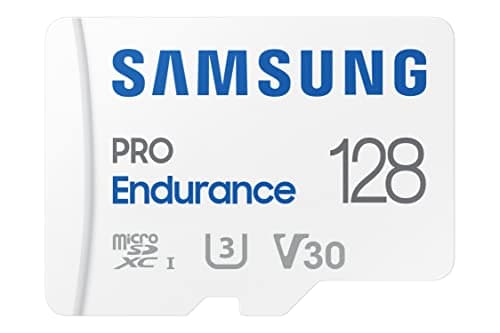
| 1 | Samsung PRO Endurance microSD The card that outlives the camera | Drops in | 9.3/10 | $76.99 - view on Amazon |
| 2 | Vantrue N4 Three channels, including the cabin | Adhesive | 6.6/10 | Check price on Amazon |
| 3 | VIOFO A229 Plus 1CH A screen, voice control and room to add a rear camera | Adhesive | 5.5/10 | $189.99 - view on Amazon |
| 4 | VIOFO HK4 hardwire kit Turning parking mode from a feature into a working thing | Hardwire | 5.3/10 | $25.99 - view on Amazon |
Prices last verified October 22, 2026. They move constantly; the figure on Amazon when you click is the real one.
Windshield rake changes where the camera points
A sedan windshield is steeply raked; a truck's is closer to vertical. Mount the same camera behind each and it ends up aimed differently, because the mount is referenced to the glass rather than to the horizon.
The practical consequence is that on a truck a camera clipped high behind the mirror frequently ends up looking slightly upward, capturing a great deal of sky and losing the near foreground — which is where the plate of the car in front actually is.
This is fixable and it has to be done at install: adjust the ball joint so the horizon sits roughly a third of the way down the frame, then check the actual recording rather than the live preview. Cameras with a generous adjustment range are worth more on a truck than on a sedan for exactly this reason.
The cable run is genuinely longer
A crew cab pickup is a long vehicle, and a rear camera cable has to travel the whole of it. Check the cable length the maker supplies before you buy, because a cable sized for a sedan leaves you splicing or buying an extension — and a poorly made extension in a rear channel is a common source of intermittent failures.
- Measure your intended route with a piece of string before ordering
- Route along the headliner edge rather than through pillar trim. Curtain airbags deploy from the roof rail down the pillars, and a cable pinned under that trim is in the deployment path
- Leave a service loop at any hinge the cable crosses — a tailgate or hatch flexes the cable every single time it opens
- Test both channels before you tidy the cable away, not after
The same principles as the power cable, covered at length in how to hardwire a dash cam.
Where the rear camera goes on a truck
This is the question that has no equivalent on a sedan. An SUV or wagon has rear glass and the rear camera goes on it, exactly as normal. A pickup does not. The open bed changes more than the camera position, and the rest of it is on accessories for pickup trucks.
| Body style | Placement | Trade-off |
|---|---|---|
| SUV / wagon | Inside rear glass | Tint and rake reduce night legibility |
| Crew cab, no canopy | Inside the cab's rear glass | Looking through two panes if a canopy is fitted |
| Pickup with canopy | Inside canopy glass | Cable crosses a removable component |
| Pickup, exterior mount | On the tailgate or bumper | Needs a weatherproof camera; most bundled rear cameras are not |
The exterior option is the one people underestimate. Most rear cameras bundled with a dual-channel kit are interior cameras with no published ingress rating, and mounting one outside a vehicle is asking it to do a job it was not specified for. If you need an exterior rear camera, buy one specified for it rather than repurposing the bundled unit.
Heat, which does not get easier in a bigger cab
A larger cabin does not mean a cooler one. A parked truck reaches the same roughly 60-70 C a parked sedan does, and the camera is in the same place relative to the glass.
So the heat axis matters just as much here. VIOFO publishes 65 C for the A229 Plus, which is real headroom stated in writing. Cameras that publish nothing are an unknown you get to discover in August. The full argument is in best dash cams for hot weather.
A supercapacitor rather than a lithium battery is the other heat-driven choice, and it is the right one in any vehicle that parks outside. Its job is only to hold enough charge to close the current file cleanly when power drops.
Parking mode on a bigger battery
One genuine advantage: trucks and large SUVs typically carry larger batteries than compact cars, which gives parking mode more runway. The arithmetic still applies — a dash cam in parking mode draws roughly 0.25 to 0.35 A on published figures — but a larger reserve buys you more hours before the low-voltage cutoff trips.
It does not remove the need for a proper hardwire kit with a voltage cutoff. The VIOFO HK4 is the one we cover, and the full arithmetic is in does parking mode drain your battery and best dash cams with parking mode.
One truck-specific caution: some heavy-duty trucks run 24V systems. Standard consumer hardwire kits are 12V devices. Check your vehicle before wiring anything.
A bigger vehicle does not need a bigger card, but a longer commute does
Card size should track how long you drive and how many channels you record, not how big the vehicle is. Two channels roughly double the write rate of one, which halves how far back your footage reaches on a given card.
High-endurance cards are not optional here. Samsung publishes 70,080 hours and 820 TBW at 128 GB against SanDisk High Endurance at 10,000 hours and 117 TBW — an order of magnitude apart, on a workload that overwrites continuously for years. See best microSD cards for a dash cam.
Every pick, with the working
Each entry lists the specifications the maker publishes, the axis scores those specifications produce, and what you give up. Rows that read “Not published” are not omissions on our side: they are things the maker will not commit to in writing, and they cost the product points on the transparency axis. Specifications compiled September 4, 2026.
Our pickThe card that outlives the camera
Samsung PRO Endurance microSD
At 128GB Samsung rates this card at 70,080 hours of continuous Full HD recording and 820 TBW. The comparable SanDisk High Endurance card is rated at 10,000 hours and 117 TBW at the same capacity. That is a seven-to-one difference in the only specification that matters for a device that overwrites its storage every day of its life.
- Rated endurance at 128GB
- 70,080 hours of Full HD recording
- TBW at 128GB
- 820 TB written
- Speed class
- V30
- Read speed
- Up to 100 MB/s
- Write speed
- Up to 40 MB/s
- Warranty
- 5 years
- Operating range
- Not published
- List price
- Not published
What it gets right
- 70,080 rated hours at 128GB, seven times the nearest mainstream competitor
- 820 TBW at 128GB against 117 TBW for SanDisk High Endurance
- V30 speed class, which every camera in this ledger is happy with
- Rated for the exact duty cycle a dash cam imposes: continuous write, forever
Flaws
- Costs meaningfully more than a general-purpose card of the same capacity
- 40 MB/s write is fine for one or two channels and marginal for three at high bitrate
- Endurance ratings are the maker's own figures, not an independent test
The working behind the 9.3
- Heat headroom: not scored (weight 22%)
- The maker publishes no operating-temperature ceiling, so this axis is dropped and the other weights are re-normalized.
- Install effort: 10.0 (weight 24%)
- Drops in and sits there. No fixing of any kind, and it comes out again when you sell the car.
- Price against the ceiling: not scored (weight 24%)
- No published list price we could cite on the compile date, so this axis is dropped and the other weights are re-normalized.
- Written commitment: 10.0 (weight 15%)
- 60-month warranty. This is the only promise in the entire listing that a court would read, which is why it is scored and the marketing copy is not.
- Spec transparency: 7.5 (weight 15%)
- 6 of the 8 specifications we went looking for are published by the maker (75%). A blank row is never a guess here: it prints “Not published” and it costs the product points, because a figure nobody will commit to in writing is a figure you cannot check.
Axes with no published input are dropped and the remaining weights re-normalized, so a product is not punished for a category where an axis does not apply. Specifications compiled September 4, 2026 from Samsung PRO Endurance published endurance ratings.
2Three channels, including the cabin
Vantrue N4
Skip this one. Its third channel points into the cabin, which is exactly right for a rideshare driver and pointless in a personal truck. You are paying for a camera and spending card space on footage of your own passenger seat. Buy it only if you carry passengers for money.
Front, cabin and rear on one camera with infrared night vision on the interior channel and the same 70 C published ceiling as the rest of Vantrue's supercapacitor line. It is the camera for somebody who drives for a living or carries passengers they do not know. For a plain commute it is two channels more than you need and $170 more than you need to spend.
- Channels
- Three: front, interior, rear
- Resolution
- 1440p + 1080p + 1080p at 30fps, or 4K front only
- Night vision
- Sony STARVIS with infrared on the cabin channel
- Power store
- Supercapacitor
- Operating range
- -10 C to 70 C (14 F to 158 F)
- Max microSD
- 512 GB
- Parking mode
- 24-hour, motion and collision detection
- GPS
- Supported
- Published current draw
- Not published
List price $259.99 per Vantrue's own store, captured on the compile date below. Not a live price and not what you will pay — the button is where the real number is.
What it gets right
- Three channels recording at once, with IR illumination on the cabin camera
- 70 C published ceiling and a supercapacitor
- 512GB card support, which three channels genuinely need
- 24-hour parking mode with motion and collision detection
Flaws
- $259.99 list is far outside this site's usual bracket
- Three channels fill a card fast, so the running cost is a bigger card sooner
- The interior camera is pointless for most private drivers and creates a privacy question for passengers
The working behind the 6.6
- Heat headroom: 10.0 (weight 22%)
- Published operating ceiling 70 C (158 F). A car parked in summer sun runs roughly 60-70 C inside, so 65 C and up is real headroom, 60 C is living at the limit, and anything under 55 C is a summer problem waiting to happen.
- Install effort: 6.0 (weight 24%)
- Adhesive pad onto the dashboard. Permanent in practice: repositioning means a new pad, and the pad is the part that fails first.
- Price against the ceiling: 2.5 (weight 24%)
- Listed at $259.99 on the compile date. This site's buyer has a practical ceiling around $150 for a single upgrade, so the scale rewards everything under $100 and falls away sharply past $150. The live price is very often different, and that is what the button is for.
- Written commitment: 7.0 (weight 15%)
- 18-month warranty. This is the only promise in the entire listing that a court would read, which is why it is scored and the marketing copy is not.
- Spec transparency: 8.9 (weight 15%)
- 8 of the 9 specifications we went looking for are published by the maker (89%). A blank row is never a guess here: it prints “Not published” and it costs the product points, because a figure nobody will commit to in writing is a figure you cannot check.
Axes with no published input are dropped and the remaining weights re-normalized, so a product is not punished for a category where an axis does not apply. Specifications compiled September 4, 2026 from Vantrue's N4 product page.
3A screen, voice control and room to add a rear camera
VIOFO A229 Plus 1CH
The same STARVIS 2 IMX675 sensor as the Mini 2 in a body with a screen, voice control and the option to add rear and interior channels later. You are paying roughly $40 over the Mini 2 for a display and an upgrade path, which is worth it if you expect to want a rear camera and not if you do not.
- Front resolution
- 2K HDR
- Image sensor
- Sony STARVIS 2 IMX675
- GPS
- Built in
- Voice control
- Yes
- Expandable
- Rear and interior channels available
- Operating range
- Not published
- Max microSD
- Not published
- Field of view
- Not published
List price $199.99 per VIOFO's own store, captured on the compile date below. Not a live price and not what you will pay — the button is where the real number is.
What it gets right
- Same STARVIS 2 IMX675 sensor as the Mini 2
- Screen on the body, so aiming and reviewing does not need the phone app
- Expandable to two and three channels without buying a whole new camera
- Voice control, which is the only genuinely safe way to lock a clip while moving
Flaws
- $200 list is well past this site's usual ceiling for a single upgrade
- A screen in the windshield is a screen in your eyeline; the Mini 2 hides behind the mirror
- Same hardwire requirement for parking mode as every other VIOFO
The working behind the 5.5
- Heat headroom: not scored (weight 22%)
- The maker publishes no operating-temperature ceiling, so this axis is dropped and the other weights are re-normalized.
- Install effort: 6.0 (weight 24%)
- Adhesive pad onto the dashboard. Permanent in practice: repositioning means a new pad, and the pad is the part that fails first.
- Price against the ceiling: 3.5 (weight 24%)
- Listed at $199.99 on the compile date. This site's buyer has a practical ceiling around $150 for a single upgrade, so the scale rewards everything under $100 and falls away sharply past $150. The live price is very often different, and that is what the button is for.
- Written commitment: 7.0 (weight 15%)
- 18-month warranty. This is the only promise in the entire listing that a court would read, which is why it is scored and the marketing copy is not.
- Spec transparency: 6.3 (weight 15%)
- 5 of the 8 specifications we went looking for are published by the maker (63%). A blank row is never a guess here: it prints “Not published” and it costs the product points, because a figure nobody will commit to in writing is a figure you cannot check.
Axes with no published input are dropped and the remaining weights re-normalized, so a product is not punished for a category where an axis does not apply. Specifications compiled September 4, 2026 from VIOFO's 1-channel range page.
4Turning parking mode from a feature into a working thing
VIOFO HK4 hardwire kit
A USB-C hardwire cable with an adjustable low-voltage cutoff at 11.8, 12.0, 12.2 or 12.4 volts and an ACC lead that tells the camera the engine is off. The cutoff is the part that matters: it is what stands between overnight parking mode and a car that will not start, and it is a setting rather than a hope.
- Cutoff voltages (12V)
- 11.8 / 12.0 / 12.2 / 12.4 V
- Cutoff voltages (24V)
- 23.6 / 24.0 / 24.4 / 24.8 V
- Voltage detection tolerance
- Approximately 0.3 V
- ACC detection
- Yes, yellow lead to ignition
- System compatibility
- 12V and 24V vehicles
- Connector
- USB-C
- List price
- Not published
- Warranty
- Not published
What it gets right
- Four selectable cutoff voltages, so the tradeoff between recording time and starting the car is yours to make
- ACC detection switches the camera into parking mode automatically when the ignition goes off
- Works on 12V and 24V systems
- Ships with a full set of circuit fuse taps, so the fuse box is not a second shopping trip
Flaws
- It is a hardwire job. Trim tools, a fuse box and half an hour minimum
- VIOFO documents roughly 0.3V of tolerance on the voltage detection, so set it higher than feels necessary
- Only fits VIOFO's USB-C cameras
The working behind the 5.3
- Heat headroom: not scored (weight 22%)
- The maker publishes no operating-temperature ceiling, so this axis is dropped and the other weights are re-normalized.
- Install effort: 4.0 (weight 24%)
- Wires into the fuse box. Half an hour, a fuse tap, a trim tool and a willingness to be upside down under the dash. This is the real cost of parking mode.
- Price against the ceiling: not scored (weight 24%)
- No published list price we could cite on the compile date, so this axis is dropped and the other weights are re-normalized.
- Written commitment: not scored (weight 15%)
- No warranty term published, so this axis is dropped and the other weights are re-normalized.
- Spec transparency: 7.5 (weight 15%)
- 6 of the 8 specifications we went looking for are published by the maker (75%). A blank row is never a guess here: it prints “Not published” and it costs the product points, because a figure nobody will commit to in writing is a figure you cannot check.
Axes with no published input are dropped and the remaining weights re-normalized, so a product is not punished for a category where an axis does not apply. Specifications compiled September 4, 2026 from VIOFO support: choosing a cut-off protection voltage.
Prices last verified October 22, 2026. They move constantly; the figure on Amazon when you click is the real one.
Questions people actually ask
Do I need a different dash cam for a truck?
Not usually a different camera, but often a longer rear cable and more mounting adjustment range. Check the supplied cable length against your actual route before ordering, particularly on a crew cab.
Can I mount a rear dash cam camera outside on a pickup?
Only with a camera specified for exterior use. Most rear cameras bundled with dual-channel kits publish no ingress rating and are interior components. Mounting one outside is using it outside its specification.
Will a dash cam work on a 24V truck?
Consumer dash cams and hardwire kits are 12V devices. Some heavy-duty trucks run 24V systems, and connecting a 12V kit to one will damage it. Confirm your vehicle's system voltage before wiring anything.
Is parking mode safer on a truck's bigger battery?
A larger battery gives more hours before the cutoff trips, which is a real advantage. It does not change the draw and it does not remove the need for a hardwire kit with a low-voltage cutoff.