The best VIOFO alternatives
VIOFO is the brand that publishes the most about its cameras. Every alternative trades some of that away for something else — a second channel, a smaller body, a bigger sensor or a lower price.
By Sawyer V. · Published · How we research
We have not tested any of this. Everything below is compiled from published manufacturer specifications, and the arithmetic is printed so you can check it. This page carries affiliate links: if you buy through one we earn a commission at no extra cost to you, and it does not change the order of the picks. Full disclosure.
The short answer
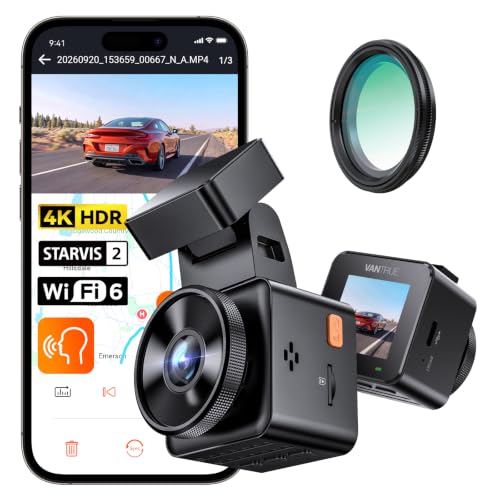
The closest alternative to a VIOFO is the Vantrue E1 Pro S. VIOFO’s reputation rests on four published specifications — a named Sony sensor part, an aperture, an operating-temperature range and a named set of parking modes — and no other brand in this ledger publishes all four on one camera. The E1 Pro S keeps two of them, names a bigger sensor (8MP STARVIS 2 IMX678 against VIOFO’s 5MP IMX675) and adds Wi-Fi 6 and a 1 TB card ceiling. What it gives up is the temperature figure. If you want two channels instead, the REDTIGER F7N is the cheapest route; if you want the camera to disappear, the Garmin Mini 3.
| # | Pick | Install | Score | Price |
|---|---|---|---|---|
| 1 | Vantrue E1 Pro S The best published sensor under $150 | Adhesive | 6.7/10 | $129.99 - view on Amazon |
| 2 | REDTIGER F7N The cheapest way into 4K front and rear | Adhesive | 7.2/10 | $85.49 - view on Amazon |
| 3 | Garmin Dash Cam Mini 3 Disappearing behind the mirror | Adhesive | 6.9/10 | $99.99 - view on Amazon |
| 4 | 70mai Dash Cam M310 The most published detail under $35 | Adhesive | 7.7/10 | $39.99 - view on Amazon |
| 5 | AUTO-VOX V5PRO Mirror Dash Cam A car whose windshield is already crowded | Clips on | 8.3/10 | $189.99 - view on Amazon |
Prices last verified November 27, 2026. They move constantly; the figure on Amazon when you click is the real one.
Updated November 26, 2026. All five alternatives were checked against Amazon that day for stock, live price and model, and all five are in stock. Prices move through the holiday period, so the button is where the real number is.
The alternatives, in one screen
- Closest to a VIOFO — Vantrue E1 Pro S. The only alternative here that names both its sensor part and its aperture. The working.
- If you want two channels — REDTIGER F7N. Front and rear for less than VIOFO’s single-channel camera costs. The working.
- If you want to stop seeing it — Garmin Dash Cam Mini 3. Key-sized, and the only alternative that publishes an operating range. The working.
- Budget pick — 70mai M310. Around forty dollars, and it still publishes a card-speed requirement and an 18-month term. The working.
- A format VIOFO does not make — AUTO-VOX V5PRO. A mirror, and this page’s declared skip. Why.
| VIOFO A119 Mini 2 | Vantrue E1 Pro S | REDTIGER F7N | Garmin Mini 3 | 70mai M310 | AUTO-VOX V5PRO | |
|---|---|---|---|---|---|---|
| What you get instead | — the reference | A bigger sensor, Wi-Fi 6, 1 TB | A second channel, cheaper | A camera you never see | The lowest price here | A 9.35 in mirror screen |
| Sensor part named | STARVIS 2 IMX675 | STARVIS 2 IMX678 | Not published | Not published | Not published | Sony IMX307 |
| Aperture | f/1.6 | f/1.8 | Not published | Not published | Not published | f/1.8 |
| Operating range | -20 C to 65 C | Not published | Not published | -20 C to 60 C | Not published | Not published |
| Parking modes named | Three | Three | One, kit required | Parking Guard, subscription | One, kit required | Stated, not named |
| Front resolution | 2560 x 1440 at 60fps | 3840 x 2160 at 30fps | 4K front, 1080p rear | 1080p | 2304 x 1296 | 1080p front and rear |
| Max microSD | 512 GB | 1 TB | 512 GB | 512 GB | 256 GB | 64 GB |
| Warranty | 18 months | 18 months | 18 months | 12 months | 18 months | Not published |
| Price | see the roundup | $129.99 - view on Amazon | $85.49 - view on Amazon | $99.99 - view on Amazon | $39.99 - view on Amazon | $189.99 - view on Amazon |
What VIOFO is actually known for
It is worth being precise about this, because “better image quality” is not the answer and it is the answer most pages give.
VIOFO’s reputation is documentation. On the A119 Mini 2 it publishes the exact Sony sensor part — a STARVIS 2 IMX675 — the lens aperture at f/1.6, a full operating range of -20 C to 65 C, a separate storage-temperature figure, three parking modes by name, a card ceiling and an 18-month warranty. Four of those are the ones that matter, because they are the four a competitor could publish and mostly does not: the sensor part, the aperture, the temperature range and the named parking modes.
No other brand in this ledger publishes all four on one camera. Across the five alternatives below, one publishes two of the four, two publish one each, and two publish none. That is the thing you are trading away, and it is worth knowing you are trading it before you decide the trade is worth making — which, for several of these, it clearly is.
The one that keeps the most: Vantrue
The E1 Pro S is the only alternative here you can compare with a VIOFO on equal terms, because Vantrue publishes both halves of the optical specification: a STARVIS 2 IMX678 at 8 megapixels, behind an f/1.8 lens. VIOFO’s Mini 2 publishes a STARVIS 2 IMX675 at 5 megapixels behind f/1.6.
Those two lines describe a real and specific trade rather than a better and a worse camera. More pixels on a similar sensor area means smaller pixels, each gathering less light, and a slower lens at f/1.8 passes less light than f/1.6 does. So the Vantrue buys daylight detail and true 4K; the VIOFO keeps more of the dark and shoots 60 frames a second at 2K, which is what reads a moving plate. Vantrue adds Wi-Fi 6 with a stated 30 MB/s transfer, a 1 TB card ceiling and a published 3 mA parked standby draw, all of which beat anything VIOFO publishes in this bracket.
What it does not publish is an operating-temperature range, on a camera adhesive-mounted to a windshield. That is the specification VIOFO is known for and the one the E1 Pro S drops. Both cameras sit in the same price bracket, which is covered in the under-$150 roundup.
The one that buys coverage: REDTIGER
The F7N is the cheapest camera on this page that records front and rear, and it undercuts VIOFO’s single-channel Mini 2 while doing it. For anyone whose actual worry is being hit from behind, that is not a compromise at all — it is the right product, and no amount of published specification on a front-only camera substitutes for a second camera.
The trade is stated plainly on REDTIGER’s own listing by omission: no sensor part number, no aperture, no operating range. It publishes a 5.8 GHz Wi-Fi band with a 20 MB/s transfer rate, a 512 GB ceiling, an 18-month warranty and a screen on the body, and it tells you the memory card is not in the box and the hardwire kit for parking mode is a separate purchase. Budget for both.
The one that buys invisibility: Garmin
The Mini 3 is the size of a car key. It hides behind the mirror completely, which is worth more than it sounds — a camera you cannot see is a camera you never think about and never knock out of alignment. Garmin is also the only brand here that maintains its phone app for years rather than quarters, and it is the only alternative on this page that publishes an operating range at all, at -20 C to 60 C.
Two things you give up. The first is resolution: 1080p at a price where 2K and 4K cameras exist, and Garmin does not publish the sensor part or the aperture, so there is no way to argue the sensor makes up for the pixel count. The second is more structural — Garmin’s Parking Guard needs Wi-Fi, the app and a paid Vault subscription, where every other camera here does parking mode with a one-off hardwire kit and no account. A full brand-level comparison is in VIOFO vs Garmin.
The one that buys the price: 70mai
At around forty dollars the M310 is a quarter of what the dearest camera here costs, and it is more honest than its price band usually manages. 70mai publishes a card-speed requirement and a 256 GB ceiling, states that no card is included, names the exact hardwire kit parking mode needs — the UP03 — and backs the camera for 18 months, which matches VIOFO’s term.
What forty dollars does not buy is any of the four: no sensor part, no aperture, no temperature range, and one parking mode rather than three. It records 2304 x 1296 at a 130-degree field of view, which is narrower than everything else here. It is the budget pick on this page and it is a genuinely reasonable one; it is not a VIOFO with a discount.
The one that buys a different shape: AUTO-VOX
VIOFO does not make a mirror dash cam, so if that is the format you want, the comparison stops being about specifications and starts being about the shape of the thing. The V5PRO replaces the rear view mirror with a 9.35 inch laminated touchscreen, records front and rear, and doubles as a backup camera display. It publishes a Sony IMX307 STARVIS sensor and an f/1.8 aperture, which is two of the four and more than REDTIGER or Garmin manage.
Our own arithmetic actually rates it the highest on this page, and that is worth saying out loud because it is wrong here: the rubric rewards a clip-on fitting and drops the axes a maker does not publish, so AUTO-VOX scores well partly by publishing nothing to be marked down on. It is still this page’s skip, and the reason is a number rather than an opinion: a Class 10 microSD ceiling of 64 GB, on a unit recording two 1080p channels at once. Everything else on this page takes at least 256 GB. Add no published warranty term and no operating range and it is the one alternative here where the silences stack up. The wider mirror field is ranked in best mirror dash cams.
What each of these costs beyond the sticker
Switching brands does not change the two purchases that come after the camera, and on this page four of the five tell you so themselves. REDTIGER and 70mai both state on their own listings that no memory card is in the box; a dash cam without one records nothing, and a real high-endurance card is a genuine line item rather than an upsell — see the card page for why the cheap ones fail first.
Parking mode is the second. REDTIGER and 70mai both need a hardwire kit sold separately, and 70mai is unusually straight about it and names the exact part. Garmin is the exception and not in a good way: Parking Guard wants an account and a paid subscription rather than a one-off kit. Assume another $40 to $60 all in before you compare prices across this page, and read the battery arithmetic before deciding parking mode is worth the afternoon at all.
When the answer is to stay with VIOFO
- Your car parks outside all day. The published temperature ceiling is the specification three of these five do not offer at any price, and a windshield mount in August is the harshest place a small electronic device lives.
- You want to read plates on moving cars. 2K at 60 frames beats 4K at 30 for that specific job, and VIOFO is the camera on this comparison that does it.
- You want to check the claims yourself. That is the whole proposition, and it is the one thing no alternative here fully replaces.
The reverse is just as true: if you need two channels, a mirror, a forty-dollar camera or a body you cannot see, VIOFO does not make it, and the published-specification argument does not help you. The wider field, VIOFO included, is ranked in best dash cams.
Every pick, with the working
Each entry lists the specifications the maker publishes, the axis scores those specifications produce, and what you give up. Rows that read “Not published” are not omissions on our side: they are things the maker will not commit to in writing, and they cost the product points on the transparency axis. Specifications compiled September 4, 2026.
Our pickThe best published sensor under $150
Vantrue E1 Pro S
True 4K at 30fps on an 8MP Sony STARVIS 2 IMX678 behind an f/1.8 lens, with Wi-Fi 6, built-in GPS, a 1 TB card ceiling and an 18-month warranty. It is the most camera anyone publishes in this bracket. What Vantrue does not publish is an operating-temperature range, which on a device adhesive-mounted to a windshield is the one omission that matters.
- Front resolution
- 3840 x 2160 at 30fps
- Image sensor
- Sony STARVIS 2 IMX678, 8MP
- Aperture
- f/1.8
- Field of view
- 158 degrees
- Screen
- 1.54 in LCD
- Max microSD
- Up to 1 TB
- Wi-Fi
- Wi-Fi 6, 2.4 and 5 GHz, stated 30 MB/s peak
- GPS
- Built in, dual-system logger
- Parking mode
- 24/7 collision, motion and AOV; hardwire kit sold separately
- Parking standby draw
- As low as 3 mA
- Start-up
- Stated 1-second TurboBoot
- In the box
- CPL filter and magnetic adhesive mount
- Warranty
- 18 months
- Operating range
- Not published
- Power store
- Not published
List price $129.99 per Vantrue's own store, sale price (regular $199.99), captured on the compile date below. Not a live price and not what you will pay — the button is where the real number is.
What it gets right
- Sony STARVIS 2 IMX678, 8MP, at f/1.8 — the largest published sensor in this bracket
- True 4K 3840 x 2160, with a stated 1 TB maximum card so a big endurance card is not wasted
- Wi-Fi 6 on 2.4 and 5 GHz with a stated 30 MB/s peak download, which makes pulling clips a phone job rather than a card job
- Stated 3 mA standby draw in parking mode, the lowest published figure in this ledger
- 18-month warranty and a 1.54 in screen, so aiming it is not purely an app job
Flaws
- No published operating-temperature range at all, where VIOFO publishes 65 C for less money
- 4K at 30fps, not 60 — a higher-resolution photograph of a smeared plate is still a smear
- Parking mode needs a hardwire kit sold separately, and Vantrue names the part rather than including it
- Front only, and the adhesive mount means repositioning costs a new pad
The working behind the 6.7
- Heat headroom: not scored (weight 22%)
- The maker publishes no operating-temperature ceiling, so this axis is dropped and the other weights are re-normalized.
- Install effort: 6.0 (weight 24%)
- Adhesive pad onto the dashboard. Permanent in practice: repositioning means a new pad, and the pad is the part that fails first.
- Price against the ceiling: 6.0 (weight 24%)
- Listed at $129.99 on the compile date. This site's buyer has a practical ceiling around $150 for a single upgrade, so the scale rewards everything under $100 and falls away sharply past $150. The live price is very often different, and that is what the button is for.
- Written commitment: 7.0 (weight 15%)
- 18-month warranty. This is the only promise in the entire listing that a court would read, which is why it is scored and the marketing copy is not.
- Spec transparency: 8.7 (weight 15%)
- 13 of the 15 specifications we went looking for are published by the maker (87%). A blank row is never a guess here: it prints “Not published” and it costs the product points, because a figure nobody will commit to in writing is a figure you cannot check.
Axes with no published input are dropped and the remaining weights re-normalized, so a product is not punished for a category where an axis does not apply. Specifications compiled September 4, 2026 from Vantrue's Element 1 Pro S product page.
2The cheapest way into 4K front and rear
REDTIGER F7N
4K front and 1080p rear with GPS, a supercapacitor and an 18-month warranty, at the lowest price of anything with two channels here. Read the listing before you read the name: this is the variant that ships with no memory card, needs a hardwire kit bought separately for parking mode, and is the only camera in REDTIGER's F7N family whose listing does not name a STARVIS 2 sensor.
- Front resolution
- 3840 x 2160 (4K UHD)
- Rear resolution
- 1920 x 1080
- Front field of view
- 170 degrees
- Rear field of view
- 140 degrees
- Max microSD
- 512 GB
- GPS
- Built in
- Wi-Fi
- 5.8 GHz
- Hardwire kit
- Required for parking mode, not included
- Memory card
- Not included
- Warranty
- 18 months
- Operating range
- Not published
- Power store
- Supercapacitor
What it gets right
- Supercapacitor rather than a lithium cell, which is the part that swells and dies in a hot cabin
- Front and rear in one box, with a 170-degree front lens
- 5.8 GHz Wi-Fi with a published 20 MB/s transfer rate, the fastest single band in this ledger
- Screen on the body, which makes aiming the camera a two-minute job rather than a phone-app job
Flaws
- No memory card in the box, and the camera records nothing without one. Budget for a high-endurance card on top of the price
- No published operating-temperature range
- The rear camera is 1080p, so it is evidence of an impact rather than a plate reader
- Parking mode needs a hardwire kit that is not in the box, which no listing in the F7N family includes
The working behind the 7.2
- Heat headroom: not scored (weight 22%)
- The maker publishes no operating-temperature ceiling, so this axis is dropped and the other weights are re-normalized.
- Install effort: 6.0 (weight 24%)
- Adhesive pad onto the dashboard. Permanent in practice: repositioning means a new pad, and the pad is the part that fails first.
- Price against the ceiling: not scored (weight 24%)
- No published list price we could cite on the compile date, so this axis is dropped and the other weights are re-normalized.
- Written commitment: 7.0 (weight 15%)
- 18-month warranty. This is the only promise in the entire listing that a court would read, which is why it is scored and the marketing copy is not.
- Spec transparency: 9.2 (weight 15%)
- 11 of the 12 specifications we went looking for are published by the maker (92%). A blank row is never a guess here: it prints “Not published” and it costs the product points, because a figure nobody will commit to in writing is a figure you cannot check.
Axes with no published input are dropped and the remaining weights re-normalized, so a product is not punished for a category where an axis does not apply. Specifications compiled September 4, 2026 from REDTIGER F7N published resolution, storage ceiling, warranty and parking-mode requirement.
3Disappearing behind the mirror
Garmin Dash Cam Mini 3
Car-key sized, 1080p, 140 degrees, voice control, and a Parking Guard feature that now needs a paid Garmin Vault subscription and constant power. It is the camera to buy if the thing you dislike most about dash cams is looking at them. It is also the camera where you pay a real premium over the Vantrue and ROVE options for 1080p, and Garmin's advantage is the app and the support rather than the sensor.
- Front resolution
- 1080p HD
- Field of view
- 140 degrees
- Wireless
- 2.4 GHz Wi-Fi
- Max microSD
- 512 GB
- Voice control
- Yes
- Parking mode
- Parking Guard, needs a paid Vault subscription
- Operating range
- -4 F to 140 F (-20 C to 60 C)
- Power store
- Not published
List price $99.99 per Amazon listing, October 1, 2026, captured on the compile date below. Not a live price and not what you will pay — the button is where the real number is.
What it gets right
- Genuinely tiny — it hides behind the mirror and you forget it exists
- Voice control, so locking a clip does not mean reaching for the windshield
- Garmin Drive app with Live View, and Garmin actually maintains its apps for years
- Takes a 512GB card
Flaws
- 1080p at a price where 2K and 4K cameras exist
- Parking Guard needs Wi-Fi, the app and a paid Vault subscription, which is a different dependency from a plain hardwired parking mode
- No screen at all, so framing the shot is entirely a phone job
The working behind the 6.9
- Heat headroom: 7.5 (weight 22%)
- Published operating ceiling 60 C (140 F). A car parked in summer sun runs roughly 60-70 C inside, so 65 C and up is real headroom, 60 C is living at the limit, and anything under 55 C is a summer problem waiting to happen.
- Install effort: 6.0 (weight 24%)
- Adhesive pad onto the dashboard. Permanent in practice: repositioning means a new pad, and the pad is the part that fails first.
- Price against the ceiling: 7.0 (weight 24%)
- Listed at $99.99 on the compile date. This site's buyer has a practical ceiling around $150 for a single upgrade, so the scale rewards everything under $100 and falls away sharply past $150. The live price is very often different, and that is what the button is for.
- Written commitment: 5.5 (weight 15%)
- 12-month warranty. This is the only promise in the entire listing that a court would read, which is why it is scored and the marketing copy is not.
- Spec transparency: 8.8 (weight 15%)
- 7 of the 8 specifications we went looking for are published by the maker (88%). A blank row is never a guess here: it prints “Not published” and it costs the product points, because a figure nobody will commit to in writing is a figure you cannot check.
Axes with no published input are dropped and the remaining weights re-normalized, so a product is not punished for a category where an axis does not apply. Specifications compiled September 4, 2026 from Garmin's Dash Cam Mini 3 product page.
4The most published detail under $35
70mai Dash Cam M310
2304 x 1296 at a 130-degree field of view, from the one brand in this price band that publishes a card-speed requirement, a card-capacity ceiling and an 18-month warranty term. It is also the only camera here that names the exact hardwire kit its parking mode needs and gives you that part's own listing, which tells you the feature is real and tells you it is not in the box.
- Front resolution
- 2304 x 1296
- Field of view
- 130 degrees
- Sensor
- 3 megapixel
- Image processing
- WDR plus 3D noise reduction
- Max microSD
- 256 GB, Class 10 or higher
- Card included
- No
- Parking mode
- Requires 70mai UP03 hardwire kit, sold separately
- Time-lapse
- 30 minutes compressed to 1 minute at 1fps
- Warranty
- 18 months
- Aperture
- Not published
- Operating range
- Not published
List price $32.99 per Amazon listing, October 17, 2026, captured on the compile date below. Not a live price and not what you will pay — the button is where the real number is.
What it gets right
- 2304 x 1296 resolution published, not a marketing resolution name
- Publishes the microSD requirement in full: 16GB to 256GB, Class 10 or higher
- 18-month warranty, the longest fixed term here that is stated without contradiction
- Names the parking-mode hardwire kit by model (UP03) rather than implying parking mode works on the 12V cable
Flaws
- 130 degrees is the narrowest field of view here - every other camera on this page publishes 170
- Parking monitoring and time-lapse both require the UP03 kit, which is a separate purchase
- No aperture figure published, which is the number that actually decides night footage
- No operating-temperature range published
The working behind the 7.7
- Heat headroom: not scored (weight 22%)
- The maker publishes no operating-temperature ceiling, so this axis is dropped and the other weights are re-normalized.
- Install effort: 6.0 (weight 24%)
- Adhesive pad onto the dashboard. Permanent in practice: repositioning means a new pad, and the pad is the part that fails first.
- Price against the ceiling: 9.5 (weight 24%)
- Listed at $32.99 on the compile date. This site's buyer has a practical ceiling around $150 for a single upgrade, so the scale rewards everything under $100 and falls away sharply past $150. The live price is very often different, and that is what the button is for.
- Written commitment: 7.0 (weight 15%)
- 18-month warranty. This is the only promise in the entire listing that a court would read, which is why it is scored and the marketing copy is not.
- Spec transparency: 8.2 (weight 15%)
- 9 of the 11 specifications we went looking for are published by the maker (82%). A blank row is never a guess here: it prints “Not published” and it costs the product points, because a figure nobody will commit to in writing is a figure you cannot check.
Axes with no published input are dropped and the remaining weights re-normalized, so a product is not punished for a category where an axis does not apply. Specifications compiled September 4, 2026 from the 70mai M310 listing.
5A car whose windshield is already crowded
AUTO-VOX V5PRO Mirror Dash Cam
Skip this one. Skip it unless the mirror format is the actual reason you are here. It is the dearest camera on this page and it publishes a Class 10 microSD ceiling of 64 GB — on a unit recording two 1080p channels at once. Everything else here takes 256 GB or more. AUTO-VOX also publishes no warranty term and no operating range, which on a device clamped over your mirror in a hot cabin is two silences rather than one.
A 9.35 inch laminated touchscreen that replaces the rear view mirror, recording front and rear while doubling as a backup camera display. It publishes the sensor — a Sony IMX307 STARVIS — which is the one specification that tells you how it behaves at night.
- Screen
- 9.35 in full-laminated touchscreen
- Front recording
- 1080p at 30 fps
- Rear recording
- 1080p at 25 fps
- Sensor
- Sony IMX307 STARVIS CMOS
- Aperture
- F/1.8
- Field of view
- 145 degrees front, 150 degrees rear
- Card support
- Class 10 microSD up to 64 GB
- Other
- GPS, G-sensor, parking mode
- Operating temperature
- Not published
- Warranty
- Not published
- List price
- Not published
What it gets right
- Publishes the actual image sensor (Sony IMX307 STARVIS) and aperture (F/1.8), which most mirror cams do not
- Full-laminated screen specifically to kill the glare that ruins cheaper mirror units in daylight
- Occupies the mirror position, so nothing new is stuck to the windshield
- The rear camera doubles as a live backup display — a real second function, unlike a normal dash cam rear channel
Flaws
- Card support is stated at Class 10 up to 64 GB, which is small for two channels and shortens your footage window considerably
- It replaces your mirror. If the screen fails you have lost a mirror as well as a camera
- No published operating-temperature ceiling, on a device that sits in the hottest part of the cabin
- Rear channel is 1080p at 25 fps rather than 30
The working behind the 8.3
- Heat headroom: not scored (weight 22%)
- The maker publishes no operating-temperature ceiling, so this axis is dropped and the other weights are re-normalized.
- Install effort: 9.0 (weight 24%)
- Clips onto a vent blade or a headrest post. Two minutes, no tools, no adhesive, no residue.
- Price against the ceiling: not scored (weight 24%)
- No published list price we could cite on the compile date, so this axis is dropped and the other weights are re-normalized.
- Written commitment: not scored (weight 15%)
- No warranty term published, so this axis is dropped and the other weights are re-normalized.
- Spec transparency: 7.3 (weight 15%)
- 8 of the 11 specifications we went looking for are published by the maker (73%). A blank row is never a guess here: it prints “Not published” and it costs the product points, because a figure nobody will commit to in writing is a figure you cannot check.
Axes with no published input are dropped and the remaining weights re-normalized, so a product is not punished for a category where an axis does not apply. Specifications compiled September 4, 2026 from AUTO-VOX V5PRO published specifications.
Prices last verified November 27, 2026. They move constantly; the figure on Amazon when you click is the real one.
Questions people actually ask
Is there a cheaper camera that is as good as a VIOFO?
Cheaper, yes — the 70mai M310 is around a third of the price and carries the same 18-month warranty term. As good is a different question, and the honest answer is that nobody can tell you from the listings, because 70mai publishes no sensor part, no aperture and no temperature range. You are not buying a cheaper VIOFO; you are buying a camera whose specification you cannot check.
Which VIOFO alternative is closest on image quality?
The Vantrue E1 Pro S, and it is the only one you can say that about with evidence. It publishes a STARVIS 2 IMX678 at 8MP and an f/1.8 lens against VIOFO's STARVIS 2 IMX675 at 5MP and f/1.6. More pixels and a slower lens buys daylight detail; fewer, larger pixels and a faster lens keeps more of the dark. Neither is simply better.
Does any alternative publish an operating temperature range?
One. Garmin publishes -20 C to 60 C for the Dash Cam Mini 3. Vantrue, REDTIGER, 70mai and AUTO-VOX publish nothing about temperature on these models, where VIOFO publishes -20 C to 65 C operating and a separate 70 C storage figure for the A119 Mini 2.
Do any of these include a memory card?
Assume not. REDTIGER and 70mai both state on their own listings that no card is included, and a dash cam records nothing without one. Budget for a high-endurance card on top of whatever you pay, and check the camera's published ceiling first — the AUTO-VOX tops out at 64 GB where most of these take 256 GB or more.
Sources
- VIOFO A119 Mini 2 published sensor, aperture, operating range and parking modes
- Vantrue Element 1 Pro S published sensor, Wi-Fi 6, GPS and parking modes
- REDTIGER F7N series published resolution, Wi-Fi band, storage ceiling and warranty
- Garmin Dash Cam Mini 3 published resolution, field of view and operating range
- 70mai M310 published resolution, card requirement, hardwire kit and warranty
- AUTO-VOX V5PRO published sensor, aperture, screen size and card ceiling