First aid kit or emergency car kit?
They get sold side by side and solve unrelated problems. The useful question is which failure you are actually insuring against, because the answers barely overlap.
By Sawyer V. · Published · How we research
We have not tested any of this. Everything below is compiled from published manufacturer specifications, and the arithmetic is printed so you can check it. This page carries affiliate links: if you buy through one we earn a commission at no extra cost to you, and it does not change the order of the picks. Full disclosure.
The short answer
Different failures, so the honest answer is both — and they are cheap. A first aid kit treats people and the specification that matters is the standard it is built to, not the piece count. An emergency car kit gets a vehicle moving again, and the two items that actually do that are a jump starter and a tire inflator rather than anything in a pre-packed bag. If you must pick one: buy the first aid kit if you carry passengers or children, and the recovery items if you commute alone in a car more than a few years old.
| # | Pick | Install | Score | Price |
|---|---|---|---|---|
| 1 | First Aid Only 335-Piece OSHA Kit A kit whose contents are defined by a standard | Drops in | 9.5/10 | $37.44 - view on Amazon |
| 2 | resqme Car Escape Tool Keeping an escape tool actually within reach | Drops in | 9.2/10 | $15.15 - view on Amazon |
| 3 | Surviveware Vehicle First Aid Kit A kit organized for finding things fast | Drops in | 8.9/10 | $44.99 - view on Amazon |
Prices last verified September 28, 2026. They move constantly; the figure on Amazon when you click is the real one.
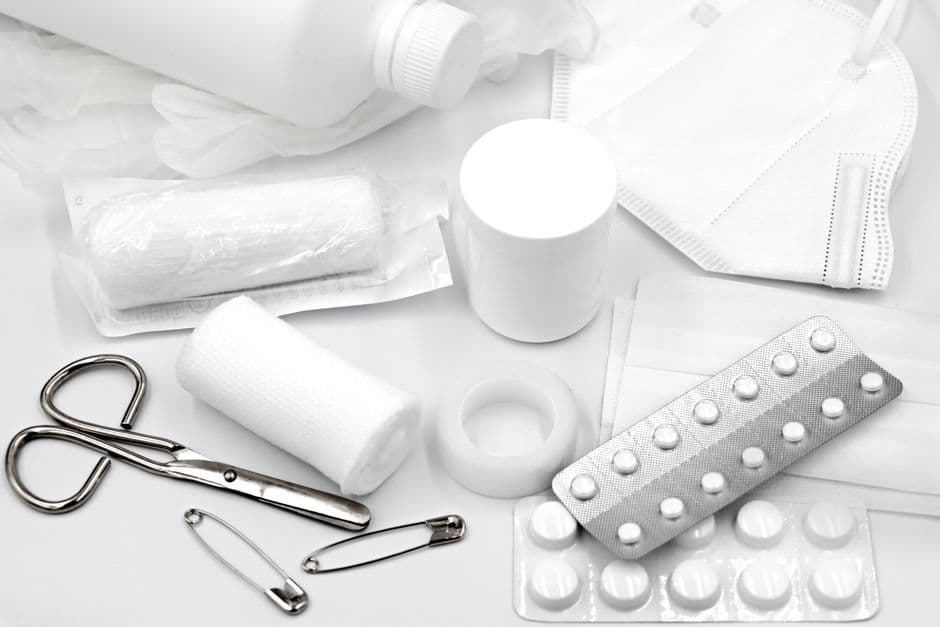
Two completely different failures
A first aid kit is for an injury. Yours, a passenger’s, or somebody else’s at a scene you happen to arrive at. It has nothing to do with the car and does not care what is wrong with it.
An emergency car kit is for a stranded vehicle. A flat battery, a soft tire, being invisible at the roadside at night. It has nothing to do with injuries.
These get shelved together and bundled together, which is why people buy one and feel covered. In practice the overlap is roughly one item — a light — and even that is usually inadequate in both.
Why piece count misleads in both
This is the shared failure mode of both categories and it is worth being blunt about. A 300-piece first aid kit reaches that number with individually wrapped adhesive bandages. A 120-piece emergency kit reaches it with cable ties and fuses. Neither number tells you whether the kit handles the thing you are afraid of.
- For a first aid kit, read the standard. Whether it is built to a published specification is the real specification — the first aid kit page works through which standards exist and why workplace kits are weighted for the wrong injuries.
- For an emergency kit, read the two items that matter. Does it include a genuine jump source and a genuine inflator? Almost none do. Jumper cables need a second car and a willing stranger.
- In both, count the things you would actually reach for. One good pressure dressing beats forty bandages. One inflator beats a bag of fuses.
What each one actually covers
| Scenario | First aid kit | Emergency car kit |
|---|---|---|
| Flat battery | No | Only if it includes a jump source |
| Soft or flat tire | No | Only if it includes an inflator |
| Cut, burn or graze | Yes | No |
| Bleeding that needs pressure | Yes, if built to a standard | No |
| Invisible at the roadside at night | No | Yes, triangles and flares |
| Trapped by a belt or a jammed door | No | Only an escape tool, kept in reach |
| Cold while waiting for recovery | No | Blanket, if included |
Prioritize the first aid kit when
- You carry children or passengers regularly. The likeliest use of a car first aid kit is a minor injury that has nothing to do with driving.
- You drive rural roads where you may be first on scene and a long way from an ambulance.
- You hike, cycle or work away from the car and want one kit that travels with you.
- You would rather buy the thing you can actually use — a kit built to a published standard beats a bigger unbranded one.
Who should skip it: nobody, honestly. It is the cheapest item on this page. But be realistic about training — a kit you do not know how to use is a bag of supplies, and the standard it meets does not transfer to you.
Prioritize the recovery items when
- You commute alone, where there is nobody to hold a flashlight or lend a battery.
- The car is a few years old on its original battery — the single most common way a journey ends.
- You park outside in a cold climate, which is when marginal batteries fail.
- You would be waiting a long time for recovery, which makes visibility and warmth real concerns.
And buy the items rather than the bag. A jump starter and an inflator between them cover most of what strands a commuter, and neither comes in a typical pre-packed emergency kit — the emergency kit page is explicit about what the bags do and do not contain.
Where each one lives
This decides whether either works. The first aid kit goes somewhere you can reach from outside the car — a trunk is fine, a spare wheel well under a loaded trunk floor is not. The recovery items go in the trunk, ideally contained so they are not loose across the floor. The escape tool goes within arm’s reach of the driver’s seat and nowhere else.
Where to store emergency gear in your car works through the placement properly, and it matters more than the contents of either kit — gear you cannot reach in the situation it was bought for is gear you do not own.
Every pick, with the working
Each entry lists the specifications the maker publishes, the axis scores those specifications produce, and what you give up. Rows that read “Not published” are not omissions on our side: they are things the maker will not commit to in writing, and they cost the product points on the transparency axis. Specifications compiled September 4, 2026.
Our pickA kit whose contents are defined by a standard
First Aid Only 335-Piece OSHA Kit
335 pieces built to an OSHA-compliant contents list rather than to a number on the box. That is the only meaningful way to judge a first aid kit: the piece count tells you nothing, the standard the contents are drawn from tells you everything. First Aid Only states supplies adequate for up to 100 people, which is generous for one car.
- Piece count
- 335
- Rated for
- Up to 100 people
- Standard
- OSHA-compliant contents
- Reference standard
- ANSI/ISEA Z308.1 minimum workplace requirements
- Intended use
- Home, car, travel and office
- Case
- Wall-mountable plastic, clear cover, compartments
- Warranty
- Not published
List price $37.44 per Amazon listing, September 27, 2026, captured on the compile date below. Not a live price and not what you will pay — the button is where the real number is.
What it gets right
- Contents built against an OSHA-compliant list, which traces to ANSI/ISEA Z308.1 minimum requirements
- Stated adequate for up to 100 people, so the quantities are generous for one car
- Published piece count of 335 alongside the standard, not instead of it
- Clear cover and individual compartments, so you can find one item under pressure
Flaws
- Workplace kits are weighted toward cuts and abrasions, not roadside trauma
- The case is wall-mountable and built for a shelf, not for a trunk that gets wet
- No published warranty, and consumables have expiry dates you have to track yourself
The working behind the 9.5
- Heat headroom: not scored (weight 22%)
- The maker publishes no operating-temperature ceiling, so this axis is dropped and the other weights are re-normalized.
- Install effort: 10.0 (weight 24%)
- Drops in and sits there. No fixing of any kind, and it comes out again when you sell the car.
- Price against the ceiling: 9.5 (weight 24%)
- Listed at $37.44 on the compile date. This site's buyer has a practical ceiling around $150 for a single upgrade, so the scale rewards everything under $100 and falls away sharply past $150. The live price is very often different, and that is what the button is for.
- Written commitment: not scored (weight 15%)
- No warranty term published, so this axis is dropped and the other weights are re-normalized.
- Spec transparency: 8.6 (weight 15%)
- 6 of the 7 specifications we went looking for are published by the maker (86%). A blank row is never a guess here: it prints “Not published” and it costs the product points, because a figure nobody will commit to in writing is a figure you cannot check.
Axes with no published input are dropped and the remaining weights re-normalized, so a product is not punished for a category where an axis does not apply. Specifications compiled September 4, 2026 from the First Aid Only 335-piece OSHA kit listing.
2Keeping an escape tool actually within reach
resqme Car Escape Tool
The one escape tool small enough to live on your keyring, which is the only place an escape tool is any use — a hammer in the glovebox is a hammer you cannot reach with a jammed belt across your chest. Spring-loaded, so it needs no swing.
- Height
- 2.93 in
- Materials
- ABS plastic and stainless steel
- Window breaker
- Spring-loaded stainless spike, resets after each use
- Belt cutter
- Stainless blade, rated for up to 100 seat belts
- Cut time
- Under 2 seconds (manufacturer figure)
- Certification
- TUV tested and certified
- Origin
- Made in USA
- Works on laminated glass
- No — tempered side glass only
- List price
- Not published
- Warranty
- Not published
What it gets right
- 2.93 inches tall and keyring-mounted, so it is on you rather than in a compartment you cannot reach
- Spring-loaded spike needs no room to swing, which matters when you are belted in
- Publishes a service life: one unit cuts up to 100 seat belts, and the spike resets after each use
- TUV tested and certified, and made in the USA
Flaws
- Breaks tempered side glass only. It will not touch a laminated side window, which is increasingly common on newer cars
- Small enough to lose, and a lost escape tool is no escape tool
- No published warranty term
The working behind the 9.2
- Heat headroom: not scored (weight 22%)
- The maker publishes no operating-temperature ceiling, so this axis is dropped and the other weights are re-normalized.
- Install effort: 10.0 (weight 24%)
- Drops in and sits there. No fixing of any kind, and it comes out again when you sell the car.
- Price against the ceiling: not scored (weight 24%)
- No published list price we could cite on the compile date, so this axis is dropped and the other weights are re-normalized.
- Written commitment: not scored (weight 15%)
- No warranty term published, so this axis is dropped and the other weights are re-normalized.
- Spec transparency: 8.0 (weight 15%)
- 8 of the 10 specifications we went looking for are published by the maker (80%). A blank row is never a guess here: it prints “Not published” and it costs the product points, because a figure nobody will commit to in writing is a figure you cannot check.
Axes with no published input are dropped and the remaining weights re-normalized, so a product is not punished for a category where an axis does not apply. Specifications compiled September 4, 2026 from resqme published specifications and certification.
3A kit organized for finding things fast
Surviveware Vehicle First Aid Kit
A registered FDA medical device with labeled compartments and a hook-and-loop panel that attaches to the trunk lining. The organization is the feature: in an emergency, a bag you have to empty is a bag that costs you a minute.
- Piece count
- 94 on the vehicle kit (180, 200 and 238 variants also sold)
- Registration
- Registered FDA medical device
- Organization
- Labeled compartments
- Mounting
- Hook-and-loop panel for trunk lining
- Notable contents
- CPR mask, pressure bandage, nitrile gloves, eyepatches, whistle
- Warranty
- Not published
- List price
- Not published
What it gets right
- Registered FDA medical device, which is a real registration rather than a marketing line
- Labeled compartments, so the thing you need is findable by someone who did not pack it
- Hook-and-loop panel attaches to trunk lining rather than sliding around
- Contents include a CPR mask, pressure bandage and nitrile gloves — beyond the plaster-and-wipe level
Flaws
- Sold in several piece counts (94, 180, 200, 238) under similar names, so it is easy to buy a different kit than you meant to
- FDA registration covers the device listing, not any claim about clinical outcomes
- No published warranty term
The working behind the 8.9
- Heat headroom: not scored (weight 22%)
- The maker publishes no operating-temperature ceiling, so this axis is dropped and the other weights are re-normalized.
- Install effort: 10.0 (weight 24%)
- Drops in and sits there. No fixing of any kind, and it comes out again when you sell the car.
- Price against the ceiling: not scored (weight 24%)
- No published list price we could cite on the compile date, so this axis is dropped and the other weights are re-normalized.
- Written commitment: not scored (weight 15%)
- No warranty term published, so this axis is dropped and the other weights are re-normalized.
- Spec transparency: 7.1 (weight 15%)
- 5 of the 7 specifications we went looking for are published by the maker (71%). A blank row is never a guess here: it prints “Not published” and it costs the product points, because a figure nobody will commit to in writing is a figure you cannot check.
Axes with no published input are dropped and the remaining weights re-normalized, so a product is not punished for a category where an axis does not apply. Specifications compiled September 4, 2026 from Surviveware vehicle kit published specifications.
Prices last verified September 28, 2026. They move constantly; the figure on Amazon when you click is the real one.
Questions people actually ask
Do I need both a first aid kit and an emergency car kit?
They cover unrelated failures, so ideally yes, and both are inexpensive. If you can only buy one, weigh it by what you actually do: passengers and children argue for the first aid kit, while commuting alone in an older car argues for a jump starter and an inflator.
Does a car emergency kit include a first aid kit?
Many include a token one — a handful of bandages and wipes — which is not the same as a kit built to a published standard. If the first aid element matters to you, buy it separately and judge it on the standard rather than the piece count.
Is a 300-piece first aid kit better than a 100-piece one?
Not necessarily, and usually not. Piece counts are inflated with individually wrapped adhesive bandages. What matters is whether it is built to a published standard and whether it contains the few items you would genuinely reach for, such as a proper pressure dressing.
Where should a car first aid kit be stored?
Somewhere reachable from outside the vehicle — the trunk is fine, buried under a loaded floor is not. Keep an escape tool separately, within arm’s reach of the driver, since its only purpose is the moment you cannot get to the trunk.