The best rain guards and window deflectors
The real argument for a deflector is not rain. It is that you can leave the windows cracked while parked, which changes how hot the car gets.
By Sawyer V. · Published · How we research
We have not tested any of this. Everything below is compiled from published manufacturer specifications, and the arithmetic is printed so you can check it. This page carries affiliate links: if you buy through one we earn a commission at no extra cost to you, and it does not change the order of the picks. Full disclosure.
The short answer
Buy the WeatherTech in-channel deflectors. They are the only ones stated to use a US DOT-approved glazing material, in 3 mm UV-treated acrylic cut to the specific vehicle. On a part that sits permanently in your side field of view, the glazing claim is the one worth paying for. The real benefit is not rain: it is being able to leave the windows cracked while parked, which meaningfully changes how hot the cabin gets.
| # | Pick | Install | Score | Price |
|---|---|---|---|---|
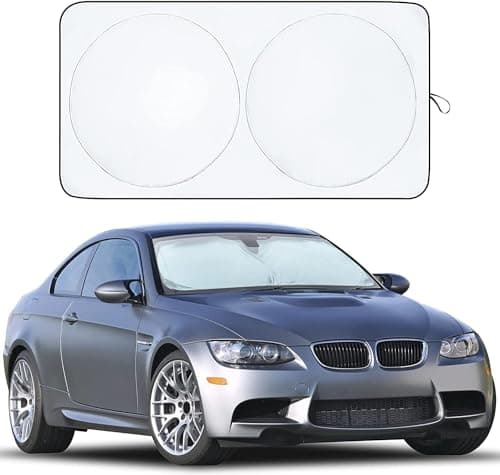
| 1 | EcoNour Windshield Sun Shade The cheapest real temperature drop in the car | Drops in | 9.3/10 | $11.99 - view on Amazon |
| 2 | EcoNour Car Side Window Sun Shade (2 pack) A rear passenger in afternoon sun | Drops in | 8.6/10 | $17.99 - view on Amazon |
| 3 | WeatherTech Side Window Deflectors Cracking the windows in the rain | Clips on | 8.3/10 | $136.95 - view on Amazon |
Prices last verified October 22, 2026. They move constantly; the figure on Amazon when you click is the real one.
The case that actually justifies them
Rain guards are sold on rain and bought for rain, and the rain benefit is modest — you can have the window down an inch in a shower without water running in.
The benefit that earns the money is what that inch does to a parked car. A cabin in summer sun reaches roughly 60-70 C, and a large part of that is simply that hot air has nowhere to go. Leaving the windows cracked lets convection work, and a deflector means you can do that in weather, and with slightly less obvious an invitation than a fully open window.
Combine cracked windows with a windshield shade and the effect compounds — the shade stops the sun heating the interior surfaces while the gap lets the already-hot air escape. The broader method is in how to keep your car cool when parked.
Why the glazing material matters
A deflector sits along the top of the window aperture, permanently, in the upper part of your side vision. You look through and past it every time you check a mirror or a blind spot.
That makes the optical properties of the material a genuine consideration rather than a specification-sheet nicety. WeatherTech states its light-tinted deflectors are the only ones made with a US DOT-approved glazing material, which is a real, named regulatory reference in a category that otherwise offers none.
The other half is UV treatment. Untreated acrylic in permanent sun hazes and yellows, and a hazed deflector in your side vision is worse than no deflector. WeatherTech publishes UV treatment against fading; the cheap alternatives generally publish nothing.
| WeatherTech | Typical tape-on deflector | |
|---|---|---|
| Material | 3 mm lightly tinted acrylic | Usually unstated |
| Glazing standard | US DOT-approved glazing | None published |
| UV treatment | Published | Rarely published |
| Fitment | Vehicle-specific, in-channel | Universal or model-specific, taped |
| Tint options | Light or dark smoke | Usually dark only |
| Warranty | Not published | Not published |
In-channel versus tape-on
This is the main decision and it is a genuine trade rather than one option being better.
- In-channel deflectors slot into the window run — the channel the glass slides in. No adhesive, nothing on the outside of the door, and a cleaner look. The risk is that they sit where the glass seals, so a poor fit can affect how the window seats or produce wind noise
- Tape-on deflectors adhere to the outside of the door frame above the window. Nothing goes into the channel, so nothing interferes with the glass. The risk is adhesive on a painted surface exposed to sun, ice and car washes
In-channel is the better choice on most modern cars, which is why WeatherTech leads with it. Tape-on is the answer where the window channel is unusual or where you are unwilling to put anything in it.
Either way, this is a vehicle-specific part. Deflectors are cut to a particular door aperture, so a set is worthless when you change cars — the same limitation as a molded floor or cargo liner, discussed in best cargo liners.
The costs, stated plainly
They are in your vision, permanently. This is the real one. A dark smoke deflector along the top of the door aperture reduces what you see out of the top of the window, and that is the area a tall vehicle beside you occupies. If you buy these, buy the light tint.
Wind noise can go either way. A well-fitted deflector can reduce noise from a cracked window; a poorly fitted one adds noise at all speeds. Vehicle-specific fitment is the difference.
They complicate automatic car washes. Tape-on deflectors in particular are an edge that brushes catch. Check before you use one.
Winter ice. A deflector gives ice one more place to bond, and prying at a frozen deflector is how they break. See what to keep in your car in winter.
What solves the adjacent problems better
Deflectors are frequently bought for jobs other products do better. Worth separating them:
- Sun on a rear passenger: a stretch mesh side shade, which covers the whole aperture and still lets the window open — best side window sun shades
- Cabin temperature: a windshield shade, which addresses the largest glass area — best windshield sun shades
- Rain on the windshield: wiper blades and a water-beading treatment, not anything on the doors — how to defog your windshield
- Glare: a separate problem with separate answers — how to stop glare while driving
Buy deflectors for what they uniquely do: windows cracked in weather, and a parked car that can breathe.
Every pick, with the working
Each entry lists the specifications the maker publishes, the axis scores those specifications produce, and what you give up. Rows that read “Not published” are not omissions on our side: they are things the maker will not commit to in writing, and they cost the product points on the transparency axis. Specifications compiled September 4, 2026.
Our pickThe cheapest real temperature drop in the car
EcoNour Windshield Sun Shade
240T polyester with a reflective coating and reinforced steel rings, in sizes from 53 by 30 up to 75 by 37 inches. EcoNour states its shades keep an interior up to 40 F cooler and block 99 percent of heat and UV. Those are the maker's own figures rather than an independent test, and even at half of them this is the best dollar-per-degree in the whole car.
- Material
- 240T polyester with reflective coating
- Frame
- Reinforced steel rings
- Sizes published
- 53x30, 59x29, 64x32, 66x27, 75x37 in
- Maker's temperature claim
- Up to 40 F cooler interior
- Maker's UV claim
- Blocks 99% of heat and UV
- Independent verification
- Not published
- Warranty
- Not published
List price $20.99 per EcoNour's own store, 53 x 30 in umbrella model, captured on the compile date below. Not a live price and not what you will pay — the button is where the real number is.
What it gets right
- Multiple published sizes, so you can actually match your windshield rather than fold a compromise
- Reinforced steel rings, which is what stops the frame collapsing after one summer
- Under $25 across most sizes
- Folds down small enough to live behind a seat rather than in the trunk
Flaws
- The 40 F figure is EcoNour's own claim, not an independent measurement, and the conditions behind it are not published
- You have to actually put it up every time, which is the real reason sun shades fail
- Sizing is on you: too small leaves a gap, too big will not sit flat
The working behind the 9.3
- Heat headroom: not scored (weight 22%)
- The maker publishes no operating-temperature ceiling, so this axis is dropped and the other weights are re-normalized.
- Install effort: 10.0 (weight 24%)
- Drops in and sits there. No fixing of any kind, and it comes out again when you sell the car.
- Price against the ceiling: 10.0 (weight 24%)
- Listed at $20.99 on the compile date. This site's buyer has a practical ceiling around $150 for a single upgrade, so the scale rewards everything under $100 and falls away sharply past $150. The live price is very often different, and that is what the button is for.
- Written commitment: not scored (weight 15%)
- No warranty term published, so this axis is dropped and the other weights are re-normalized.
- Spec transparency: 7.1 (weight 15%)
- 5 of the 7 specifications we went looking for are published by the maker (71%). A blank row is never a guess here: it prints “Not published” and it costs the product points, because a figure nobody will commit to in writing is a figure you cannot check.
Axes with no published input are dropped and the remaining weights re-normalized, so a product is not punished for a category where an axis does not apply. Specifications compiled September 4, 2026 from EcoNour's windshield sunshade range.
2A rear passenger in afternoon sun
EcoNour Car Side Window Sun Shade (2 pack)
Skip this one. A mesh sock and a deflector look like they solve the same problem and do not. A shade blocks sun and lets you open the window; a deflector lets you leave the window cracked in rain. If your complaint is sun on a passenger, the shade is the product — this page is about weather and ventilation.
A stretch mesh sock that goes over the whole door frame rather than a suction-cup square that covers a third of the glass. The trade is that it is a screen, not a blackout: it cuts glare and direct sun while you can still see out and still lower the window.
- Sizes offered
- 18 x 20 in, 36 x 17 in, XL 24 x 38 in
- Material
- Nylon, spandex and rubber stretch mesh
- Fitment
- Over the door frame, not on the glass
- Window still opens
- Yes
- Pack size
- 2
- UV blocking percentage
- Not published
- List price
- Not published
- Warranty
- Not published
What it gets right
- Covers the full window aperture instead of a suction-cupped rectangle in the middle of it
- Breathable stretch fabric means the window still opens with the shade fitted
- No suction cups, so nothing falls off the glass on a hot day
- Sold in pairs, which is what a car with two rear windows actually needs
Flaws
- It is a mesh screen. It reduces glare and direct sun; it is not a blackout and does not make the back seat dark
- Sizing is by window aperture, and a shade sized for a sedan will not stretch over a minivan frame
- No published UV-blocking percentage or UPF rating for the mesh
The working behind the 8.6
- Heat headroom: not scored (weight 22%)
- The maker publishes no operating-temperature ceiling, so this axis is dropped and the other weights are re-normalized.
- Install effort: 10.0 (weight 24%)
- Drops in and sits there. No fixing of any kind, and it comes out again when you sell the car.
- Price against the ceiling: not scored (weight 24%)
- No published list price we could cite on the compile date, so this axis is dropped and the other weights are re-normalized.
- Written commitment: not scored (weight 15%)
- No warranty term published, so this axis is dropped and the other weights are re-normalized.
- Spec transparency: 6.3 (weight 15%)
- 5 of the 8 specifications we went looking for are published by the maker (63%). A blank row is never a guess here: it prints “Not published” and it costs the product points, because a figure nobody will commit to in writing is a figure you cannot check.
Axes with no published input are dropped and the remaining weights re-normalized, so a product is not punished for a category where an axis does not apply. Specifications compiled September 4, 2026 from EcoNour side window shade published specifications.
3Cracking the windows in the rain
WeatherTech Side Window Deflectors
The only deflector that states it uses a DOT-approved glazing material, in 3 mm UV-treated acrylic cut to the specific vehicle. On a part that sits in your side vision permanently, the glazing claim is the one worth having.
- Material
- 3 mm lightly tinted acrylic
- Glazing
- US DOT-approved glazing material
- UV
- UV treated against fading
- Fit
- Vehicle-specific, in-channel
- Tint options
- Light or dark smoke
- Warranty
- Not published
- List price
- Not published
What it gets right
- The only deflectors stated to use a US DOT-approved glazing material
- 3 mm acrylic with a UV treatment, so it does not haze and yellow the way cheap film-thin deflectors do
- Cut to the vehicle's exact window channel rather than taped to the outside of the door
- Lets you leave windows cracked in rain, which is the single most useful thing they do for cabin heat
Flaws
- In-channel fitment means they sit in the window run — if fitted badly they can affect how the glass seats
- Vehicle-specific, so worthless when you change cars
- They are in your side field of view permanently, and a dark tint option makes that worse
- No published warranty term
The working behind the 8.3
- Heat headroom: not scored (weight 22%)
- The maker publishes no operating-temperature ceiling, so this axis is dropped and the other weights are re-normalized.
- Install effort: 9.0 (weight 24%)
- Clips onto a vent blade or a headrest post. Two minutes, no tools, no adhesive, no residue.
- Price against the ceiling: not scored (weight 24%)
- No published list price we could cite on the compile date, so this axis is dropped and the other weights are re-normalized.
- Written commitment: not scored (weight 15%)
- No warranty term published, so this axis is dropped and the other weights are re-normalized.
- Spec transparency: 7.1 (weight 15%)
- 5 of the 7 specifications we went looking for are published by the maker (71%). A blank row is never a guess here: it prints “Not published” and it costs the product points, because a figure nobody will commit to in writing is a figure you cannot check.
Axes with no published input are dropped and the remaining weights re-normalized, so a product is not punished for a category where an axis does not apply. Specifications compiled September 4, 2026 from WeatherTech Side Window Deflectors published specifications.
Prices last verified October 22, 2026. They move constantly; the figure on Amazon when you click is the real one.
Questions people actually ask
Do window deflectors reduce wind noise?
A well-fitted one can reduce noise from a cracked window. A poorly fitted one adds noise at all speeds, whether the window is open or not. Vehicle-specific fitment is what decides which you get.
In-channel or tape-on?
In-channel on most modern cars — no adhesive on paint and a cleaner look. Tape-on where the window channel is unusual or you would rather not put anything into it. Both are vehicle-specific.
Are dark tinted deflectors a problem?
They sit permanently in the upper part of your side vision, which is where a tall vehicle beside you appears. Light tint is the safer choice for anything you look past on every mirror check.
Can I take my car through a car wash with deflectors?
Check first, particularly with tape-on deflectors — they present an edge that brushes can catch. In-channel deflectors are generally less exposed but still worth confirming.