Dash cam features you actually need
A dash cam listing has thirty bullet points. Four of them decide whether there is footage on the day you need it, and they are rarely the four in bold.
By Sawyer V. · Published · How we research
We have not tested any of this. Everything below is compiled from published manufacturer specifications, and the arithmetic is printed so you can check it. This page carries affiliate links: if you buy through one we earn a commission at no extra cost to you, and it does not change the order of the picks. Full disclosure.
The short version
Four things decide whether footage exists: a published operating-temperature ceiling, a supercapacitor rather than a lithium battery, a high-endurance card large enough to reach back a full day, and reliable loop recording with a working file lock. Everything else — resolution above 2K, Wi-Fi, voice control, apps, driver alerts — is a preference. Buy the four first, then spend what is left on whatever you actually want.
| # | Pick | Install | Score | Price |
|---|---|---|---|---|
| 1 | Vantrue E1 The best heat rating under $100 | Adhesive | 7.6/10 | $99.99 - view on Amazon |
| 2 | VIOFO A119 Mini 2 The one to buy if you only buy one | Adhesive | 6.7/10 | $129.99 - view on Amazon |
| 3 | Garmin Dash Cam 57 A discontinued camera worth knowing about | Adhesive | 5.7/10 | $259.50 - view on Amazon |
| 4 | VIOFO A229 Plus 1CH A screen, voice control and room to add a rear camera | Adhesive | 5.5/10 | $189.99 - view on Amazon |
Prices last verified October 22, 2026. They move constantly; the figure on Amazon when you click is the real one.
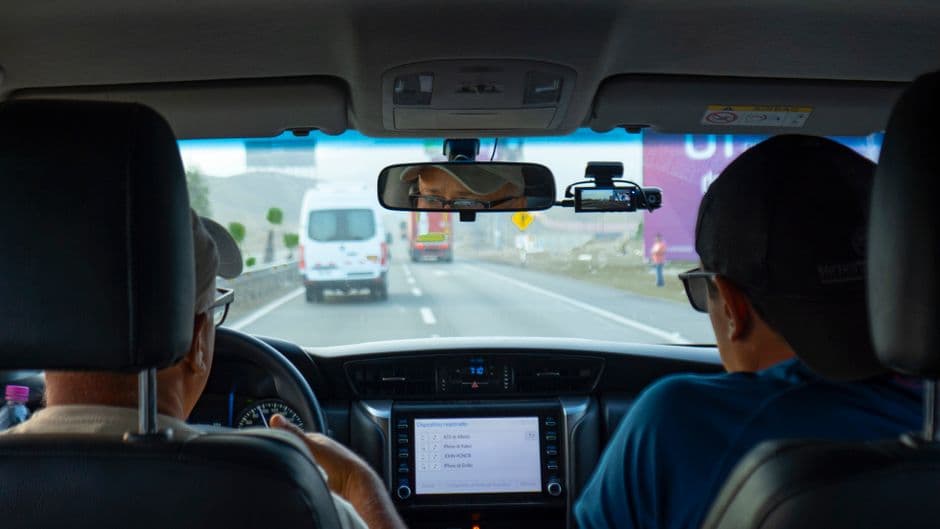
Tier one: the four that decide whether footage exists
A dash cam has exactly one job, and it fails at that job in a small number of ways. These four features are the ones that address those failure modes directly.
- A published operating-temperature ceiling. A parked car in summer runs roughly 60-70 C inside. Vantrue publishes 70 C for the E1 line and VIOFO 65 C for the A229 Plus. A camera that publishes nothing is an unknown you discover in August — see best dash cams for hot weather
- A supercapacitor, not a lithium battery. The power store's only job is to hold enough charge to close the current file cleanly when power drops. A supercapacitor tolerates heat far better, and a swollen lithium cell behind a windshield is a genuinely bad outcome
- A high-endurance card, sized properly. Dash cam use is close to the worst case for flash memory: continuous sequential writes, overwritten forever, in a hot car. Samsung publishes 70,080 hours and 820 TBW at 128 GB against SanDisk High Endurance at 10,000 hours and 117 TBW — best microSD cards for a dash cam
- Loop recording with a file lock that works. The camera has to overwrite old footage, and it has to protect the clip you press the button on. Both are table stakes and both occasionally fail — how to save dash cam footage
Tier two: genuinely useful, worth paying for
| Feature | What it does | Who needs it |
|---|---|---|
| GPS | Logs speed and position, sets the clock | Most people, for the clock alone |
| Parking mode | Records while parked | Street parkers, with a hardwire kit |
| Rear channel | Records behind you | Anyone worried about being rear-ended |
| HDR / WDR | Handles headlights and tunnel exits | Anyone who drives at night |
| Sensor named on the spec sheet | Tells you night behavior | Everyone, as a signal |
| Polarizing filter | Cuts windshield reflection | Cars with reflective dashboards |
Two of these deserve expansion. Parking mode is only a real feature if you also buy a hardwire kit with a low-voltage cutoff — without constant power it does nothing, and without a cutoff it can flatten your battery. The arithmetic is in does parking mode drain your battery.
HDR or WDR matters more than resolution at night, which is when most incidents that need footage happen. Without it, an oncoming headlight is a white blob and everything around it is black.
Tier three: filler
None of these is harmful. All of them appear in bold on listings and none of them changes whether you have usable footage.
- Resolution above 2K. A 4K camera at a low bitrate produces worse plate legibility than a good 2K one, because compression discards exactly the fine detail a plate is made of. The full argument is in dash cam resolution explained
- Wi-Fi and phone apps. Convenient for changing settings and pulling one clip. When it actually matters you will be copying the whole card to a computer anyway
- Voice control. A solution to pressing one button, on a device you press a button on perhaps twice a year
- Lane departure and forward collision alerts. A camera behind your windshield is not a calibrated safety system. These produce false positives and get switched off within a week
- Cloud connectivity. A subscription, a SIM, and a recurring cost, to solve a problem — getting footage off the camera — that a memory card already solves
- Interior-facing third channel. Genuinely right for a rideshare driver and pointless for a private owner. See best dash cams for rideshare
Two claims that mean less than they look
“Night vision”. On a dash cam this almost always means the sensor is reasonably sensitive, not that there is any infrared illumination. A named sensor — the Sony STARVIS parts appear on the better cameras — tells you far more than the phrase does.
“Emergency lock” via G-sensor. A good safety net and not a substitute for pressing the button. Set too sensitive it locks a file over every pothole until the protected folder is full; set too insensitive it misses a low-speed impact.
Buying in the right order
Work down the list and stop when the money runs out. That produces a better outcome than buying the camera with the most bullet points at the same price.
- Published heat ceiling, at or above 65 C
- Supercapacitor
- Budget for a high-endurance card as part of the purchase, not an afterthought
- HDR or WDR
- 2K rather than 4K, unless bitrate is published and proportionate
- GPS
- Parking mode plus a hardwire kit, if you park on the street
- Rear channel, if being rear-ended is your concern
The shortlists that follow this order are under $100 and under $150. If you have not decided whether to buy at all, we argued both sides in are dash cams worth it.
Every pick, with the working
Each entry lists the specifications the maker publishes, the axis scores those specifications produce, and what you give up. Rows that read “Not published” are not omissions on our side: they are things the maker will not commit to in writing, and they cost the product points on the transparency axis. Specifications compiled September 4, 2026.
Our pickThe best heat rating under $100
Vantrue E1
Vantrue publishes an operating range of -20 C to 70 C on this camera, which is the highest ceiling of anything here and 10 C above what the same company publishes for its own 4K model. It is a supercapacitor camera with GPS and a 2.7K sensor at a two-figure list price, which is an unusual combination, and it is the pick if your car sits in a sun-baked lot all day.
- Front resolution
- 2592 x 1944
- Alternate mode
- 1920 x 1080 at 60fps
- Power store
- Supercapacitor
- Operating range
- -20 C to 70 C (-4 F to 158 F)
- Max microSD
- 512 GB
- GPS
- Built in
- Wi-Fi
- Built in, app control
- Parking mode
- 24-hour, buffered motion detection
- Field of view
- Not published
- Published current draw
- Not published
List price $89.99 per Vantrue's own store, sale price (regular $129.99), captured on the compile date below. Not a live price and not what you will pay — the button is where the real number is.
What it gets right
- 70 C published ceiling — the highest of any camera in this ledger, and 10 C above Vantrue's own E1 Pro
- Supercapacitor rather than a lithium cell, which is the part that swells and dies in a hot cabin
- GPS and voice control at a list price under $100
- Takes a 512GB card, so a big endurance card will not be wasted on it
Flaws
- 2592x1944 is not 4K, and the marketing calls it 2.7K, which is a stretch of the usual naming
- Front only. A rear channel means a different camera
- Parking mode needs a hardwire kit that is not in the box
The working behind the 7.6
- Heat headroom: 10.0 (weight 22%)
- Published operating ceiling 70 C (158 F). A car parked in summer sun runs roughly 60-70 C inside, so 65 C and up is real headroom, 60 C is living at the limit, and anything under 55 C is a summer problem waiting to happen.
- Install effort: 6.0 (weight 24%)
- Adhesive pad onto the dashboard. Permanent in practice: repositioning means a new pad, and the pad is the part that fails first.
- Price against the ceiling: 7.0 (weight 24%)
- Listed at $89.99 on the compile date. This site's buyer has a practical ceiling around $150 for a single upgrade, so the scale rewards everything under $100 and falls away sharply past $150. The live price is very often different, and that is what the button is for.
- Written commitment: 7.0 (weight 15%)
- 18-month warranty. This is the only promise in the entire listing that a court would read, which is why it is scored and the marketing copy is not.
- Spec transparency: 8.0 (weight 15%)
- 8 of the 10 specifications we went looking for are published by the maker (80%). A blank row is never a guess here: it prints “Not published” and it costs the product points, because a figure nobody will commit to in writing is a figure you cannot check.
Axes with no published input are dropped and the remaining weights re-normalized, so a product is not punished for a category where an axis does not apply. Specifications compiled September 4, 2026 from Vantrue's E1 product page.
2The one to buy if you only buy one
VIOFO A119 Mini 2
A Sony STARVIS 2 IMX675 sensor at 2K 60fps, a supercapacitor, a published 65 C ceiling, an 18-month warranty and three named parking modes including buffered recording. VIOFO publishes more about this camera than anyone else here publishes about anything, and that is the reason it wins: every claim on the page is one you can check.
- Front resolution
- 2560 x 1440 at 60fps
- Image sensor
- Sony STARVIS 2 IMX675, 5MP
- Field of view
- 140 degrees
- Aperture
- f/1.6
- Power store
- Supercapacitor, no battery
- Operating range
- -20 C to 65 C (-4 F to 149 F)
- Storage temperature
- -20 C to 70 C
- Max microSD
- 512 GB
- Wi-Fi
- 2.4 GHz and 5 GHz
- Parking modes
- Auto event detection, time lapse, low bitrate
- Dimensions
- 1.81 x 1.77 x 2.94 in
- Published current draw
- Not published
List price $159.99 per VIOFO's own store, captured on the compile date below. Not a live price and not what you will pay — the button is where the real number is.
What it gets right
- Sony STARVIS 2 IMX675 with an f/1.6 lens — the best published low-light hardware in this ledger
- 2K at 60fps, which reads plates on moving cars better than 4K at 30fps does
- Published 65 C ceiling and a supercapacitor, so summer is designed for rather than hoped about
- Three named parking modes, including buffered recording that keeps the seconds before a trigger
- 18-month warranty, longer than most of this category
Flaws
- Front only, and adding the rear camera means a different model entirely
- The list price is well above the sub-$100 bracket most people start in
- Parking mode needs the HK4 hardwire kit, which is a separate purchase and a separate afternoon
The working behind the 6.7
- Heat headroom: 9.0 (weight 22%)
- Published operating ceiling 65 C (149 F). A car parked in summer sun runs roughly 60-70 C inside, so 65 C and up is real headroom, 60 C is living at the limit, and anything under 55 C is a summer problem waiting to happen.
- Install effort: 6.0 (weight 24%)
- Adhesive pad onto the dashboard. Permanent in practice: repositioning means a new pad, and the pad is the part that fails first.
- Price against the ceiling: 3.5 (weight 24%)
- Listed at $159.99 on the compile date. This site's buyer has a practical ceiling around $150 for a single upgrade, so the scale rewards everything under $100 and falls away sharply past $150. The live price is very often different, and that is what the button is for.
- Written commitment: 7.0 (weight 15%)
- 18-month warranty. This is the only promise in the entire listing that a court would read, which is why it is scored and the marketing copy is not.
- Spec transparency: 9.2 (weight 15%)
- 11 of the 12 specifications we went looking for are published by the maker (92%). A blank row is never a guess here: it prints “Not published” and it costs the product points, because a figure nobody will commit to in writing is a figure you cannot check.
Axes with no published input are dropped and the remaining weights re-normalized, so a product is not punished for a category where an axis does not apply. Specifications compiled September 4, 2026 from VIOFO's A119 Mini 2 product page.
3A discontinued camera worth knowing about
Garmin Dash Cam 57
Skip this one. This is a discontinued product with the lowest published heat ceiling here. Unless you find it heavily discounted, the Garmin Dash Cam X110 is the current camera and the Vantrue E1 has 10 C more headroom for half the money.
1440p, a 140-degree lens and a published operating range of -20 C to 60 C from Garmin's own owner's manual, which is more than most makers publish. It has also been discontinued, and that changes the calculation completely: remaining stock is real, and so is the fact that a discontinued camera's firmware support has a horizon.
- Front resolution
- 2560 x 1440 (1440p)
- Field of view
- 140 degrees
- Operating range
- -20 C to 60 C (-4 F to 140 F)
- Charging range
- 0 C to 45 C (32 F to 113 F)
- Input voltage
- 4.75 to 5.25 Vdc, 1 A
- Wireless
- 2.4 GHz at 16 dBm maximum
- Parking mode
- Parking Guard, via the Garmin Drive app
- Availability
- Discontinued
- Power store
- Not published
- Published current draw
- Not published
List price $229.99 per Garmin's listed price before discontinuation, captured on the compile date below. Not a live price and not what you will pay — the button is where the real number is.
What it gets right
- Garmin publishes the operating range, charging range and input voltage in the owner's manual, which almost nobody in this category does
- 1440p at 140 degrees in a body the size of a matchbox
- Voice control and the Garmin Drive app ecosystem
Flaws
- Discontinued. Firmware support has a horizon even if nobody will tell you where it is
- 60 C ceiling — the lowest published figure in this ledger, and below what a car in summer sun actually reaches
- Remaining stock is priced as new stock rather than as run-out stock
The working behind the 5.7
- Heat headroom: 7.5 (weight 22%)
- Published operating ceiling 60 C (140 F). A car parked in summer sun runs roughly 60-70 C inside, so 65 C and up is real headroom, 60 C is living at the limit, and anything under 55 C is a summer problem waiting to happen.
- Install effort: 6.0 (weight 24%)
- Adhesive pad onto the dashboard. Permanent in practice: repositioning means a new pad, and the pad is the part that fails first.
- Price against the ceiling: 2.5 (weight 24%)
- Listed at $229.99 on the compile date. This site's buyer has a practical ceiling around $150 for a single upgrade, so the scale rewards everything under $100 and falls away sharply past $150. The live price is very often different, and that is what the button is for.
- Written commitment: 5.5 (weight 15%)
- 12-month warranty. This is the only promise in the entire listing that a court would read, which is why it is scored and the marketing copy is not.
- Spec transparency: 8.0 (weight 15%)
- 8 of the 10 specifications we went looking for are published by the maker (80%). A blank row is never a guess here: it prints “Not published” and it costs the product points, because a figure nobody will commit to in writing is a figure you cannot check.
Axes with no published input are dropped and the remaining weights re-normalized, so a product is not punished for a category where an axis does not apply. Specifications compiled September 4, 2026 from Garmin Dash Cam 47/57/67W owner's manual, specifications page.
4A screen, voice control and room to add a rear camera
VIOFO A229 Plus 1CH
The same STARVIS 2 IMX675 sensor as the Mini 2 in a body with a screen, voice control and the option to add rear and interior channels later. You are paying roughly $40 over the Mini 2 for a display and an upgrade path, which is worth it if you expect to want a rear camera and not if you do not.
- Front resolution
- 2K HDR
- Image sensor
- Sony STARVIS 2 IMX675
- GPS
- Built in
- Voice control
- Yes
- Expandable
- Rear and interior channels available
- Operating range
- Not published
- Max microSD
- Not published
- Field of view
- Not published
List price $199.99 per VIOFO's own store, captured on the compile date below. Not a live price and not what you will pay — the button is where the real number is.
What it gets right
- Same STARVIS 2 IMX675 sensor as the Mini 2
- Screen on the body, so aiming and reviewing does not need the phone app
- Expandable to two and three channels without buying a whole new camera
- Voice control, which is the only genuinely safe way to lock a clip while moving
Flaws
- $200 list is well past this site's usual ceiling for a single upgrade
- A screen in the windshield is a screen in your eyeline; the Mini 2 hides behind the mirror
- Same hardwire requirement for parking mode as every other VIOFO
The working behind the 5.5
- Heat headroom: not scored (weight 22%)
- The maker publishes no operating-temperature ceiling, so this axis is dropped and the other weights are re-normalized.
- Install effort: 6.0 (weight 24%)
- Adhesive pad onto the dashboard. Permanent in practice: repositioning means a new pad, and the pad is the part that fails first.
- Price against the ceiling: 3.5 (weight 24%)
- Listed at $199.99 on the compile date. This site's buyer has a practical ceiling around $150 for a single upgrade, so the scale rewards everything under $100 and falls away sharply past $150. The live price is very often different, and that is what the button is for.
- Written commitment: 7.0 (weight 15%)
- 18-month warranty. This is the only promise in the entire listing that a court would read, which is why it is scored and the marketing copy is not.
- Spec transparency: 6.3 (weight 15%)
- 5 of the 8 specifications we went looking for are published by the maker (63%). A blank row is never a guess here: it prints “Not published” and it costs the product points, because a figure nobody will commit to in writing is a figure you cannot check.
Axes with no published input are dropped and the remaining weights re-normalized, so a product is not punished for a category where an axis does not apply. Specifications compiled September 4, 2026 from VIOFO's 1-channel range page.
Prices last verified October 22, 2026. They move constantly; the figure on Amazon when you click is the real one.
Questions people actually ask
Is 4K worth it on a dash cam?
Rarely. Resolution is a ceiling, not a result — a 4K stream at a low bitrate loses exactly the fine detail a license plate consists of. A well-implemented 2K camera is the better default for most buyers.
Do I need parking mode?
Only if you park where incidents happen and you are willing to fit a hardwire kit with a low-voltage cutoff. Parking mode without constant power does nothing, and constant power without a cutoff is how batteries go flat.
Are dash cam driver alerts useful?
Not really. A camera stuck to a windshield is not a calibrated driver assistance system, and the false positive rate means most people disable the alerts within a week of installing.
What is the single most important dash cam specification?
The published operating-temperature ceiling. Everything else affects how good the footage is; heat decides whether there is any. A parked car in summer reaches roughly 60-70 C, and most of this category publishes no ceiling at all.