The best car accessories for seniors
Nothing here is a medical device and nothing here is about giving up driving. It is the short list of things that make the car easier to see out of and easier to sit in.
By Sawyer V. · Published · How we research
We have not tested any of this. Everything below is compiled from published manufacturer specifications, and the arithmetic is printed so you can check it. This page carries affiliate links: if you buy through one we earn a commission at no extra cost to you, and it does not change the order of the picks. Full disclosure.
The short answer
Start with the seat, then the glass, then the roadside kit. A gel seat cushion and a lumbar support change how far you can comfortably drive more than anything else here. Blind spot mirrors and a polarized visor extender address the two things that get measurably harder with age, turning to look and coping with glare. A tire inflator and an escape tool cover the case where help is further away than it used to be.
| # | Pick | Install | Score | Price |
|---|---|---|---|---|
| 1 | resqme Car Escape Tool Keeping an escape tool actually within reach | Drops in | 9.2/10 | $15.15 - view on Amazon |
| 2 | AstroAI Portable Tire Inflator (150 PSI) Topping up four tires in a driveway | Plugs in | 9.1/10 | $26.99 - view on Amazon |
| 3 | Everlasting Comfort Lumbar Support Pillow Filling the gap your seat leaves | Drops in | 9.1/10 | $39.99 - view on Amazon |
| 4 | ComfiLife Gel Enhanced Seat Cushion The standard answer for a long drive | Drops in | 9.0/10 | $49.95 - view on Amazon |
| 5 | Glare Guard Polarized Sun Visor Extender Low sun that sits under the factory visor | Clips on | 8.1/10 | $39.99 - view on Amazon |
| 6 | Ampper 2 in. Round Blind Spot Mirror An adjustable swivel rather than a fixed stick-on | Adhesive | 5.9/10 | $6.99 - view on Amazon |
Prices last verified September 24, 2026. They move constantly; the figure on Amazon when you click is the real one.
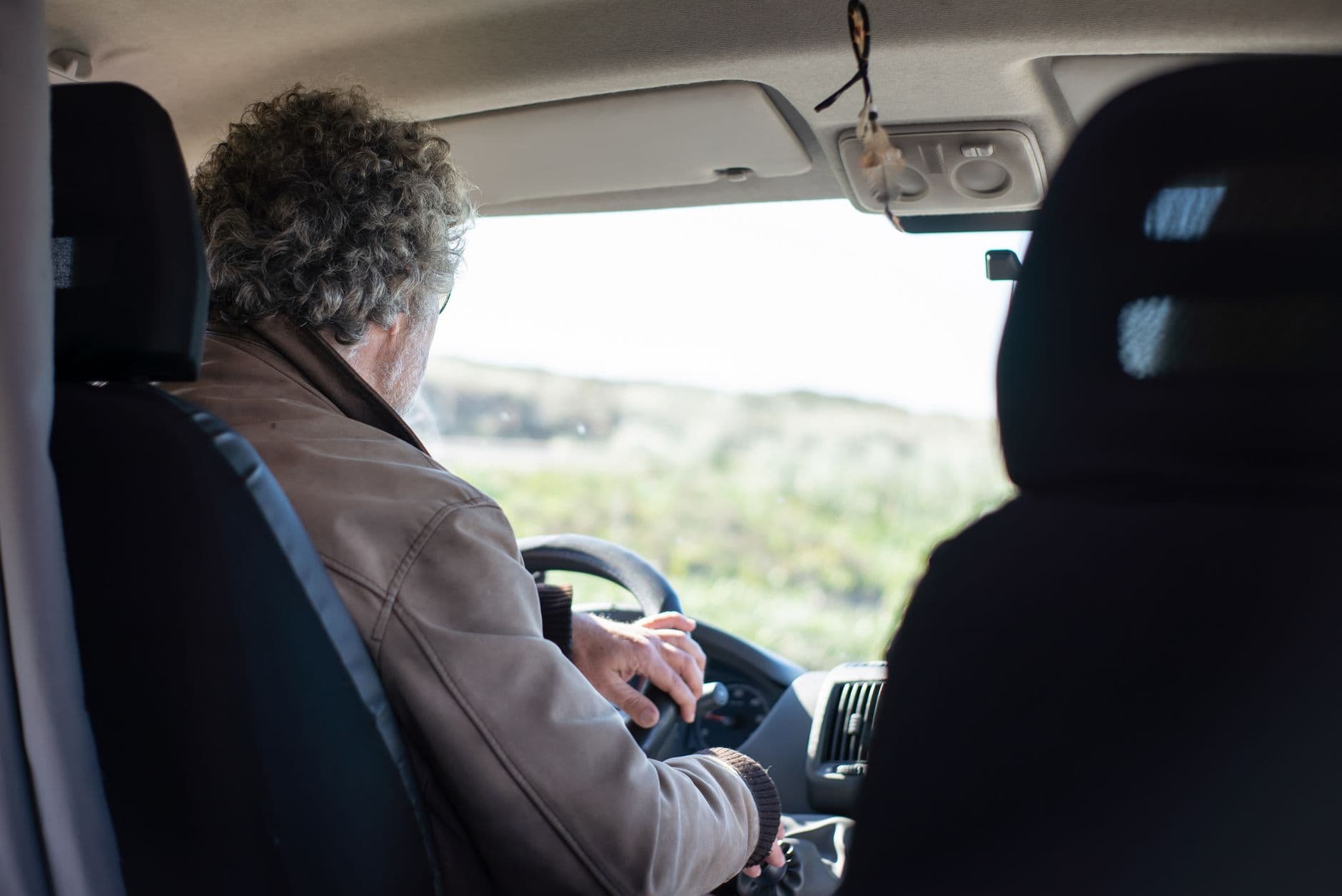
Who this page is for
The CDC reports that in 2022 there were almost 52 million licensed drivers aged 65 and older in the United States. It also notes that “age-related changes in vision, physical functioning, and the ability to reason and remember, as well as diseases and medications, might affect some older adults’ driving abilities”, and that higher crash death rates in this group are primarily due to increased vulnerability to injury in a crash.
The seat is the first thing worth changing
Car seats are designed around an average, and an average is a bad fit for a lot of people at any age. Two cheap items change the geometry without touching the car.
- A gel seat cushion raises hip height, which improves the sight line over the hood and reduces how much you have to crane at junctions. It also spreads pressure on a long drive.
- A lumbar support fills the gap most car seats leave in the lower back. That gap is why a drive that used to be comfortable stops being comfortable.
- Then re-set the mirrors. Raising the seat changes every mirror angle you had set. The five-minute version is on how to set up your driving position.
One caution specific to seat height: the distance between your chest and the steering wheel matters. Raising a cushion should not move you closer to the wheel than you were. The airbag distance argument is set out on the accessories for women page, where it is laid out in full, and it applies to any shorter driver regardless of age.
Glare and the shoulder check
Two things in a car get harder with age in ways that accessories genuinely address. Glare is one — low winter sun and oncoming headlights are more disabling for older eyes, and the factory visor is a rectangle of cardboard that was never designed for either. A polarized visor extender cuts glare from an angle the sun visor does not cover.
The other is the shoulder check. Turning far enough to clear a blind spot is a range-of- motion question before it is a vision one, and blind spot mirrors remove the need for most of that rotation. They are a few dollars and they go on in two minutes.
| Problem | What helps | Where it is covered |
|---|---|---|
| Low sun and headlight glare | Polarized visor extender | Sun visor extenders |
| Night glare from inside the glass | Clean the interior windshield | How to stop glare while driving |
| Checking the blind spot | Convex blind spot mirrors | Blind spot mirrors |
| Judging the gap when reversing | Parking sensors, or a camera | Parking sensors, backup cameras |
| Fogged glass on a cold morning | Air conditioning, and a dry cabin | How to defog your windshield |
Reversing is worth a sentence of its own. If the car predates the rear visibility rules, a backup camera or a set of parking sensors is one of the highest-value additions on this whole site — sensors especially, because they beep whether or not you are looking at a screen.
The roadside kit, which matters more than it used to
- A tire inflator. Topping up a soft tire on the driveway is a job anyone can do sitting on a stool. Changing a wheel at the roadside is not, and increasingly should not be attempted at all.
- A charged phone. The single most useful piece of roadside equipment is a phone with battery left. A car charger costs ten dollars.
- An escape tool. A seat belt cutter and window punch on the keyring. Small probability, total consequence, four dollars.
- A jump starter rather than cables. Jumper cables need a second car and a stranger willing to stop. A lithium jump starter needs neither.
Getting in and out
This is the request that comes up most often and the one where the honest answer is least satisfying. Swivel cushions, support handles that hook into the door striker, and grab bars are widely sold, and this site does not rank them because it ranks products on published specifications and those categories publish almost nothing — no load ratings, no fit data, no test standard.
Recommending a load-bearing device that publishes no load rating would be the exact failure this site exists to avoid. If getting in and out is the problem, an occupational therapist or a mobility specialist can specify something rated for the job, and that is a better answer than anything this page could rank.
If you are buying for a parent
Buy the things that are unambiguously useful and leave the rest alone. A seat cushion, a tire inflator, a car charger and a set of blind spot mirrors cover most of the value on this page for well under a hundred dollars, and none of them implies anything about anyone’s driving.
If comfort over distance is the specific concern, the long drives guide works through the same problem from the other direction, and how to reduce driver fatigue covers what actually helps on a three-hour trip.
Every pick, with the working
Each entry lists the specifications the maker publishes, the axis scores those specifications produce, and what you give up. Rows that read “Not published” are not omissions on our side: they are things the maker will not commit to in writing, and they cost the product points on the transparency axis. Specifications compiled September 4, 2026.
Our pickKeeping an escape tool actually within reach
resqme Car Escape Tool
The one escape tool small enough to live on your keyring, which is the only place an escape tool is any use — a hammer in the glovebox is a hammer you cannot reach with a jammed belt across your chest. Spring-loaded, so it needs no swing.
- Height
- 2.93 in
- Materials
- ABS plastic and stainless steel
- Window breaker
- Spring-loaded stainless spike, resets after each use
- Belt cutter
- Stainless blade, rated for up to 100 seat belts
- Cut time
- Under 2 seconds (manufacturer figure)
- Certification
- TUV tested and certified
- Origin
- Made in USA
- Works on laminated glass
- No — tempered side glass only
- List price
- Not published
- Warranty
- Not published
What it gets right
- 2.93 inches tall and keyring-mounted, so it is on you rather than in a compartment you cannot reach
- Spring-loaded spike needs no room to swing, which matters when you are belted in
- Publishes a service life: one unit cuts up to 100 seat belts, and the spike resets after each use
- TUV tested and certified, and made in the USA
Flaws
- Breaks tempered side glass only. It will not touch a laminated side window, which is increasingly common on newer cars
- Small enough to lose, and a lost escape tool is no escape tool
- No published warranty term
The working behind the 9.2
- Heat headroom: not scored (weight 22%)
- The maker publishes no operating-temperature ceiling, so this axis is dropped and the other weights are re-normalized.
- Install effort: 10.0 (weight 24%)
- Drops in and sits there. No fixing of any kind, and it comes out again when you sell the car.
- Price against the ceiling: not scored (weight 24%)
- No published list price we could cite on the compile date, so this axis is dropped and the other weights are re-normalized.
- Written commitment: not scored (weight 15%)
- No warranty term published, so this axis is dropped and the other weights are re-normalized.
- Spec transparency: 8.0 (weight 15%)
- 8 of the 10 specifications we went looking for are published by the maker (80%). A blank row is never a guess here: it prints “Not published” and it costs the product points, because a figure nobody will commit to in writing is a figure you cannot check.
Axes with no published input are dropped and the remaining weights re-normalized, so a product is not punished for a category where an axis does not apply. Specifications compiled September 4, 2026 from resqme published specifications and certification.
2Topping up four tires in a driveway
AstroAI Portable Tire Inflator (150 PSI)
150 PSI maximum, a digital gauge, and AstroAI's own published figure of a 195/65/R15 tire going 30 to 36 PSI in under a minute. It also publishes the duty cycle honestly: fifteen minutes of continuous use and then ten minutes of cooling. That duty cycle is the specification that separates a topping-up tool from a tire-filling one.
- Maximum pressure
- 150 PSI
- Power
- 12 V DC
- Duty cycle
- 15 minutes continuous, then 10 minutes cooling
- Published inflation rate
- 195/65/R15 from 30 to 36 PSI in under 1 minute
- Gauge
- Digital, automatic shutoff
- Warranty
- Not published
- Operating range
- Not published
List price $37.99 per AstroAI's own store, captured on the compile date below. Not a live price and not what you will pay — the button is where the real number is.
What it gets right
- Published inflation rate on a named tire size, which is the only useful way to state this figure
- Published duty cycle: 15 minutes on, 10 minutes cooling
- Digital gauge with automatic shutoff at the set pressure
- Around $32 to $38 depending on the model
Flaws
- 15 minutes of continuous running is four tires topped up, not one tire filled from flat
- 150 PSI is a headline number a passenger car will never approach
- 12V socket powered, so a car with the ignition off will run its battery down doing this
The working behind the 9.1
- Heat headroom: not scored (weight 22%)
- The maker publishes no operating-temperature ceiling, so this axis is dropped and the other weights are re-normalized.
- Install effort: 10.0 (weight 24%)
- Plugs into a 12V socket or a USB port. Nothing to mount, nothing to route, reversible in a second.
- Price against the ceiling: 9.5 (weight 24%)
- Listed at $37.99 on the compile date. This site's buyer has a practical ceiling around $150 for a single upgrade, so the scale rewards everything under $100 and falls away sharply past $150. The live price is very often different, and that is what the button is for.
- Written commitment: not scored (weight 15%)
- No warranty term published, so this axis is dropped and the other weights are re-normalized.
- Spec transparency: 7.1 (weight 15%)
- 5 of the 7 specifications we went looking for are published by the maker (71%). A blank row is never a guess here: it prints “Not published” and it costs the product points, because a figure nobody will commit to in writing is a figure you cannot check.
Axes with no published input are dropped and the remaining weights re-normalized, so a product is not punished for a category where an axis does not apply. Specifications compiled September 4, 2026 from AstroAI's 150 PSI tire inflator page.
3Filling the gap your seat leaves
Everlasting Comfort Lumbar Support Pillow
13.4 by 4.1 by 12.6 inches of heat-responsive memory foam on a dual-strap harness that fits seats up to 32 inches wide. The 4.1-inch depth is the specification to check against your own back: most car seats leave a lumbar gap of two to four inches, and a pillow deeper than your gap pushes you forward rather than supporting you.
- Dimensions
- 13.4 L x 4.1 W x 12.6 H in
- Material
- Heat-responsive memory foam
- Attachment
- Dual adjustable straps, removable
- Fits seats up to
- 32 in wide
- Cover
- Machine washable, cold gentle cycle
- Foam density figure
- Not published
- Warranty
- Not published
List price $39.99 per Everlasting Comfort's own store, captured on the compile date below. Not a live price and not what you will pay — the button is where the real number is.
What it gets right
- Published depth, width and height, so you can measure your own gap and compare
- Dual adjustable straps rather than one, which is what stops it sliding down the seat back
- Fits seats up to 32 in wide, and the strap is removable
- Machine-washable cover
Flaws
- 4.1 in is deep. If your seat already has lumbar adjustment wound out, this is too much
- Heat-responsive foam means it is firmer on a cold morning than it is in August
- The straps are visible from the back seat and there is no way to hide them
The working behind the 9.1
- Heat headroom: not scored (weight 22%)
- The maker publishes no operating-temperature ceiling, so this axis is dropped and the other weights are re-normalized.
- Install effort: 10.0 (weight 24%)
- Drops in and sits there. No fixing of any kind, and it comes out again when you sell the car.
- Price against the ceiling: 9.5 (weight 24%)
- Listed at $39.99 on the compile date. This site's buyer has a practical ceiling around $150 for a single upgrade, so the scale rewards everything under $100 and falls away sharply past $150. The live price is very often different, and that is what the button is for.
- Written commitment: not scored (weight 15%)
- No warranty term published, so this axis is dropped and the other weights are re-normalized.
- Spec transparency: 7.1 (weight 15%)
- 5 of the 7 specifications we went looking for are published by the maker (71%). A blank row is never a guess here: it prints “Not published” and it costs the product points, because a figure nobody will commit to in writing is a figure you cannot check.
Axes with no published input are dropped and the remaining weights re-normalized, so a product is not punished for a category where an axis does not apply. Specifications compiled September 4, 2026 from Everlasting Comfort's lumbar support page.
4The standard answer for a long drive
ComfiLife Gel Enhanced Seat Cushion
17.5 by 13.7 by 2.8 inches of high-density memory foam with a gel layer on top, a non-slip rubber base and a washable cover. The published geometry is what matters here: 2.8 inches is enough lift to change your hip angle and not so much that your head moves toward the headliner in a low car. Measure your seat-to-roof clearance before you buy.
- Dimensions
- 17.5 L x 13.7 W x 2.8 H in
- Weight
- 1.45 lb
- Core material
- High-density memory foam
- Top layer
- Cooling gel
- Base
- Non-slip rubber
- Cover
- Machine-washable zippered velour, OEKO-TEX certified
- Foam density figure
- Not published
- Warranty
- Not published
List price $59.94 per ComfiLife's own store, captured on the compile date below. Not a live price and not what you will pay — the button is where the real number is.
What it gets right
- Published dimensions, which most cushions in this category do not give you
- 2.8 in of lift changes the hip angle without wrecking your seating position
- Non-slip rubber base, so it stays where you put it when you get in
- Cover comes off and goes in the machine, which after one summer matters
Flaws
- 2.8 in of lift is a real change to your relationship with the roof, the mirrors and the belt path
- ComfiLife does not publish a foam density figure, only the words high density
- $59.94 list is a lot for foam
The working behind the 9.0
- Heat headroom: not scored (weight 22%)
- The maker publishes no operating-temperature ceiling, so this axis is dropped and the other weights are re-normalized.
- Install effort: 10.0 (weight 24%)
- Drops in and sits there. No fixing of any kind, and it comes out again when you sell the car.
- Price against the ceiling: 9.0 (weight 24%)
- Listed at $59.94 on the compile date. This site's buyer has a practical ceiling around $150 for a single upgrade, so the scale rewards everything under $100 and falls away sharply past $150. The live price is very often different, and that is what the button is for.
- Written commitment: not scored (weight 15%)
- No warranty term published, so this axis is dropped and the other weights are re-normalized.
- Spec transparency: 7.5 (weight 15%)
- 6 of the 8 specifications we went looking for are published by the maker (75%). A blank row is never a guess here: it prints “Not published” and it costs the product points, because a figure nobody will commit to in writing is a figure you cannot check.
Axes with no published input are dropped and the remaining weights re-normalized, so a product is not punished for a category where an axis does not apply. Specifications compiled September 4, 2026 from ComfiLife's Gel Enhanced Seat Cushion page.
5Low sun that sits under the factory visor
Glare Guard Polarized Sun Visor Extender
A polarized panel that clips to the existing visor and flips down into the gap the factory visor cannot reach. Polarization is the functional part — it filters the reflected glare a tinted panel only dims.
- Optics
- Polarized
- UV
- Stated UV400
- Mounting
- Clip-on to existing visor, tool free
- Adjustment
- Flip up and down
- Warranty
- Not published
- List price
- Not published
What it gets right
- Polarized rather than simply tinted, which filters reflected glare off wet roads and body panels specifically
- Stated UV400, blocking a high proportion of UVA and UVB
- Flips up out of the way and clips on without tools, so it is not permanent
- Covers the band between the bottom of the factory visor and the top of your sightline, which is exactly where low sun sits
Flaws
- It is an object in your forward field of view, and a poorly positioned one obstructs more than it helps
- Polarized panels can make some LCD instrument displays hard to read at certain angles
- Clip strength varies with visor thickness, and a loose one drops into your lap on a bump
- No published warranty term
The working behind the 8.1
- Heat headroom: not scored (weight 22%)
- The maker publishes no operating-temperature ceiling, so this axis is dropped and the other weights are re-normalized.
- Install effort: 9.0 (weight 24%)
- Clips onto a vent blade or a headrest post. Two minutes, no tools, no adhesive, no residue.
- Price against the ceiling: not scored (weight 24%)
- No published list price we could cite on the compile date, so this axis is dropped and the other weights are re-normalized.
- Written commitment: not scored (weight 15%)
- No warranty term published, so this axis is dropped and the other weights are re-normalized.
- Spec transparency: 6.7 (weight 15%)
- 4 of the 6 specifications we went looking for are published by the maker (67%). A blank row is never a guess here: it prints “Not published” and it costs the product points, because a figure nobody will commit to in writing is a figure you cannot check.
Axes with no published input are dropped and the remaining weights re-normalized, so a product is not punished for a category where an axis does not apply. Specifications compiled September 4, 2026 from Glare Guard published polarization and UV rating.
6An adjustable swivel rather than a fixed stick-on
Ampper 2 in. Round Blind Spot Mirror
Publishes a diameter, an ingress rating and an adjustment mechanism, which is more than most of this category manages. What it does not publish — and nor does anyone else — is a radius of curvature, which is the number the federal standard uses to define a legal convex mirror.
- Size
- 2 in diameter, round
- Adjustment
- 360 degree swivel bracket
- Ingress rating
- IP65
- Adhesive
- 3M
- Radius of curvature
- Not published
- Field of view
- Not published
- List price
- Not published
What it gets right
- Published 2 in diameter and a frameless, ultra-thin profile that sits close to the host mirror
- Adjustable swivel bracket with 360 degree rotation, so the aim can be corrected after sticking it down
- Published IP65 rating and stated rust-resistant, non-hazing glass
- 3M adhesive base rather than an unbranded pad
Flaws
- No published radius of curvature, so its magnification cannot be compared with anything, including the federal 889-1651 mm range for factory convex mirrors
- No published field-of-view figure — the entire reason the product exists is unquantified
- Adhesive mounting on a heated, vibrating, ice-scraped surface is a wear item
- 2 in is small; the whole image lives in a circle the size of a bottle cap
The working behind the 5.9
- Heat headroom: not scored (weight 22%)
- The maker publishes no operating-temperature ceiling, so this axis is dropped and the other weights are re-normalized.
- Install effort: 6.0 (weight 24%)
- Adhesive pad onto the dashboard. Permanent in practice: repositioning means a new pad, and the pad is the part that fails first.
- Price against the ceiling: not scored (weight 24%)
- No published list price we could cite on the compile date, so this axis is dropped and the other weights are re-normalized.
- Written commitment: not scored (weight 15%)
- No warranty term published, so this axis is dropped and the other weights are re-normalized.
- Spec transparency: 5.7 (weight 15%)
- 4 of the 7 specifications we went looking for are published by the maker (57%). A blank row is never a guess here: it prints “Not published” and it costs the product points, because a figure nobody will commit to in writing is a figure you cannot check.
Axes with no published input are dropped and the remaining weights re-normalized, so a product is not punished for a category where an axis does not apply. Specifications compiled September 4, 2026 from Ampper published diameter, adjustment and ingress rating.
Prices last verified September 24, 2026. They move constantly; the figure on Amazon when you click is the real one.
Questions people actually ask
How many older adults are licensed drivers in the US?
The CDC reports almost 52 million licensed drivers aged 65 and older in 2022. It also reports that about 9,100 older adults were killed in traffic crashes that year and over 270,000 were treated in emergency departments for crash injuries.
What car accessory helps most with glare?
A polarized visor extender covers the band of sky the factory visor leaves open, which is where low sun and oncoming headlights come from. For night glare specifically, the biggest single improvement is cleaning the inside of the windshield — the film there scatters light far more than most people expect.
Are swivel seat cushions and car grab handles any good?
This site does not rank them, because they publish almost no specifications — no load rating, no fit data, no test standard — and recommending a load-bearing aid with no published load rating would be irresponsible. If getting in and out is the problem, an occupational therapist can specify equipment rated for it.
What is the most useful thing to put in an older driver's car?
A car charger, because a charged phone is the most useful roadside tool there is. Then a tire inflator, which turns a soft tire into a driveway job instead of a roadside one. Then blind spot mirrors, which remove most of the rotation a shoulder check needs.