The best car chargers for iPhone
The iPhone sets the ceiling, not the charger. Which means the decision is about magnets, heat and what is in the box rather than about watts.
By Sawyer V. · Published · How we research
We have not tested any of this. Everything below is compiled from published manufacturer specifications, and the arithmetic is printed so you can check it. This page carries affiliate links: if you buy through one we earn a commission at no extra cost to you, and it does not change the order of the picks. Full disclosure.
The short answer
Buy the Belkin BoostCharge Pro Qi2 if you want magnetic charging — it is Qi2 certified at 15 W, it is the only charger here with a published warranty (2 years, plus connected equipment cover), and crucially it includes the 20 W USB-C supply that Qi2 needs. Buy the Anker 323 if you would rather plug a cable in: its 30 W USB-C port is at or above what any iPhone will accept, for a quarter of the price. Nothing above 30 W charges an iPhone faster.
| # | Pick | Install | Score | Price |
|---|---|---|---|---|
| 1 | Anker 323 Car Charger (52.5W) The one most people should actually buy | Plugs in | 9.2/10 | $15.19 - view on Amazon |
| 2 | ESR HaloLock Qi2 with CryoBoost The heat problem, solved at the mount | Clips on | 8.8/10 | $35.99 - view on Amazon |
| 3 | Anker Nano Car Charger, 75W Retractable Publishing what each port gets when both are in use | Plugs in | 8.3/10 | Check price on Amazon |
| 4 | Belkin BoostCharge Pro Qi2 Car Charger The one that comes with everything it needs | Clips on | 8.2/10 | $47.95 - view on Amazon |
Prices last verified September 28, 2026. They move constantly; the figure on Amazon when you click is the real one.
What to look for, before any product
Four things decide this purchase for an iPhone specifically, and none of them is the headline wattage on the box.
- The ceiling is the phone, not the charger. An iPhone accepts roughly 20 to 30 W over a cable and 15 W over Qi2. A 67 W or 130 W car charger does not make it charge faster — it only lets you run more devices at once. That arithmetic is worked through on how many watts do you need.
- Qi2 needs a 20 W input source. This is the detail that catches most people: a Qi2 mount is not a charger, it is a charging pad that needs feeding. Both Qi2 products here state a requirement for a USB-C PD source of 20 W or more. Belkin includes one in the box; ESR does not.
- Heat is what actually slows wireless charging. A phone on a sunlit windshield running navigation will throttle, and no amount of rated wattage changes that. A charger that addresses cooling is addressing the real constraint.
- PPS does not matter here. The variable-voltage mode some Android phones want for their fastest charging is not how an iPhone charges, which is the main way this list differs from the Android page.
Wired or wireless, for an iPhone
| Wired USB-C | Qi2 magnetic | |
|---|---|---|
| Peak rate to an iPhone | 20 to 30 W | 15 W |
| Holds the phone | No, you need a mount too | Yes, that is the product |
| Affected by heat | Less | Significantly |
| Needs a separate supply | No | Yes, 20 W or more |
| One-handed to use | No | Yes |
| Cheapest route | Anker 323, around a quarter of the Belkin | ESR, if you already own a 20 W supply |
The honest framing: wireless is slower and more convenient, wired is faster and cheaper. For a commute where the phone is on navigation for 25 minutes, the convenience usually wins. For a long drive where you need the battery to actually gain charge while the screen is bright, the cable wins.
Why the Belkin leads despite the price
It is the most expensive product here by a wide margin and it wins on the two things this site scores: what is published, and what is promised. Belkin states Qi2 certification at 15 W, a 2-year warranty with connected equipment cover to $2,500, and ships the mount, a 5 ft tethered USB-C cable and a 20 W USB-C car supply together.
That last part matters more than it reads. Buy a cheaper Qi2 mount and discover it needs a 20 W supply you do not own, and the price difference closes fast. Belkin is the only one here that removes that step.
Where the ESR is the better buy
ESR is the only charger on this page that addresses heat directly. It publishes an active fan — CryoBoost — plus heat-dissipating components, and heat is the genuine limiter on wireless charging in a car. At roughly half the Belkin’s list price it is the right choice if you already own a 20 W USB-C supply.
What it does not publish is a warranty term, which is the gap. The head-to-head between these two is set out on ESR HaloLock vs CryoBoost.
The cable is where wired setups lose
A 30 W charger and a poor cable gives you a slow charge, and people blame the charger. Two practical points.
- Short beats long. Voltage drop is real, and a 6 ft cable coiled in a console is worse than a 1 ft one — USB-C cables for the car covers what to look for.
- Or remove the cable from the equation. The Anker Nano 75W has the cable built in and retractable at four published lengths, from 7.9 to 29.5 in, which is the neatest answer for a car where a loose cable ends up in the footwell.
Where it goes matters as much as what it is
For wireless charging specifically, mount position is a thermal decision. A phone on a Qi2 pad in direct sun on the windshield will throttle; the same pad on a vent has moving air across it. Both Qi2 chargers here are vent mounts for that reason.
Vent against dashboard against windshield compares the positions, and if wireless charging is the goal, wireless charging car mounts covers the mount side of the same decision.
Every pick, with the working
Each entry lists the specifications the maker publishes, the axis scores those specifications produce, and what you give up. Rows that read “Not published” are not omissions on our side: they are things the maker will not commit to in writing, and they cost the product points on the transparency axis. Specifications compiled September 4, 2026.
Our pickThe one most people should actually buy
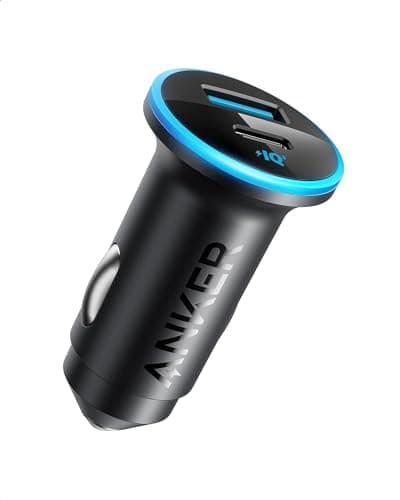
Anker 323 Car Charger (52.5W)
Two ports, 52.5W total, and a published voltage table showing 30W maximum on the USB-C port. Thirty watts charges any phone at or near its own ceiling, which means the 67W chargers above it are selling you headroom nothing in your pocket can use. At $19.99 this is the honest default.
- Ports
- 1 x USB-C, 1 x USB-A
- Total output
- 52.5 W
- USB-C output
- 5V/3A, 9V/3A, 12V/2.5A, 15V/2A, 20V/1.5A (30 W max)
- USB-A output
- 5V/3A, 9V/2A, 10V/2.25A (22.5 W max)
- Input
- 12V at 5.6 A, 24V at 3.6 A
- Safety
- ActiveShield 2.0
- Model
- A2735
- Warranty
- 18 months
- Operating range
- Not published
List price $19.99 per Anker's own store, captured on the compile date below. Not a live price and not what you will pay — the button is where the real number is.
What it gets right
- Anker publishes the full PDO table — 5V/3A, 9V/3A, 12V/2.5A, 15V/2A, 20V/1.5A — rather than a headline number
- 30 W on USB-C is at or above what almost every phone will accept
- Input rated 12V and 24V, so it works in a truck as well as a car
- $19.99 list and physically small, which matters in a tight console
Flaws
- Two ports, not three. A second passenger and a tablet is one device too many
- 30 W will not charge a laptop at any useful speed
- The USB-A port tops out at 22.5 W, so it is the slow one
The working behind the 9.2
- Heat headroom: not scored (weight 22%)
- The maker publishes no operating-temperature ceiling, so this axis is dropped and the other weights are re-normalized.
- Install effort: 10.0 (weight 24%)
- Plugs into a 12V socket or a USB port. Nothing to mount, nothing to route, reversible in a second.
- Price against the ceiling: 10.0 (weight 24%)
- Listed at $19.99 on the compile date. This site's buyer has a practical ceiling around $150 for a single upgrade, so the scale rewards everything under $100 and falls away sharply past $150. The live price is very often different, and that is what the button is for.
- Written commitment: 7.0 (weight 15%)
- 18-month warranty. This is the only promise in the entire listing that a court would read, which is why it is scored and the marketing copy is not.
- Spec transparency: 8.9 (weight 15%)
- 8 of the 9 specifications we went looking for are published by the maker (89%). A blank row is never a guess here: it prints “Not published” and it costs the product points, because a figure nobody will commit to in writing is a figure you cannot check.
Axes with no published input are dropped and the remaining weights re-normalized, so a product is not punished for a category where an axis does not apply. Specifications compiled September 4, 2026 from Anker's 323 Car Charger product page.
2The heat problem, solved at the mount
ESR HaloLock Qi2 with CryoBoost
Qi2 certified 15W with an actual cooling fan built into the mount. That sounds like a gimmick until you have watched a phone throttle its own charging to a crawl on a summer afternoon while running navigation. Wireless charging in a hot car is a thermal problem before it is a power problem, and this is the only mount here that addresses it directly.
- Wireless standard
- Qi2 certified
- Wireless output
- 15 W
- Cooling
- CryoBoost active fan plus heat-dissipating components
- Required input
- USB-C PD source of 20 W or more
- Attachment
- Vent mount
- Magnet
- MagSafe compatible alignment
- Warranty
- Not published
- Operating range
- Not published
List price $39.99 per ESR's own store, sale price (regular $59.99), captured on the compile date below. Not a live price and not what you will pay — the button is where the real number is.
What it gets right
- Qi2 certified at the full 15W, not a 7.5W mount described as fast
- Active cooling fan, which is the difference between 15W sustained and 15W for four minutes
- Magnetic alignment does the aiming for you, one-handed, without looking
- $39.99 sale against a $59.99 list
Flaws
- Needs a USB-C source of 20W or more, which most cars do not have from the factory — budget for a car charger too
- There is a fan in your car, and you can hear it when the stereo is off
- Vent mounting means a blocked vent, on the mount whose selling point is cooling
The working behind the 8.8
- Heat headroom: not scored (weight 22%)
- The maker publishes no operating-temperature ceiling, so this axis is dropped and the other weights are re-normalized.
- Install effort: 9.0 (weight 24%)
- Clips onto a vent blade or a headrest post. Two minutes, no tools, no adhesive, no residue.
- Price against the ceiling: 9.5 (weight 24%)
- Listed at $39.99 on the compile date. This site's buyer has a practical ceiling around $150 for a single upgrade, so the scale rewards everything under $100 and falls away sharply past $150. The live price is very often different, and that is what the button is for.
- Written commitment: not scored (weight 15%)
- No warranty term published, so this axis is dropped and the other weights are re-normalized.
- Spec transparency: 7.5 (weight 15%)
- 6 of the 8 specifications we went looking for are published by the maker (75%). A blank row is never a guess here: it prints “Not published” and it costs the product points, because a figure nobody will commit to in writing is a figure you cannot check.
Axes with no published input are dropped and the remaining weights re-normalized, so a product is not punished for a category where an axis does not apply. Specifications compiled September 4, 2026 from ESR's Qi2 CryoBoost car charger page.
3Publishing what each port gets when both are in use
Anker Nano Car Charger, 75W Retractable
A built-in retractable USB-C cable with four preset lengths, and — the part that matters — Anker publishes the split: 45W from the retractable cable and 30W from the second port when both are working. A headline wattage without that split tells you nothing.
- Total output
- 75 W
- Shared split
- 45 W retractable + 30 W second port
- Cable lengths
- 7.9 / 15.7 / 23.6 / 29.5 in
- Ports
- Retractable USB-C plus USB-C
- Operating temperature
- Not published
- Warranty
- Not published
- List price
- Not published
What it gets right
- Publishes the shared-power split: 45 W on the retractable cable plus 30 W on the second port
- Retractable cable locks at four published lengths — 7.9, 15.7, 23.6 and 29.5 in
- No loose cable to tangle, fall into a footwell or get shut in a door
- 75 W total is enough to charge a laptop slowly as well as a phone quickly
Flaws
- A tethered cable is a single point of failure — when the retractor wears out, the charger is finished
- The retractable cable is USB-C only, so a Lightning device needs an adapter or the second port
- Fixed maximum length of 29.5 in, which may not reach a rear passenger
- No published operating temperature range
The working behind the 8.3
- Heat headroom: not scored (weight 22%)
- The maker publishes no operating-temperature ceiling, so this axis is dropped and the other weights are re-normalized.
- Install effort: 10.0 (weight 24%)
- Plugs into a 12V socket or a USB port. Nothing to mount, nothing to route, reversible in a second.
- Price against the ceiling: not scored (weight 24%)
- No published list price we could cite on the compile date, so this axis is dropped and the other weights are re-normalized.
- Written commitment: not scored (weight 15%)
- No warranty term published, so this axis is dropped and the other weights are re-normalized.
- Spec transparency: 5.7 (weight 15%)
- 4 of the 7 specifications we went looking for are published by the maker (57%). A blank row is never a guess here: it prints “Not published” and it costs the product points, because a figure nobody will commit to in writing is a figure you cannot check.
Axes with no published input are dropped and the remaining weights re-normalized, so a product is not punished for a category where an axis does not apply. Specifications compiled September 4, 2026 from Anker published output split and cable lengths.
4The one that comes with everything it needs
Belkin BoostCharge Pro Qi2 Car Charger
Qi2 at 15W with the 20W USB-C car power supply and a five-foot tethered cable in the box, plus a two-year warranty and Belkin's connected-equipment cover. Every other wireless mount here needs a car charger you buy separately; this one does not, and once you add that cost the price gap narrows considerably.
- Wireless standard
- Qi2 certified
- Wireless output
- 15 W
- In the box
- Mount, 5 ft tethered USB-C cable, 20 W USB-C PD car supply
- Warranty
- 2 years, plus connected equipment cover to $2,500
- Attachment
- Vent mount
- Orientation
- Portrait or landscape
- Cooling
- Not published
- Operating range
- Not published
List price $71.99 per Belkin's own store, captured on the compile date below. Not a live price and not what you will pay — the button is where the real number is.
What it gets right
- 20W USB-C PD car power supply included, so the box is genuinely complete
- Two-year warranty, the longest of any mount in this ledger
- Qi2 certified 15W with one-handed alignment in portrait or landscape
- Tethered 5 ft cable with a strap and rear holder, so it does not become a loose-cable problem
Flaws
- $71.99 list, comfortably the most expensive mount here
- No active cooling, so sustained 15W in a hot car is optimistic
- Vent mounting only
The working behind the 8.2
- Heat headroom: not scored (weight 22%)
- The maker publishes no operating-temperature ceiling, so this axis is dropped and the other weights are re-normalized.
- Install effort: 9.0 (weight 24%)
- Clips onto a vent blade or a headrest post. Two minutes, no tools, no adhesive, no residue.
- Price against the ceiling: 8.0 (weight 24%)
- Listed at $71.99 on the compile date. This site's buyer has a practical ceiling around $150 for a single upgrade, so the scale rewards everything under $100 and falls away sharply past $150. The live price is very often different, and that is what the button is for.
- Written commitment: 8.0 (weight 15%)
- 24-month warranty. This is the only promise in the entire listing that a court would read, which is why it is scored and the marketing copy is not.
- Spec transparency: 7.5 (weight 15%)
- 6 of the 8 specifications we went looking for are published by the maker (75%). A blank row is never a guess here: it prints “Not published” and it costs the product points, because a figure nobody will commit to in writing is a figure you cannot check.
Axes with no published input are dropped and the remaining weights re-normalized, so a product is not punished for a category where an axis does not apply. Specifications compiled September 4, 2026 from Belkin's Qi2 15W magnetic car charger page.
Prices last verified September 28, 2026. They move constantly; the figure on Amazon when you click is the real one.
Questions people actually ask
What wattage car charger do I need for an iPhone?
About 30 W over a cable is enough — an iPhone accepts roughly 20 to 30 W and will not draw more however large the charger. Over Qi2 the ceiling is 15 W. Higher-wattage chargers are useful for charging several devices at once, not for charging one iPhone faster.
Do I need a separate charger for a Qi2 car mount?
Usually yes, and it is the most common surprise in this category. Both Qi2 products here state they need a USB-C PD source of 20 W or more. Belkin includes that supply in the box; ESR does not, so budget for one if you do not already have it.
Why does my iPhone charge slowly on a wireless car charger?
Almost always heat. A phone running navigation with a bright screen in direct sun throttles charging to protect the battery, and no rated wattage overrides that. Mount it on a vent rather than the windshield, and prefer a charger that publishes active cooling.
Is MagSafe the same as Qi2?
Not quite. Qi2 is the open standard that adopted magnetic alignment; MagSafe is Apple’s implementation of the same idea. A Qi2-certified car charger aligns magnetically and charges a modern iPhone at 15 W.